
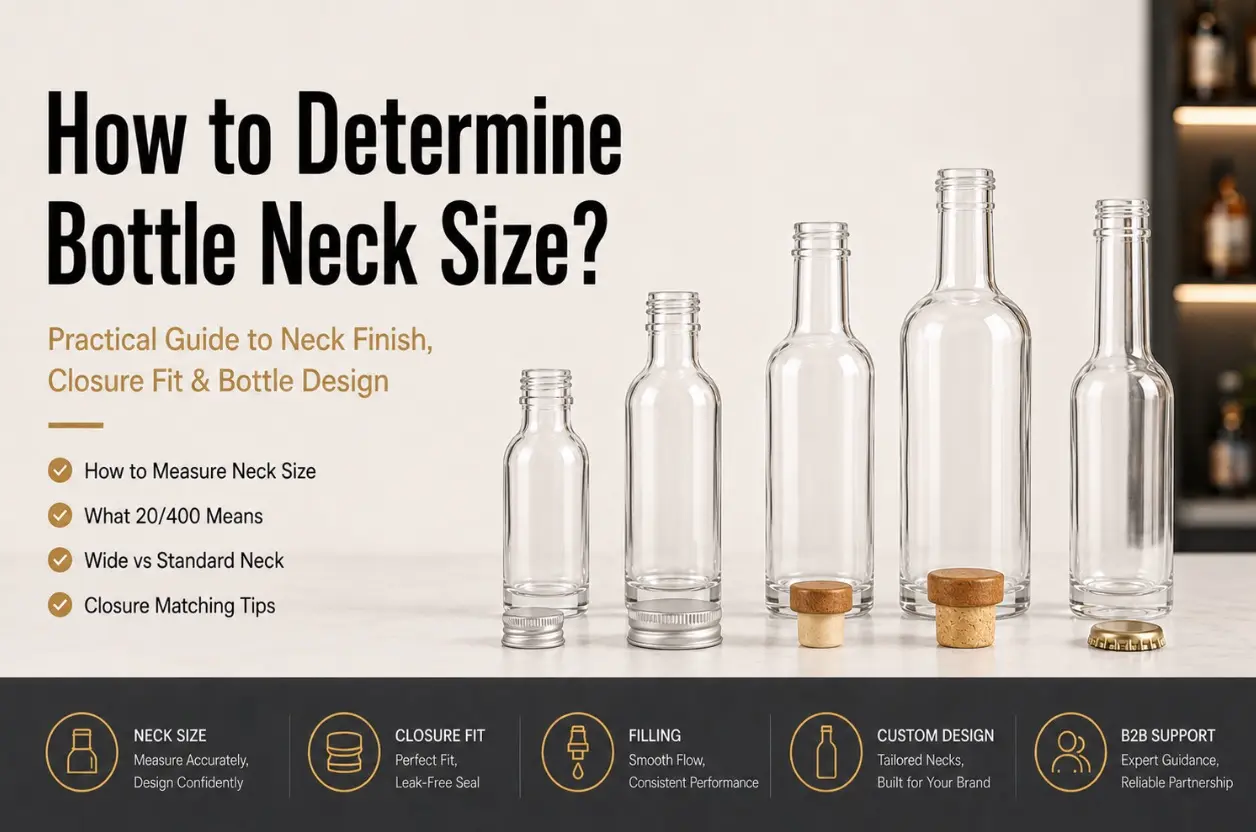
Bottle neck size is the measured neck finish that helps a bottle match the right cap, cork, stopper, pump, sprayer, or closure. For threaded bottles, it is usually shown as a code such as 20/400, 24/410, or 28/400. The first number usually refers to the neck diameter in millimeters. The second number refers to the thread style or finish series.
Bottle neck size is not only a small technical detail. It affects sealing, filling, pouring, decoration, product safety, and the final look of the package. A bottle may look good in a photo, but it still needs the correct neck size before it can work with the right closure.
For most custom glass bottle projects, buyers do not need to design the closure system alone. A professional glass bottle supplier can recommend matching caps, corks, stoppers, pumps, or sprayers based on the bottle neck size and product use. The buyer usually needs to confirm the product type, filling method, appearance, color, material, and final style.
What Does Bottle Neck Size Mean?
Bottle neck size refers to the measured finish at the top of the bottle. This is the part that connects with the closure. A container closure can be a cap, lid, cork, plug, pump, sprayer, stopper, or other sealing part. The bottle finish must match that closure.
In simple terms, the bottle neck size tells the supplier what closure family can fit the bottle. It is not enough to say that the bottle has a “small neck” or a “wide mouth.” The supplier needs the actual neck finish, diameter, thread type, sealing surface, and sometimes the inner opening.
For glass bottles, neck size can affect several important details. It can change the closure match, filling speed, pouring control, headspace, overflow capacity, carton design, and total packaging cost. This is why the neck should be confirmed during the bottle drawing stage, not after mass production.
¿Cómo determinar el tamaño de un cuello de botella?
The safest way to determine bottle neck size is to check the technical drawing or supplier specification. The drawing should show the neck finish code, outer thread diameter, inner opening, neck height, sealing surface, and closure type. If the bottle is already made, the supplier can measure the sample and confirm the matching closure.
For a threaded bottle, the most common method is to measure across the outside of the threads. This is often called the T dimension. It helps determine the first number in a neck finish code such as 20/400 or 28/410. The measurement is usually given in millimeters.
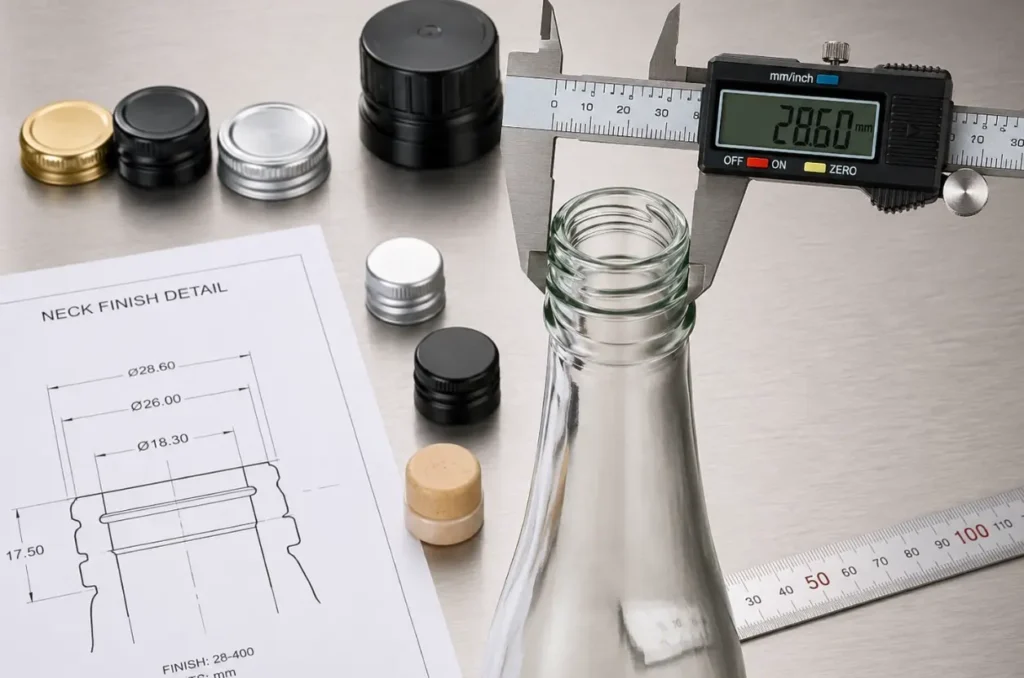
The second part of the code is the finish or thread style. This part is just as important as the diameter. A 24/400 closure and a 24/410 closure may have the same diameter, but they are not the same finish. They may not seal correctly if the thread style does not match.
Buyers should avoid measuring only the inner opening of the bottle. The inner opening matters for filling tubes, pourers, droppers, and plugs, but it does not fully define the closure fit. The outer finish and sealing structure must also be checked.
What Does 20/400 Neck Finish Mean?
A 20/400 neck finish is a common way to describe a threaded bottle finish. The number 20 usually refers to the neck finish diameter in millimeters. The number 400 refers to the thread style or finish series.
In practical terms, a bottle with a 20/400 neck finish usually needs a matching 20/400 closure. A buyer should not only match the first number. The full finish code matters because the thread height, thread engagement, and sealing area need to match.
For example, a 20/400 closure and a 20/410 closure may look similar to a non-specialist buyer. Both may seem to fit a 20 mm neck. But the thread style is different, so the closure may not tighten, seal, or perform in the same way.
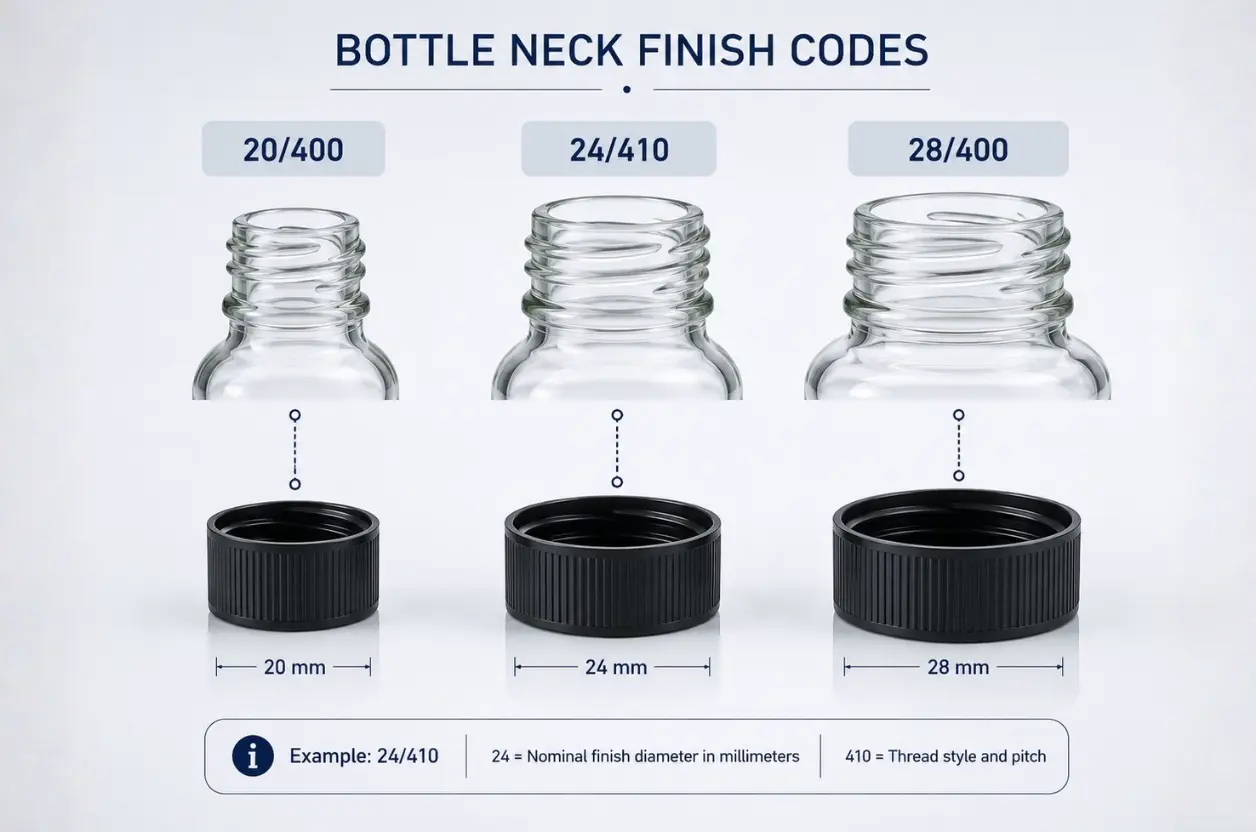
This is why bottle neck size should be confirmed with the closure sample, not only with a written code. For custom glass bottle projects, Jingbo Glass can help match the bottle with a suitable cap, cork, stopper, pump, or sprayer before the buyer confirms the final order.
Common Bottle Neck Finish Codes
Threaded neck finish codes are common in cosmetic, personal care, pharmaceutical, beverage, and some food packaging. These codes help match containers and closures more clearly.
| Neck Finish Example | Basic Meaning | Uso habitual |
|---|---|---|
| 18/400 | About 18 mm neck diameter with 400 finish | Small bottles, droppers, essential oil bottles |
| 20/400 | About 20 mm neck diameter with 400 finish | Small cosmetic bottles, sample bottles, liquid bottles |
| 24/410 | About 24 mm neck diameter with 410 finish | Pumps, sprayers, cosmetic bottles |
| 28/400 | About 28 mm neck diameter with 400 finish | Beverage bottles, food bottles, general liquid packaging |
| 38 mm lug or twist-off | Wider jar finish for lug caps | Food jars, sauce jars, preserves |
| Bar-top or cork mouth | Designed for cork or stopper closure | Spirits, liquor, premium bottles |
| Crown finish | Designed for crown caps | Beer and some beverage bottles |
| Crimp finish | Designed for crimp pumps or sprayers | Perfume and fragrance bottles |
These examples are useful for understanding the idea, but they are not a replacement for a confirmed drawing. Different product categories may use different standards, closure designs, and sealing requirements.
Is Wide Neck or Standard Neck Better?
A wide neck is not always better. A standard or narrow neck is not always better either. The right choice depends on the product, filling method, closure, pouring need, and user experience.
Wide neck bottles are often better for products that are thick, solid, spooned, or filled in larger amounts. Food jars, sauces, powders, candles, creams, and some supplements may benefit from a wider opening. A wide neck can make filling, cleaning, and product access easier.
Standard or narrow neck bottles are often better for liquids that need controlled pouring or a more elegant appearance. Spirits, beverages, perfumes, essential oils, and cosmetic liquids often use standard or narrow necks. These necks can support better pouring control, cleaner shelf appearance, and suitable closure systems.
The best choice should not be based only on appearance. A wide neck may increase closure size and cost. A narrow neck may slow filling or limit the type of closure. The neck needs to match the product and the supply chain.
| Neck Type | Better For | Main Concern |
|---|---|---|
| Wide neck | Food jars, sauces, powders, creams, candles | Closure size, sealing area, carton space |
| Standard neck | Liquor, beverages, cosmetic liquids, general liquid packaging | Closure match, pouring control, filling speed |
| Narrow neck | Perfume, essential oils, spirits, controlled dispensing | Filling speed, pump or stopper fit, cleaning |
| Special neck | Custom premium bottles, fragrance, pharmaceutical packaging | Mold design, closure availability, testing |
How Bottle Neck Size Affects Closure Fit
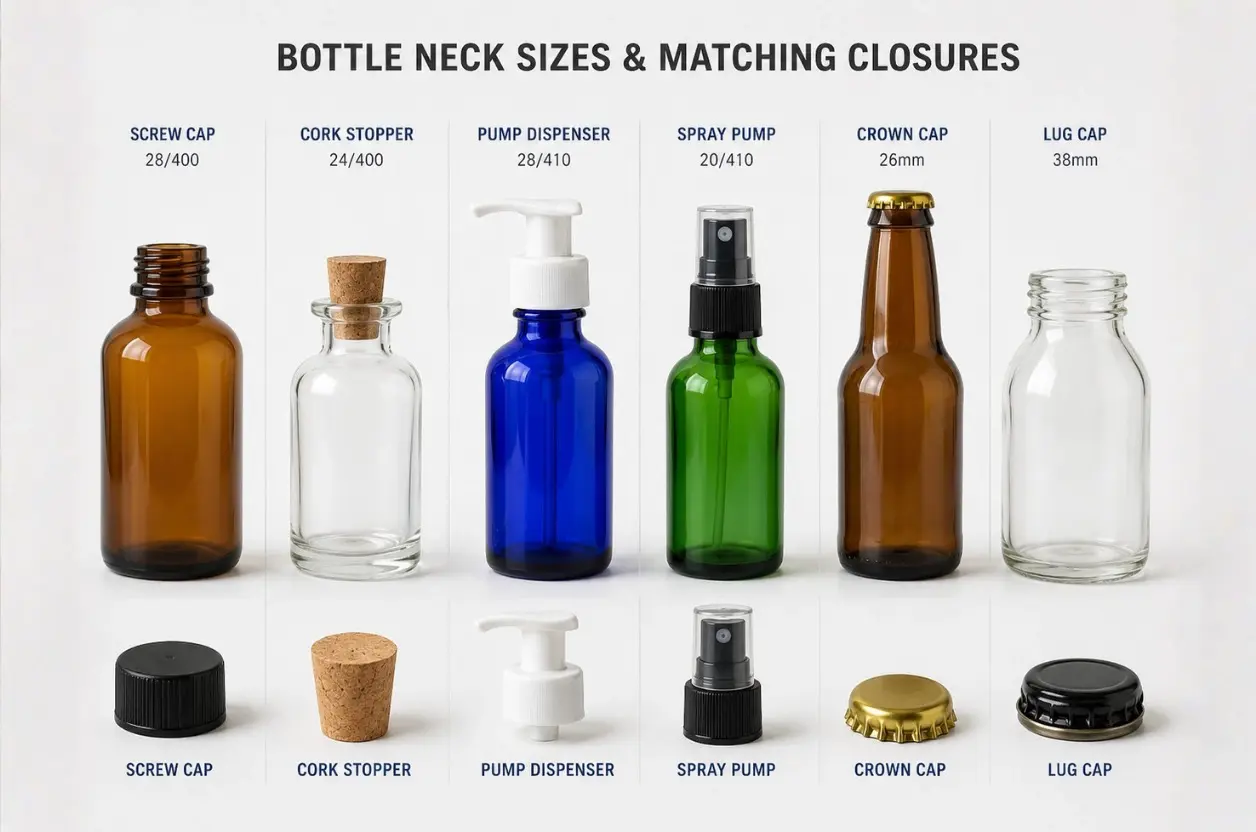
Bottle neck size directly affects closure fit. A closure must match the neck diameter, thread style, sealing surface, and intended use. If the closure does not match the bottle finish, the package may leak, loosen, crack, or fail during transport.
This does not mean the buyer must become a closure engineer. In most custom glass bottle projects, the buyer only needs to provide the product type, intended market, filling method, and preferred appearance. The supplier can then recommend suitable closure options.
For spirits bottles, the closure may be a cork, synthetic stopper, bar-top closure, screw cap, or other premium finish. For perfume bottles, the closure system may include a crimp pump, spray pump, collar, cap, or decorative cover. For food jars, the closure may be a lug cap or screw cap. For cosmetic bottles, pumps and sprayers are common.
After technical compatibility is confirmed, the buyer usually chooses the visible style. This may include color, material, surface finish, logo, decoration, and premium feel. That is the part where brand preference matters most.
How Bottle Neck Size Affects Filling and Sealing
Bottle neck size affects how the bottle works on the filling line. A wider opening may allow faster filling for thick products. A narrow opening may need slower filling or more careful equipment settings.
The neck also affects sealing. The closure must press, screw, crimp, snap, or seal in the right way. If the sealing surface is not suitable, the bottle may leak even if the closure looks correct from the outside.
The product itself also matters. Alcohol, oil, syrup, sauce, perfume, and cream do not behave the same way during filling. Some products foam. Some are thick. Some need better vapor control. Some need a tamper-evident closure or an inner seal.
Buyers should confirm the neck size together with the filling method. A bottle that works for hand filling may not work smoothly on an automatic filling line. A closure that works for a dry sample may not perform the same way after filling, storage, and transport.
How Bottle Neck Size Affects Overflow Capacity and Headspace
Bottle neck size can affect fill level, headspace, and capacidad de desbordamiento. A long neck, narrow opening, high shoulder, or special finish can change the visual fill height and usable internal space.
Overflow capacity is the maximum internal volume of the bottle when filled to the top. Nominal capacity is the normal declared fill volume. The space between the liquid level and the top of the bottle is headspace.
Neck and shoulder design can make the same nominal capacity look different on the shelf. A bottle with a long narrow neck may show liquid level changes more clearly. A bottle with broad shoulders may need a different fill line to look balanced.
This is why bottle capacity should not be checked separately from neck design. A buyer should review nominal capacity, overflow capacity, fill level, headspace, neck finish, and closure together before confirming a custom mold.
How Bottle Neck Size Affects Glass Bottle Weight
A bottle neck may look small compared with the body, but it can still affect the final peso de la botella de cristal. A longer neck, thicker finish, special bead, or reinforced sealing area can add glass.
The difference may be small for one bottle, but it can matter in a large order. Extra glass affects unit weight, carton weight, pallet weight, and export freight. It can also change the hand feel of the bottle.
Weight should not be reduced without technical review. The neck must remain strong enough for filling, capping, sealing, handling, and transport. A weak neck can create breakage or sealing problems.
The goal is not to make the neck as thin as possible. The goal is to use the right amount of glass for strength, closure fit, appearance, and cost control.
How Bottle Neck Size Affects Glass Bottle Cost
Bottle neck size can affect coste de la botella de cristal in several ways. A special neck finish may need a specific mold, tighter tolerance, slower inspection, or a more expensive closure.
The cost impact is not only in the glass bottle. The closure, liner, pump, sprayer, cork, cap, collar, and decoration can all change the final packaging cost. A standard neck with common closure options may be more cost-efficient than a special finish with limited closure supply.
This does not mean custom neck designs should be avoided. A special finish may be the right choice for a premium perfume, luxury liquor, or unique product concept. But the buyer should know the cost effect before approving the design.
The best time to review cost is before the mold is made. Once the neck design is fixed, the closure system and many packaging choices are also partly fixed.
Bottle Neck and Bottle Base Should Be Reviewed Together
A good glass bottle should be reviewed from top to bottom. The neck affects closure fit, sealing, filling, and user experience. The base affects stability, strength, weight, and shelf presence.
For example, a premium spirits bottle may use a heavy base and a bar-top closure. The base supports the luxury feel, while the neck must match the stopper and pouring experience. Both parts need to fit the same brand position.
A food jar may use a wide mouth and a stable base. The neck supports easy filling and product access, while the base supports standing stability during filling, packing, and storage.
For more detail on the lower part of the bottle, read our guide on why bottles have concave bottoms.
What Buyers Should Confirm Before Ordering
Buyers do not need to know every technical standard, but they should confirm the information that affects the final package. A clear specification helps the supplier match the correct closure and avoid production mistakes.
| Asunto pendiente de confirmación | Por qué es importante |
|---|---|
| Tipo de producto | Different products need different sealing and filling conditions |
| Bottle neck size | Helps match the right closure family |
| Neck finish code | Confirms diameter and thread or finish style |
| Inner opening | Affects filling tubes, pourers, droppers, and plugs |
| Closure type | Confirms cap, cork, stopper, pump, sprayer, or lug cap |
| Filling method | Affects neck opening, speed, and equipment fit |
| Sealing requirement | Helps prevent leakage, evaporation, and contamination |
| Headspace and fill level | Affects appearance and packaging performance |
| Decoration plan | Affects cap color, collar, logo, and surface finish |
| Muestra aprobada | Confirms real fit before mass production |
This table is useful for both stock mold and custom mold projects. For a stock bottle, many values may already exist. For a custom bottle, the drawing should confirm them before mold production.
How to Choose the Right Glass Bottle Based on Neck Size
To choose the right glass bottle, start with the product, not the bottle photo. The product decides the filling method, sealing need, pouring style, and user experience. The bottle design should support these needs.
For liquids such as spirits, beverages, oils, and perfumes, the neck should support clean filling and controlled dispensing. For thicker products such as sauces, creams, powders, or food items, a wider opening may be more practical.
The closure should be selected together with the neck. A beautiful bottle may fail if the cap leaks, the pump does not fit, or the stopper feels loose. A simple bottle can perform well when the neck, closure, and filling line are correctly matched.
Buyers should also consider brand position. A premium liquor bottle may need a heavier base and a decorative stopper. A practical food jar may need a reliable lug cap. A fragrance bottle may need a precise spray pump and decorative overcap.
How Jingbo Glass Helps Match Bottle Neck Size and Closures
Jingbo Glass supports buyers as a fabricante de botellas de vidrio a medida by reviewing bottle shape, neck finish, closure options, filling method, decoration, and export packing together.
For stock mold projects, Jingbo can recommend bottles with existing neck sizes and matching closure options. This can help buyers move faster and reduce development risk.
For custom glass bottle projects, Jingbo can review the drawing before mold production. The team can help confirm the neck finish, closure compatibility, bottle weight, capacity, base design, decoration area, and packing method.
Buyers usually do not need to select the technical closure structure alone. After compatibility is confirmed, they can choose the visible closure style, such as color, material, surface finish, logo, and premium appearance.
The goal is simple. The bottle should look right, seal correctly, fill smoothly, and perform safely during transport and use.
FAQ About Bottle Neck Size
How do you determine bottle neck size?
You can determine bottle neck size by checking the technical drawing or measuring the outside diameter of the bottle finish. For threaded bottles, this outer thread measurement is often used as the first number in codes such as 20/400 or 28/410. The thread style must also be confirmed.
What does 20/400 neck finish mean?
20/400 usually means the bottle has about a 20 mm neck finish diameter and a 400 thread style. The full code matters. A 20/400 closure should normally match a 20/400 bottle finish.
Is a wide neck or standard neck better?
Neither is always better. A wide neck is often better for food jars, sauces, powders, creams, and easy filling. A standard or narrow neck is often better for liquids, spirits, perfumes, controlled pouring, and cleaner shelf appearance.
Does bottle neck size affect closure choice?
Yes. Bottle neck size directly affects closure choice. The cap, cork, stopper, pump, sprayer, or closure must match the neck diameter, finish type, sealing surface, and product use.
Does bottle neck size affect overflow capacity?
Yes, it can. Neck shape, shoulder height, and finish design can affect fill level, headspace, and overflow capacity. This is why neck size and capacity should be reviewed together.
Can one cap fit bottles with the same diameter but different finish codes?
Not always. Two bottles may have the same first number, such as 24 mm, but different finish codes, such as 24/400 and 24/410. The closure may not seal correctly if the thread style does not match.
Do buyers need to provide the closure themselves?
Not necessarily. For most custom glass bottle projects, Jingbo Glass can help match suitable caps, corks, stoppers, pumps, or sprayers based on the bottle neck size and product use. Buyers usually confirm the final color, material, surface finish, and appearance.
Conclusión
Bottle neck size is one of the most important details in glass bottle packaging. It affects closure fit, sealing, filling, pouring, headspace, bottle weight, and cost. For threaded bottles, codes such as 20/400 or 28/410 help describe the neck finish. The first number usually refers to the neck diameter in millimeters. The second number refers to the finish or thread style.
A buyer does not need to engineer the closure system alone. But the buyer should understand why bottle neck size matters and should confirm the product type, filling method, closure preference, and final appearance before ordering.
The best glass bottle is not only a bottle with a good shape. It is a complete package that uses the right neck, the right closure, the right capacity, and the right structure for the product.