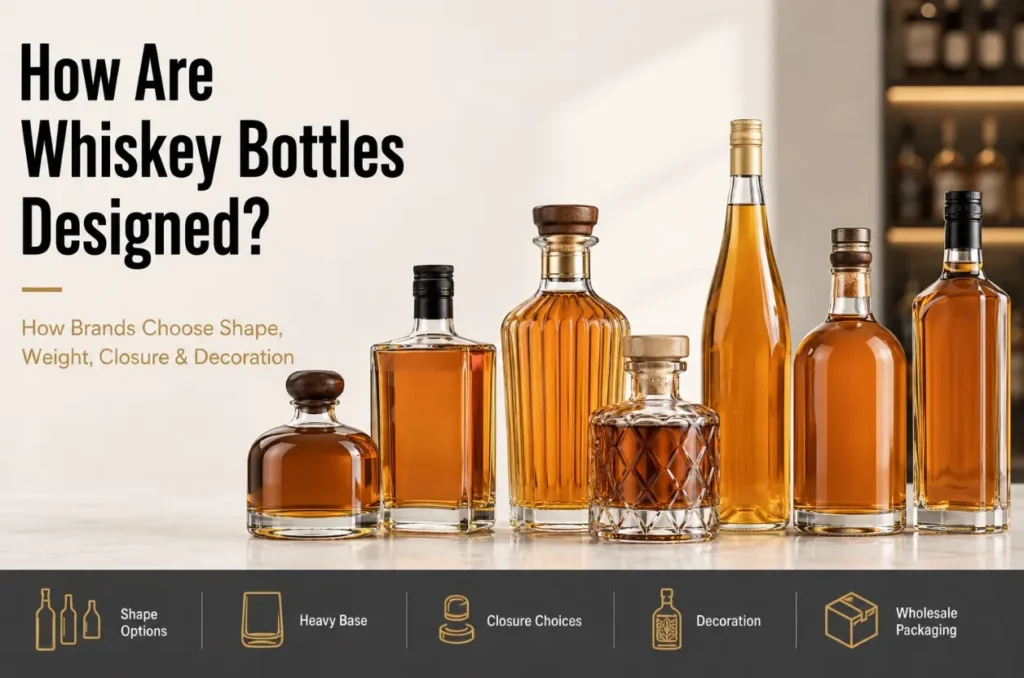
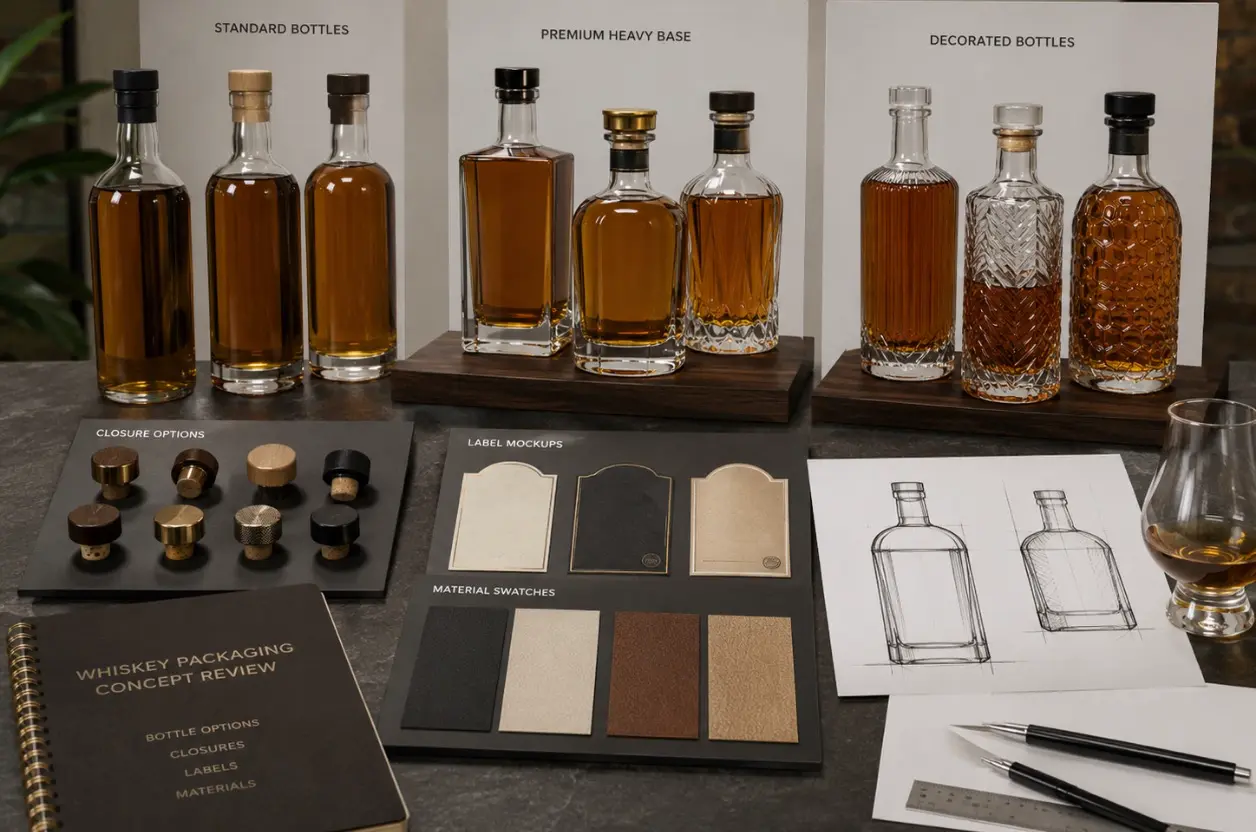
Whiskey bottles are designed by matching brand position, bottle shape, glass weight, base style, neck finish, closure, decoration, label area, packing, and production feasibility. A good whiskey bottle should look strong on the shelf, feel right in the hand, work with the correct closure, and remain practical for wholesale production and repeat orders.
For whiskey brands, the bottle often sells before the customer tastes the product. A plain bottle may work for a low-cost product, but a premium whiskey needs stronger shelf presence, better touch, and a more memorable package.
For distributors, whiskey bottle design is also a sales tool. A strong bottle range can help them serve new spirits brands, craft distilleries, private-label buyers, gift packaging projects, and premium accounts.
What Is Considered a Good Whiskey Bottle Design?
A good whiskey bottle design is not only a beautiful shape. It should match the whiskey’s price level, sales channel, brand story, filling process, closure style, and packing plan.
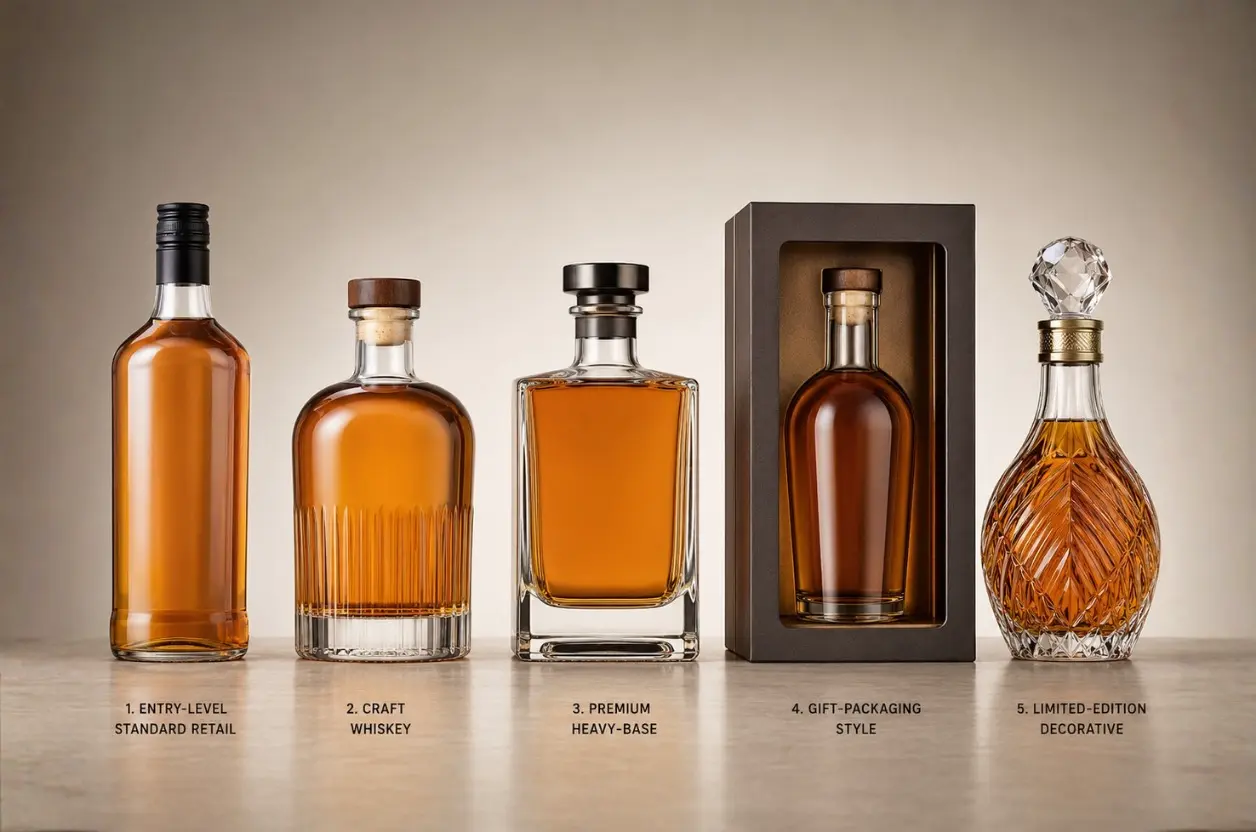
For an entry-level whiskey, the best bottle may be a proven existing mold with a clean label and practical closure. For a premium whiskey, the bottle may need heavier glass, a thicker base, high-clarity glass, refined decoration, and a better stopper. For a limited edition, the bottle may need a special silhouette, gift-box compatibility, embossing, coating, or metallic decoration.
The important point is simple: the bottle should support the product’s selling position. A bottle that looks too cheap can weaken a premium whiskey. A bottle that is too heavy or complex can create unnecessary cost for a price-sensitive product.
| Whiskey Position | Better Bottle Direction |
|---|---|
| Entry-level whiskey | Existing mold, practical weight, clear label area |
| Craft whiskey | Distinctive shape, storytelling label, simple decoration |
| Premium whiskey | Heavy base, refined closure, stronger shelf presence |
| Gift packaging | Decorative bottle, premium cap, carton or box matching |
| Limited edition | Special shape, embossing, coating, or metallic finish |
| Private label project | Existing mold with brand-specific decoration |
Start With Brand Position, Not Bottle Shape
Many buyers start by asking for a bottle that looks “luxury.” That is understandable, but it is not enough. Luxury means different things in different markets.
A whiskey brand should first decide where the product will sit. Is it a standard retail whiskey, a craft spirit, a premium gift product, a club bottle, a duty-free product, or a limited-edition release? The answer changes the bottle direction.
A new brand may not need a new bottle mold at the beginning. A strong existing whiskey bottle with the right label, closure, and decoration can help the brand test the market faster. Once sales become stable, the brand can upgrade to a custom bottle shape, embossed logo, or more exclusive design.
For procurement teams, this approach reduces risk. They can compare bottle options by cost, delivery time, decoration feasibility, and packing performance before committing to a new mold.
Which Bottle Shape Works Best for Whiskey?
There is no single best whiskey bottle shape. The right shape depends on brand identity, shelf competition, label design, and target price.
Round whiskey bottles feel classic and familiar. They work well for many spirits because they are easy to handle, easy to label, and widely accepted by customers. Square bottles create a stronger shelf block and often feel more modern or premium. Rectangular bottles provide a clean front panel for labels and are useful for gift packaging.
Decanter-style bottles are more suitable for luxury, collector, or limited-edition products. They can look valuable, but they usually require more careful review of weight, packing, closure fit, and cost. Tall slim bottles can create a modern and elegant feel, while short heavy bottles create a bold and stable impression.
| Форма бутылки | Buyer Advantage | Distributor Selling Angle |
|---|---|---|
| Round bottle | Classic, familiar, easy to use | Good standard line for many spirits |
| Square bottle | Strong shelf presence, clear label panel | Good for premium or gift customers |
| Rectangular bottle | Clean front face, efficient branding area | Easy to present for private-label buyers |
| Decanter style | Luxury and collectible feel | Suitable for limited-edition projects |
| Tall slim bottle | Modern and elegant appearance | Good for boutique spirits brands |
| Short heavy bottle | Strong hand feel and stable base | Good for premium whiskey positioning |
A buyer should not choose shape from the front view only. Side profile, base thickness, label panel, closure match, carton packing, and hand feel should also be reviewed.
Heavy Base or Practical Weight?
A heavy base is common in premium whiskey bottle design because it creates a solid hand feel and stronger shelf presence. Customers often connect bottle weight with value before they even open the bottle.
But heavier is not always better. Extra glass increases bottle weight, carton weight, pallet weight, and freight pressure. For a premium whiskey, this may be acceptable. For a price-sensitive product, the extra cost may not create enough value.
A procurement team should ask what the extra weight is doing. Is it improving the brand impression? Is it helping the bottle stand better? Does it match the whiskey’s retail price? Or is it only adding freight cost?
For premium spirits, Jingbo Group usually reviews bottle weight together with shape, base style, closure, and decoration. If the buyer needs a premium look, a heavy-base bottle may be suitable. If the buyer needs efficiency, a more practical weight may be better. Buyers who want a deeper explanation can read the guide on вес стеклянной бутылки.
Clear, Amber, Dark, or Coated Glass?
Glass color changes how customers read the whiskey bottle. Clear glass shows the color of the spirit directly. This can work well for whiskey brands that want the liquid color to become part of the visual identity.
Amber or dark glass can create a traditional, vintage, or stronger spirits image. Black or full-color coated bottles can feel more premium, mysterious, or gift-oriented. Coating can also help create a brand color that plain glass cannot achieve.
The choice should match the product position. A craft whiskey may want transparency and story. A luxury whiskey may want black coating, gold stamping, or a darker visual style. A private-label buyer may prefer clear glass because it is easier to apply different labels to the same bottle shape.
Distributors can use glass color as a way to create product tiers. Clear bottles can serve standard customers, amber or dark bottles can serve traditional spirits buyers, and coated bottles can serve premium or gift customers.
Closure Choice Changes the Whole Design
A whiskey bottle does not feel complete until the closure is selected. A bottle with a premium body can still look weak if the cap, cork, or stopper does not match the brand level.
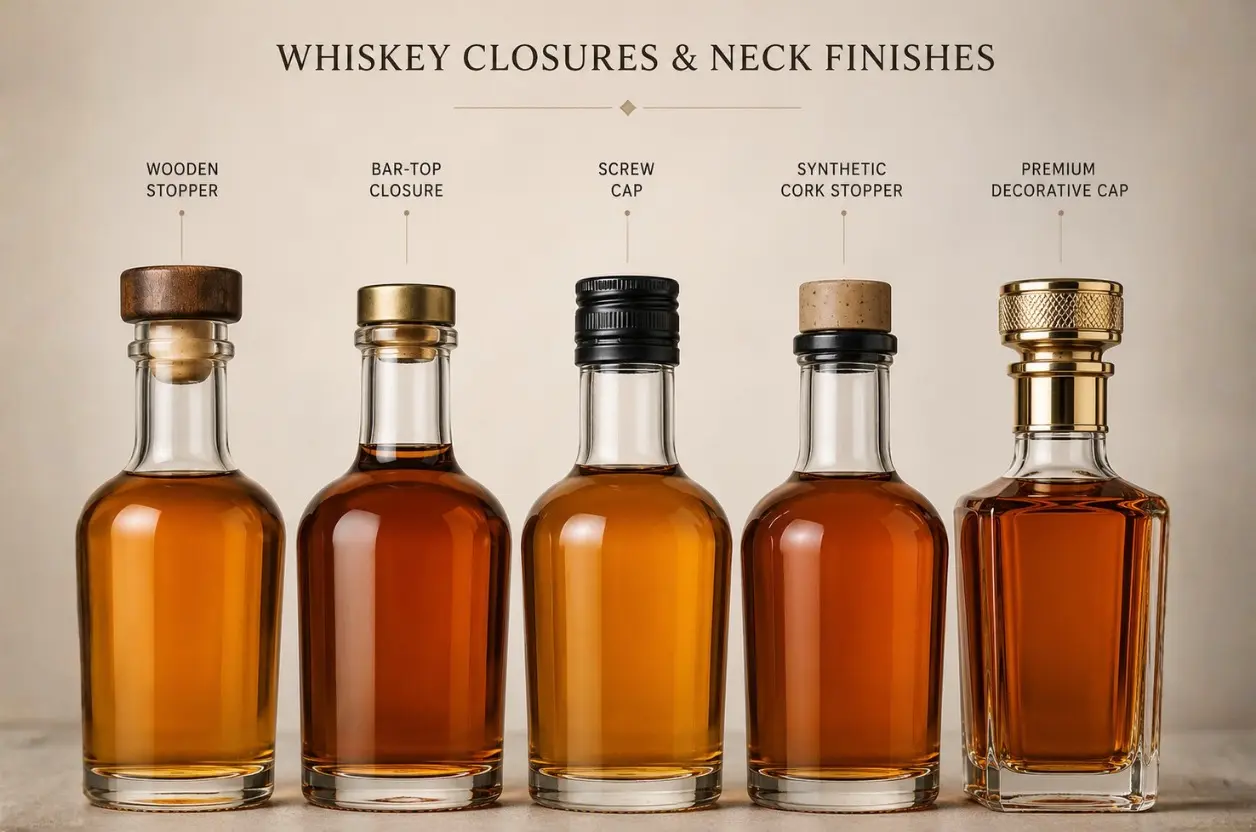
Common whiskey closures include wooden stoppers, synthetic cork stoppers, bar-top closures, screw caps, aluminum caps, and decorative caps. Each option creates a different impression. Wooden and bar-top closures often feel more premium. Screw caps can be practical and efficient. Decorative caps can support gift packaging or limited-edition projects.
The buyer does not need to engineer the closure alone. Jingbo Group can recommend suitable closures based on bottle neck size, product positioning, target budget, and filling needs. The buyer usually confirms the visible style, such as color, material, logo, surface finish, and premium appearance.
Closure choice should be confirmed early. If the neck finish is wrong, the closure may not seal correctly or may not match the bottle’s appearance. For more detail, buyers can review the guide on bottle neck size
Decoration Makes a Standard Bottle Look Premium
Not every whiskey brand needs a new bottle mold. A standard bottle can look much more premium with the right decoration.
Labels, screen printing, hot stamping, frosting, spray coating, embossing, and custom closures can all change the final package. For a new brand, decoration is often a safer first step than custom mold development. It allows the buyer to test the market while still building a clear brand identity.
For a premium whiskey, decoration should support the product’s price level. Gold hot stamping, matte coating, embossed patterns, thick paper labels, or a refined cap can make the bottle feel more valuable. For a craft whiskey, a clean label and simple screen printing may be enough if the brand story is strong.
Distributors can use decoration to sell the same bottle shape to different customers. One existing mold can become a standard whiskey bottle, a craft whiskey bottle, a premium gift bottle, or a private-label bottle depending on decoration and closure selection. For more decoration options, buyers can read the guide on декор стеклянных бутылок.
What Are Some Iconic Whiskey Bottle Design Features?
Many iconic bottle designs are not famous because of one feature alone. They become recognizable because the shape, label, closure, glass color, and brand story work together for a long time.
Instead of copying a famous bottle, buyers should understand which design features create recognition. A square body can create a strong shelf block. A heavy base can create a premium hand feel. A broad shoulder can make the bottle look stronger. A narrow label panel can feel more refined. Embossing can make the brand feel permanent.
| Design Feature | Why It Works |
|---|---|
| Square body | Strong shelf block and clear brand panel |
| Heavy base | Premium hand feel and stable appearance |
| Broad shoulder | Stronger visual impression |
| Tall slim shape | Modern and elegant shelf image |
| Embossed logo | Long-term brand recognition |
| Dark glass or coating | Luxury and limited-edition feeling |
| Wooden stopper | Better opening experience |
| Clean front label panel | Easier brand communication |
The goal is not to make the bottle complicated. The goal is to make the bottle memorable and suitable for repeat production.
How Do I Design My Own Whiskey Bottle?
A brand can design its own whiskey bottle in several levels. It does not always need to start with a completely new mold.
The first level is to choose an existing bottle and add a custom label or simple printing. This is practical for first launches, private-label projects, and distributor customers. The second level is to use an existing bottle with more advanced decoration, such as hot stamping, frosting, coating, or a custom closure. The third level is to create a new bottle mold with a unique shape, embossed logo, special base, controlled weight, and dedicated closure.
A buyer should prepare reference images, target capacity, order quantity, preferred bottle style, closure idea, decoration direction, and target market before asking for development advice. With this information, Jingbo Group can judge whether an existing mold is enough or whether a new design is worth the investment.
| Buyer Goal | Better Starting Point |
|---|---|
| First whiskey launch | Existing mold + label or screen printing |
| Faster market entry | Existing mold + standard closure |
| Better shelf presence | Existing mold + premium decoration |
| Premium brand image | Heavy-base bottle + refined closure |
| Exclusive long-term product | Custom mold + embossing + decoration |
| Distributor sample range | Several existing styles with different decoration levels |
This staged approach helps buyers control risk. It also helps procurement teams avoid paying for a custom mold before the sales plan is clear.
For Distributors: How to Sell Whiskey Bottles
Distributors should not present whiskey bottles as single random items. A better approach is to build a range that serves different customer types.
A standard whiskey line can include round and square existing mold bottles with practical closures. This line is easier to sell to new brands and cost-sensitive buyers. A premium upgrade line can include heavy-base bottles, better closures, hot stamping, coating, or textured labels. A custom project line can be reserved for key accounts that need unique bottle shapes or long-term brand packaging.
| Customer Type | Distributor Selling Angle |
|---|---|
| New spirits brand | Existing whiskey bottle with simple decoration |
| Craft distillery | Distinct shape and storytelling label area |
| Premium whiskey brand | Heavy base and refined closure |
| Gift packaging buyer | Decanter style and premium decoration |
| Private-label client | Same bottle shape with different branding |
| Long-term brand | Custom mold and exclusive decoration |
This structure helps distributors sell at different price levels. It also makes the sample presentation more convincing. Instead of saying “we have whiskey bottles,” the distributor can say “we have standard, premium, and custom whiskey bottle solutions.”
How Jingbo Group Recommends Whiskey Bottle Design
Jingbo Group usually starts by reviewing the buyer’s product position, target market, order quantity, budget, delivery schedule, and design goal. The recommendation is not the same for every customer.
For a new whiskey brand, Jingbo may recommend existing whiskey bottle molds first. This helps the buyer launch faster and reduce development risk. For a cost-sensitive project, Jingbo may suggest a practical bottle shape, standard closure, and efficient export packing. For a premium whiskey line, Jingbo may recommend a heavy-base bottle, matched closure, and surface decoration.
For a gift or limited-edition project, Jingbo may suggest a more distinctive bottle shape, decorative cap, hot stamping, coating, or embossing. For a long-term brand project, Jingbo can support custom bottle design, mold development, decoration, and stable repeat supply.
| Buyer Situation | Jingbo Group Usually Recommends |
|---|---|
| Fast launch | Existing whiskey bottle mold |
| Cost-sensitive project | Standard shape and efficient packing |
| Brand upgrade | Existing mold with decoration and custom closure |
| Premium spirits line | Heavy-base bottle and refined finishing |
| Gift or limited edition | Special shape and premium decoration |
| Distributor sample range | Several existing whiskey bottle styles |
| Long-term spirits brand | Custom mold and stable repeat supply |
Jingbo Group supports buyers as a производитель стеклянных бутылок на заказ by reviewing the full bottle system: shape, weight, capacity, neck finish, closure, decoration, packing, and export needs. This helps buyers choose a design that looks good and can still be produced, packed, shipped, and reordered.
What Buyers Should Confirm Before Ordering Whiskey Bottles
A good whiskey bottle project should be confirmed before bulk production. The buyer should not rely only on renderings or front-view photos.
For whiskey sold in regulated markets, the declared bottle volume should match local labeling rules. If the product will be sold in the United States, the TTB explains that the net contents statement shows the volume of distilled spirits in the container.
| Пункт для подтверждения | Почему это важно |
|---|---|
| Target capacity | Confirms the main bottle size |
| Bottle shape | Affects shelf presence and label area |
| Вес бутылки | Affects hand feel, cost, and freight |
| Конструкция основания | Affects premium appearance and stability |
| Отделка горловины | Affects closure fit and sealing |
| Closure type | Affects brand impression and user experience |
| Decoration method | Affects final look and cost |
| Область этикетки | Affects brand communication |
| Способ упаковки | Protects bottles during transport |
| Sample approval | Confirms real appearance before mass production |
For distributors, this checklist can also be used with end customers. It helps collect better information before asking Jingbo Group for recommendations or quotations.
FAQ About Whiskey Bottle Design
How are whiskey bottles designed?
Whiskey bottles are designed by combining brand position, bottle shape, glass weight, base structure, neck finish, closure, decoration, label area, packing, and production feasibility. A good design must look attractive and remain practical for filling, sealing, shipping, and repeat orders.
What is considered a good whiskey bottle?
From a packaging view, a good whiskey bottle should match the product’s price level, feel suitable in the hand, stand out on the shelf, work with the right closure, and support stable wholesale production. It should not only look beautiful in a photo.
Do premium whiskey bottles need to be heavy?
Not always. A heavy base can create premium feel, but it also increases cost and freight weight. The best bottle weight depends on the brand position, target price, shipping plan, and customer experience.
Are square whiskey bottles better than round bottles?
Square bottles can create stronger shelf presence and a clearer front label panel. Round bottles are classic, familiar, and often easier to use across many spirits categories. The better choice depends on the brand image and sales channel.
How do I design my own whiskey bottle?
Start by sending reference images, target capacity, order quantity, closure preference, decoration idea, and target market. The supplier can then recommend whether to use an existing mold, upgrade with decoration, or develop a new custom bottle mold.
Can an existing whiskey bottle look custom?
Yes. Existing whiskey bottles can look custom through labels, screen printing, hot stamping, frosting, spray coating, embossing, and custom closures. This is often a practical option for new brands and distributors.
Can Jingbo Group help with whiskey bottle closures?
Yes. Jingbo Group can recommend matched closures such as wooden stoppers, bar-top closures, screw caps, aluminum caps, or decorative caps based on bottle neck finish, product positioning, and buyer requirements.
Заключение
Whiskey bottle design is not only about making a bottle look attractive. It is a packaging decision that affects brand position, shelf appeal, customer experience, cost, production, packing, and repeat supply.
For new whiskey brands, an existing mold with the right label and closure may be the safest starting point. For premium spirits, a heavier base, refined closure, and better decoration can help support a higher price level. For long-term brand projects, a custom bottle design may create stronger recognition and better control.
For distributors, whiskey bottles should be sold as a range, not as one isolated product. Standard bottles, premium decorated bottles, and custom design options can serve different customers and price levels.
Jingbo Group’s recommendation is practical: start with the product, market, budget, timeline, and order plan. Then choose the bottle shape, weight, closure, decoration, and packing method that make the whiskey bottle easier to launch, easier to sell, and easier to reorder.