
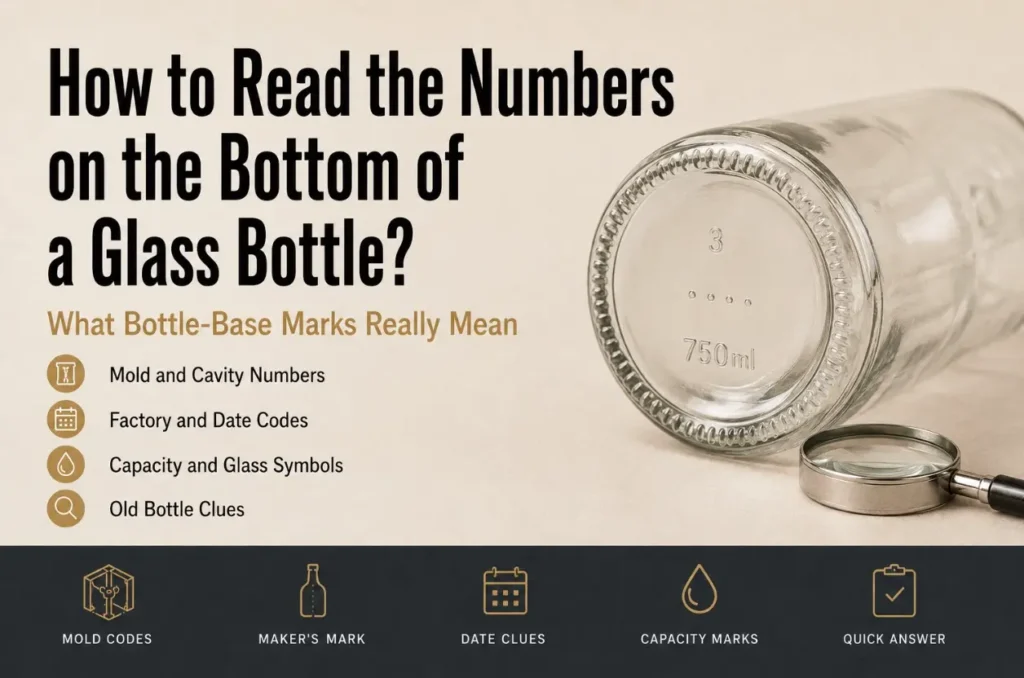
Цифры на дне стеклянной бутылки могут обозначать полость формы, производителя, завод-изготовитель, код даты, объём или материал стекла. Рельефные точки также могут указывать на форму, в которой была изготовлена бутылка. Напечатанные цифры имеют иное значение и зачастую относятся к системе маркировки партий или дат компании-розливщика.
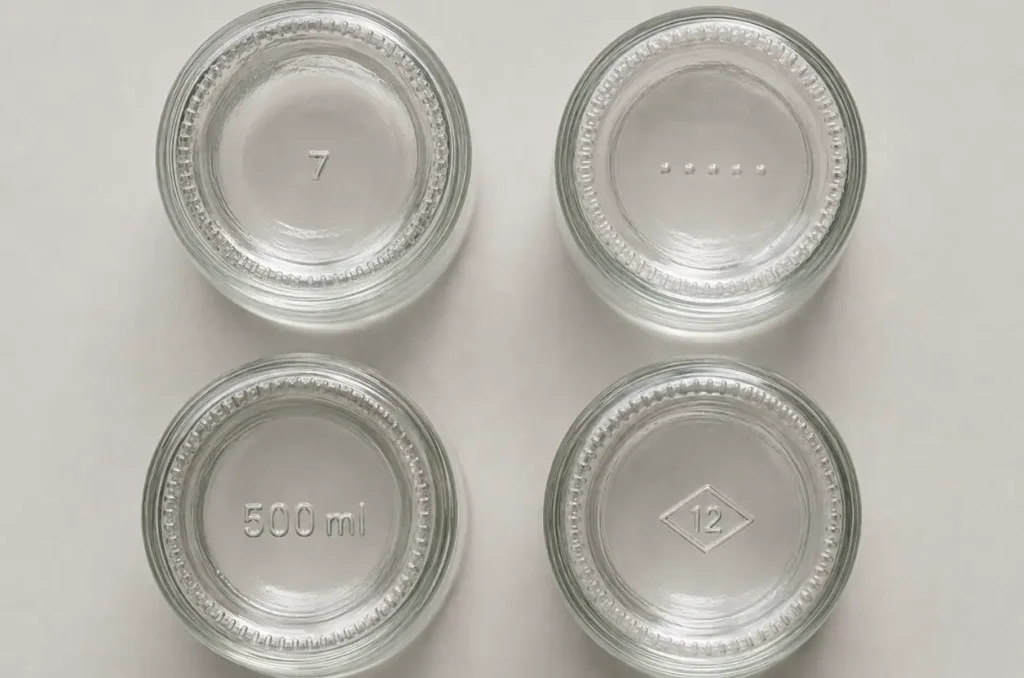
Не существует универсального способа расшифровки всех этикеток на бутылках. Одиночная цифра “7” на одной бутылке может означать номер полости, а на другой — быть частью даты изготовления. Её значение зависит от расположенного рядом логотипа, букв, единиц измерения, символов, положения на этикетке и системы кодирования, используемой данным производителем.
Что означают цифры на дне стеклянных бутылок?
Большинство маркировок на дне бутылок можно разделить на несколько практических групп. Некоторые из них помогают стекольному заводу отслеживать производство. Другие указывают объём или позволяют определить материал, из которого изготовлена тара. Маркировки на старых бутылках также могут помочь коллекционерам определить, когда и где была изготовлена та или иная бутылка.
| Маркировка на бутылке | Общее значение | Можно ли читать эту книгу отдельно? |
|---|---|---|
| Одна или две выделенные цифры | Номер формы или полости | Обычно нет |
| Рельефные точки в области пятки | Машиночитаемый код полости | Нет |
| Логотип или инициалы | Производитель стекла | Иногда |
| Цифры вокруг клейма изготовителя | Завод, дата, форма или код продукта | Только с системой производителя |
| Число, за которым следует «мл», «кл» или «мм» | Информация о вместимости или уровне наполнения | Обычно |
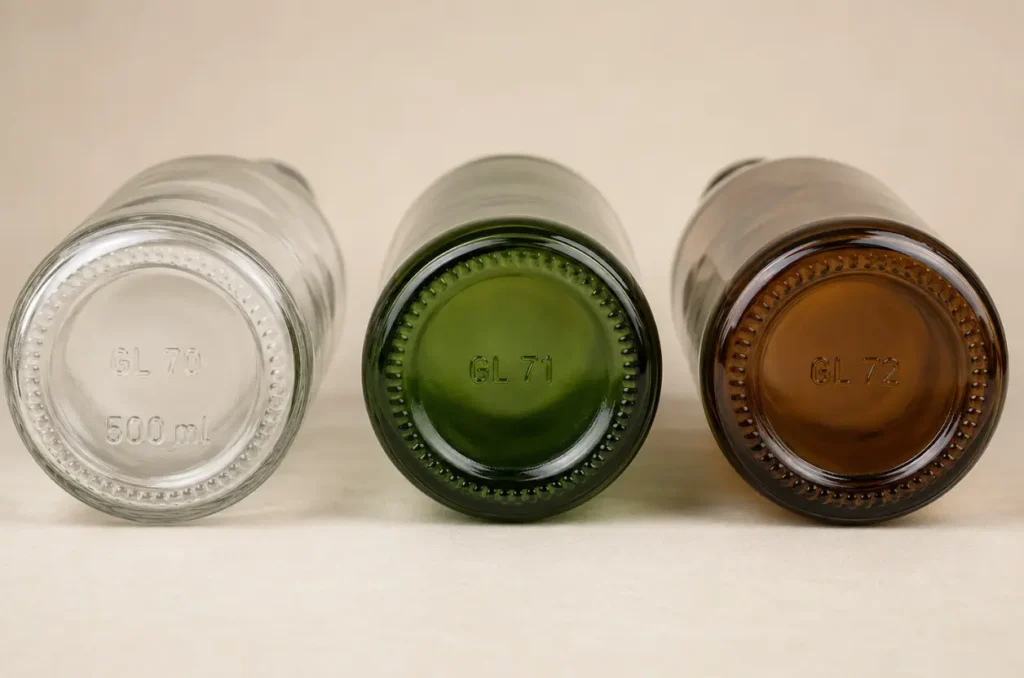
| GL 70, GL 71 или GL 72 | Категория материала и цвета стекла | Да |
| Штрих-код или лазерный код | Отслеживание даты розлива, партии, линии или продукта | Только на основании документов, предоставленных заполнителем |
Композиция имеет такое же значение, как и символы. Две одинаковые цифры, расположенные по разные стороны логотипа, могут иметь разное значение. Цифру, за которой следует обозначение “мл”, гораздо проще интерпретировать, чем ту же цифру, стоящую отдельно.
Как пошагово расшифровывать отметки?
1. Проверьте, является ли маркировка литой или напечатанной
Отпечаток от формы представляет собой выпуклость или углубление, являющееся частью стекла. Он образуется при контакте раскаленного стекла с формой. Как правило, такие отпечатки содержат информацию о производителе тары, форме, полости, объёме или материале.
Позже наносится код, напечатанный струйным или лазерным принтером, который может указывать партию розлива, линию, время производства или срок годности. Не следует автоматически использовать его для указания даты изготовления самого стеклянного изделия.
2. Найдите логотип, буквы и единицы измерения
Прежде чем пытаться расшифровать цифры, обратите внимание на логотип или инициалы производителя. Также запишите все единицы измерения, такие как мл, кл или мм, а также символы, например перевернутую букву эпсилон. Эти детали могут помочь превратить неопределённое число в обозначение ёмкости или производственную маркировку.
Используйте боковое освещение и поворачивайте бутылку, пока символы не станут стоять вертикально. Изогнутое стекло и точечная текстура могут привести к тому, что цифра 3 будет выглядеть как 8, а логотип — как цифра.
3. Зафиксируйте положение каждой отметки
Запишите, что находится над, под, слева и справа от логотипа. Не объединяйте символы в одно длинное число. Расположение символов может определять, обозначает ли цифра завод, год или полость.
4. Сверьте полный текст с достоверным источником
Для современной бутылки воспользуйтесь техническим чертежом или обратитесь к производителю стекла. Для исторической бутылки сравните полный логотип и компоновку с изображением из специализированного справочника. Общество исторической археологии поясняет, что а Клеймо изготовителя может помочь определить происхождение и возраст, но только в том случае, если известен срок эксплуатации.
Обычно ли номера форм представляют собой однозначные или двузначные числа?
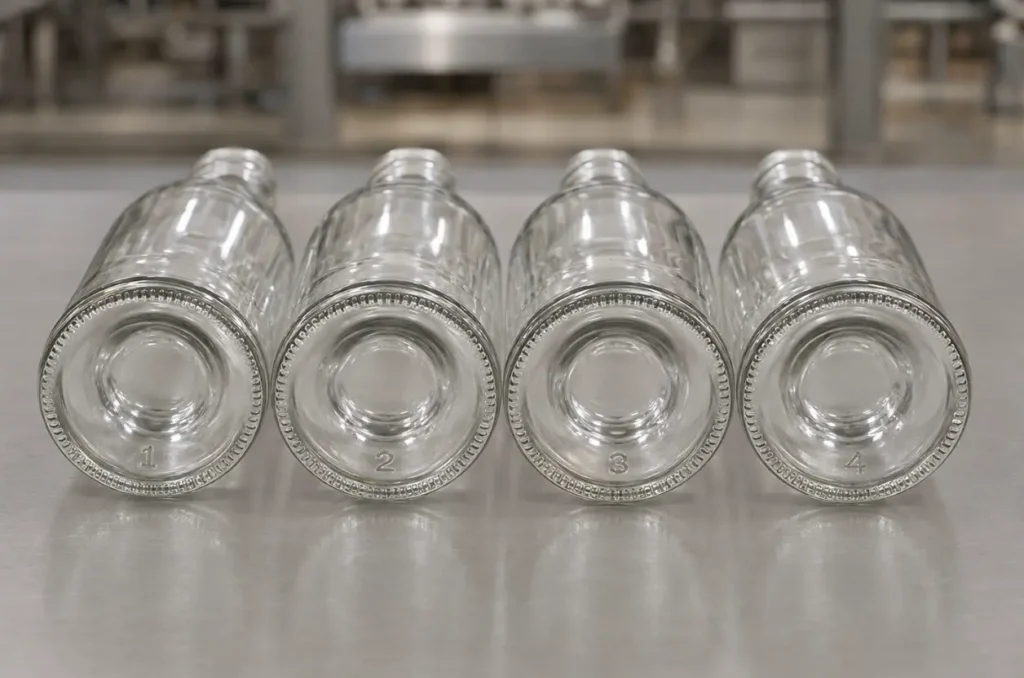
Часто бывает так. Современные машины для формовки бутылок используют одновременно несколько секций и полостей. Каждая полость может наносить на бутылку свой номер или код. Если в ходе контроля обнаруживается повторяющийся дефект, завод может установить связь между бракованными бутылками и формой, на которой они были изготовлены.
Код может иметь вид рельефного числа, комбинации букв и цифр или ряда мелких точек. В европейском патенте, описывающем проверку тары, указано, что рельефные точки в нижней части бутылки позволяют определить участок формовочной машины и его конкретные полая часть формы.
Поэтому две бутылки одинакового дизайна могут иметь разные мелкие номера. Возможно, они просто были изготовлены в разных гнездах на одной и той же производственной линии.
Указывает ли цифра внизу на дату выпуска бутылки или завод-изготовитель?
Это возможно, но только с учетом конкретных обстоятельств. Некоторые производители объединяют логотип с кодами завода и даты. Другие используют отдельные внутренние системы, со временем меняют формат или вообще не указывают разборчивую дату на основании.
Хорошо задокументированный исторический пример показывает, почему местоположение имеет значение. Общество исторической археологии идентифицирует пивную бутылку компании “Оуэнс-Иллинойс” с заводским кодом “20” слева от клейма производителя и датой “1” справа. Другие свидетельства связывают эту бутылку с заводом в Окленде в 1941 году. Сама по себе цифра «1» без логотипа и расположения не подтверждала бы год выпуска.
Никогда не следует предполагать, что двузначное число, например “74”, обязательно означает 1974 год. Это может быть код формы, каталога, завода, мощности или конструкции. Сначала определите производителя, а затем выясните, какая система кодирования использовалась в вероятный период производства.
Что означают показатели пропускной способности и обратное «эпсилон»?
Указания объёма легче читать, если рядом с цифрой указана единица измерения. На бутылке может быть указана её номинальная ёмкость в миллилитрах, сантилитрах или литрах. Другая цифра может обозначать объём до краёв или расстояние между краем и рекомендуемым уровнем наполнения.
В соответствии с правилами ЕС по калибровке бутылок-контейнеров на бутылках, соответствующих этим требованиям, наносится символ «эпсилон» в перевернутом виде. Эти же правила требуют указания номинальной вместимости и идентификационного знака производителя. На дне или по краю дна также может быть указана максимальная вместимость в сантилитрах или расстояние до уровня наполнения в миллиметрах. Официальный Директива ЕС о мерных емкостях определяет эти обозначения.
Например, обозначение “75 cl” может указывать номинальную вместимость, тогда как отдельное число, за которым следует “мм”, может обозначать расчетное расстояние от края до уровня наполнения. Само по себе число не следует рассматривать как вместимость, если его единица измерения, символ, рисунок или информация о производителе не подтверждают такое толкование.
Перевёрнутую букву “эпсилон” на стекле не следует путать с символом «℮», напечатанным рядом с указанным количеством. Перевёрнутая буква «эпсилон» относится к бутылке-мерной ёмкости. Данная “Символ ”℮» представляет собой декларацию упаковщика в рамках системы средневесового учета.
Если базовая отметка указывает на максимальный внутренний объём, также важно проводить различие между обычным заявленным объёмом наполнения и полная вместимость или предельная вместимость.
Что означают аббревиатуры GL 70, GL 71 и GL 72?
Это коды идентификации упаковочных материалов, а не годы. Система, установленная Решением Комиссии ЕС № 97/129/EC, предусматривает присвоение:
- GL 70 — бесцветное стекло
- GL 71 — зелёное стекло
- GL 72 — коричневое стекло
Этот официальное решение ЕС описывает эту систему и указывает, что её использование является добровольным. Поэтому не на каждой прозрачной, зелёной или коричневой бутылке будет указан один из этих кодов.
Можно ли по отметкам на дне определить, старая ли бутылка и представляет ли она ценность?
Клейма на дне могут служить подсказкой, но сами по себе не позволяют определить возраст или стоимость изделия. Для получения достоверной оценки необходимо учитывать клеймо производителя в совокупности с формой бутылки, типом укупорки, тиснением, цветом стекла, способом изготовления и швы стеклянных бутылок.
Стоимость зависит не только от возраста. Важную роль играют такие факторы, как редкость, состояние, цвет, историческая значимость, спрос, наличие оригинальных этикеток, тиснение, а также то, подвергалась ли бутылка реставрации. Обычная старая бутылка может иметь незначительную рыночную стоимость, в то время как более редкий экземпляр того же периода может заинтересовать коллекционеров.
Часто задаваемые вопросы
Что означают цифры на стеклянных бутылках?
Они могут указывать форму литья, производителя, завод, дату производства, дизайн бутылки, вместимость, уровень наполнения или материал упаковки. Напечатанные коды могут также относиться к компании, осуществлявшей розлив продукта. Окружающие их логотипы, буквы, единицы измерения и символы помогают определить вероятное значение.
Что означают цифры на дне бутылок?
На современных коммерческих бутылках небольшие отпечатанные номера чаще всего служат для отслеживания производственной цепочки. На мерных бутылках номера с единицами измерения могут обозначать номинальную вместимость, максимальную вместимость или расстояние до уровня наполнения. Единого кода, используемого всеми производителями бутылок, не существует.
Как определить, представляет ли стеклянная бутылка ценность?
Обратите внимание на производителя, возрастную группу, редкость, состояние, цвет, тиснение, форму, оригинальную этикетку и спрос со стороны коллекционеров. Номер на дне бутылки — лишь один из признаков. Он не доказывает, что бутылка старая, редкая или ценная.
Число на дне всегда является кодом даты?
Нет. Короткий номер часто служит идентификатором формы или полости. Дата считается достоверной только в том случае, если задокументированная система кодирования производителя, логотип, расположение символов и другие особенности бутылки подтверждают такую интерпретацию.
Заключение
Цифры на дне стеклянных бутылок служат для обозначения производителя и идентификации изделия, но не являются универсальным кодом. Разграничивайте отпечатанные коды и отформованные маркировки. Затем обратите внимание на логотип, единицы измерения, символы и расположение, прежде чем определять, относится ли цифра к формовочной полости, заводу, дате, объёму или материалу.
В случае современных проектов по производству упаковки наиболее достоверную информацию можно получить из чертежей производителя и производственной документации. Компания Jingbo Group может проанализировать базовые маркировки, необходимые для идентификации бутылок, контроля объёма, отслеживания формы и учета целевого рынка сбыта.