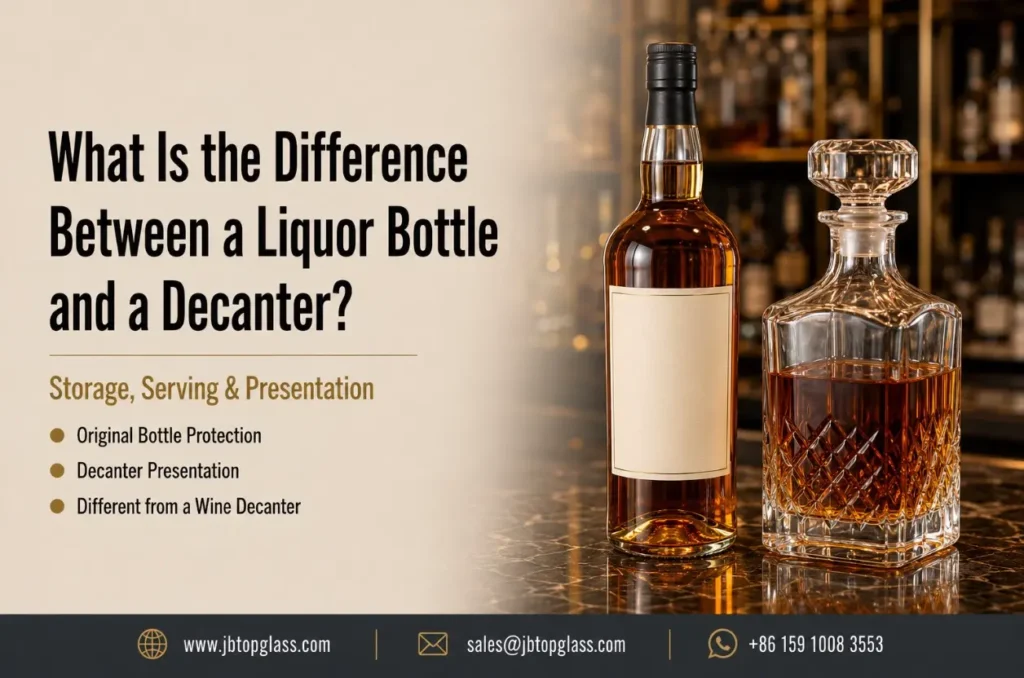
A liquor bottle is designed to package, seal and store spirits. A decanter is mainly used to serve and display spirits after the original bottle has been opened.
The original liquor bottle is normally the better choice for long-term storage. Its closure matches the bottle neck, and its label keeps the product information with the spirit. A decanter gives the drink a more formal presentation, but it does not preserve whiskey better.
This article explains the difference between a liquor bottle and a decanter. It also explains why a liquor decanter is different from a red wine decanter and what brands should consider when choosing decanter-style packaging.
What Is a Liquor Bottle?
A liquor bottle is the original package used for whiskey, vodka, rum, gin, tequila, brandy and other distilled spirits.
The producer fills, closes and labels the bottle before sale. The bottle protects the product during packing, shipping, retail display and storage.
A complete liquor package includes more than the glass bottle. The bottle neck, stopper or cap, sealing material and label all work together.
Liquor bottles come in many shapes. A bottle may have a round, square, flat or faceted body. A premium bottle may also have a thick base, embossed details or a decorative stopper.
The shape does not change the bottle’s main purpose. The container remains a liquor bottle when a producer fills, seals and labels it for sale.
The original bottle also keeps useful information with the spirit. Its label identifies the brand, product type, alcohol content, volume and producer. The owner loses this information when the spirit moves into an unmarked decanter.
What Is a Decanter?
A decanter is a reusable glass container that receives liquor from an opened bottle. The owner normally uses it for pouring, serving and display.
A liquor decanter often has a heavy base, a decorative body and a removable stopper. Many designs use clear glass so that the color of the whiskey, rum or brandy remains visible.
The owner fills the decanter at home, in a bar or in a restaurant. The decanter does not normally carry the original label or a tamper-evident closure.
A decanter can make serving feel more special. However, transferring whiskey into a decanter does not continue the aging process or automatically improve the flavor.
The word “decanter” also appears in commercial bottle catalogs. A supplier may describe a heavy or decorative retail bottle as a “decanter bottle.” This bottle still functions as liquor packaging when a spirits producer fills, seals and labels it for sale.
The difference therefore depends on how the container is used. A retail decanter-style bottle is commercial packaging. A refillable liquor decanter is serving ware.
Is a Liquor Decanter the Same as a Red Wine Decanter?
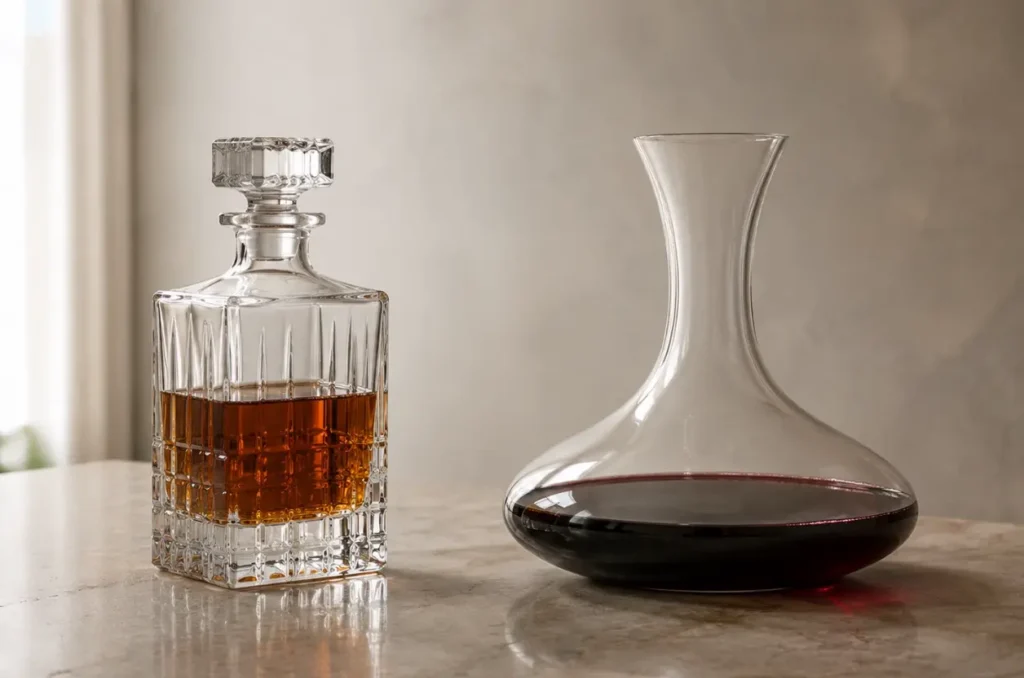
A liquor decanter is not the same as a red wine decanter. The two containers have different shapes and purposes.
A liquor decanter mainly improves presentation and pouring. It normally has a narrow neck and a fitted stopper. The owner closes the stopper after serving to reduce unnecessary air entry and evaporation.
A red wine decanter often has a wide base and an open neck. Its shape increases contact between the wine and the air. The user may also pour an older wine carefully into the decanter while leaving sediment inside the original bottle.
The following table summarizes the three containers:
| 容器 | Main Purpose | Typical Closure | Storage Use |
|---|---|---|---|
| Liquor bottle | Filling, shipping, retail sale and storage | Cork, bar-top stopper or screw cap | Normally the best choice for long-term storage |
| Liquor decanter | Serving and display | Removable glass or decorative stopper | Suitable when the material and stopper are appropriate |
| Red wine decanter | Separating sediment and exposing wine to air | Usually remains open | Intended for serving rather than storage |
A whiskey decanter focuses on display, controlled pouring and closing the container between servings. A wine decanter focuses more on preparing wine before it is served.
Why Use a Decanter Instead of the Original Bottle?
A liquor decanter creates a cleaner and more formal presentation. It can also make pouring whiskey or brandy feel like part of the drinking experience.
A home bar may use matching decanters to avoid displaying bottles with different shapes and labels. A restaurant may use a decanter when it wants a more traditional table presentation.
A decanter also works well when the original bottle is large or difficult to pour. A smaller serving decanter may give the user better control.
However, a decanter offers few practical storage advantages. A poor stopper may allow slow evaporation. An unmarked decanter may also make the spirit difficult to identify later.
The owner should keep the original bottle and label when possible. The owner can return the remaining spirit to the original packaging when the decanter is only needed for an event or tasting.
Is It Better to Keep Whiskey in a Bottle or a Decanter?
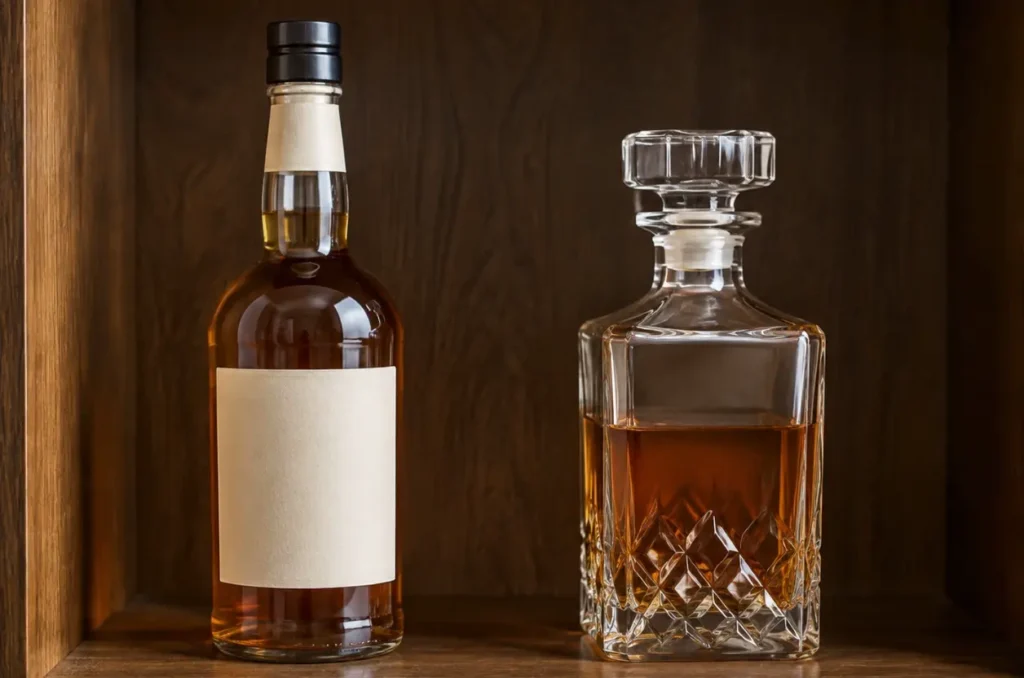
The original bottle is better for long-term whiskey storage.
The producer selected the closure for that bottle neck. The original package also keeps the product name, alcohol content and producer information available.
A home decanter introduces several unknown factors. Its stopper may not seal tightly. Its glass material may not be clear. Its previous contents may also leave odors inside the container.
The owner should keep both bottles and decanters upright. The owner should also protect them from direct sunlight, high temperatures and large temperature changes.
A liquor decanter works best when the manufacturer confirms that the material is lead-free. The stopper should fit securely, and the inside should be clean and dry. The owner should also plan to use the spirit rather than leave it untouched for many years.
How Long Can Whiskey Stay in a Decanter?
No single storage period applies to every whiskey decanter.
The result depends on the stopper, glass material, headspace, temperature and light. A nearly empty decanter contains more air in relation to the remaining whiskey. A loose stopper also allows more aroma and alcohol to escape.
A clean, lead-free decanter with a good stopper may suit regular serving. The original bottle remains the safer choice when the owner plans to store whiskey for a long time.
The owner should not store whiskey in a lead-crystal decanter. Health Canada states that the risk of lead transfer increases when drinks remain in lead crystalware for longer periods. The agency recommends using lead-free containers for drink storage.
An old or second-hand decanter may not show its material clearly. The owner should avoid storing alcohol in it when the material cannot be confirmed.
What Kind of Liquor Can Go in a Decanter?
A clean, lead-free liquor decanter can hold many shelf-stable distilled spirits during serving or regular use.
Whiskey, bourbon, brandy, cognac and aged rum are common choices. Their colors also remain visible through clear glass.
Vodka, gin and tequila can also go into a suitable decanter. However, clear spirits may make dust, water marks or poor cleaning more visible.
The owner should check the product label before transferring any drink. Cream liqueurs, low-alcohol drinks and products that require refrigeration need different storage conditions.
Strongly flavored spirits may leave aromas inside the glass. The owner should avoid changing products frequently when the decanter has a narrow neck that is difficult to clean.
Can a Decanter-Style Bottle Be Used as Commercial Spirits Packaging?
A spirits brand can use a decanter-style glass bottle as its original retail package.
A commercial decanter-style bottle may have a thick base, faceted sides, embossed details or a decorative stopper. These features can give whiskey, cognac, brandy or premium rum a stronger shelf presence.
The bottle still needs to work as packaging. The buyer should confirm the capacity, bottle weight, glass distribution, neck finish and sealing system. The buyer should also check the filling line, label area, decoration process and shipping carton.
The stopper requires special attention. A glass, metal or wooden top creates the visible part of the closure. The cork or synthetic shank underneath creates the seal. Both parts must match the bottle neck.
Jingbo Group supplies standard and custom 玻璃瓶封口件和瓶盖 for different spirits packaging projects.
The target market may also affect the bottle size. Some brands use 700ml bottles, while others use 750ml bottles. Our guide to 700ml liquor bottles in the US explains how brands can evaluate these two sizes.
结论
A liquor bottle protects spirits during sale, transport and long-term storage. A liquor decanter mainly improves serving and presentation. A red wine decanter serves a different purpose because it helps separate sediment or expose wine to air before serving.
京博集团 supplies stock and custom decanter-style liquor bottles. Share your required capacity, bottle style, closure, quantity and target market to receive a suitable packaging proposal.