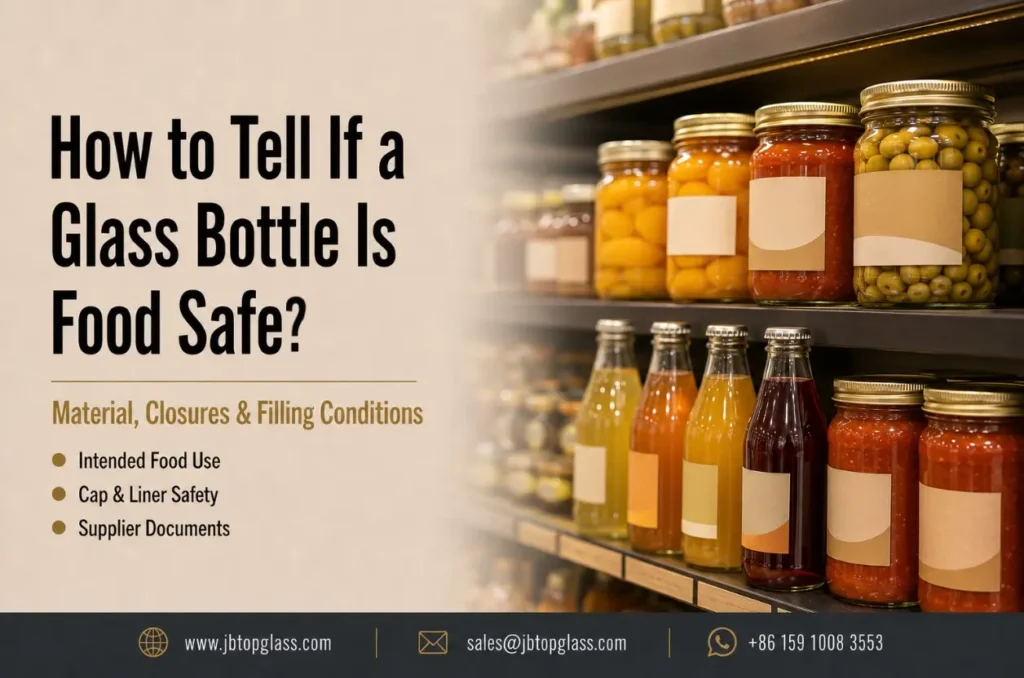
You can’t tell whether a glass bottle is food safe just by looking at it. Clear glass, thick walls and a clean surface don’t prove that a bottle is suitable for food or beverages.
A food safe glass bottle has to match the product and the way it will be filled, stored and used. Buyers also need to check the cap, liner, decoration and supplier documents.
This guide explains what “food safe” really means. It also shows you what to check before placing a commercial order.
What Is a Food Safe Glass Bottle?
A food-safe glass bottle is made for direct contact with food or beverages under its intended conditions of use.
The bottle can’t transfer substances into the product at levels that could harm health. The packaging also shouldn’t change the product’s composition, taste or smell.
The European Commission’s food contact material guidance applies these principles to glass, plastic, metal, paper and other packaging materials.
The intended use makes a difference. A bottle that works for cold-filled water may not work for hot sauce, cooking oil or high-alcohol spirits. Each product places different demands on the bottle and closure.
For this reason, “food grade” doesn’t describe the glass alone. The term also covers whether the complete package suits a specific product and filling process.
Is All Glass Food Safe?
No. Not every glass item is made for food packaging.
Most commercial food and beverage bottles use soda-lime container glass. Manufacturers use this material for water, juice, sauces, oils, beer, wine and spirits.
Other types of glass serve different purposes. Window glass, laboratory glass, decorative glass and lead crystal aren’t all suitable for the same applications. An old decorative bottle may also have an unknown coating, colorant or previous use.
The bottle color doesn’t confirm food safety. Clear, amber and green bottles may all be suitable when they are produced for food packaging. The color mainly affects appearance and light protection.
The bottle weight doesn’t confirm food safety either. A heavier bottle may feel stronger or more premium, but extra glass doesn’t replace a proper packaging review.
A recycling symbol, product photo or general supplier claim isn’t enough for a commercial order. Buyers need information about the exact bottle, closure and intended use.
How Can You Tell If a Glass Bottle Is Food Safe?

Your team needs to review the bottle as part of a complete packaging system.
| What to Check | Why It Matters |
|---|---|
| Intended application | The bottle needs to be made for food or beverage packaging. |
| Glass material | The material needs to suit the intended product. |
| Bottle condition | The bottle needs to be free from cracks, chips, contamination and harmful residues. |
| Closure and liner | The cap, stopper and liner may touch the product or bottle opening. |
| Decoration | The ink, coating or other decoration needs to suit its position and use. |
| Filling conditions | The bottle needs to match the filling temperature, pressure and later processing. |
| Supporting documents | The documents need to cover the target market and actual packaging components. |
The product is the best place to start. Your supplier needs to know what the bottle will contain. Your supplier also needs the filling temperature, closure type, expected shelf life and destination market.
A supplier can’t confirm the right bottle without this information.
Do Caps, Liners and Decoration Affect Food Safety?
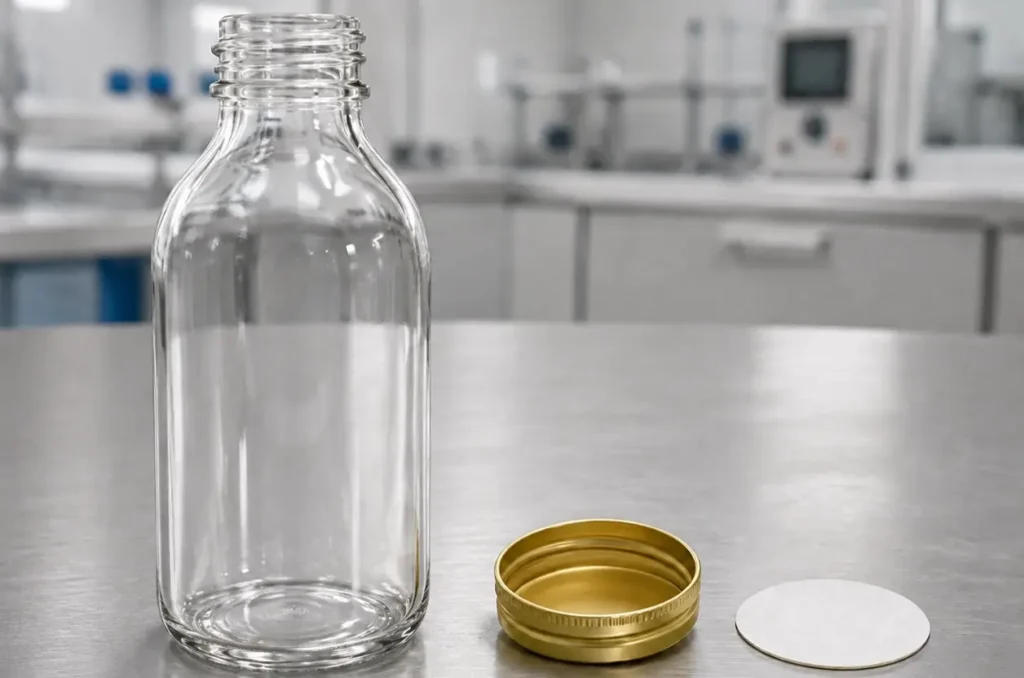
Yes. The bottle isn’t the whole package.
A cap may contain metal, plastic, rubber, cork, coating or sealing material. A liner may come into direct contact with the product. This contact becomes more likely when the bottle lies on its side or moves during transport.
The FDA’s explanation of food contact substances covers packaging components and materials applied to packaging surfaces. The examples include adhesives and colorants.
Your team needs to review the closure and liner separately. A food-safe bottle doesn’t make an unsuitable cap safe.
The position of the decoration also matters. External labels and printing normally stay outside the product-contact area. The decoration shouldn’t extend onto the bottle lip or another area that touches the product or the consumer’s mouth unless the process suits that use.
Brands need to confirm the bottle, closure and decoration as one package. Jingbo Group checks these parts together before preparing samples for a packaging project.
What About BPA and Microplastics?
Is All Glass BPA-Free?
Standard soda-lime container glass isn’t made with BPA. Manufacturers mainly use BPA in certain polycarbonate plastics and epoxy resins.
That doesn’t automatically make the whole package BPA-free. A complete package may include plastic caps, liners, coatings or other resin-based parts.
A brand shouldn’t make a BPA-free claim based only on the glass bottle. The brand also needs to check every food-contact component. The FDA’s BPA information explains how BPA has been used in food-contact applications.
Do Glass Bottles Give Off Microplastics?
The glass itself doesn’t shed microplastics because it isn’t plastic. However, other parts of the package may introduce plastic particles.
A 2025 study reported by ANSES found more microplastic particles in some drinks packaged in glass bottles than in drinks using other packaging materials. The researchers traced many of those particles to paint on the outside of metal caps. The caps had rubbed against each other before use.
The study didn’t identify the glass as the source. Instead, the results pointed to the bottle caps and the way they were handled.
Filling plants need to store and handle caps under controlled conditions. The production team also needs to review its cap-cleaning process when contamination presents a risk.
Does Food Safe Mean Hot-Fill Safe?

No. A bottle can be food safe and still be wrong for a hot-fill line.
Food-contact safety and heat resistance are separate requirements. A hot-fill bottle also has to handle the thermal stress created during filling and cooling.
A bottle may work well with cold-filled juice but break when a hot product enters it. A sudden temperature change during filling, rinsing or cooling can place extra stress on the glass.
Brands need to give the supplier the actual filling temperature and cooling process before ordering. The filling plant also needs to test the bottle, closure and product under real production conditions.
Our guide to hot-fill and cold-fill bottles explains why two bottles that look similar may perform differently on a filling line.
Conclusion
You can’t confirm a food safe glass bottle by its color, weight or appearance. You need to check its intended use, material, closure, decoration, filling conditions and supporting documents.
Shandong Jingbo Group Co., Ltd. supplies glass bottles, jars and matching closures for food and beverage packaging. Send us your product type, capacity, filling temperature, closure, order quantity and destination market, and our team will recommend a suitable packaging solution.