
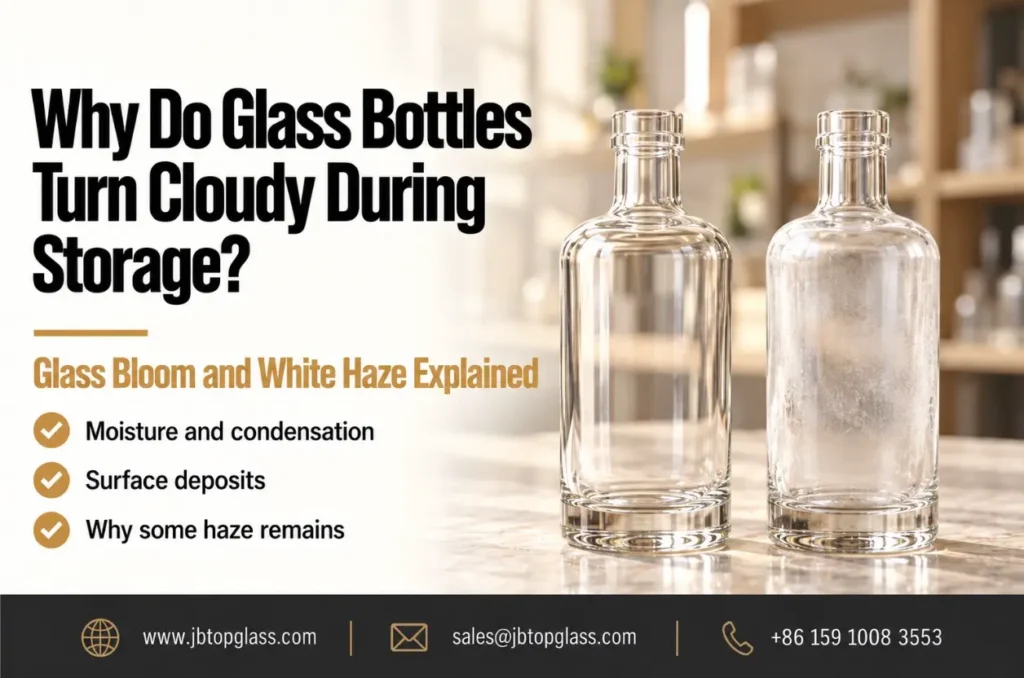
Glass bottles turn cloudy during storage when deposits collect on the surface or the surface itself changes. Moisture is a common cause. It can react with the glass, while water left after rinsing may leave mineral deposits as it dries.
These effects often look similar, but they develop in different ways. That difference explains why some white films wash off and others remain.
Why Do Glass Bottles Turn Cloudy Even When Unused?
An empty bottle is still exposed to moisture in the surrounding air. Its outer surface and inner wall can both undergo changes during storage.
One possible result is glass bloom, also called glass weathering. It appears as a whitish film or haze.
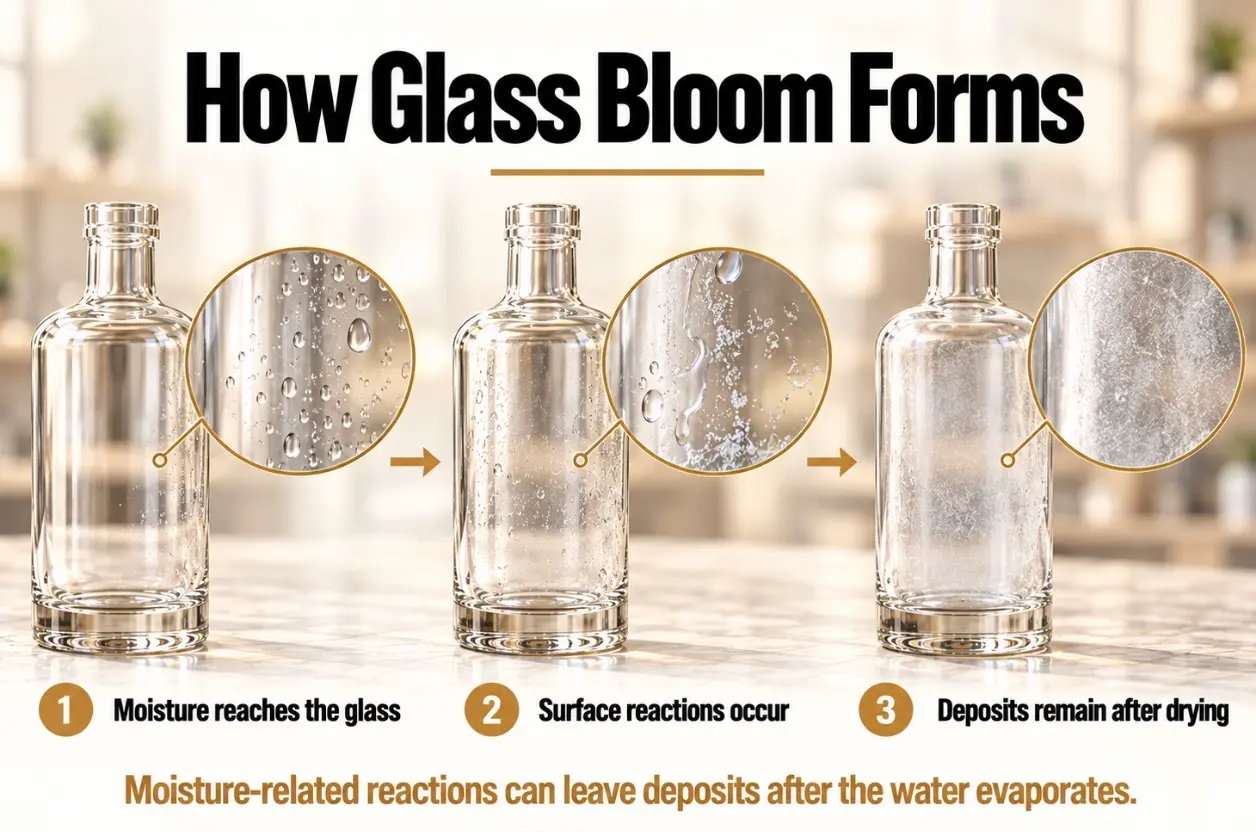
Most glass packaging bottles are made from soda-lime glass. Sodium is part of this glass composition. Under suitable conditions, moisture interacts with the surface and draws out small amounts of sodium and other ions. This process is called leaching.
Moisture Starts the Surface Reaction
Water on the glass acts as the medium for the reaction. The bottle does not need to be filled or exposed to rain. Condensation during storage or transport can supply moisture to the surface.
Dissolved Components Form Deposits
The ions released from the glass interact with substances in the surrounding environment. Carbon dioxide in the air contributes to the formation of carbonate salts, including sodium and calcium carbonates.
These deposits form at the surface. Their appearance does not require the whole bottle wall to change.
Drying Leaves Material Behind
As surface moisture evaporates, dissolved material becomes more concentrated. Deposits remain after the water has gone.
Repeated wetting and drying allow the process to continue. This is why a bottle may look dry when the haze is noticed, even though moisture helped cause it.
Why Do Humidity and Temperature Changes Matter?
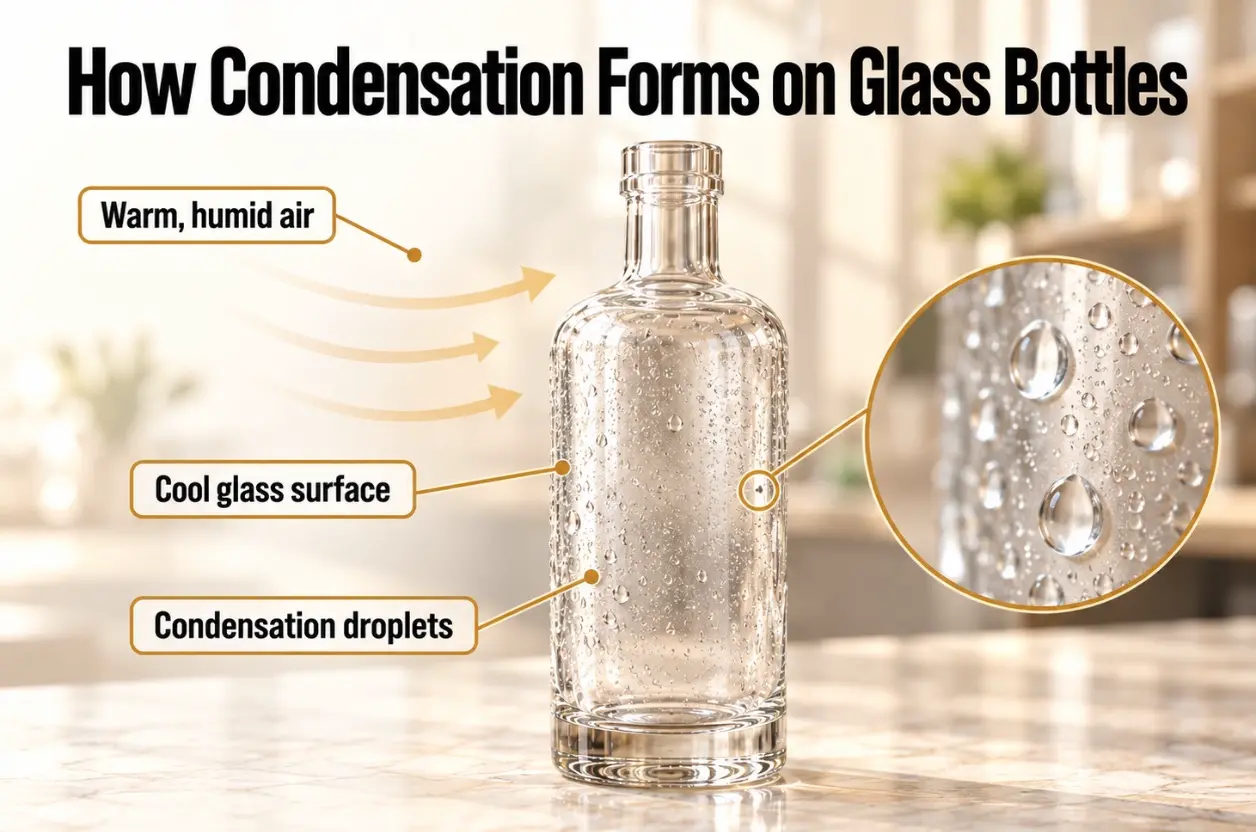
Temperature changes affect whether water remains as vapor in the air or condenses on a surface.
If a bottle is cool enough relative to the surrounding humid air, water can collect on it. This happens when the surface reaches the air’s dew point—the temperature at which condensation begins.
A cold bottle brought into warm, humid air provides a familiar example. The water on its outside comes from the air. The same physical process helps explain moisture exposure during changing storage or transport conditions.
Condensation and glass weathering are related, but they are different processes. Condensation supplies water. Weathering involves reactions between that water, the glass surface and the surrounding environment.
Temporary condensation clears as the water evaporates. A deposit formed during weathering remains after drying. A dry-looking bottle can therefore still show the effects of earlier moisture exposure.
Why Does a Thin Film Make Glass Look White?
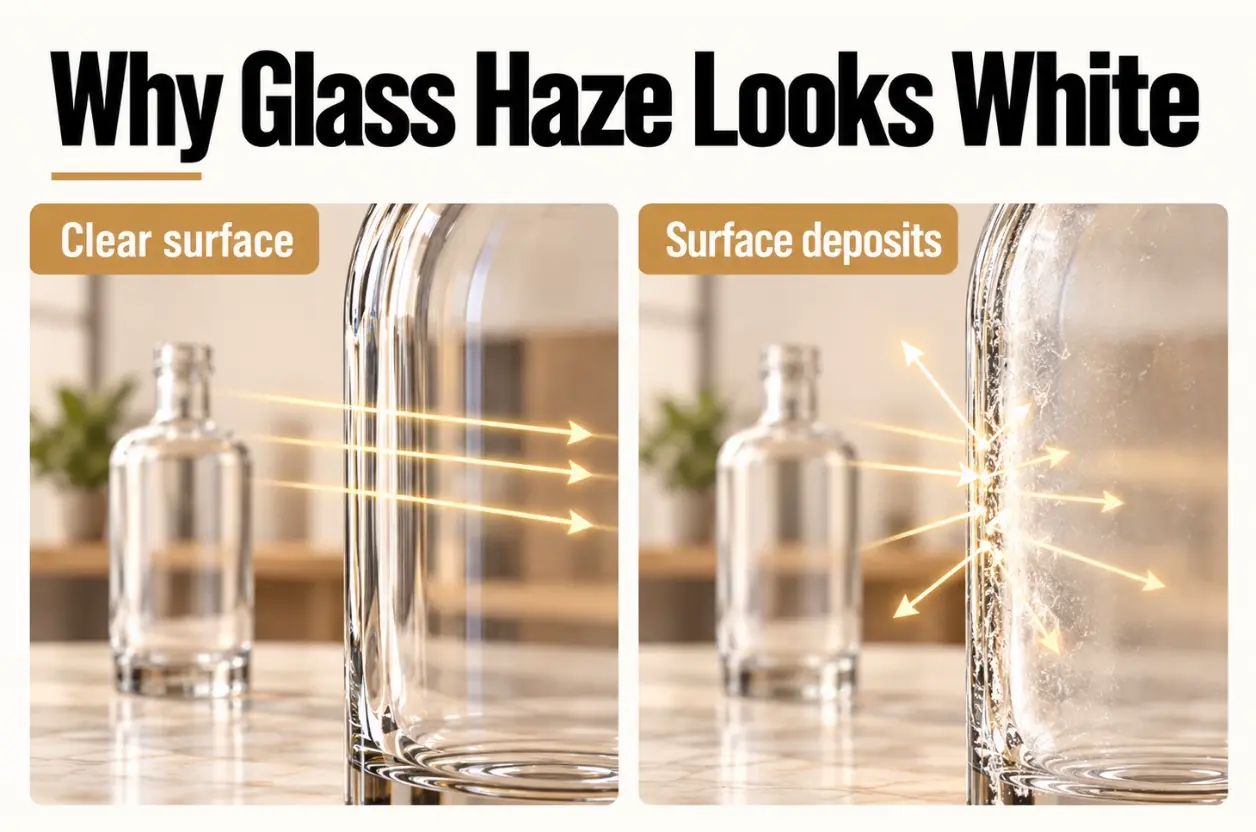
A cloudy appearance is partly an effect of light scattering.
Particles and small surface irregularities redirect light in different directions. This reduces the contrast of objects seen through the glass and gives it a milky or hazy appearance.
A layer does not need to be thick to change how the bottle looks. Small deposits spread across the surface can affect clarity, while scratches create another source of scattering.
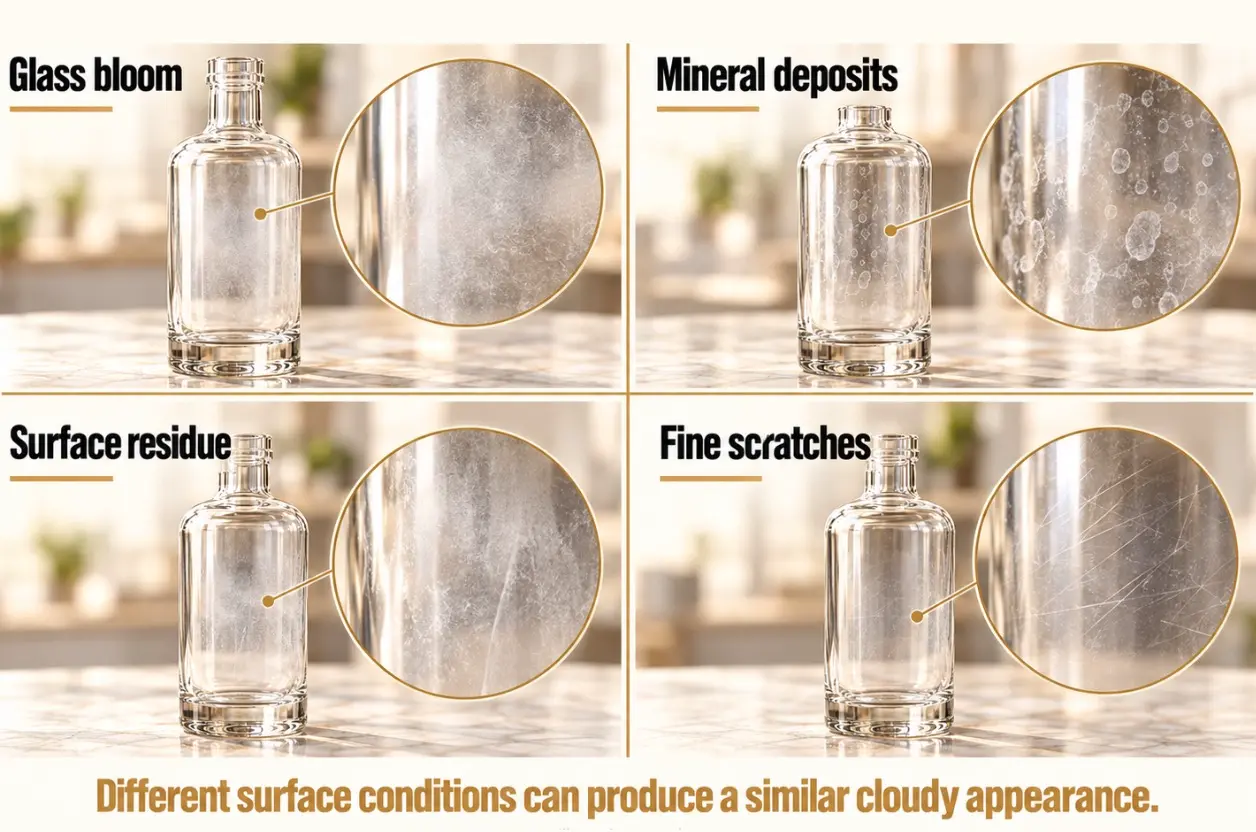
This explains why different causes produce a similar appearance. A mineral deposit, a weathered surface and fine scratches all change how light passes through or reflects from the glass.
Is Every White Film a Sign of Glass Weathering?
Several other conditions leave glass looking cloudy. The source of the material helps distinguish them.
Minerals Left by Rinse Water
Water used for rinsing may contain dissolved minerals, including calcium compounds. As the water dries, these remain on the glass.
The result may appear as white spots, rings, streaks or a broader film. In this case, the deposit comes from the water. With glass weathering, some of the deposit-forming components come from the glass itself.
The two processes can look similar, which is why white marks alone do not establish their origin.
Dust and Cleaning Residue
Dust and residue from handling or cleaning also dull the surface. These materials sit on the glass without necessarily indicating a reaction within the surface.
A stored bottle may therefore look cloudy because something has collected on it. The appearance does not automatically identify that material as glass bloom.
Fine Scratches and Chemical Attack
Fine scratches change the surface texture. Chemical attack also alters the surface rather than simply leaving loose material on top.
Cleaning may remove deposits without restoring the original clarity of a damaged surface. This distinction between removable deposits and lasting surface changes explains why stronger cleaning does not always make glass clear again.
Why Do Some Bottles Stay Clear Longer?
Weathering depends on both the glass and its environment. Two bottles stored for the same period do not necessarily experience the same conditions.
Glass composition affects resistance to moisture-related reactions. Humidity and temperature affect the exposure. Differences in storage conditions can therefore produce different results, even when the bottles initially look alike.
Even within one shipment, cartons and pallet positions may experience different moisture and temperature conditions. Similar-looking bottles can therefore develop haze at different times.
Storage time is one factor among several. There is no single number of weeks or months after which all glass bottles become cloudy.
How Can You Reduce Cloudiness During Storage?
Dry, well-ventilated storage with reasonably stable temperatures helps limit moisture exposure. Cartons and dividers should also remain dry.
For bottles that already look cloudy, treatment depends on the cause. A cleaning method suited to the glass and any decoration may remove surface deposits. Haze caused by scratches or lasting surface changes may remain.
If cleaning does not restore clarity, the supplier or a glass laboratory should identify the cause before further treatment.
FAQ
Can White Haze Form Inside an Empty Bottle?
Yes. Moisture-related reactions also occur on the inner wall. An empty bottle does not need to contain a product for its surface to be exposed to humid air.
Does a Dry Bottle Mean Moisture Was Not the Cause?
No. Water may have evaporated before the haze became noticeable. Deposits left by earlier moisture exposure can remain on a dry surface.
Can the Haze Return After Cleaning?
It may return if the conditions that caused it continue. Removing deposits does not prevent later moisture exposure or new deposits from forming.
Conclusion
Glass bottles turn cloudy for several reasons. Moisture-related weathering, minerals from rinse water, surface residue and fine scratches can produce a similar appearance. Understanding these differences explains why cleaning works in some cases and leaves haze in others.
For glass bottle and export packing advice, contact Jingbo Group.