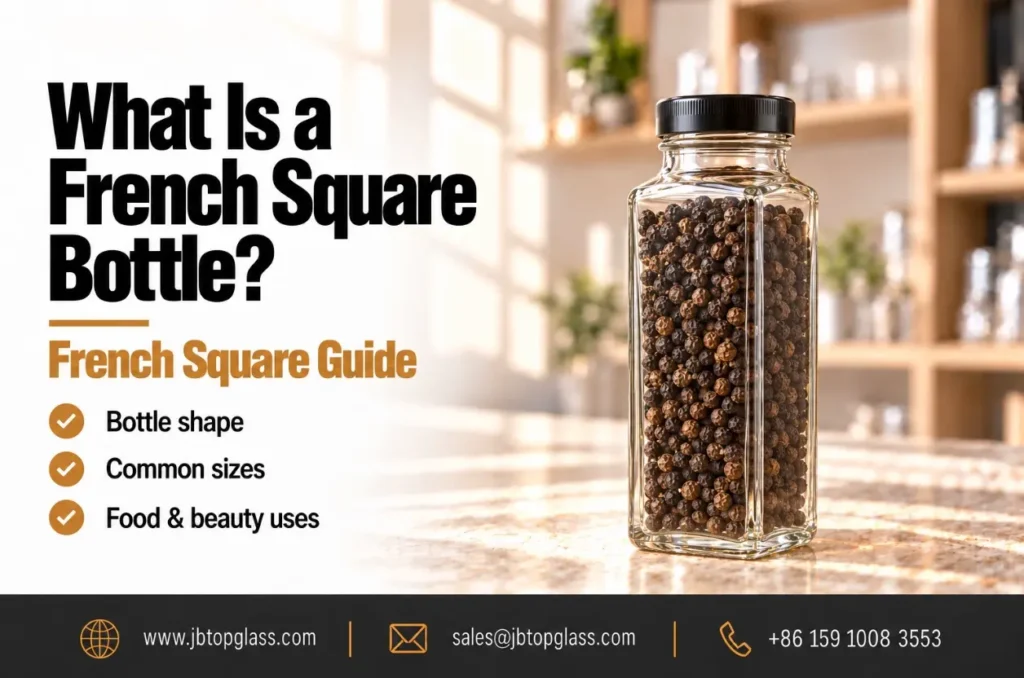
French square bottle has a tall, four-sided body, flat panels, beveled corners and a relatively wide mouth. Glass versions are used for spices, seasonings, sauces and personal care products. The flat faces provide space for labels, while the opening allows access to the contents.
What Does a French Square Bottle Look Like?
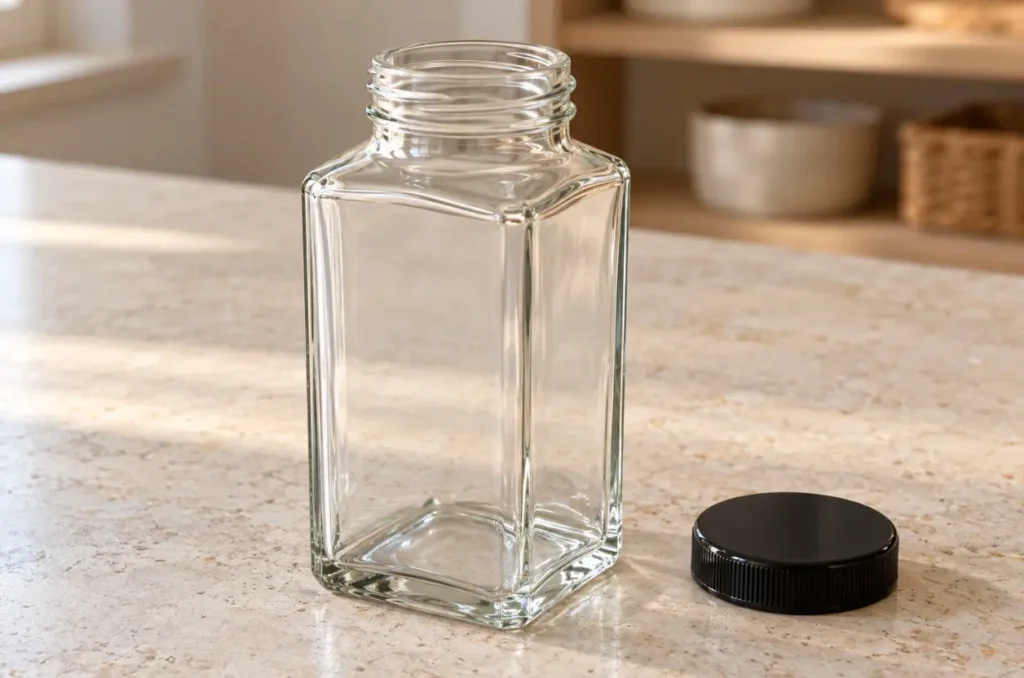
A French square bottle is easiest to recognize from a slight angle. You can see a flat front panel, another flat side panel and the narrow edge joining them.
The square cross-section also separates it from a rectangular bottle. On a typical square design, the main faces have similar widths. A rectangular body has two broader faces and two narrower ones. The corner details can give either shape a softer outline.
The corners are usually beveled or softened. A bevel is a small angled surface between two larger faces. It gives the bottle a square outline without making each corner a sharp right-angle edge.
Above the straight body, the shoulders slope inward toward a short, round neck. The opening and lid remain round even though the body below them is square.
The relatively broad mouth is another useful clue. Compared with a typical narrow-neck liquid bottle, it provides more room for dry ingredients, food pieces or a small utensil to pass through. The actual opening still varies with bottle size and design.
Clear glass is common, so the contents remain visible through the flat panels. Whole peppercorns, dried herbs and colored seasoning blends can all become part of the package’s appearance.
The shape has roots in nineteenth-century prescription packaging. Today, French square bottles are used across food, personal care, laboratory and pharmaceutical packaging. Their purpose has expanded well beyond medicine.
How Is It Different from Other Glass Bottles?
French Square vs Round Bottles
The body is the clearest difference. A round bottle has a continuous curved surface. A French square bottle has four main flat faces joined by narrow corner sections.
That gives the package a defined front, back and two sides. A label on a round bottle follows a curved surface. On a French square, it can sit within one flat face or extend across several panels.
The opening needs a separate comparison. Both round and square bottles can have broad or narrow necks, so the body shape alone does not establish how easily a product pours or scoops out.
For a food brand, the useful comparison is between complete bottles: the body appearance, the mouth and the way the customer removes the product.
French Square vs Marasca Bottles
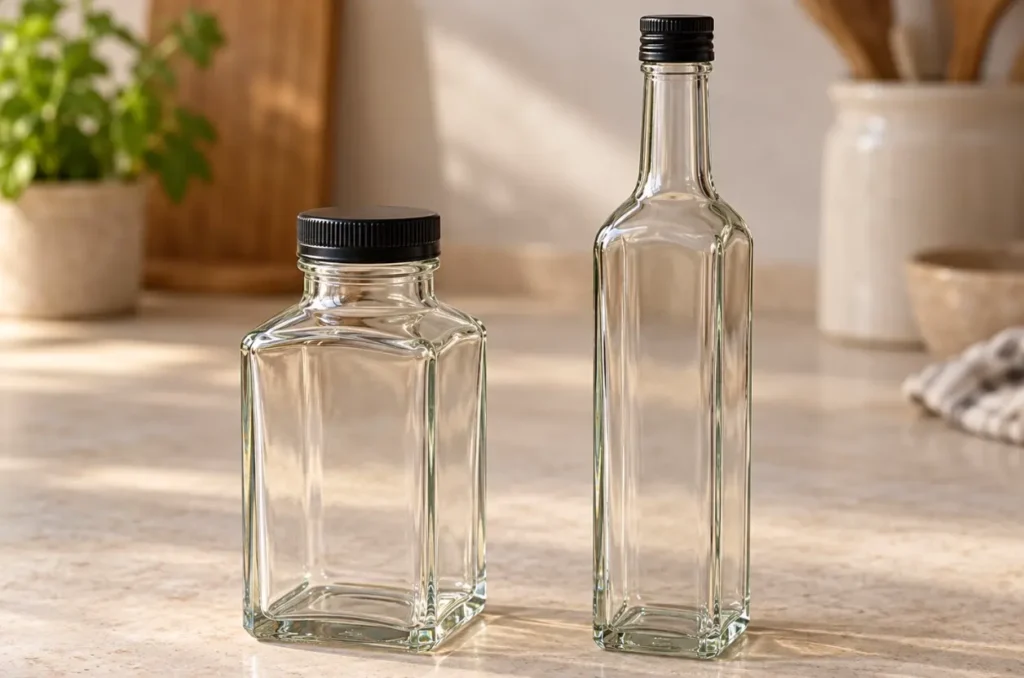
A Marasca bottle also has a square or rectangular body, but a typical oil-bottle version narrows into a longer, slimmer neck.
A French square bottle usually has a shorter neck and a broader opening. This difference helps explain their familiar uses. Marasca bottles are strongly associated with olive oil and vinegar, while French squares are also used for dry seasonings and products that need easier access through the mouth.
A square body can suit either style. The neck and shoulder profile help identify which one you are looking at.
For example, a bottle intended for a controlled drizzle of oil has a different job from a container that customers open to spoon out a seasoning blend. The most useful shape follows that serving method.
What Are French Square Glass Bottles Used For?
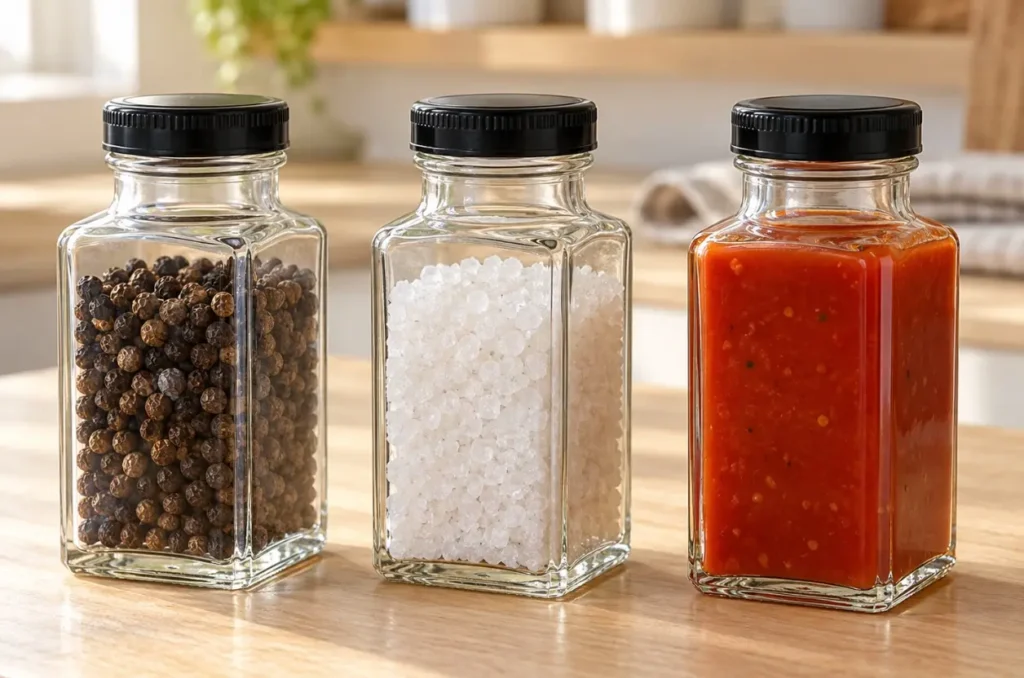
Spices, Herbs and Seasoning Blends
French square glass bottles are used for ground spices, whole peppercorns, dried herbs, seeds and seasoning blends.
The flat front provides a clear place for the product name. Other panels can carry ingredients, preparation suggestions or additional brand information. A brand can keep a similar layout across several flavors while showing the ingredients through the exposed glass.
The opening affects how customers use each seasoning. Fine powder may be sprinkled through a suitable dispensing insert. Larger flakes or dried leaves need more room to pass through. A blend used by the spoonful needs an opening that accommodates the intended spoon.
The inside shoulder also matters for access. A spoon that fits through the mouth may still have limited movement once it reaches the wider body.
This is why a bottle that works well for peppercorns may create a different experience with a firm or clumped ingredient. The product’s texture matters alongside the attractive square shape.
Salts and Dry Specialty Foods
Coarse salts, flavored salts and dry food blends are other uses for this style.
Clear glass shows differences in grain size, color and texture. The flat panels also give a specialty food brand room to explain how a blend is used without covering every side of the bottle.
The amount of space needed varies with the contents. Dense grains and loose dried leaves occupy a container differently, even when their net weights are the same.
For a range that includes several ingredients, matching the bottle shape can create a consistent appearance. Matching every product to the same capacity may be less practical.
A small spice blend and a bulky herb mix can therefore use related French square designs in different sizes. The shared panels and corner profile help the packages look like part of one range.
Sauces, Marinades and Dressings
French square bottles can also hold sauces, marinades, dressings and syrups.
A broader opening can be useful when the product contains herbs, seeds or small pieces. Those ingredients need enough clearance to move through the mouth along with the liquid.
The preferred pour matters too. A customer shaking a few drops onto food expects a different result from someone pouring a marinade over a large dish. A wide opening can release a thin liquid quickly, so it should suit the serving amount.
Thick products bring another consideration. A sauce may pour well when the bottle is full but become harder to remove near the bottom or around the shoulders.
A filled sample lets you try the package as the customer would use it. You can compare the pour, reach the remaining contents and see whether the opening suits the food.
Bath Salts and Personal Care Products
French square glass bottles are also used for bath salts and some scrubs or other personal care products.
The broad opening can suit a product that is poured or removed with a small scoop. The clear panels show the texture and color, while the square body provides separate areas for branding and product information.
Texture remains important. Loose bath salts are easier to pour from a bottle than a thick scrub that customers need to scoop out. A short, wide jar may offer more comfortable access for a firm product.
The food-packaging and personal-care uses share the same basic shape, but each finished package needs to suit its own contents and way of use.
What Sizes Do French Square Bottles Come In?
French square glass bottles are made in several capacities, including 1, 2, 4, 8, 16 and 32 fl oz. The name does not identify one fixed height, body width or opening.
Understanding the Capacity
The figures here use U.S. fluid ounces, which measure volume. One U.S. fluid ounce is approximately 29.57 ml.
For comparison:
- A 2 fl oz capacity is approximately 59 ml.
- A 4 fl oz capacity is approximately 118 ml.
- An 8 fl oz capacity is approximately 237 ml.
- A 16 fl oz capacity is approximately 473 ml.
- A 32 fl oz capacity is approximately 946 ml.
These conversions explain the units. The selected bottle’s capacity details establish the intended fill and the space available above it.
Bottle Volume and Product Weight
A 4 fl oz bottle does not automatically hold four ounces of spice by weight.
Whole peppercorns leave spaces between individual pieces. Fine salt packs more closely, while dried leaves can occupy a large volume for relatively little weight.
The amount sold in each pack therefore needs to be considered separately from the bottle’s stated volume. The right spice jar size depends on the ingredient, target net weight and desired fill level.
Outside dimensions matter as well. Two bottles can hold the same volume while differing in height, panel width and neck size. Those differences affect the label layout and how the finished pack fits a shelf or box.
Why Do Brands Choose the French Square Shape?
Four Flat Panels for Labels
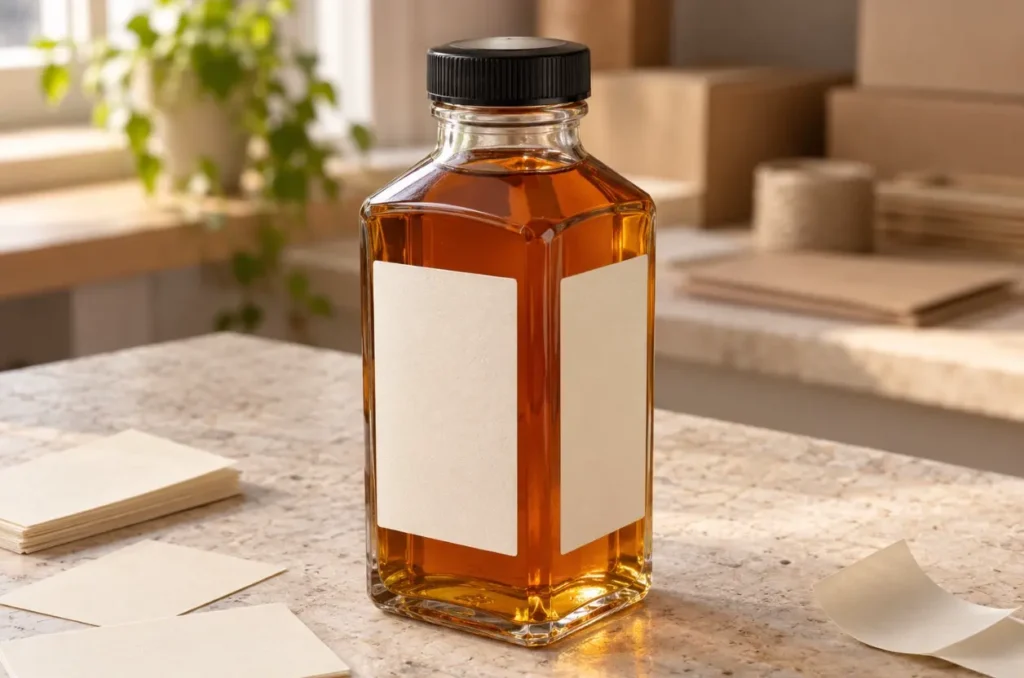
The four faces give a designer distinct areas to work with. The front can carry the product name, the back can hold supporting information and the side panels can provide additional space.
The usable area is the flat section of each face. The corner edges, shoulder and lower body curve sit outside that straightforward label space.
A rectangular label placed within one panel can leave the corners and neighboring faces exposed. This helps preserve the bottle’s outline and lets some of the contents remain visible.
A wider label can extend across more than one face, but it must follow the changes in direction at the corners. Artwork needs to account for where each fold or curve appears.
The front view is especially useful when reviewing the design. Important words should remain readable on the face customers see first.
A Defined Shape on the Shelf
A French square bottle presents a broad, flat face when its front panel is aligned toward the customer.
For a seasoning range, consistent panel placement can help several flavors look coordinated. The ingredient colors and individual labels can then distinguish one product from another.
Clear glass also provides a choice about how much food to show. A small front label leaves more of the contents exposed. Larger labels provide more room for product information.
The package’s final appearance comes from these details together: the body proportions, label coverage, visible food and lid. The square shape provides the starting point.
A Square Footprint for Grouped Packs
The flat sides can sit close together when bottles are arranged in straight rows. This can be useful for retail assortments, gift boxes and rectangular packing layouts.
The result depends on the actual outside dimensions. A broad square bottle may need more width than a slender round bottle of similar capacity.
The lid and shoulders also contribute to the finished package size. A box designed around the glass body alone may leave too little room for the assembled bottle.
For a multi-bottle set, the panel width determines the space needed for each position. A small change in that width can affect the overall box or divider layout.
FAQ
Is Every Square Glass Bottle a French Square Bottle?
No. Square bottles include many different profiles. A French square is usually recognized by its taller body, four flat panels, beveled or softened corners and relatively broad mouth.
A square base alone does not identify the full style.
Is a French Square Bottle the Same as a Square Spice Jar?
Some French square containers are used as spice jars and may be described that way. “Spice jar” identifies the use, while “French square” identifies the general shape.
Other square spice jars can have shorter bodies or different shoulders.
Does a French Square Bottle Need a Square Lid?
No. The body is square, but the neck and opening are round. The lid matches the neck finish rather than the body shape.
Two similar-looking French square bottles can still need different lids if their neck finishes differ.
Are French Square Bottles Always Made from Glass?
No. French square bottles are also made from plastic. The name identifies the bottle style, so the material is a separate detail.
Conclusion
A French square bottle combines a tall, four-sided body with flat panels, softened corners and a relatively broad opening. It is used for spices, salts, sauces and other products that suit this combination of shape and access.
The useful choice is one that presents the product clearly and remains comfortable to pour from or reach into.
You can contact Jingbo Group with your product, target fill quantity and a reference image to discuss a suitable glass bottle design.