
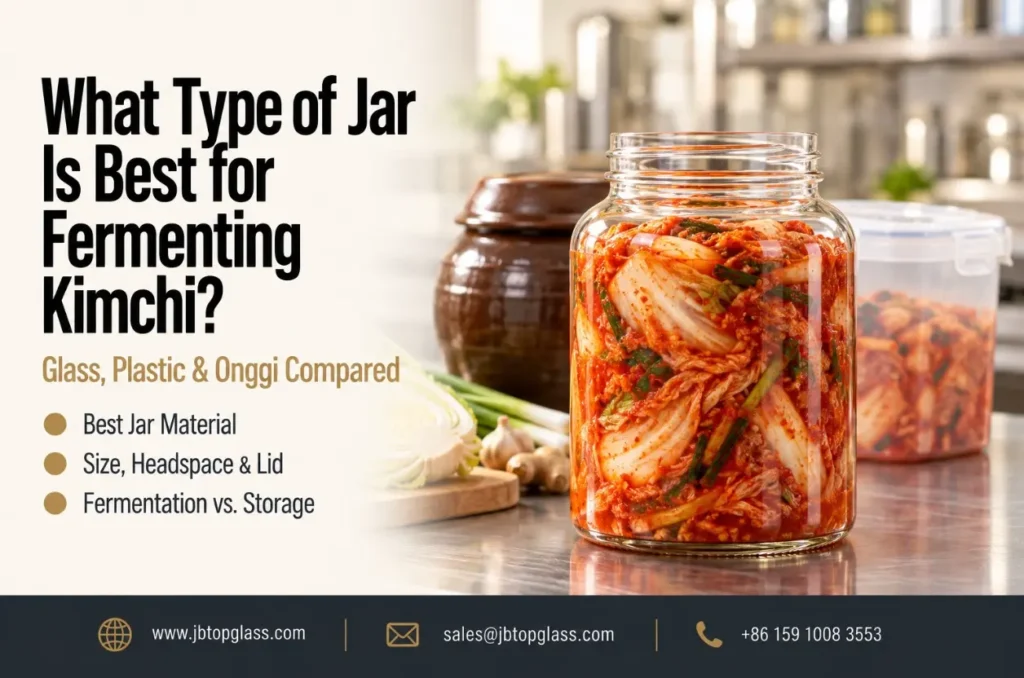
For most people, a food-safe, wide-mouth glass jar is the best jar for fermenting kimchi.
Glass is easy to clean. It does not hold strong smells or red stains as easily as plastic. The clear wall also lets you see the kimchi, the liquid level and the bubbles that appear during fermentation.
The material is not the only thing that matters, though. A useful kimchi jar also needs a wide opening, enough room for the food to expand and a lid that suits the way you plan to ferment it.
Traditional onggi and food-grade plastic containers can work too. Onggi is closely linked with traditional Korean fermentation, while plastic is light and hard to break. Each choice has a place.
This guide covers those choices in the order they matter: material, shape, size, headspace, lid and storage.
What Does a Good Kimchi Jar Need to Do?
Before comparing materials, ask what the container needs to do.
It must be safe for food and easy to clean. Its opening needs to be wide enough for cabbage, and its body needs room for the bubbles and gas produced during fermentation.
The jar also needs to fit your routine. One large jar may suit a family batch, while several smaller jars may be easier to refrigerate and open one at a time.
These needs—food safety, easy handling, room for gas and practical storage—make the different materials easier to judge.
Glass, Plastic or Onggi: Which Material Is Best?
Glass, plastic and onggi can all be used for kimchi. The best choice depends on what you value most.
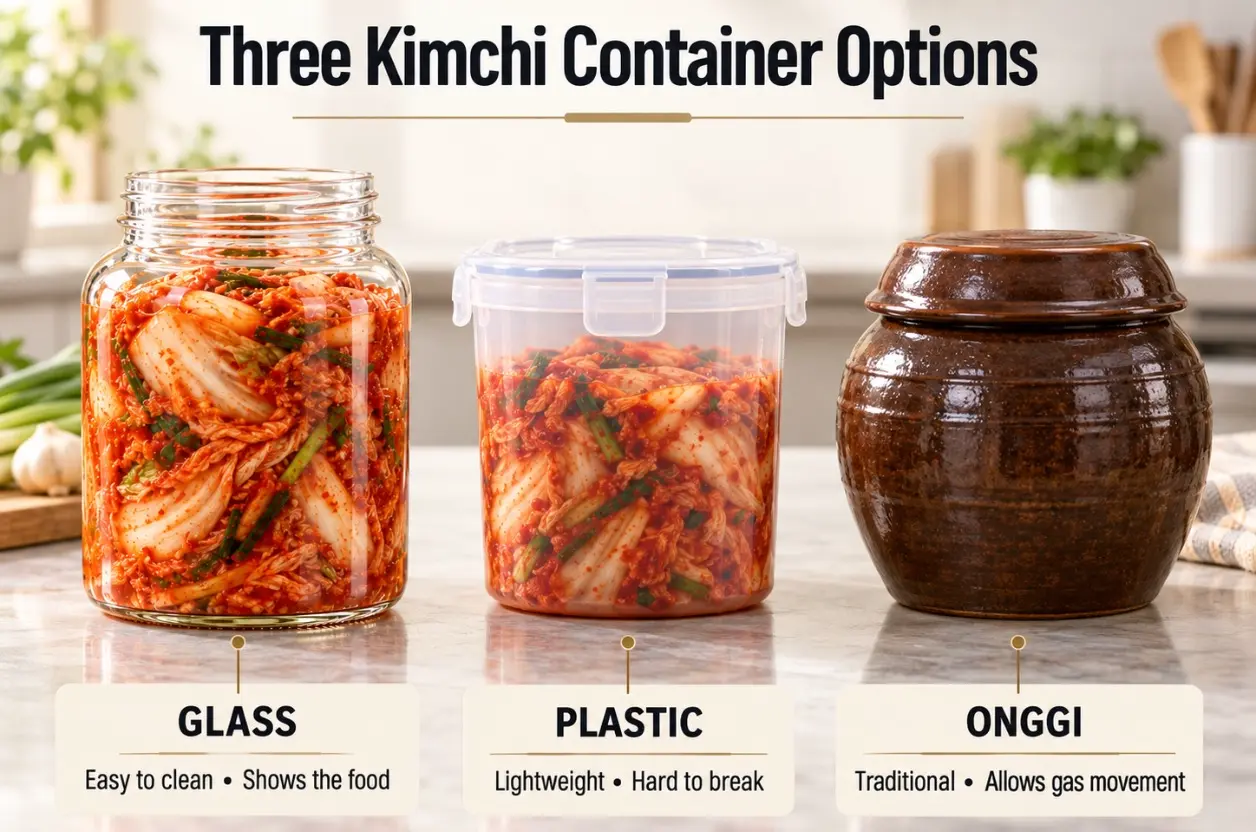
| Container | Main Benefits | Main Drawbacks | Best For |
|---|---|---|---|
| Glass jar | Easy to clean, does not hold odors and shows the food clearly | Breakable and heavier than plastic | Most home batches, refrigerated storage and retail packaging |
| Food-grade plastic | Lightweight, low-cost and hard to break | Can hold odors, stains and scratches | Large batches and busy household kitchens |
| Onggi | Traditional design allows some gas movement | Heavy, fragile and less convenient to clean | Traditional Korean fermentation |
Why Is Glass the Best All-Around Choice?
Glass works well because its smooth surface is easy to wash and does not absorb the smell or color of kimchi. The clear wall also lets you see how tightly the food is packed and whether bubbles or liquid are rising.
El National Center for Home Food Preservation lists glass and food-grade plastic as suitable alternatives to traditional stone crocks for fermenting vegetables. It also stresses the importance of keeping vegetables properly packed under the brine.
Glass can break, so do not use a jar with a crack, chip or damaged rim. The lid needs a smooth rim to sit on correctly.
You should also choose a jar made for food. An old decorative jar may look perfect, but you may not know what it previously held or whether its coating is suitable. Our guide to food-safe glass bottles and jars explains why appearance alone is not enough.
When Is Plastic a Better Choice?
Food-grade plastic makes sense when low weight and resistance to breakage matter most.
A large plastic container is easier to lift than a large glass jar and less likely to break. This helps when you make large batches or move the container often.
Plastic is not perfect. Strong kimchi odors can remain after washing. Chili may stain the inside, and scratches can make an older container harder to clean well.
The word “food-grade” matters. A general storage box, paint bucket or unknown plastic bag should not be used just because it is the right size. If you prefer plastic, keeping one container only for kimchi also stops the smell from affecting other foods.
Why Do People Use Onggi for Kimchi?
An onggi is a traditional Korean earthenware container used for kimchi, soy sauce and other fermented foods. Its walls contain tiny pores. A study of onggi and kimchi fermentation found that carbon dioxide can pass through this porous wall, which is why onggi is sometimes called a “breathing” container.
The trade-off is convenience. Onggi is heavy and can break. Its shape can be awkward in a modern refrigerator, and its surface needs careful cleaning. It is also harder to see what is happening inside without opening it.
Onggi offers a more traditional experience. Glass remains easier for most modern kitchens.
What Shape and Size Should a Kimchi Jar Be?
Once you choose the material, the next question is shape.
Choose a Wide Mouth
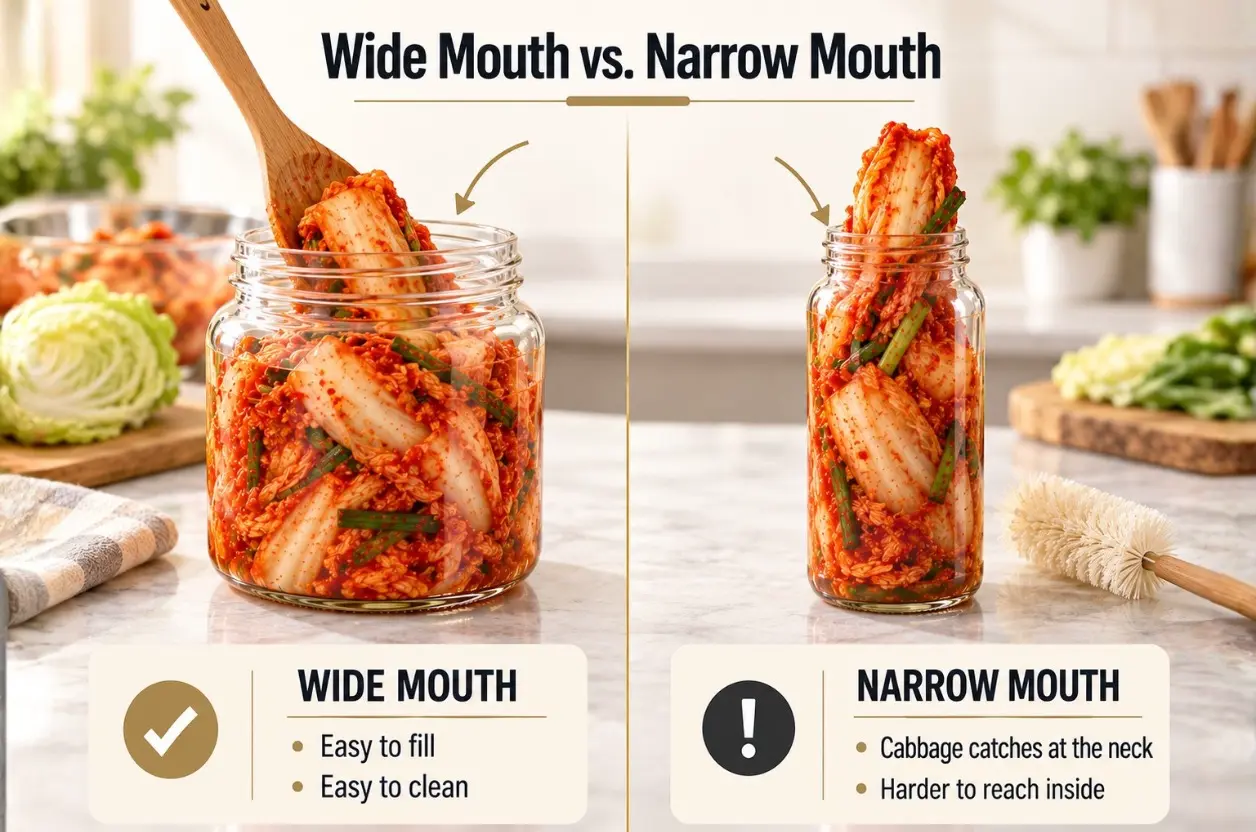
A wide opening makes almost every step easier. Large pieces of cabbage fit without being forced through a narrow neck. You can press the kimchi down, remove a serving and reach inside when cleaning.
A narrow jar may look elegant on a shelf, but it is rarely the most practical choice for kimchi. Narrow openings work better for liquids than for large pieces of vegetables.
Match the Size to the Batch
There is no single best capacity. Smaller jars let you divide a batch into portions and open one at a time. They are also easier to lift and arrange in the refrigerator.
A larger jar reduces the number of containers and may suit a family that eats kimchi every day. However, it becomes heavy when full and takes more space.
Think about the full jar, not just the empty one. Make sure you can lift it, fit it in the refrigerator and remove food without tipping it too far.
The jar should hold the planned batch without being filled to the rim. If your ingredients only fit when you press them against the lid, the jar is too small.
Look for a Simple Body Shape
A straight or gently rounded body is easier to fill and clean than one with deep corners or a narrow shoulder. Square jars use shelf space well, but food can collect in their corners.
For everyday use, a simple wide-mouth jar is easy to handle from start to finish.
How Much Space Should You Leave at the Top?
Kimchi produces carbon dioxide as it ferments. The gas forms bubbles inside the vegetables and liquid. As those bubbles rise, the contents of the jar can rise with them.
If the jar is filled to the top, liquid may leak under the lid or spill when the jar is opened.
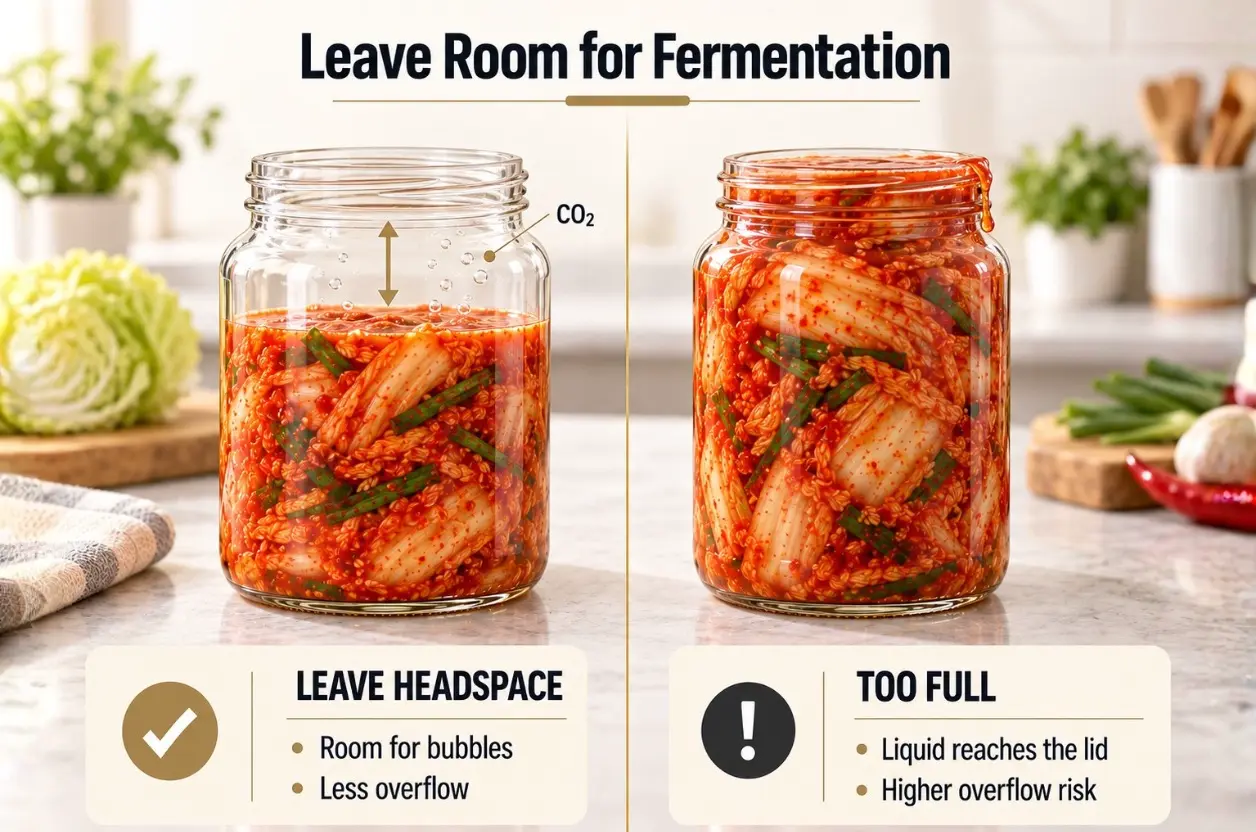
Food Smart Colorado’s kimchi preparation guide recommends filling the container about two-thirds full for its recipe. That space gives the kimchi room to bubble and expand.
Other recipes may use a different level because the ingredients, jar and method are not always the same.
The practical lesson is simple: never pack kimchi to the rim. Use a larger jar and leave the space recommended by your recipe.
The kimchi should still remain tightly packed. Large air pockets between the vegetables are not useful headspace. Pressing the food down helps the liquid move around it and limits unnecessary air inside the mixture.
Some recipes produce enough liquid to cover most of the vegetables. Other styles are less wet. Follow the recipe’s instructions for pressing, turning or weighting the kimchi instead of assuming every batch must look exactly the same.
Should a Kimchi Jar Be Airtight?
Kimchi ferments in a low-oxygen environment. Limiting outside air supports the process and helps protect the food. At the same time, the bacteria produce carbon dioxide. That gas needs space and, depending on the method, a way to escape.
This is why the tightest possible lid is not always the best answer during active fermentation.
Some recipes use a loose lid during the first stage. Some use an airlock. Others use a regular lid and give instructions for checking or releasing gas.
El University of Georgia’s science-based kimchi guide uses loosely covered jars during the first 48 hours. The jars are then moved to refrigerated storage.
An airlock lets carbon dioxide move out while limiting outside air. A normal lid can also work when the recipe is written for it.
Do not mix instructions from several recipes. Choose one reliable method and follow its directions for the jar, lid, time and temperature.
How Should You Clean the Jar Before Fermentation?
Wash the jar, lid and any weights with hot soapy water. Rinse them well and check for food, grease or soap left around the rim and threads.
The University of Georgia guide also sanitizes the equipment used for its recipe. Follow the cleaning steps in the tested method you choose.
Do not pour boiling water into a cold jar unless the jar and method are designed for that treatment. A sudden temperature change can crack ordinary glass.
After washing, inspect the jar again. Replace any jar or lid that is cracked, chipped, rusty or hard to clean.
Can You Ferment and Store Kimchi in the Same Jar?
Yes. A suitable glass jar can often handle both jobs.
Once the kimchi reaches the flavor you like, you can move the same jar into the refrigerator.
Cold storage slows fermentation but does not stop it at once. The kimchi will become more sour, and its texture may soften over time.
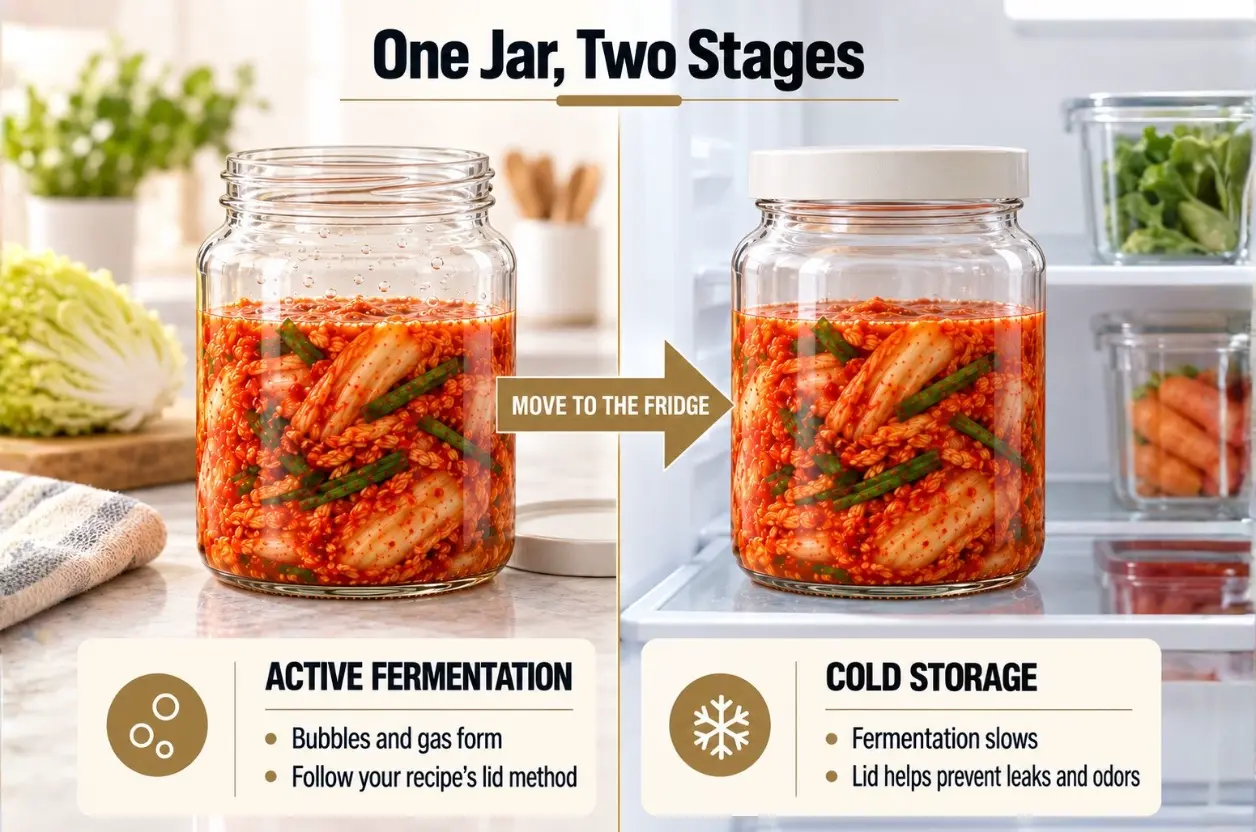
The lid now has a second job: preventing leaks and keeping strong smells inside the jar.
Keep some room at the top even after the jar moves into cold storage. The kimchi may continue to produce gas, especially during the first days in the refrigerator.
Smaller jars let you keep most of the batch closed while opening only what you expect to eat soon.
Is a Retail Kimchi Jar Different From a Home Fermentation Jar?
A home cook may ferment, store and serve kimchi from one jar. A food brand may ferment a large batch in a separate vessel and then place the finished kimchi into smaller retail jars.
Retail packaging must survive transport and stay closed until the customer opens it. Glass also lets shoppers see the color and texture of the kimchi.
Live kimchi may continue producing gas after packing, even under refrigeration. The jar, fill level and lid must work together throughout its shelf life.
Heat-treated kimchi behaves differently and may expose the jar to temperature changes that a cold-filled product does not face.
The final package should therefore be tested with the real kimchi and lid. This point is specific to retail products and does not change the simple advice for home use.
Preguntas frecuentes
Can You Use Any Glass Jar for Kimchi?
No. Use a clean, food-safe jar with no cracks, chips or damage around the opening. Avoid decorative jars when you do not know their intended use or previous contents.
Can You Use a Mason Jar for Kimchi?
Yes. A food-safe, wide-mouth Mason jar is easy to fill and clean. Leave enough room at the top and use the lid according to the recipe.
What Is a Traditional Kimchi Jar Called?
A traditional Korean kimchi jar is called an onggi. It is made from earthenware, and its slightly porous wall allows limited gas movement.
How Full Should a Kimchi Jar Be?
Do not fill it to the rim. One university extension recipe uses about two-thirds of the container, but other methods may require a different level.
Does Kimchi Need to Stay Under the Liquid?
Keep the vegetables tightly packed and protected from too much air. Some styles have more liquid than others, so follow the recipe’s instructions for pressing or weighting them.
What Is the Best Container for Storing Kimchi?
A glass jar or food-grade plastic container with a well-fitting lid works in the refrigerator. Glass is easier to clean and does not hold smells or stains as easily.
Can Kimchi Break a Glass Jar?
Kimchi itself does not break glass. The concern is pressure in an overfilled or unsuitable sealed container. Leave room at the top, follow the recipe and never use damaged glass.
Conclusión
For most people, a food-safe, wide-mouth glass jar is the best jar for fermenting kimchi.
Glass is easy to fill, clean and store. Choose a jar that fits your batch without reaching the rim, leave room for bubbles and use the lid as your recipe directs.
Onggi suits traditional fermentation, while food-grade plastic is useful when low weight and break resistance matter more.
Jingbo Group supplies wholesale tarros de cristal para alimentos for kimchi, pickles and other packaged foods. Póngase en contacto con nosotros to discuss your required capacity, jar shape, lid and order quantity.