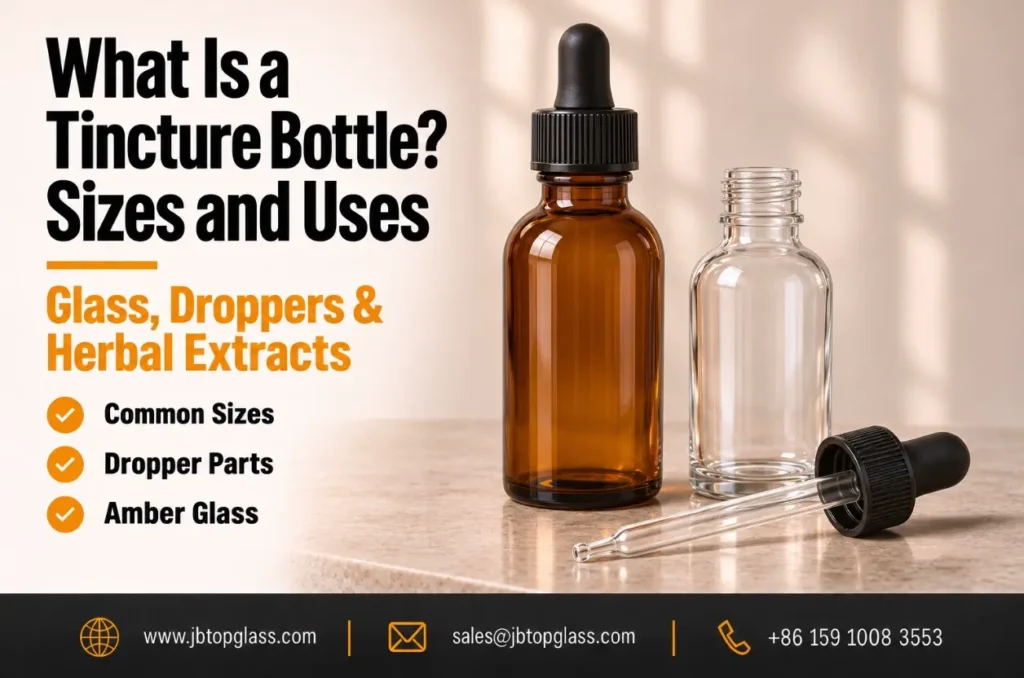
A tincture bottle is a small container for herbal extracts, usually fitted with a dropper. Amber glass helps reduce light exposure, while the dropper lets you take out small amounts without pouring. This guide explains how to recognize a tincture bottle, the sizes and uses you will commonly see, and how the glass bottle and dropper work together.
What Is a Tincture Bottle?
A tincture bottle holds a liquid herbal extract. An herbal tincture is made using alcohol, often mixed with water, to extract substances from plants. The familiar packaging is a small glass bottle with a narrow screw neck and a removable dropper.
Many tincture bottles use the Boston round shape: a cylindrical body with rounded shoulders leading into the neck. This shape is easy to recognize, but tincture bottles can also have square bodies or other designs. The name refers to the intended contents, so several bottle shapes can be used.
On a typical dropper version, you can see a flexible bulb above the cap. A glass tube extends from the cap into the liquid. Together, these parts let you withdraw some of the contents and dispense it through a small tip.
You will therefore see some containers described as both tincture bottles and glass dropper bottles. “Tincture bottle” identifies the intended use; “dropper bottle” describes the dispensing arrangement. Glass dropper bottles also hold products such as cosmetic serums.
What Are Tincture Bottles Used For?
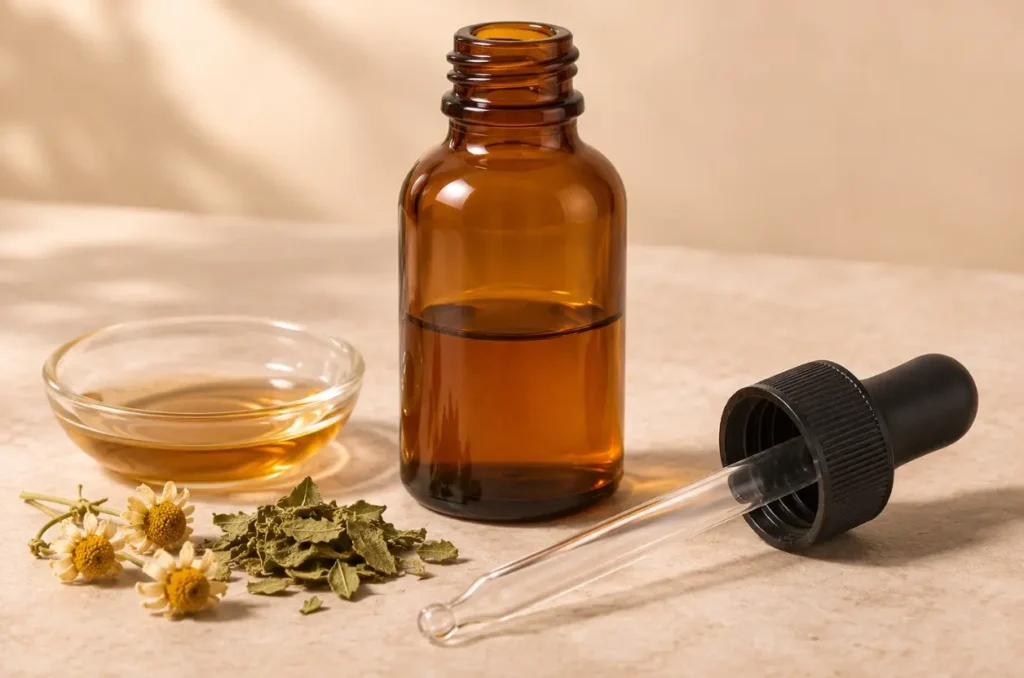
Tincture bottles are mainly used to package liquid herbal extracts. These include single-herb tinctures and blends containing extracts from several plants. The narrow opening and removable pipette suit liquids that are taken out a small amount at a time.
The same bottle format is also used for glycerin-based herbal extracts. These are often called glycerites. Although they may look much like alcohol-based tinctures, the liquid inside is different. When choosing herbal extract bottles, identify the actual formula as well as the bottle’s intended use.
Herbal tincture bottles normally hold the prepared liquid after the plant material has been separated out. The narrow pipette is designed for liquid, so pieces of herbs can obstruct it. A product containing suspended particles may need a different dispenser.
Some liquid extract bottles have a plain screw cap for pouring or transferring the contents. Tincture bottles with droppers are more useful when you need to remove small amounts while keeping the bottle upright.
What Sizes Do Tincture Bottles Come In?
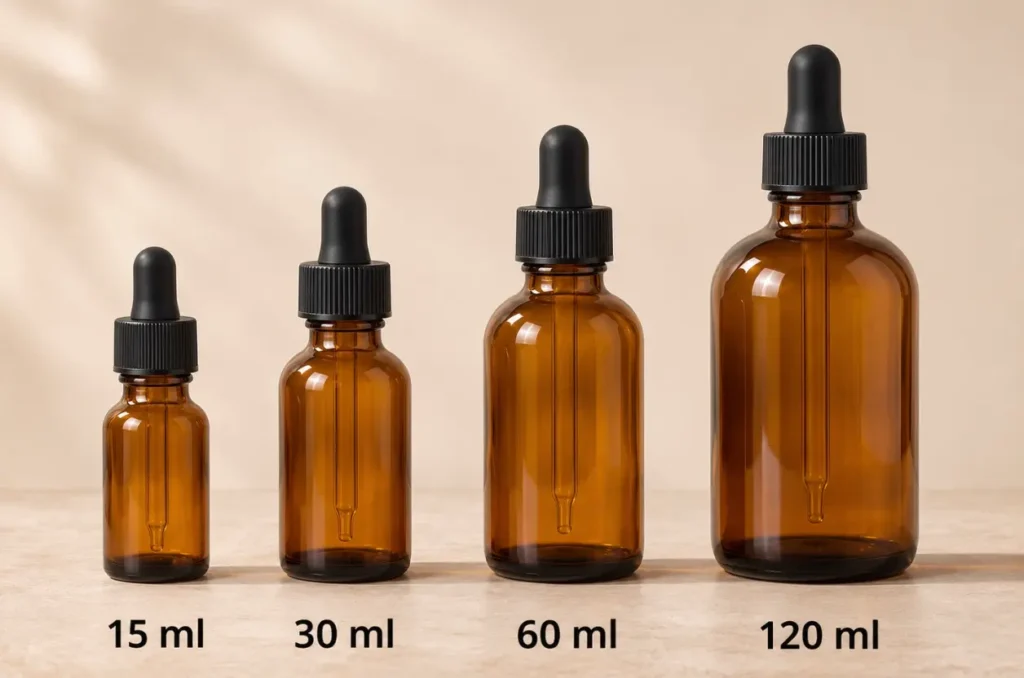
Common tincture bottle sizes include 15 ml, 30 ml, 60 ml, and 120 ml. Small tincture bottles are often described in ounces as well as milliliters.
The listed capacity tells you how much product the bottle is intended to contain. Capacité maximale is different: it is the amount the empty bottle holds when filled to the rim. A bottle filled for sale needs room above the liquid, including space for the inserted pipette.
How Does a Tincture Dropper Bottle Work?
A tincture dropper bottle uses a squeezable bulb to draw liquid into a glass pipette. Squeezing the bulb again releases the liquid through the tip.
The Bottle, Bulb, and Glass Pipette
The familiar design has four main parts:
| Part | What it does |
|---|---|
| Bouteille en verre | Holds the main supply of extract |
| Screw cap or collar | Attaches the dropper to the bottle neck and holds the assembly together |
| Dropper bulb | Pushes air out when squeezed and creates suction when released |
| Glass pipette | Draws liquid from the bottle and directs it through the tip |
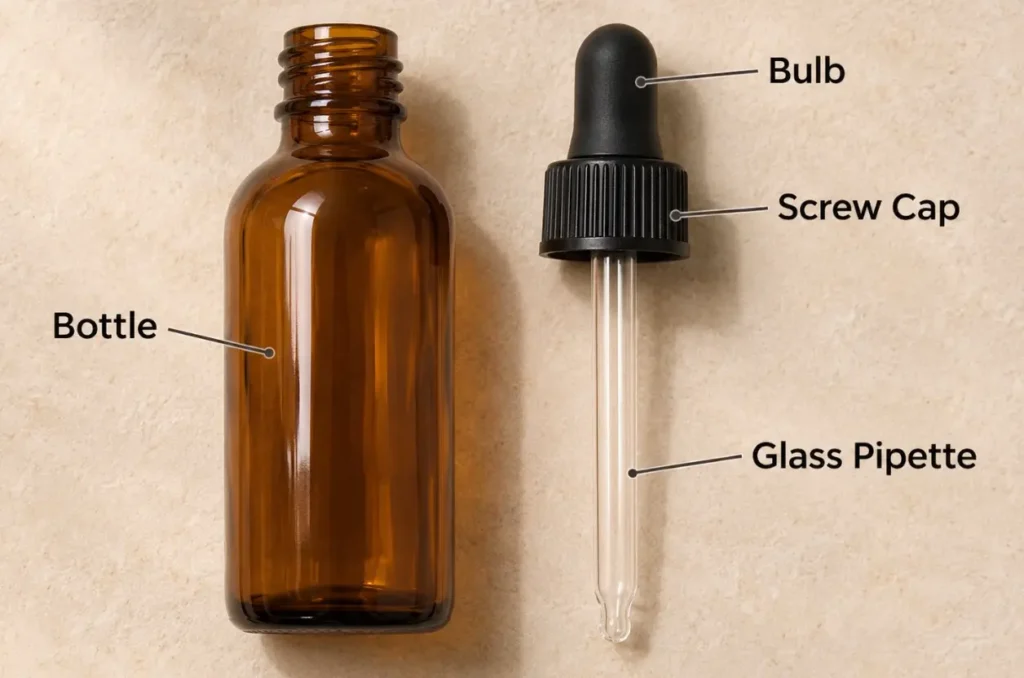
The glass pipette should reach close to the bottom without pressing against it when the cap is closed. A tube that is too short leaves more liquid beyond its reach. An overly long tube can prevent the assembly from fitting properly.
Some pipettes have milliliter markings. These show the volume of liquid in the tube and help you see how much you have drawn up. They do not describe the bottle’s capacity: a 30 ml bottle and a 60 ml bottle can use droppers with the same withdrawal volume.
How the Dropper Draws Up and Releases Liquid
Place the pipette tip below the liquid surface and squeeze the bulb to push air out. Release the bulb while keeping the tip submerged. As the bulb returns to its shape, liquid rises into the glass tube.
Lift the dropper from the bottle and squeeze again to release the liquid. A gentle squeeze can release individual drops; more pressure releases liquid faster. Thick extracts usually flow more slowly than thin ones. The tip opening also affects drop size, so counting drops is different from reading a volume marked in milliliters.
A pipette dropper differs from a dropper insert, also called an orifice reducer. The pipette comes out with the cap. An insert stays in the bottle mouth and controls the liquid as you tilt the bottle. Both dispense small amounts, but they work in different ways.
Why Are Tincture Bottles Often Made of Amber Glass?
Amber glass tincture bottles are common because glass suits many herbal extracts and the brown color helps protect light-sensitive contents.
Why Glass Is Common
Glass is nonporous and resists many alcohol-and-water mixtures used in herbal tinctures. It provides a rigid container that can remain in contact with the liquid during storage. This makes glass tincture bottles a familiar choice for herbal extracts.
The glass wall forms a barrier against oxygen and moisture, while the cap seals the opening. Both matter during storage: a glass body with a poorly fitting dropper cap can still leak.
The bulb and sealing parts are made from materials other than glass. They also need to suit the liquid, especially when it contains alcohol or oils. Choosing a suitable glass body is one part of choosing the complete package.
What the Amber Color Does
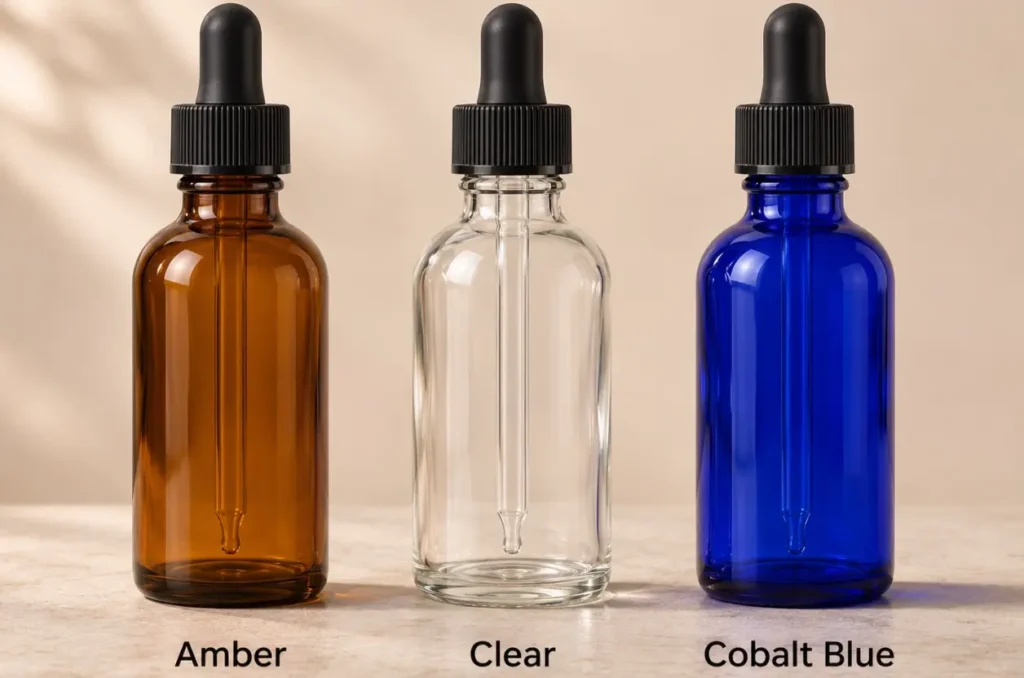
Amber tincture bottles help protect light-sensitive extracts by reducing the light passing through the glass. The Glass Packaging Institute explains that amber glass filters ultraviolet and short-wave visible light. This is why brown glass is common for products that need reduced light exposure.
Other colors serve different needs. Clear glass dropper bottles make it easier to see the extract’s color and remaining level. Cobalt blue tincture bottles provide a different appearance and filter light differently. Their blue color should not be treated as proof of the same UV protection as amber.
Actual light transmission depends on glass composition, color depth, and wall thickness. Amber dropper bottles reduce exposure but still need suitable storage. Keep the finished product according to its storage instructions, including any requirement to avoid direct sunlight.
Foire aux questions
Is a tincture bottle the same as an essential oil bottle?
They can share the same glass body, but often use different dispensers. A tincture bottle commonly has a removable pipette. Many essential oil bottles use an insert that releases drops when you tilt the bottle. Some essential oil products also use pipettes, so check the actual dispensing parts and their suitability for the liquid before treating the bottles as interchangeable.
Does a tincture dropper always hold 1 ml?
No. The amount a tincture dropper draws up depends on its bulb and pipette design. Even a pipette marked at 1 ml may draw less than that with one squeeze. If you need to measure a stated volume, use the appropriate markings and product instructions. The bottle’s size, such as 30 ml or 60 ml, does not tell you the dropper volume.
Why does my tincture dropper only fill halfway?
A half-full pipette can be normal because the bulb may draw less liquid than the tube can hold. Keep the tip submerged while releasing the bulb; a tip above the surface draws air. If suction suddenly becomes weak, inspect the bulb and its connection to the pipette. A crack or loose connection can let air enter and reduce the liquid drawn up.
Can I replace the dropper on a tincture bottle?
Yes, if the replacement fits the bottle’s neck and suits the contents. Match the bottle neck finish, including the thread, and check the glass pipette length. The cap must close fully, and the tube should reach near the bottom without pressing against it. Matching only the cap’s visible width can overlook differences in the thread or sealing arrangement.
Can tincture bottles be made in a custom shape?
Yes. Jingbo Group can help you develop custom glass bottle designs in your preferred shape and capacity. We also consider the neck and pipette length so the dropper fits the bottle. After you confirm the design drawing, we can make glass samples for you to review. Once you approve the samples, we can proceed with bulk production.
Conclusion
A tincture bottle holds liquid extracts and makes small amounts easy to dispense. Capacity determines how much it stores, the dropper controls how liquid leaves, and amber glass helps reduce light exposure. Jingbo Group supplies glass tincture bottles and supports custom bottle development. To discuss your project, nous contacter with your required capacity, preferred shape, and expected order quantity.