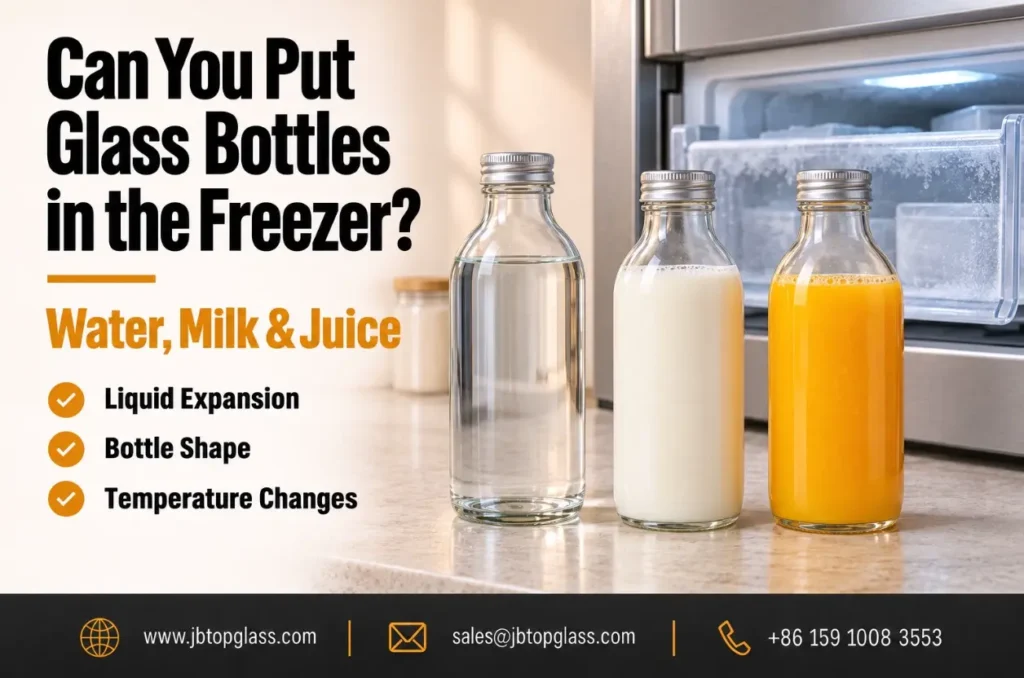
You can put some glass bottles in the freezer, but a bottle filled with liquid can crack as its contents turn to ice. The main issue is expansion: the drink needs more room, while glass cannot stretch enough to provide it. Bottle shape and sudden temperature changes also affect the risk. This guide explains what matters when freezing water, milk, or juice.
Can Glass Withstand Freezing Temperatures?
Glass can be used at freezer temperatures. It is already a solid, so it does not turn into ice as water does. This is why glass containers made for freezing can hold food and drinks in a freezer.
However, cooling an empty bottle and freezing a drink inside it are different situations. An empty bottle has no liquid pushing against its walls as it freezes. A filled bottle must deal with both the temperature change and the force from expanding ice.
The question is therefore more specific than whether glass can get cold. Can that bottle hold the drink as it freezes, with enough space for expansion? To understand the answer, it helps to look at what causes the glass to break.
Why Do Glass Bottles Break in the Freezer?
The Liquid Takes Up More Space
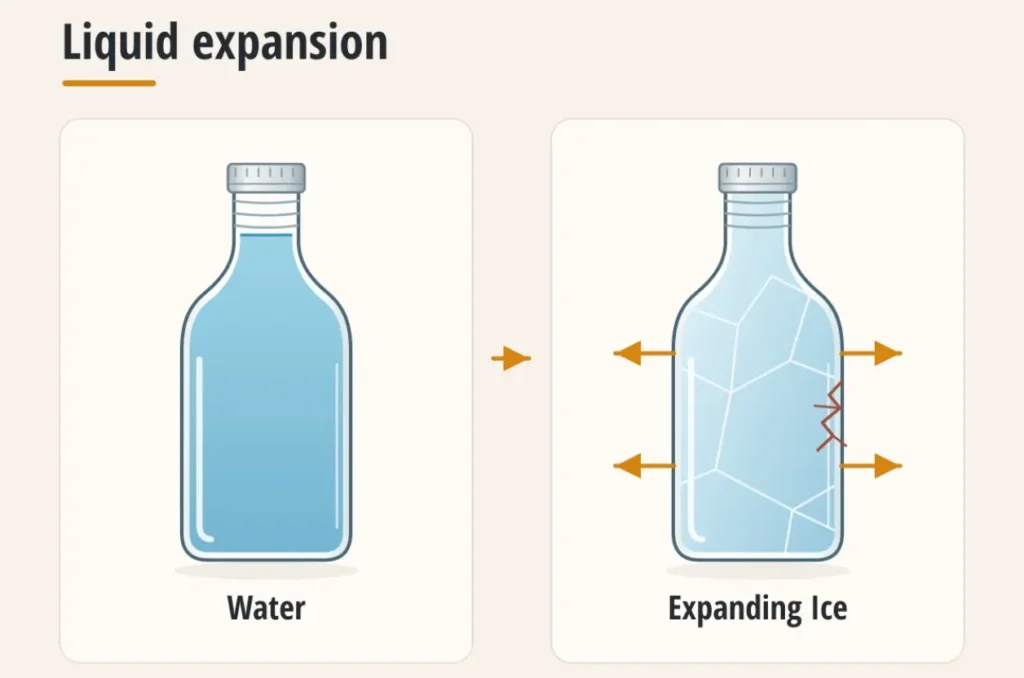
Water expands by roughly 9% when it turns to ice. For example, 500 mL of water becomes about 545 mL of ice. The change in water density during freezing explains why a bottle filled close to the top can run out of room.
Glass cannot stretch enough to absorb this expansion. If the growing ice is confined, pressure builds against the bottle. The result may be a crack, a broken base, or a shattered bottle.
This also applies to milk and juice because both contain water. Their other ingredients affect how they freeze, but they still need room for expansion.
Ice Can Trap Unfrozen Liquid
Leaving empty space at the top helps, but it does not prevent every freezing failure. Ice can form around a pocket of water that is still liquid. When that trapped water freezes, it expands against the surrounding ice and glass.
Researchers at the University of Amsterdam observed this in their work on why freezing water breaks glass containers. Their findings explain why even partly filled, open containers can break. The trapped liquid cannot use the empty space above it.
A Sudden Temperature Change Stresses the Glass
Thermal shock is a separate cause of breakage. It happens when one part of the glass changes temperature much faster than another. Those parts expand or contract by different amounts, creating stress.
Putting a hot bottle straight into a freezer can create this problem. So can pouring hot water over a frozen bottle. A bottle may survive freezing and then crack when you try to warm it too quickly.
What Makes a Glass Bottle More Suitable for Freezing?
The glass material, bottle shape, and condition all matter. None of these features alone can guarantee that a filled bottle will survive. Together, they explain why two glass bottles in the freezer may behave differently.
Glass Material
Many beverage bottles are made from soda-lime glass. This is common packaging glass used for water, milk, juice, beer, and other drinks. Its widespread use for beverages does not mean that every bottle made from it is suitable for freezing.
Borosilicate glass generally handles sudden temperature changes better than ordinary soda-lime glass because it expands and contracts less. That can help reduce thermal shock. It does not give expanding ice more room inside a sealed bottle.
A borosilicate bottle can therefore still break if freezing water becomes trapped inside it. When comparing glass materials for freezer use, keep these two causes of damage separate. Resistance to sudden cooling and resistance to pressure from ice are different requirements.
Forme de la bouteille
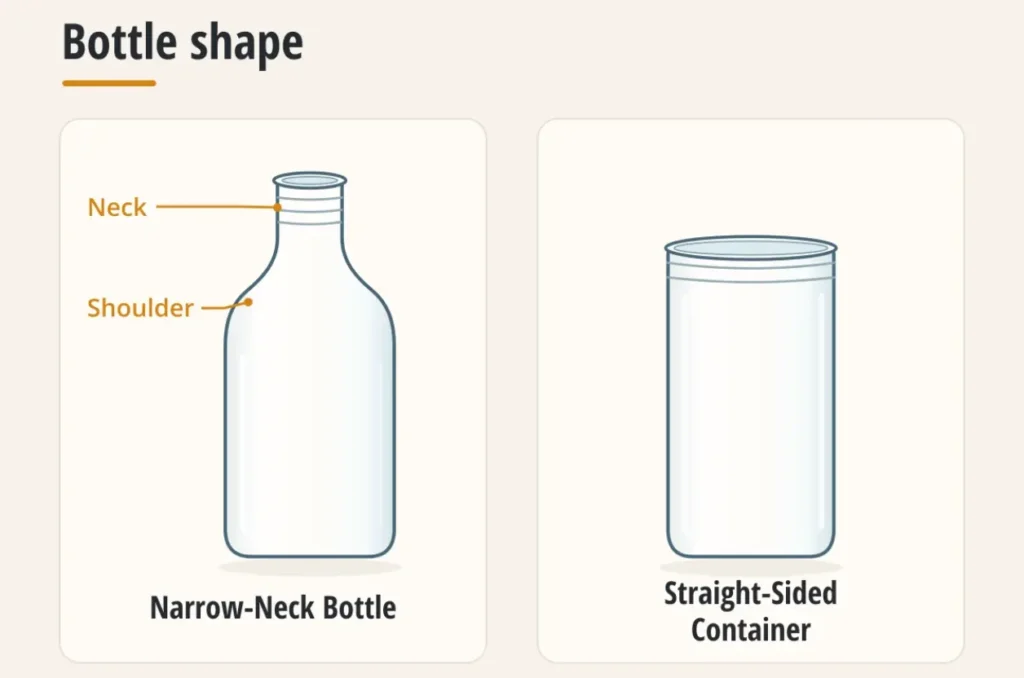
A narrow-neck bottle has a wider body that curves inward at the shoulder. If liquid fills this area, expanding ice has less room as it reaches the narrowing top. A small gap under the cap may leave very little usable expansion space.
Straight-sided glass containers avoid that sharp narrowing. This is one reason freezer containers often look different from ordinary beverage bottles. A wide opening also makes it easier to remove the contents after they have partly thawed.
The National Center for Home Food Preservation distinguishes glass containers suitable for freezing from ordinary jars. It also explains that narrow-mouth canning jars need extra headspace. A wide mouth is useful, but it does not make every wide-mouth bottle freezer-safe.
Bottle Condition
A chipped rim or cracked wall is a reason to stop using a bottle. Do not put damaged glass bottles in the freezer. Freezing adds stress to glass that is already damaged, and a crack can also allow fragments to enter the drink.
Look around the base, body, shoulder, and mouth before filling. This can reveal obvious damage, although a bottle looking intact does not establish its suitability for freezing. Visual inspection and freezer performance are different checks.
Can You Freeze Water, Milk, or Juice in Glass Bottles?
All three can be frozen in suitable containers. The difference is what happens to the drink during freezing and after thawing. The original glass bottle may also have been filled for refrigerated storage, with too little spare room for freezing.
Can You Put a Glass Water Bottle in the Freezer?
You can freeze water in a glass bottle designed for that use, with sufficient expansion space. A nearly full drinking bottle is a poor choice because the ice needs more volume than the water you poured in.
For a bottle with a narrow neck, the visible gap can be misleading. Two centimetres of empty neck holds much less air than the same height of empty space in a wide body. What matters is the spare volume available, not just the distance between the water and cap.
If you only want cold drinking water, the refrigerator avoids the expansion caused by ice formation. You do not need to freeze the water to chill it.
Can You Freeze Milk in Glass Bottles?
Pasteurized milk can be frozen in suitable glass containers. Like water, it needs room to expand. A milk bottle filled close to its shoulder or neck may not have enough spare capacity for this.
Milk can also separate during freezing and thawing. Fat and other solids may become unevenly distributed, changing the texture. The University of Missouri’s guidance on freezing milk recommends thawing it in the refrigerator and mixing it after thawing to redistribute the solids.
If the original milk bottle is not suitable for frozen storage, transfer the milk to a container made for freezing. Pouring a little milk out of an ordinary bottle creates space, but does not by itself make that bottle suitable.
Can You Freeze Juice in Glass Bottles?
Juice can also be frozen in appropriate glass containers with room for expansion. For example, the National Center for Home Food Preservation recommends glass jars in its instructions for freezing citrus juice.
That does not make an unopened retail juice bottle a good freezer container. The original fill may leave only a small air gap, particularly in a narrow neck. The juice can expand against the glass even though the bottle held it without problems in the refrigerator.
For freshly prepared juice, use a clean container and leave the required expansion space. Freezing does not make spoiled juice suitable to drink or replace proper food handling.
How Much Space Should You Leave in a Glass Bottle?
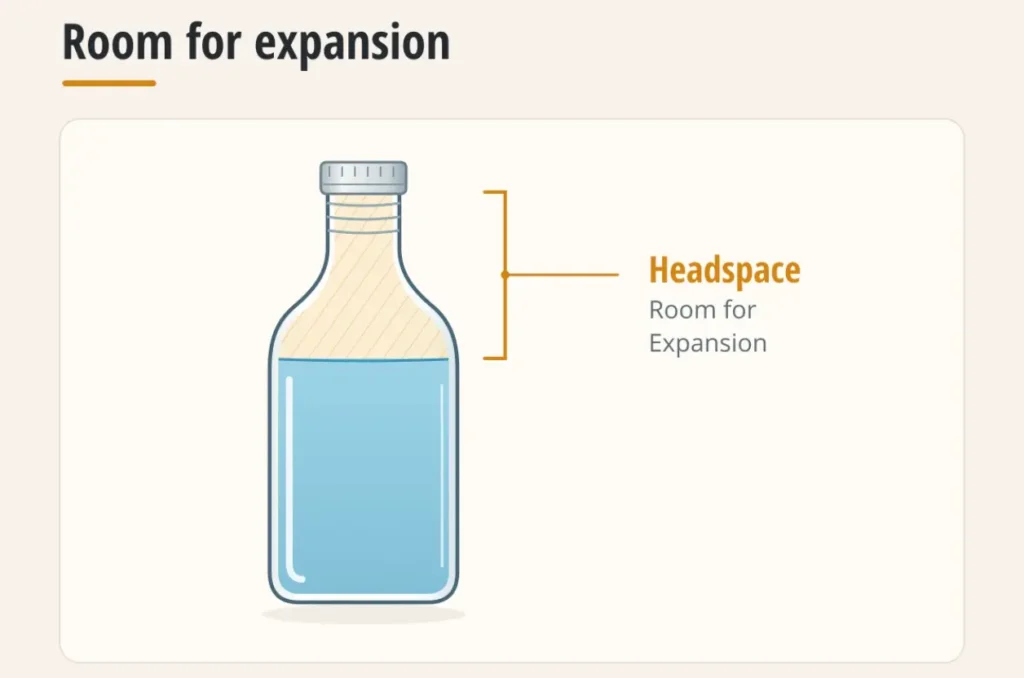
Headspace is the empty space above the liquid. It is essential when freezing drinks in suitable glass containers, but there is no single measurement that works for every bottle.
Container size and shape both affect the amount needed. The National Center for Home Food Preservation’s freezing headspace chart gives different allowances for wide and narrow openings. Those measurements apply to the container sizes and foods listed, rather than every beverage bottle.
For this reason, “leave one inch” or “fill it three-quarters full” is not a universal rule for glass bottles in the freezer. A fixed distance means different spare volumes in different bottle shapes. The 9% expansion of water is useful for understanding the problem, but it is not a complete formula for choosing a safe fill level.
For home use, choose a container made for freezing and use its specified fill allowance. For bottled drinks intended for frozen storage, the bottle and fill volume need to be considered together before production. A normal retail fill level should not simply be carried over to frozen storage.
How Should You Cool and Thaw Glass Bottles?
Managing temperature changes helps reduce thermal shock. It also matters for the quality and handling of milk and juice.
Cool the Contents Before Freezing
Do not move a hot bottle directly into the freezer. The outside can cool much faster than the inside, putting the glass under stress. A bottle that has just been washed with hot water also needs time to cool.
For milk and juice, keep food handling in mind while cooling. Leaving a warm drink on the counter for a long time is not a suitable way to protect the bottle. Use the appropriate cooling and storage method for the drink before transferring it to the freezer.
Thaw Gradually in the Refrigerator
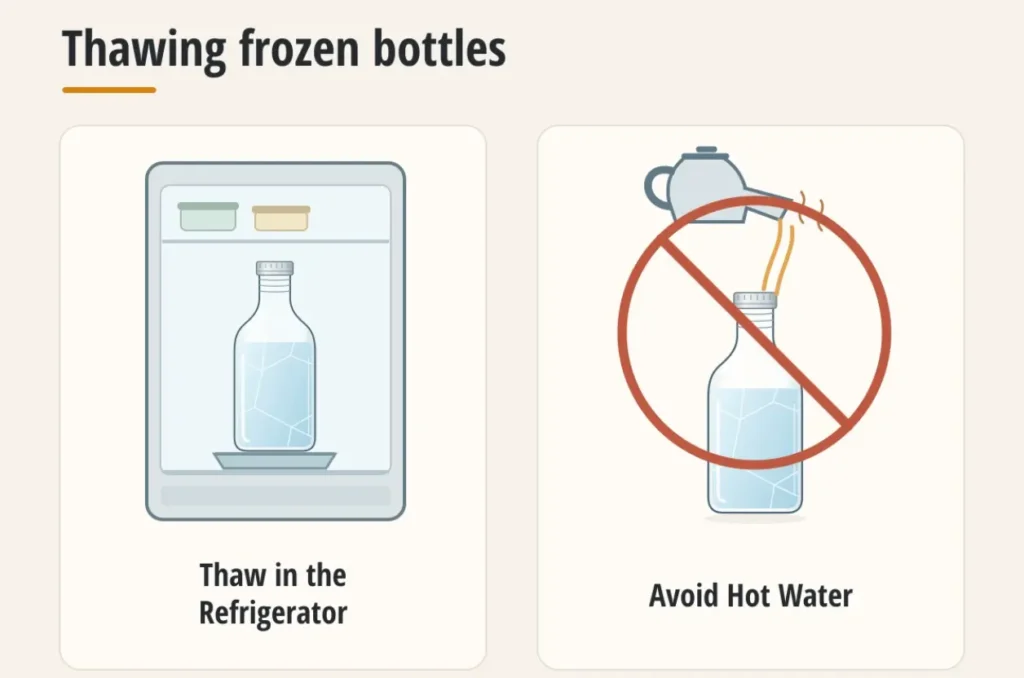
Let frozen milk and juice thaw in the refrigerator. Place the bottle upright in a tray to catch drips. This allows the contents to thaw without exposing the glass to sudden heat.
Do not pour boiling water over a frozen bottle or put it directly into hot water. Avoid using a knife to break ice inside the neck, and do not force a cap stuck against frozen contents. Let the ice melt enough to release naturally.
Once the drink has thawed, keep milk and juice refrigerated and follow their storage requirements. Freezing does not remove the need to handle the drink properly.
Foire aux questions
Can You Put an Empty Glass Bottle in the Freezer?
An empty glass bottle has no liquid expanding inside it, so it avoids that source of pressure. It can still experience thermal shock if its temperature changes too quickly. Do not put a hot, freshly washed bottle straight into the freezer or pour a hot drink into frozen glass. Any attached parts also need to tolerate the cold.
Are Thicker Glass Bottles Safer for Freezing?
Not necessarily. Extra thickness does not create more room for expanding liquid. A heavy bottle filled too high can still break, and thickness alone does not tell you how it will handle sudden temperature changes. When considering glass bottles in the freezer, look at the complete design and filling conditions rather than judging them by weight or appearance.
How Long Can You Leave a Glass Bottle in the Freezer to Chill It?
There is no fixed time that works for every bottle. The drink’s starting temperature, quantity, and freezer conditions all affect how quickly it cools and begins to freeze. A timer can help you remember it, but it cannot guarantee that the contents will remain liquid. For routine chilling, a refrigerator avoids the risk of accidentally freezing the drink.
Does Taking the Cap Off Prevent a Glass Bottle From Breaking?
No. Removing the cap does not guarantee that a bottle will survive freezing. Ice can trap liquid inside the bottle, so pressure can develop even when the top is open. An open bottle also leaves the contents exposed. For a container designed for freezing, use its intended closure arrangement rather than treating a loose or missing cap as protection.
Can You Freeze Sparkling Water in a Glass Bottle?
Avoid freezing sealed glass bottles of sparkling water unless the product is specifically designed for it. Carbonated drinks already contain gas under pressure, while freezing adds the problem of liquid expansion. A bottle made to hold carbonation during normal storage is not automatically suitable for freezing. Keep sparkling water refrigerated when you want a cold drink without freezing it.
Can You Drink the Contents If a Bottle Cracks in the Freezer?
No. Discard the drink if a crack or break could have allowed glass into it. Small fragments may be difficult to see, and straining is not a reliable way to make the drink safe. The Food Standards Agency advises discarding food that may contain broken glass. Do not continue using the damaged bottle after it thaws.
Conclusion
Putting glass bottles in the freezer requires more than glass that can get cold. The bottle must also handle liquid expansion and temperature changes. Leave suitable headspace, avoid damaged glass, and thaw gradually. Jingbo Group manufactures glass bottles for water, milk, and juice, with custom designs available. For a frozen-storage packaging project, nous contacter with your drink, fill volume, quantity, and storage conditions.