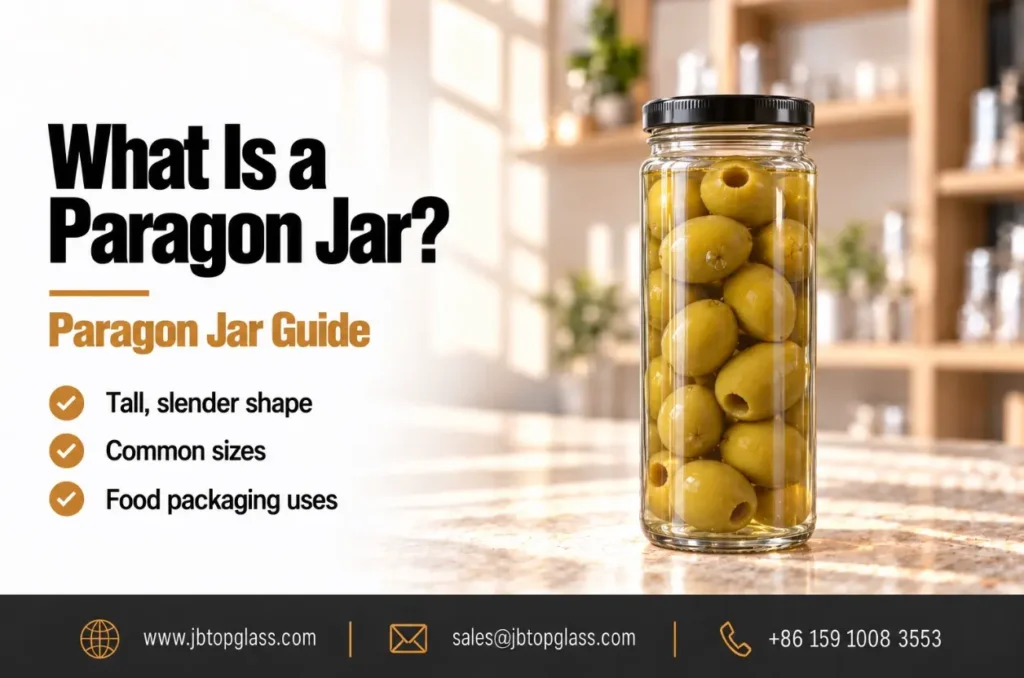
Paragon jar is a tall, narrow glass jar with a round body, mostly straight sides and a short neck. It is commonly used for spices, sauces, olives and pickled vegetables. The name describes a jar style, rather than one fixed size.
The shape is useful when a product needs a taller display or a narrower package. Whether it suits your food also depends on how customers pour, spoon or remove the contents.
What Does a Paragon Jar Look Like?
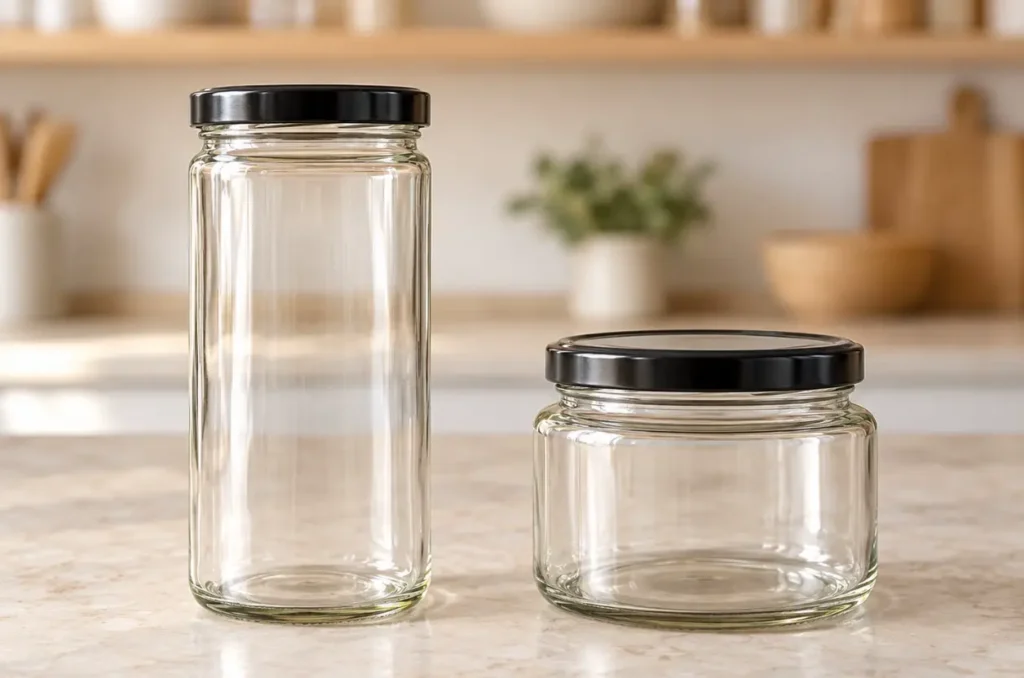
The easiest way to recognize a paragon jar is by its proportions. The body is tall compared with its width, and the sides usually rise straight from near the base toward the opening.
Some designs have a small shoulder below the lid. Others have almost no visible neck, with the mouth close to the width of the body.
Clear glass is common. It shows the color of a sauce, the texture of a seasoning blend or the arrangement of vegetables inside. A label can cover part of the body while leaving the rest of the food visible.
A paragon jar can look similar to a sauce bottle, but the upper profile helps distinguish them. A typical sauce bottle has a more pronounced shoulder and a longer, narrower neck. A paragon jar usually carries more of its body width toward the mouth.
You may also see it described as a straight-sided jar. The descriptions can overlap: “straight-sided” describes the body walls, while “paragon” generally points to the tall, slender style.
Why Choose a Paragon Jar?
A paragon jar holds its capacity in a taller, narrower body than a short, wide jar. That difference affects product display, shelf fit and everyday use.
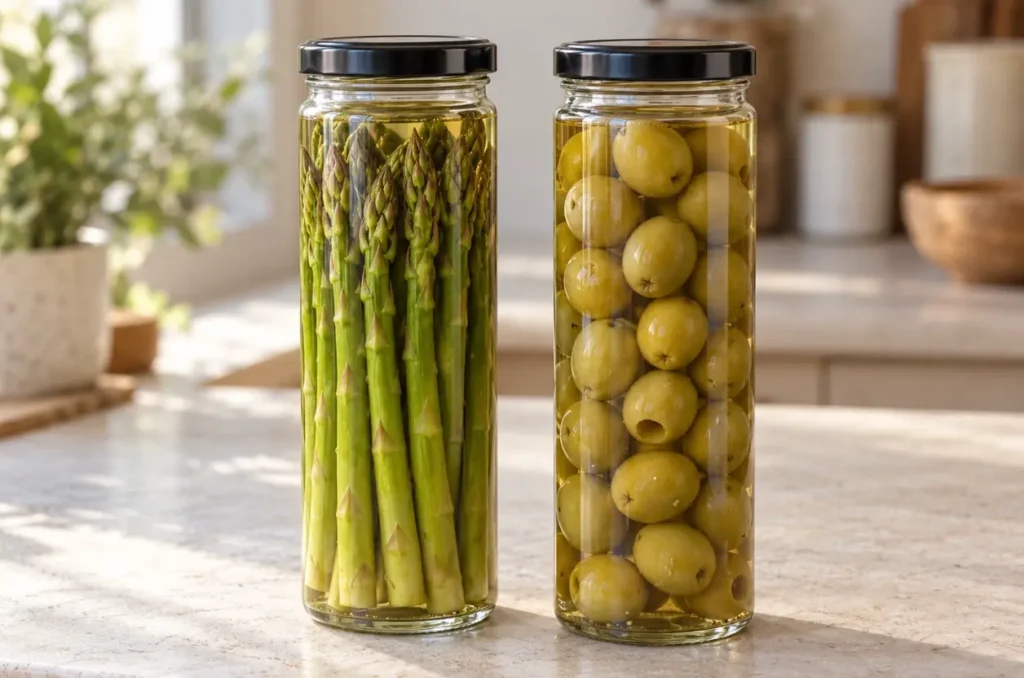
For whole vegetables, the height can be useful. Asparagus or green beans may fit upright when the jar’s internal dimensions match the food. A shorter jar of the same capacity may require a different arrangement or shorter pieces.
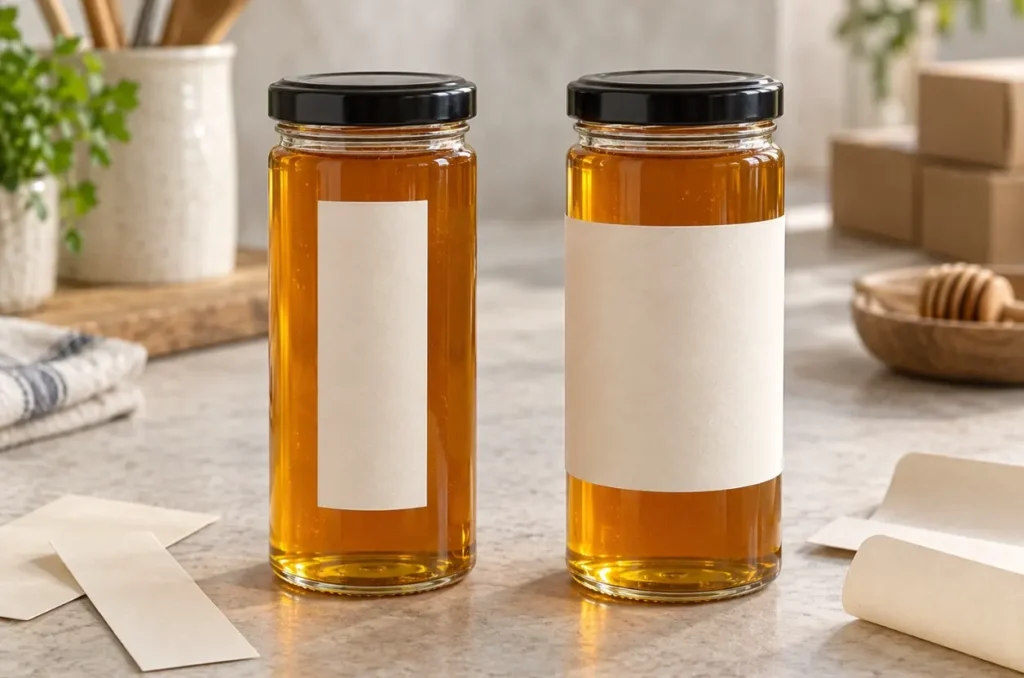
For a seasoning range, the long body provides space for a vertical label. A brand can keep the product name at the front while leaving some glass exposed to show the ingredients.
The narrower body also takes up less shelf width than a broader jar of similar capacity. It needs more vertical clearance, so the available shelf space still matters.
A short, wide jar has its own practical advantages. Customers may find it easier to scoop out a firm spread or reach food at the bottom. A tall jar can require a longer spoon.
The choice comes down to the product and how it is used. A paragon jar makes sense when its height serves a purpose, whether that is displaying whole pieces, creating a taller package or fitting a particular label design.
What Sizes Do Paragon Jars Come In?
Paragon jars come in several sizes, including 4, 6, 8, 12 and 16 oz.
The conversions below use U.S. fluid ounces, which measure volume. One U.S. fluid ounce equals approximately 29.57 ml.
4 oz and 6 oz Paragon Jars
A 4 fl oz capacity is approximately 118 ml. A 6 fl oz capacity is approximately 177 ml.
These smaller versions provide the tall profile in a compact package. They are used for spices, seasonings, jams and other foods.
For dry ingredients, the listed capacity does not tell you the product weight. Whole peppercorns leave spaces between the pieces, while a finely ground seasoning packs differently. The same jar can therefore hold different weights of different ingredients.
These smaller formats can also work in gift assortments, where several jars share one box.
8 oz Paragon Jars
Une contenance de 8 fl oz correspond à environ 237 ml.
This size is used for sauces, preserves, spices and pickled foods. Jars with the same capacity can still have different heights, body diameters and neck finishes.
12 oz and 16 oz Paragon Jars
A 12 fl oz capacity is approximately 355 ml. A 16 fl oz capacity is approximately 473 ml.
These larger versions offer more room for food while retaining the elongated profile. They are used for products including sauces, olives and pickled vegetables.
A larger capacity does not necessarily mean a much wider mouth. The extra volume may come from a taller body, a wider body or a combination of both. Food piece size and the intended serving method still need to suit the opening.
Jar Capacity and Product Fill
A jar filled to the very top reaches its capacité maximale. Normal filling leaves space above the contents.
If a drawing lists brimful capacity, that figure should not automatically be treated as the amount of food to fill. The intended fill depends on the product and the space needed above it.
The ounce-to-milliliter figures are unit conversions. The selected jar’s specification shows whether its stated capacity refers to the intended fill or the volume to the brim.
What Products Suit Paragon Jars?
Épices, herbes aromatiques et mélanges d'assaisonnement
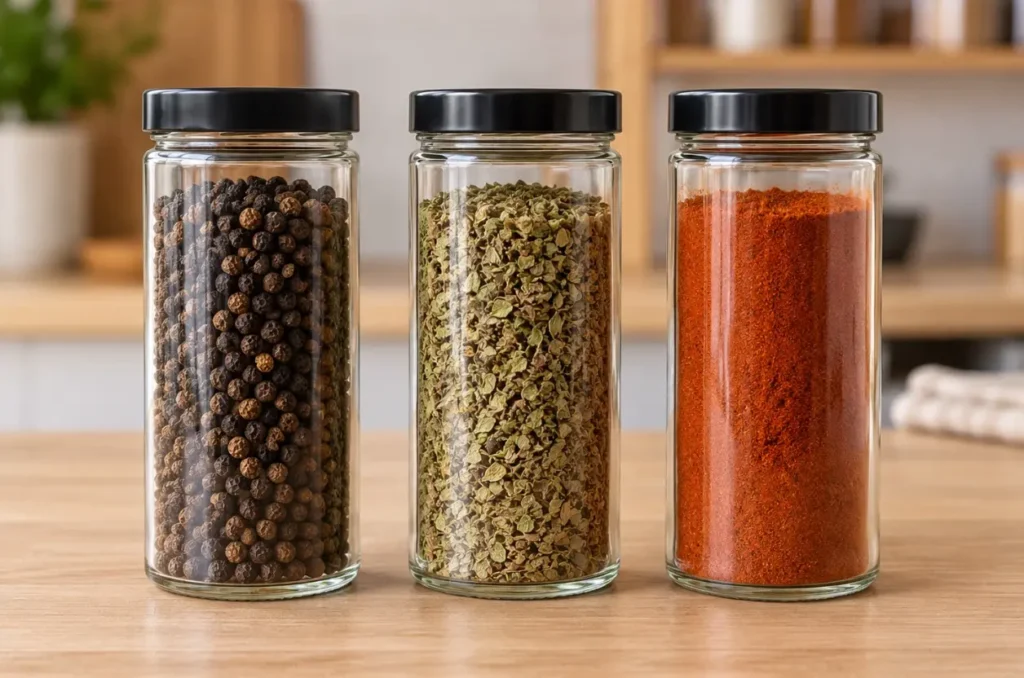
Glass paragon jars are used for whole spices, dried herbs and seasoning blends.
The clear body lets customers see the ingredients. The tall label area also gives a seasoning range a consistent appearance, with different colors or artwork identifying each flavor.
The serving method helps determine the right opening. A spice sold for sprinkling needs a suitable dispensing arrangement. A blend intended for spooning needs enough room for the utensil.
The ingredient also affects the filled appearance. Loose dried herbs and ground seasoning will sit differently in the glass, even when the jars have the same capacity.
Sauces, Relishes and Preserves
Paragon jars can hold sauces, marinades, relishes, jams and preserves.
For a smooth, pourable sauce, the mouth affects how easily the contents flow out. For a chunky relish, the pieces also need enough room to pass through.
Thicker foods bring a different concern. Customers need to reach the contents with a spoon, including the last portion at the bottom. A tall, narrow design may be less convenient for a firm spread than a broader jar.
Trying the actual food in a sample makes this difference clear. You can see how it pours or scoops, how much remains on the inside and whether the package is comfortable to use.
Olives and Pickled Vegetables
The elongated body gives olives and pickled vegetables a long display area.
Long vegetables may be arranged upright when the usable internal height allows it. Olives and smaller pieces create a different presentation, with the food visible throughout the body.
The internal height is smaller than the overall glass height because the base and neck occupy part of that measurement. The mouth must also allow the food to enter and come out comfortably.
This makes the actual piece size important. A jar suitable for sliced vegetables may not suit whole pieces of the same food.
Honey and Specialty Condiments
Honey and specialty condiments can also use paragon-style packaging.
A pourable product behaves differently from a firm or crystallized one that customers remove with a spoon. The tall appearance should still work with the way the food is served.
Honey is usually sold by weight, so its required packaging volume must be calculated separately. A weight in grams is not the same as a capacity in milliliters.
The shape changes the visible fill level too. The same quantity of honey reaches a different height in a slender jar than in a broad one.
What Should You Check When Choosing a Paragon Jar?
The Opening
The body can have enough space for the product while the mouth limits what passes through.
The useful measurement is the clear internal opening. A cap-size number describes the closure fit; it does not give the complete space available for food or utensils.
For whole foods, the opening needs to accommodate the pieces. For spooned products, it needs to provide comfortable access to the contents.
The Label Area
The usable label area sits on the straight section between the lower body curve and the shoulder. The full jar height is not available for artwork.
A label that extends onto curved areas may not sit flat. Its width also affects what customers see from the front, because the artwork wraps around the round body.
A narrow front label leaves more food visible. A wraparound label offers more room for product information.
A paper print wrapped around the sample can show whether the product name remains clear and where the artwork moves toward the sides.
The Finished Package Dimensions
The assembled jar needs to fit the shelf, gift box or carton planned for it.
Overall height should include the lid. Body diameter determines how much room each jar needs and how closely several jars can sit together.
For a gift assortment, even a small change in diameter can affect the compartments. A replacement jar may hold the same amount of food while needing a different box layout.
These outside dimensions are particularly useful when the rest of the packaging has already been designed.
The Neck Finish
Paragon jars are available with continuous-thread and lug neck finishes.
A continuous-thread finish has a screw thread running around the neck. A lug finish uses separate raised sections that engage with a matching lug cap.
Both can appear on a similar tall body. The jar’s shape does not identify which lid fits.
If an existing product already uses a particular closure, the new jar needs the matching neck finish as well as the desired capacity and proportions.
FAQ
Is a Paragon Jar the Same as a Spice Jar?
A paragon jar describes a shape, while a spice jar describes a use. Some spice jars have a paragon profile. Others are square, short and round, or made in other shapes.
Are All Paragon Jars Wide-Mouth?
Many have a relatively broad mouth compared with the body, but the opening varies by model. Its clear internal diameter determines whether food pieces or a spoon can pass through comfortably.
Can Paragon Jars Be Used for Hot Filling?
Some designs are suitable for hot filling. The specific jar, closure and filling conditions need to be confirmed together. The paragon shape does not establish a temperature limit.
Is a Paragon Jar Always Clear Glass?
Clear glass is common, but “paragon” describes the jar’s shape rather than its color. Glass color and any decorative finish are separate details.
Conclusion
A paragon jar is a tall, slender glass jar used for spices, sauces, olives and other foods. Its height can help display the contents, accommodate longer food pieces and provide space for a vertical label.
The best fit depends on the food, the planned fill and how customers will use it.
Vous pouvez contacter Jingbo Group with your product, target fill quantity and a reference image to discuss a suitable glass food jar design.