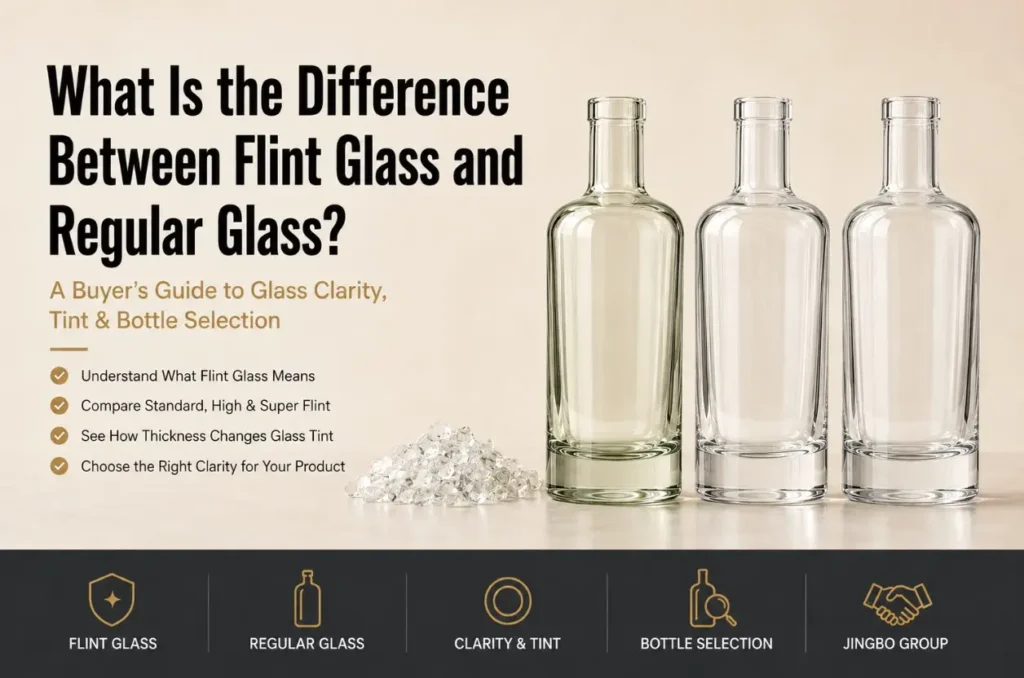
ボトル包装業界において、「フリントガラス」とは通常、透明またはほぼ無色のガラスを指します。「通常のガラス」という表現は、それほど厳密な用語ではありません。これは、一般的なソーダ石灰ガラス、標準的な透明ガラス、着色された容器用ガラス、あるいは単にサプライヤーが最も一般的に製造しているグレードを指す場合があります。.
この2つは必ずしも異なる素材というわけではありません。市販されているフリントボトルのほとんどは、今でもソーダ石灰ガラスで作られています。購入者が目で見分けられる違いは、通常、ガラスの透明度、残留色、原材料の管理、ボトルの厚さ、そして価格によるものです。.
ガラス瓶の調達においては、標準フリントガラス、ハイフリントガラス、スーパーフリントガラスの3種類を比較することが、より有用な場合が多い。.
ボトル包装において、「フリントガラス」とはどういう意味ですか?
容器業界において、「フリントガラス」とは、透明またはほぼ無色のガラスの通称です。容器の中身が見えるため、酒類、飲料、食品、香水、化粧品、医薬品などに広く使用されています。.
ほとんどのフリントガラス瓶には、珪砂、ソーダ灰、石灰石、および「カレット」と呼ばれる再生ガラスが含まれています。これらの材料は、他のソーダ石灰ガラス容器とほぼ同様の方法で、溶融、精製、成形、そして焼きなまし処理が行われます。Jingbo Groupのガイドによると、 ガラス瓶の製造工程 これらの製造工程について、より詳しく説明しています。.
「フリント」という言葉は、包装用ガラスの外観上の等級を表すものです。これは、そのボトルが鉛クリスタルで作られていることを意味するものではありません。この用語は光学分野における別の種類のガラスにも用いられるため、時に混乱を招くことがあります。市販のフリント製容器ガラスは、歴史的な 光学用フリントガラス.
“これに対し、「レギュラーガラス」は、正式な透明度等級として認められていません。あるサプライヤーはこれを「通常のソーダ石灰ガラス」を指す言葉として使うかもしれません。また、別のサプライヤーは、標準フリントガラスとハイフリントガラスやスーパーフリントガラスを区別するためにこの言葉を使うかもしれません。もしその「レギュラー」ボトルが透明であれば、すでに標準フリントガラスで作られている可能性があります。.
| 特集 | フリントガラス | 通常のガラス |
|---|---|---|
| 一般的な意味 | 透明またはほぼ無色の容器用ガラス | 広義の、専門的ではない用語 |
| 代表的な材料 | 通常はソーダ石灰ガラス | 多くの場合、ソーダ石灰ガラス |
| 目に見える色 | 選択したフリントのグレードによって異なります | 透明、緑、琥珀色、あるいはその他の色である場合がある |
| 製品の可視性 | 通常より高い | ガラスの色によって異なります |
| 費用 | 通常、透明度の等級が高くなるにつれて高くなります | 色、デザイン、重量、および製造状況によって異なります |
| 一般的な用途 | 酒類、食品、飲料、香水、化粧品 | 最も一般的な包装の種類 |
色や透明度が重要な場合、「透明ガラス」や「通常のガラス」とだけ記載された見積書では、十分な情報が得られません。サプライヤーは、実際のガラスのグレードを確認し、代表的なサンプルを提供すべきです。.
「スタンダード」「ハイ」「スーパー」のフリントガラスでは、どのような違いがあるのでしょうか?
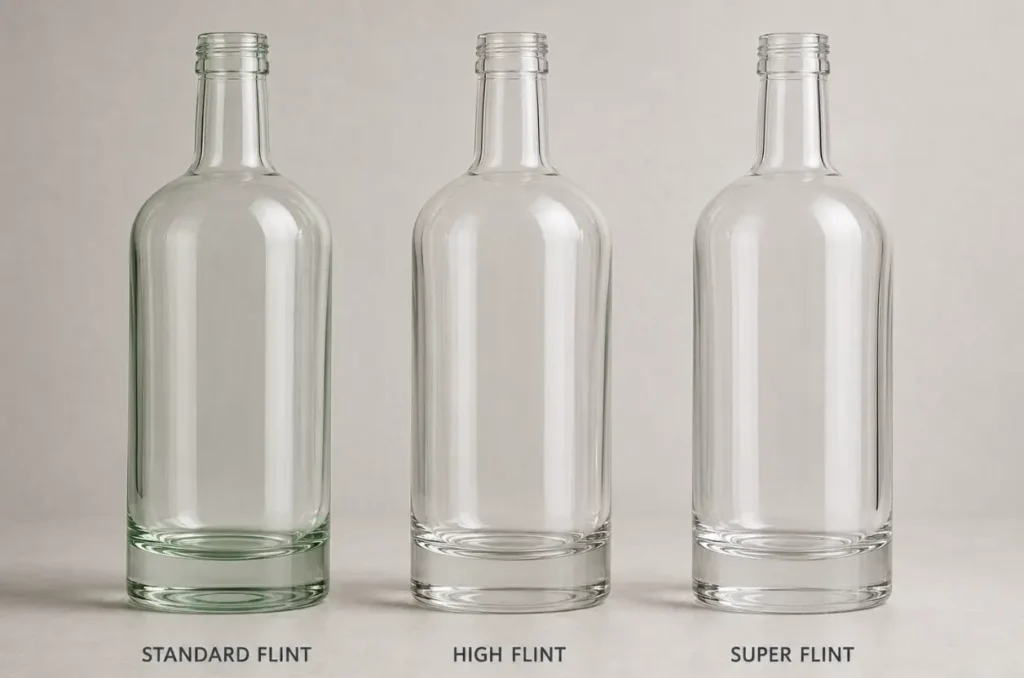
透明なボトル用ガラスは、一般的に「スタンダード・フリント」、「ハイ・フリント」、あるいは「スーパー・フリント」と呼ばれます。これらの名称は、購入者が予想される外観を比較する上で役立ちますが、必ずしも世界的に統一された格付け基準に従っているわけではありません。2つの工場が、見た目がわずかに異なるボトルに対して同じグレード名を使用している場合もあります。.
このため、実物のサンプルは、単に品位名だけで判断するよりも信頼性が高い。.
標準フリントガラス
スタンダード・フリントは、最も一般的な透明な容器用ガラスです。製品がよく見えるという利点がありますが、かすかな緑、青緑、灰色、または黄色の色かぶりが見られる場合があります。.
この残留色は、通常、底、ヒール、首、縁、その他の肉厚な部分でより見分けやすいものです。軽量の標準的なフリントガラス製のボトルは、正面から見るとほぼ無色に見えますが、底を通して見ると顕著な緑がかった色合いが見られることがあります。.
スタンダード・フリントは、食品用瓶、ソース瓶、飲料瓶、ワイン瓶、および日常的に使用されるスピリッツの容器に広く使用されています。視認性が高く求められるものの、完全な色中立性が不要な場合、通常は最も経済的な選択肢となります。.
ハイ・フリント・グラス
ハイフリントガラスは、より澄んでいて明るい外観を呈します。通常、標準的なフリントガラスに比べて、緑や灰色の色合いが少なく見えます。.
このグレードは、ウォッカ、ジン、テキーラ、高級ミネラルウォーター、化粧品、香水などに多く採用されています。また、透明なラベル、淡いスクリーン印刷、メタリック装飾、エンボス加工など、ガラスの大部分が見えるような細部の仕上がりをより美しく見せる効果もあります。.
ハイ・フリントは、視覚的な透明度とパッケージングコストのバランスに優れています。標準的なフリントでは緑がかりすぎてしまうが、プロジェクトで最高レベルの透明度が求められていない場合には、この素材が適している場合があります。.
スーパー・フリント・グラス
スーパーフリント(エクストラフリントやエクストラホワイトガラスとも呼ばれる)は、一般的な容器用ガラスグレードの中で、最もニュートラルな外観を実現することを目的としています。.
特に、壁が厚く底が重い高級スピリッツのボトルには非常に有効です。こうしたデザインのボトルはガラス使用量が多いため、残留色がはるかに見分けやすくなります。「スーパーフリント」を使用することで、底が緑色や灰色に見えずに、明るく透明な状態を保つことができます。.
この外観を実現するには、通常、原料、カレット、ガラスの化学組成、溶融条件、および色補正をより厳密に管理する必要があります。そのため、スーパーフリントは標準的なフリントよりも高価になる傾向があります。.
透明ガラスに残る色調は、通常、原材料に含まれる微量の鉄に起因しています。メーカーは、より純度の高い原料を使用したり、再生ガラスを慎重に選別したり、溶融炉の条件を管理したり、不要な色の影響を調整したりすることで、その視覚的な影響を軽減することができます。.
その ガラス包装協会によるガラスの色の化学的メカニズムに関する解説 酸化鉄やその他の材料が、容器用ガラスの外観にどのような影響を与えるかを説明しています。.
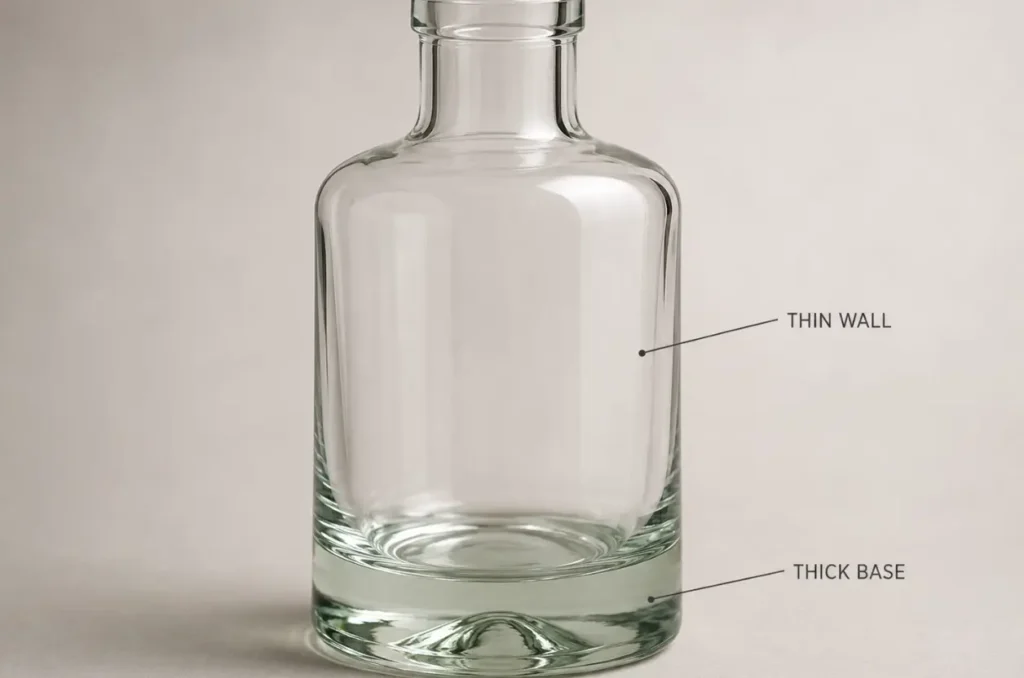
ボトルのデザインも、色の見え方を変えます。薄い壁越しに見ると光路が短くなるため、ガラスがほぼ無色に見えることがあります。一方、厚い底越しに見ると、はるかに多くのガラスを通して見ることに相当するため、同じ微かな色合いでもより目立つようになります。.
したがって、同じガラス配合で作られた軽量なボトルと底が重いボトルでは、透明度に違いがあるように見える場合があります。購入者は、ガラスのグレードについて結論を出す前に、形状、重量、ガラスの厚さが似たボトル同士を比較すべきです。.
Do Clarity Grades Change Bottle Performance?
A higher clarity grade does not automatically make a bottle stronger. Super flint is not necessarily stronger than standard flint, and a visible green tint does not mean that the glass is weak.
Bottle strength depends on the complete container design and how the bottle will be used. Its shape, wall and base construction, glass distribution, annealing quality, surface condition, filling temperature, internal pressure, and transport environment all affect performance.
These factors work together. A heavy bottle may feel more substantial, but additional glass does not guarantee better strength. Poor glass distribution can leave thin or highly stressed areas even when the total bottle weight is high. Jingbo Group’s guide to ガラス瓶の重量 explains why bottle design and glass distribution matter more than weight alone.
Flint glass is not inherently heavier than regular glass either. A standard-flint bottle and a super-flint bottle can have the same capacity, dimensions, and target weight. Premium flint bottles often appear heavier because high-clarity glass is frequently paired with thick bases and luxury packaging designs.
For example, one supplier may quote a lightweight 750 ml standard-flint bottle, while another quotes a much heavier 750 ml super-flint bottle. The second bottle will cost more because it uses both a higher clarity grade and a larger amount of glass. It would be misleading to attribute the entire price difference to clarity.
Clear flint glass also provides limited protection from light. Its transparency is useful when customers need to see the product, but the same transparency allows more light to reach the contents.
Amber glass is generally a better option for products whose flavor, aroma, color, or stability can be affected by light. Beer is a familiar example. Jingbo Group’s guide to why beer bottles are usually brown explains how amber, green, and clear bottles provide different levels of light protection.
The clearest glass is therefore not always the best packaging choice. Buyers should consider the product formula, expected shelf life, retail lighting, storage conditions, and desired appearance before selecting a glass color or clarity grade.
When Is High or Super Flint Worth Choosing?
High and super flint are most useful when the clarity of the bottle contributes directly to the product’s presentation.
Clear spirits such as vodka, gin, and tequila are common examples. A neutral glass color preserves the clean appearance of the liquid. It can also make a thick base, embossed detail, or decorative bottle shape look brighter under retail lighting.
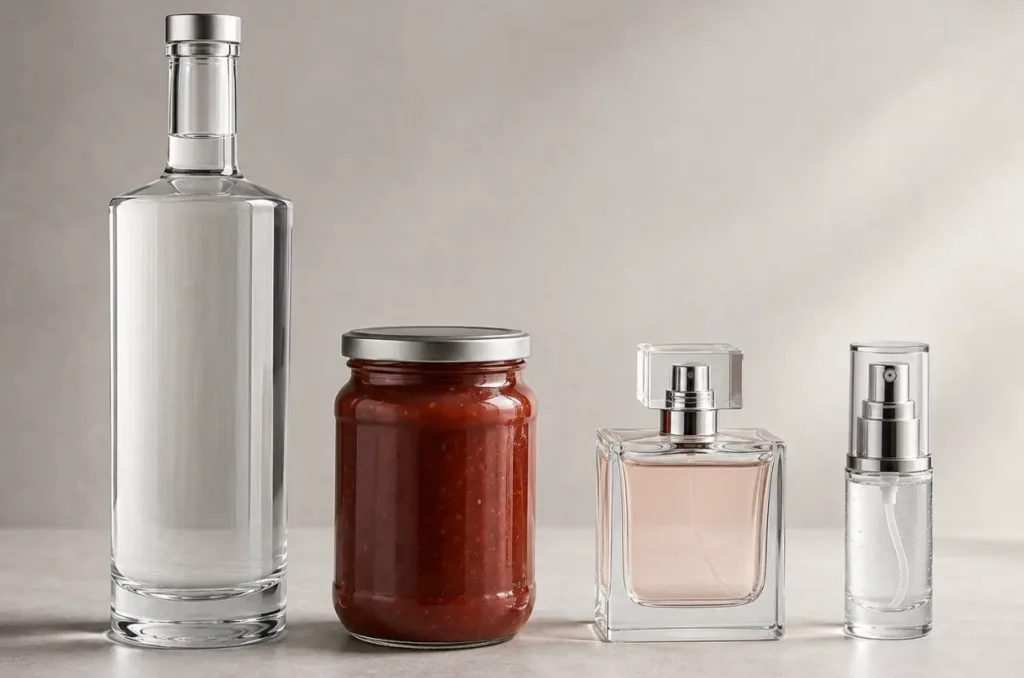
Perfume and cosmetic bottles can benefit for similar reasons. When the formula is clear or lightly colored, residual green glass may affect how customers see the product. Higher-clarity glass creates a cleaner background for transparent labels, minimal printing, metallic details, and premium closures.
Standard flint remains suitable for many food jars, sauce bottles, beverages, and everyday spirits products. A dark sauce, whiskey, or strongly colored drink may hide most of the visual difference between standard and super flint. Paying for the highest clarity grade may provide little practical value in these situations.
The bottle design also influences whether the upgrade is worthwhile. Thick bases, broad heels, sharp corners, deep embossing, and decorative glass details concentrate or bend light. Residual color is often more noticeable in these areas, so a premium clarity grade can produce a more visible improvement.
Decoration may make the difference between glass grades either more or less important. Transparent labels and light screen printing leave most of the glass exposed, so natural clarity remains easy to see. Frosting softens the bottle’s appearance, but it may not completely hide a green base. Deep embossing can make the tint more noticeable because additional glass is concentrated around the raised detail.
An opaque spray coating covers much more of the original surface. If the bottle will be fully coated, the visual advantage of super flint may almost disappear. Standard flint may then be a more economical base for the decoration. Jingbo Group’s guide to ガラス瓶の装飾 compares coating, printing, frosting, labeling, hot stamping, and embossing in more detail.
| Product or Design | Practical Glass Choice | 主な理由 |
|---|---|---|
| Premium clear spirits | High or super flint | Shows the liquid and thick base clearly |
| Standard spirits range | Standard or high flint | Balances appearance and cost |
| Perfume and cosmetics | High or super flint | Supports a clean, premium presentation |
| Food jars and sauces | Standard flint | Provides good visibility at a practical cost |
| Dark-colored products | Standard flint may be enough | The product color can hide the residual tint |
| Fully coated bottles | Standard flint may be enough | The coating covers the original glass color |
| Light-sensitive products | Amber or another protective solution | Clear glass provides limited light protection |
Super flint is worth the higher cost when customers can see the improvement in the finished package and that improvement supports the intended price and market position. It is less valuable when dark contents, a large label, or an opaque coating hides most of the natural glass.
結論
Flint glass generally refers to clear bottle glass, while regular glass is a broad and less precise term. Standard flint is suitable for most everyday packaging, while high and super flint provide better clarity for premium spirits, perfume, cosmetics, and other products where glass appearance matters.
Need help choosing the right glass clarity for your packaging? Contact Jingbo Group at sales@jbtopglass.com for bottle recommendations and a project quotation.