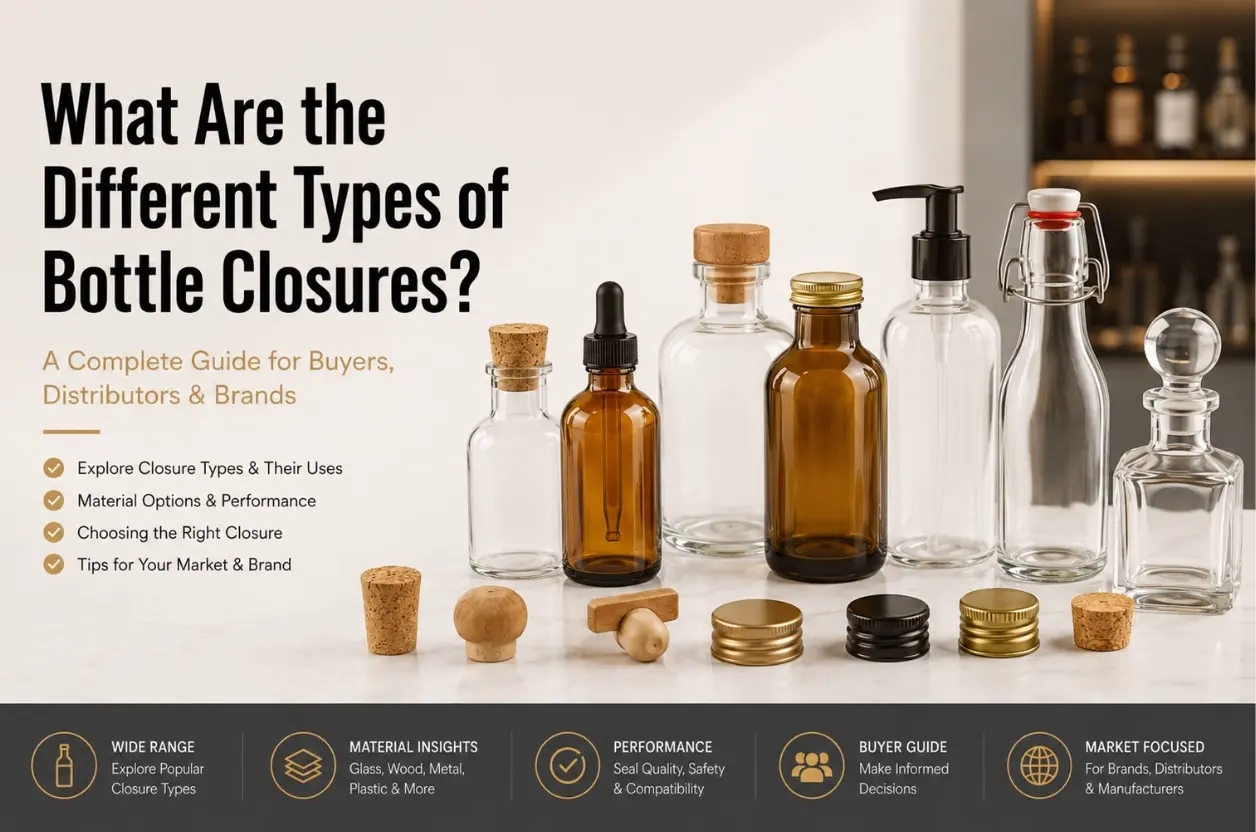
ボトルキャップの主な種類には、コルク栓、バートップまたはTトップ栓、スクリューキャップ、ROPPキャップ、詰め替え不可型キャップ、クラウンキャップ、ラグキャップ、スイングトップキャップ、クリンプキャップ、ポンプ、スプレー、ドロッパー、プラグ、ガラス栓などがあります。 適切な選択は、ボトルの首部形状、製品、充填ライン、ターゲット市場、密封要件、およびブランドの位置づけによって異なります。.
A 閉鎖 これは単にボトルの上部に装着される装飾的な部品というだけではありません。容器を閉じる、あるいは密閉し、液漏れや汚染の防止、開封、内容物の取り出し、再密閉を制御する役割を果たす部品です。ボトルの中でこの閉鎖部品がはめ込まれる部分は、「フィニッシュ」と呼ばれます。.
卸売バイヤーにとって、重要な問いは「どのキャップが最も見栄えが良いか」ではありません。むしろ、「どのキャップがボトルに適合し、製品を密閉し、充填ラインで問題なく機能し、ターゲット市場の要件を満たし、ブランドの販売戦略を支えるか」という問いこそが重要です。“
高級感のある木製の栓は、ウイスキー、テキーラ、ブランデーに適しているように見えるかもしれません。 大量販売されるウォッカやジンのラインには、スクリューキャップの方が適しているかもしれません。購入者がより強力な改ざん防止機能や再充填防止機能を希望する場合は、再充填できないタイプのキャップが必要になる場合があります。ポンプやスプレー式は、香水や化粧品、および定量供給に適しています。.
ボトルとキャップは、一つのシステムとして選定する必要があります。購入担当者は、まずボトルを承認し、生産開始後に適切なキャップを探そうとしてはなりません。.
ボトルのキャップ種類の簡単な比較
以下の表は、購入者にとって実用的な最初の比較材料となります。.
| 閉鎖タイプ | 一般的な用途 | 主な購入者のメリット | 確認すべき主なポイント |
|---|---|---|---|
| 天然コルク栓 | ワイン、スピリッツ、高級商品 | 従来型の外観と圧縮可能なシール | コルクの寸法、ばらつき、ボトルの内径 |
| 合成ストッパー | スピリッツ、ワイン、オイル | 素材と外観の一貫性が向上 | 製品の互換性と取り外しに必要な力 |
| バートップまたはTトップ用ストッパー | ウイスキー、テキーラ、ラム、ブランデー | 最高級のオープニング体験 | 内径とストッパーシャンクの嵌合 |
| ネジ山が連続したスクリューキャップ | 酒類、飲料、食品、化粧品 | 簡単に塗布でき、再密封も可能 | ねじの仕上げ、ライナー、締め付けトルク |
| ROPPキャップ | 酒類、ワイン、油類、大量生産品 | 改ざん防止機能と自動塗布 | 適切なネック仕上げおよびキャッピング装置 |
| 詰め替え不可のキャップ | 酒類およびセキュリティを重視したブランドの輸出 | 改ざん防止機能および再充填防止機能 | 市場の要件と組立システム |
| クラウンキャップ | ビールおよび炭酸飲料 | 確実な圧着シール | クラウンネック仕上げとキャッピング圧力 |
| ラグキャップまたはツイストオフキャップ | ソース、ジャム、食品用瓶 | 迅速な塗布と広口部のシール | ラグ仕上げ、ライナー、充填工程 |
| スイングトップ式開閉 | ビール、飲料、ギフト用パッケージ | 再利用可能で、他とは一味違う | ワイヤーアセンブリ、ガスケット、ボトルの口部 |
| 圧着式留め具 | 香水とフレグランス | ポンプの接続部をきれいに洗浄する | 圧着径とポンプとの互換性 |
| ポンプまたは噴霧器 | 香水、化粧品、パーソナルケア | 定量吐出 | ディップチューブ、出力、ネック仕上げ |
| ドロッパー、プラグ、またはオリフィスレデューサー | 精油、医薬品、規制対象の液体 | 流量制御または定量供給 | 内径およびインサートの寸法 |
| ガラス栓 | デカンタと高級ギフト | 高級感あふれる外観 | 二次シールおよび輸送時の保護 |
ボトル用キャップはさまざまな業界で使用されているため、その種類は多岐にわたります。酒類用ボトルのプロジェクトでは、購入担当者は通常、バートップストッパー、コルク、スクリューキャップ、ROPPキャップ、装飾用キャップ、および詰め替え不可のキャップをまず比較検討します。.
コルク栓
コルク栓は、ボトルの口に差し込むものであり、ボトルの口の外側からねじ込んで取り付けるものではありません。. 天然コルク 伸縮性があり、軽量で、液体の浸透にも強いという特徴があるため、ボトルの栓の素材として長い歴史を持っています。.
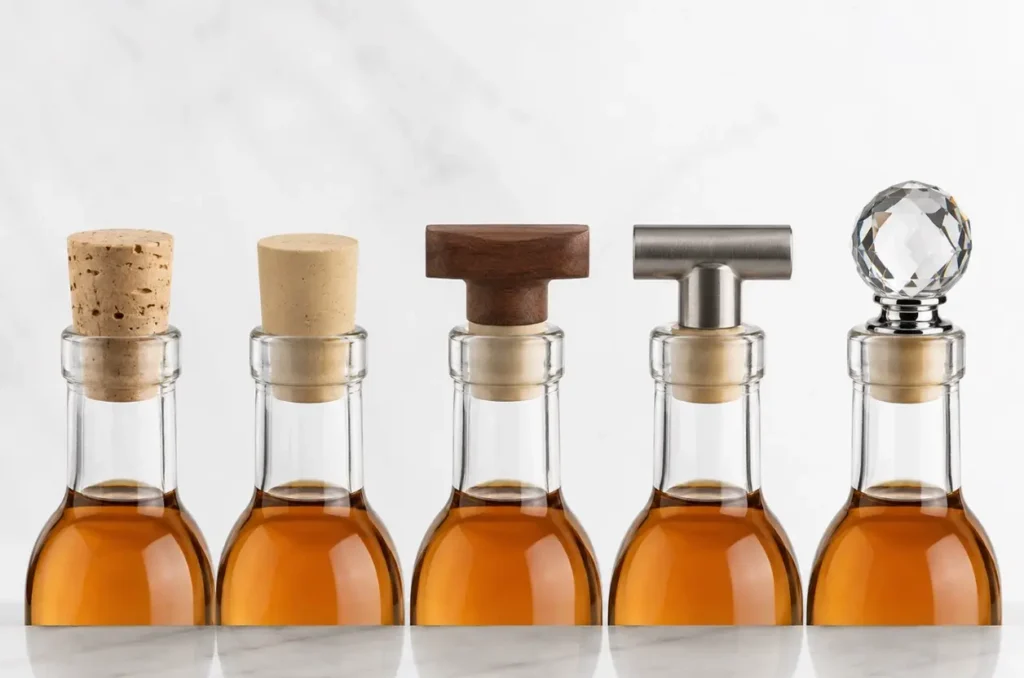
スピリッツのパッケージングに関しては、バイヤーは「フルコルク栓」と「Tトップ栓」という2つの概念を区別する必要があります。フルコルク栓は一般的にワインに関連付けられています。一方、Tトップまたはバートップ式の栓は、木、金属、プラスチック、あるいはその他の装飾素材で作られた目に見える上部を持ち、ボトルの首にはコルクまたは合成素材のシャンクが挿入されています。.
コルク式の栓は、伝統的で高級感あふれる体験を生み出します。顧客はねじって開けるのではなく、引っ張って取り外すため、ウイスキー、ラム、ブランデー、テキーラ、リキュール、クラフトスピリッツのポジショニングを後押しすることができます。.
ただし、購入者は、見た目が高級そうという理由だけでコルク栓を選ぶべきではありません。ボトルの首部の内径と栓のシャンクは、互いに適合していなければなりません。緩すぎる栓は、輸送中に液漏れを起こしたり、ずれたりする恐れがあります。逆に、きつすぎる栓は、差し込んだり抜いたりするのが困難になる場合があります。.
天然コルクは、完全成形された合成ストッパーに比べて、素材のばらつきも大きくなります。調達担当者は、ストッパーの寸法、圧縮率、表面処理、抜去力、および製品との適合性を確認する必要があります。.
バートップおよびTトップ用ストッパー
バートップやTトップのストッパーは、酒類のボトルに最も一般的に使用される高級な栓の一種です。上部は、木製、金属製、ガラスのような素材、セラミック、あるいは成形プラスチック製のものがあります。下部は通常、天然コルク、微細凝集コルク、または合成の密封材が使用されています。.
キャップが視認できることで、そのデザインがブランドイメージの一部となります。木製のキャップは、手作りの温かみや伝統的な雰囲気を醸し出します。金属製のキャップは、よりモダンな印象を与えます。また、装飾性の高い大きなキャップは、ギフト用や限定版のボトルを引き立てる役割を果たします。.
購入者にとっての主なメリットは、その柔軟性です。技術的な互換性が確認されれば、同じ基本のボトルネックに、いくつかの異なるデザインのキャップを装着することが可能です。これにより、ブランドや販売業者は、ボトルの形状を全面的に変更することなく、スタンダード、プレミアム、ギフト向けの各オプションを展開することができます。.
外観よりも、技術的な適合性が依然として重要です。購入者は、ボトルの内径、ストッパーのシャンク径、挿入深度、シール材、抜去力、および不正開封防止バンド、カプセル、あるいは二次部品が使用されるかどうかを確認する必要があります。.
スクリューキャップ
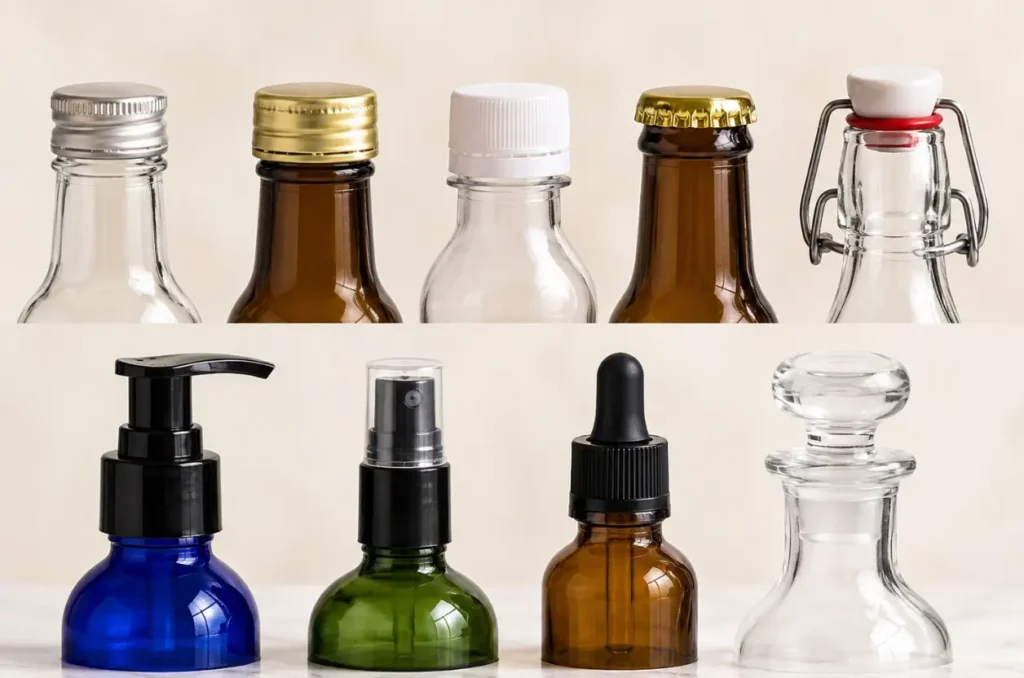
A スクリューキャップ ねじ込み式のボトル口に取り付けます。スクリューキャップは手作業または自動装置で取り付け可能であり、その密閉性能は、ねじ山の適合性、ライナー、および締め付けトルクによって決まります。.
スクリューキャップは、しばしば低コストの選択肢として扱われがちですが、それはあまりにも単純な見方です。適切にデザインされた金属製のキャップは、適切な色、エンボス加工、印刷、ローレット加工、ライナー、そしてネック部のプロポーションを組み合わせることで、高級感あふれる外観に仕上げることができます。.
ウォッカ、ジン、一般的なスピリッツ、リキュール、食用油、飲料、その他の大量生産品については、スクリューキャップには実用的な利点があります。再封が容易で、消費者にも馴染みがあり、効率的な充填作業に適しています。.
購入者は、ネックの直径のおおよその値だけでスクリューキャップを選定すべきではありません。2つのフィニッシュは直径が似ていても、ねじの形状、高さ、あるいはシール面が異なる場合があります。フィニッシュコードをすべて確認する必要があります。.
ライナーもまた、密閉システムの一部です。製品によって、必要なライナーの材質や密封構造が異なる場合があります。アルコール、油、ソース、香水、水では、包装条件が異なります。.
ROPPキャップ
ROPPとは、「ロールオン・ピルファープルーフ(転がして装着する盗難防止仕様)」の略です。このキャップは通常、あらかじめ準備されたボトルの口部に被せられ、キャッピング工程においてネジ山や不正開封防止構造の周囲に成形されます。.
ROPPキャップは、購入者が自動充填、目視による不正開封の検知、および金属キャップのような外観を求める場合に広く採用されています。スピリッツ、ワイン、オイル、その他の液体製品に採用されることがよくあります。.
大きな利点の一つは、キャップを装着する前に装飾を施せることです。ブランド側は、印刷、エンボス加工、色、表面仕上げなどを選択できます。これにより、ROPPキャップは実用的な生産面とブランドイメージの演出の両方をサポートすることが可能になります。.
主な制約は、設備の互換性です。充填ラインには、選定されたボトルの口部形状やキャップの寸法に適したキャッピング装置と金型が備わっていなければなりません。ボトルとROPPキャップは仕様上は適合していても、量産に先立ってライン試験を行う必要があります。.
調達チームは、サプライヤーがボトル、キャップ、ライナー、不正開封防止バンド、およびキャッピング要件を、1つの完全なシステムとして見積もっているかどうかを確認すべきです。.
詰め替え不可のキャップ
再充填不可のキャップは、ボトル開封後の不正な再充填を困難にするよう設計されています。こうしたシステムは、輸出用スピリッツ、偽造防止プロジェクト、および製品のセキュリティ強化が重視される市場でよく採用されています。.
このキャップは、外側キャップ、内部バルブ、インサート、注ぎ口、不正開封防止バンド、ボトルネックとの接合部など、いくつかの部品で構成されている場合があります。このため、このシステムは単純なコルクやスクリューキャップよりも複雑になっています。.
購入者にとっては、製品の安全性と注ぎ量の管理がメリットとなります。販売業者にとっては、再充填できないキャップは、製品の真正性や市場管理、あるいは高級感のある小売展示を重視するブランドにとって、より付加価値の高い選択肢として提案することができます。.
購入者は、対象市場において特定の不正開封防止システムが必要かどうかを確認すべきである。米国で販売される蒸留酒については、TTBのガイダンスにより、ボトルやその他の容器には、確実に固定された 不正開封防止キャップ または同様のデバイス。.
これは、すべてのボトルに同じタイプの閉鎖部を使用しなければならないという意味ではありません。改ざん防止機能は、キャップ、破断式バンド、カプセル、ストリップ、またはその他の適切な構造に組み込むことができます。購入者は、製品が販売される国の最新の要件を確認する必要があります。.
クラウンキャップ
A クラウンキャップ, 、別名「クラウンコルク」とも呼ばれるこの製品は、対応するボトルの口部に圧着して固定する、浅い金属製の栓である。ビールや炭酸飲料と強く結びついており、商業的に成功した最初のボトルキャップのデザインであった。.
クラウンキャップは、パッケージに強固な圧着シールが必要であり、かつ充填ラインがすでにクラウンキャップの取り付けに対応している場合に適しています。ただし、標準的なウイスキーやテキーラのボトルではあまり一般的ではありません。これは、開栓時の感触が異なり、クラウンキャップ用のネック形状が必要となるためです。.
For craft spirits, miniature bottles, ready-to-drink products, and specialty beverages, a crown cap may still be relevant. The buyer should judge it by the product and channel rather than by the traditional category alone.
A crown closure also needs compatible capping equipment. It should not be treated as interchangeable with a screw cap or press-on decorative cap.
Lug and Twist-Off Caps
Lug caps are commonly used on food jars, sauce bottles, preserved products, and wide-mouth glass containers. Instead of a continuous thread, they use several short lugs that engage with the jar finish.
They are useful when the package needs fast application and a broad sealing area. The liner, vacuum conditions, filling temperature, and product type all affect the final seal.
This closure is not a normal choice for whiskey or tequila bottles, but it is important for distributors that sell both spirits packaging and food packaging. A supplier may offer many glass products, but each closure family requires its own bottle finish.
Buyers should not select a lug cap based only on the opening diameter. The number and position of the lugs, finish height, sealing surface, and liner must match.
スイングトップ式キャップ
A swing-top or flip-top closure uses a stopper held in place by a wire assembly. It can normally be opened and resealed without a separate bottle opener.
This format is common in beer, water, specialty beverages, syrups, and gift packaging. It creates a distinctive reusable experience and can support craft or traditional positioning.
The disadvantages are added components and assembly complexity. The wire frame, stopper, gasket, and bottle finish must work together. Packing also needs to protect the closure from bending or impact.
For wholesale projects, the buyer should confirm whether the closure arrives already assembled on the bottle or is supplied separately. That detail affects filling-line labor, packaging, and final cost.
Pumps, Sprayers, Droppers, and Dispensing Closures
Not all bottle closures are designed only to seal. Many closures also control how the product is dispensed.
Perfume bottles may use crimp pumps or screw pumps. Cosmetic bottles may use lotion pumps, mist sprayers, or treatment pumps. Essential-oil bottles may use droppers, plugs, or orifice reducers. Sauce and oil bottles may use pourers or flow-control inserts.
These projects require more than a neck diameter. The buyer may need to confirm the inner opening, dip-tube length, output volume, spray pattern, pump height, overcap dimensions, and product viscosity.
For perfume and cosmetic bottles, the cap is often only the visible outer component. The full system may include the bottle neck, pump, gasket, collar, crimp component, actuator, dip tube, and decorative cap.
This is why distributors should sell pumps and sprayers as matched systems rather than separate accessories.
Glass Stoppers
Glass stoppers are often used for decanters, gift bottles, and luxury spirits packaging. They create a high-end visual effect and can match decorative glass patterns in the bottle body.
However, the visible glass stopper is not always the only sealing component. A secondary gasket, plastic sleeve, cork insert, or another seal may be required to control leakage.
Glass stoppers also need careful packing. Their weight and hard surface can increase the risk of impact damage if the stopper is packed loosely with the bottle.
For limited editions and gift projects, the visual value may justify the added complexity. For high-volume retail orders, buyers should compare the cost, sealing system, replacement risk, and packing method before selecting this option.
Why the Same Closure Does Not Fit Every Bottle
A closure can look correct and still fail.
The bottle finish controls the attachment and sealing surface. A screw cap needs the correct external thread. A T-top stopper needs the correct inner neck diameter. A crown cap needs the correct bead and crimping finish. A pump may need both a specific thread and the correct dip-tube length.
Buyers should therefore confirm the full neck specification before approving closures. Jingbo Group’s guide on ボトルネックのサイズ explains why the outer finish, inner opening, thread style, and closure structure must be checked together.
A reference photograph is useful for style, but it cannot confirm compatibility. The supplier should review technical drawings or physical samples.
For important projects, buyers should approve the bottle and closure together. This reduces the risk of receiving bottles that are correct by themselves but cannot be sealed with the selected cap.
How Should Buyers Choose Bottle Closures?
Buyers should start with function before appearance.
The product determines the required barrier, dispensing, and sealing conditions. The filling plant determines which closure can be applied consistently. The target market determines whether tamper evidence or other regulatory features are required. The brand determines the visible material, color, decoration, and opening experience.
| Buyer Question | その重要性 |
|---|---|
| What product will be filled? | Affects liner, seal, dispensing, and compatibility |
| What bottle neck finish is used? | Determines the closure family |
| How will the product be filled? | Determines capping or inserting equipment |
| Does the bottle need resealing? | Helps compare stoppers, screw caps, and one-time systems |
| Is tamper evidence required? | Affects bands, ROPP caps, capsules, or non-refillable systems |
| What brand level is targeted? | Affects visible materials and decoration |
| Will the bottle be exported? | Affects compliance and packing |
| Is the project high volume? | Affects automation and closure consistency |
| Will the closure ship separately? | Affects assembly and filling-line planning |
| Has the complete package been tested? | Confirms real performance |
The visible style should be chosen after the technical family is confirmed. A buyer can choose a wooden, black, gold, silver, or custom-printed top, but the sealing dimensions cannot be chosen only by appearance.
What Procurement Teams Should Test
The closure should be tested under real project conditions. A dry fit in an office is not enough for a commercial order.
The procurement team should confirm application, sealing, opening, transport, and repeated use. For stopper projects, this may include insertion and removal force. For screw caps, it may include application torque and removal torque. For pumps, it may include priming, output, and leakage.
| Test Area | What the Team Should Check |
|---|---|
| Initial fit | Closure matches the approved bottle sample |
| Leakage | Package remains sealed in expected positions |
| Temperature change | Seal remains stable during storage and transport |
| Opening force | Customer can open the package as intended |
| 再封 | Reclosable systems still perform after opening |
| Filling-line application | Equipment applies the closure consistently |
| Tamper evidence | The feature breaks or changes as intended |
| Product compatibility | Liner, gasket, and closure material remain suitable |
| Transport simulation | Closure remains secure after vibration and handling |
| Decoration quality | Color, logo, and surface remain consistent |
The exact test plan depends on the product. A perfume pump, whiskey stopper, beer crown, and sauce-bottle lug cap should not use the same approval process.
How Distributors Can Sell Bottle Closures
Distributors should not present closures as an unorganized box of caps and corks. Customers buy more confidently when closures are grouped by use and price level.
A useful spirits-closure range can be divided into three levels.
| Distributor Level | Closure Direction | Suitable Customer |
|---|---|---|
| Standard | Screw cap or simple synthetic stopper | New brands and cost-sensitive products |
| プレミアム | Wooden T-top, metal-top stopper, decorated cap | Whiskey, tequila, rum, and brandy brands |
| Security | ROPP or non-refillable closure | Export and anti-refill projects |
For perfume and cosmetics, a distributor can create separate pump, sprayer, collar, and cap combinations. For food packaging, the range can focus on lug caps, screw caps, pourers, and inner plugs.
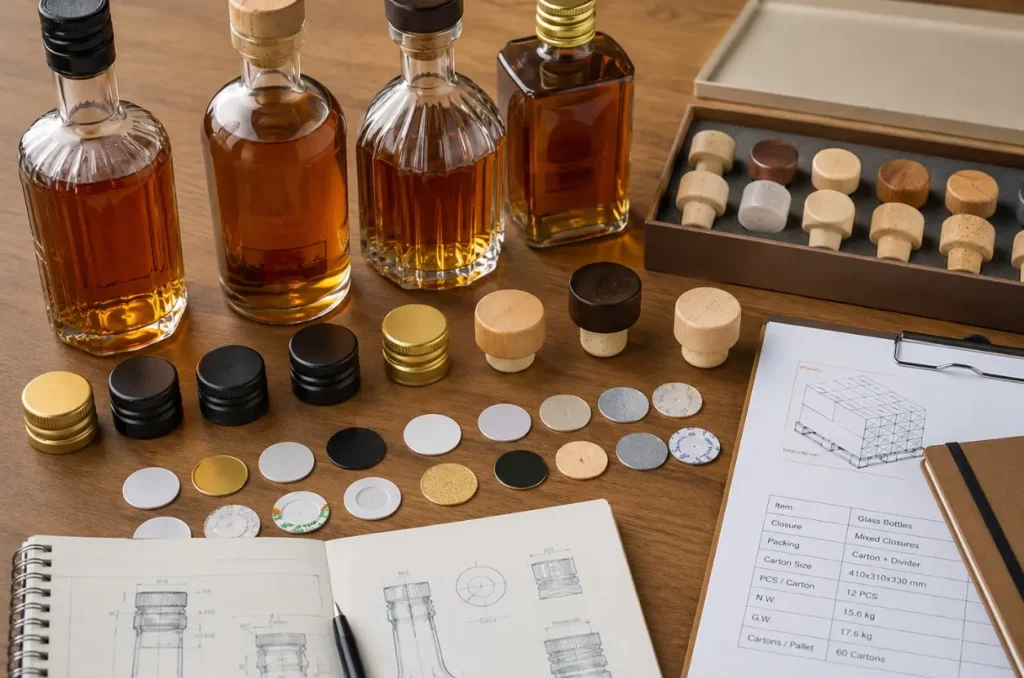
Sample sets are useful. A distributor can show the same bottle with several compatible closures. This helps the customer understand how the closure changes the package without changing the bottle mold.
The closure can also be coordinated with decoration. Gold printing, black coating, frosting, or a premium label may need a matching cap color and material. Buyers can review ガラス瓶の装飾 when planning the complete visual system.
How Jingbo Group Recommends Bottle Closures
Jingbo Group begins with the bottle neck, product, target market, filling method, and brand level. The technical match is confirmed first. The buyer then selects the visible color, material, logo, and style.
For new spirits brands, Jingbo Group may recommend an existing bottle and its proven closure options. This reduces development time and avoids creating a new neck finish before the product plan is stable.
For premium whiskey, tequila, rum, or brandy, Jingbo may compare wooden T-tops, synthetic stoppers, metal-top closures, decorative caps, and tamper-evident secondary components.
For high-volume vodka, gin, liqueur, or oil projects, screw caps or ROPP systems may be more practical when the filling line supports them. For export or anti-refill projects, Jingbo can review non-refillable or stronger tamper-evident systems.
| Buyer Situation | Jingbo Group Usually Recommends |
|---|---|
| Fast spirits launch | Existing bottle with proven closure options |
| Premium whiskey or tequila | Wooden or decorative T-top stopper |
| High-volume vodka or gin | Screw cap or ROPP system |
| Export security project | Tamper-evident or non-refillable closure |
| Gift or limited edition | Decorative metal or glass-style stopper |
| Distributor sample range | Several compatible closures for one bottle |
| Perfume or cosmetic project | Matched pump, collar, and cap system |
| Food or oil project | Suitable screw cap, lug cap, plug, or pourer |
Jingbo Group’s liquor bottle range supports cork, bar-top, screw-cap, T-cork, and related closure directions, subject to the confirmed bottle-neck standard.
Buyers can review the available glass liquor bottles before requesting closure recommendations. Existing bottle and closure combinations are often the most efficient starting point for wholesale orders.
What Should Buyers Send Before Requesting a Closure Recommendation?
A useful inquiry should identify the complete packaging requirement. “I need a cap for this bottle” is usually not enough.
The buyer should provide the bottle sample or drawing, product type, order quantity, filling method, target market, preferred closure style, tamper-evident requirement, and delivery schedule.
A clear inquiry might say:
“We need a closure for a 750 ml whiskey bottle with a cork-finish neck. We prefer a wooden T-top, black and gold branding, and tamper-evident protection for export. Please confirm the suitable stopper dimensions and available styles.”
This information allows Jingbo Group to check technical fit before discussing appearance. It also reduces repeated sampling and prevents the buyer from selecting a decorative closure that cannot work with the bottle.
FAQ About Bottle Closures
What are the main types of bottle closures?
The main bottle closure types include cork stoppers, synthetic stoppers, T-top or bar-top stoppers, screw caps, ROPP caps, non-refillable closures, crown caps, lug caps, swing tops, pumps, sprayers, droppers, plugs, crimp closures, and glass stoppers.
What is the best closure for liquor bottles?
There is no single best closure for every liquor bottle. Bar-top stoppers are common for premium whiskey, tequila, rum, and brandy. Screw caps and ROPP caps are often practical for high-volume spirits. Non-refillable closures can support security-focused export projects.
What is the difference between a cork and a bar-top stopper?
A cork may consist mainly of the inserted sealing material. A bar-top or T-top closure combines an inserted cork or synthetic shank with a visible decorative top made from wood, metal, plastic, or another material.
Can screw caps be used for premium spirits?
Yes. A metal screw cap can support premium packaging when the bottle, cap proportions, decoration, liner, and brand design are coordinated. Screw caps should not automatically be treated as low-end closures.
Why does the same cap not fit every bottle?
Bottle finishes differ in diameter, thread profile, height, sealing surface, inner opening, and attachment structure. A closure must match the complete neck specification, not only the approximate diameter.
What is a tamper-evident closure?
A tamper-evident closure includes a feature that shows visible evidence when the package has been opened or interfered with. The feature may be a breakable band, capsule, strip, cap component, or another structure.
What is a non-refillable liquor closure?
A non-refillable closure includes internal components that make the bottle more difficult to refill after opening. It may also provide controlled pouring and tamper evidence.
Can Jingbo Group provide matching bottle closures?
Yes. Jingbo Group can recommend compatible corks, T-top stoppers, screw caps, ROPP caps, non-refillable closures, pumps, sprayers, or related components based on the bottle neck and product requirements. The buyer can then select the preferred color, material, and visible style.
結論
Bottle closures affect far more than the appearance of a package. They control sealing, opening, resealing, dispensing, tamper evidence, filling-line performance, and customer experience.
Corks and bar-top stoppers are often suitable for premium spirits. Screw caps and ROPP caps can support efficient filling and consistent sealing. Non-refillable closures can add product-security functions. Crown caps, lug caps, swing tops, pumps, sprayers, and droppers serve different beverage, food, perfume, and cosmetic applications.
The best closure is not the most decorative or the least expensive option. It is the closure that matches the bottle neck, product, production line, target market, brand level, and transport conditions.
Buyers should approve the bottle and closure as one package. Distributors should organize closures by application and price level. ジンボーグループ recommends confirming technical compatibility first, then selecting the color, material, decoration, and style that support the brand.