
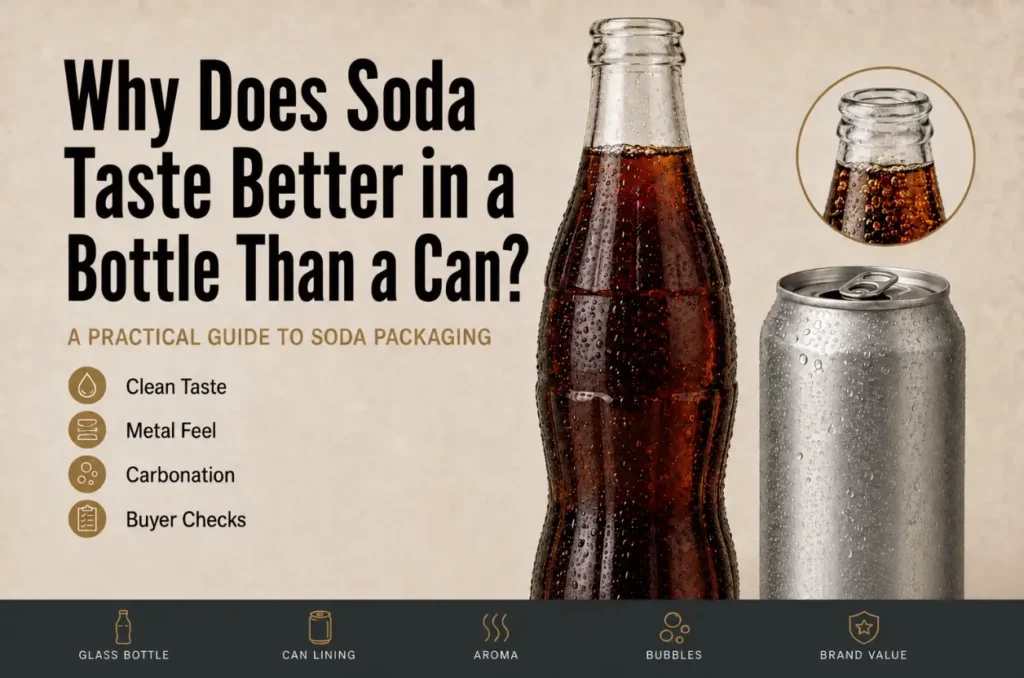
Glass bottle soda tastes better for many people because glass feels cleaner, colder and more neutral when drinking. The drink may use the same formula, but the packaging changes how we smell, taste, and judge it.
A can is light and easy to chill. It is also excellent for transport. But when people compare the same soda in a bottle and a can, many still prefer the glass bottle. The reason is not only one thing. It comes from packaging material, aroma, mouthfeel, carbonation, temperature and even memory.
So, does soda really taste better in glass? Often, yes to the drinker. But the reason is more complex than “glass is always better.”
Is the Soda Formula Different?
Sometimes it is. Sometimes it is not.
Many soda brands use the same basic recipe across glass bottles, cans and plastic bottles. But in some markets, the sweetener, water source or production plant may be different. For example, one version may use cane sugar while another uses high-fructose corn syrup.
That means a “bottle vs can” comparison is not always a clean test. If the soda comes from different factories or countries, the package may not be the only reason for the taste difference.
But even when the formula is the same, people may still feel that soda tastes better from glass. That is where packaging starts to matter.
Glass Does Not Add a Metal Smell
Glass is a very neutral packaging material. It does not have the same smell or mouth contact as metal or plastic. This matters because taste is closely connected to smell.
When you drink from a can, your nose is close to the metal opening. Even if the drink itself is not touching bare aluminum in the way people imagine, the can still gives a different sensory experience. You feel the metal edge, smell the can opening and drink through a small cut in the top.
Modern beverage cans usually have an internal coating that separates the drink from the metal. The Food Packaging Forum explains that metal food and beverage cans often use coatings to keep the product separate from the metal surface. The FDA also notes that epoxy resins have been used as protective linings inside some metal-based food and beverage cans.
This coating helps protect the drink and the can. But the total drinking experience still feels different from glass.
Glass has no metal edge. It has no can-opening smell. For many people, that makes the soda taste cleaner.
Glass Is More Neutral for Flavor
Glass is often chosen for drinks because it is chemically stable and does not easily interact with the product inside. FEVE notes that glass acts as a barrier that helps protect taste, freshness, aroma and bubbles in carbonated drinks.
For soda, this is important because flavor is not only sweetness. It also includes acidity, aroma, carbonation and the clean finish after swallowing.
A glass bottle does not make soda sweeter by itself. It does not create flavor. But it can help the drink feel closer to its intended taste because the package is not adding a strong smell or drinking sensation.
This is one reason premium sodas, craft beverages and nostalgic soft drinks often use glass bottles.
Carbonation Feels Different in a Glass Bottle
Carbonation is one of the biggest reasons people enjoy soda. The bubbles create sharpness, freshness and a clean bite.
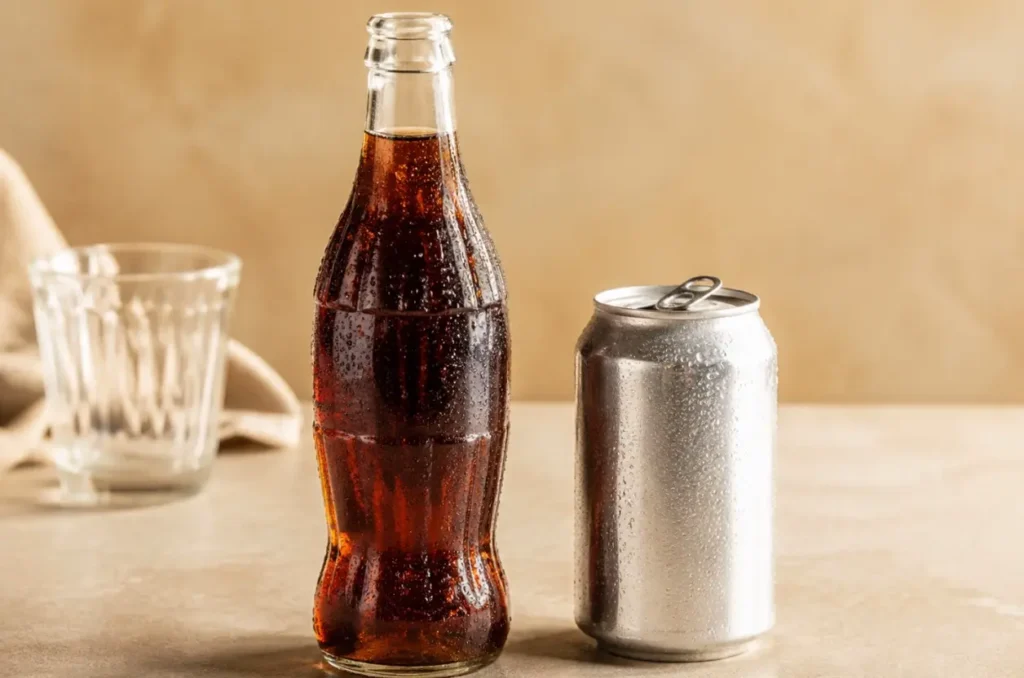
Glass is a strong barrier for carbonated drinks. It helps keep carbon dioxide inside the package during normal storage. Cans also protect carbonation well, but the drinking experience from a bottle can make the bubbles feel different.
A glass bottle usually has a narrower opening than a can. When you drink from the bottle, the soda flows through a smaller mouth. The aroma is more focused, and the bubbles may feel sharper on the tongue.
A can has a wider top area. Once opened, more surface area is exposed. The soda may still be fizzy, but the first sip feels different.
This does not mean every glass-bottled soda has more carbonation than every canned soda. Filling pressure, closure quality, storage time and temperature all matter. But glass bottle soda often gives a stronger “fresh” feeling when served cold.
Temperature Changes the Taste
Cold soda usually tastes better than warm soda. It feels crisper, less syrupy and more refreshing.
Glass has a heavier, colder feel in the hand and on the lips. A chilled glass bottle can make the drink feel colder before the soda even reaches the tongue. That physical feeling can change how the brain judges flavor.
A can also chills quickly, which is one of its advantages. But the thin metal wall, pull-tab opening and direct metal mouth contact create a different experience.
This is why two drinks with the same formula can feel different when served from different packages.
The Bottle Shape Affects Aroma
Flavor is not only what touches the tongue. Much of what we call taste comes from aroma.
When you drink soda from a glass bottle, the narrow neck directs aroma toward the nose. The first sip can feel more focused. The bottle shape also controls how the liquid reaches the mouth.
A can creates a wider opening, but the nose is close to the metal top. Some people notice the package more than the drink.
This is similar to why wine, beer and spirits use different glass shapes. The container changes how aroma reaches the drinker. Soda is simpler than wine, but the same basic idea still applies.
Psychology Also Matters
Some of the difference is emotional.
Glass bottles often feel more premium. They are heavier. They look cleaner. They are linked with older soda shops, restaurants and special occasions. That can make the drink feel better before tasting even begins.
Blind taste tests sometimes show that people cannot always identify the package when visual and touch cues are removed. Serious Eats tested this idea and found that the perceived difference can become much smaller when people do not know which package the soda came from.
That does not mean people are “wrong.” Packaging is part of the product experience. If the bottle makes the soda feel colder, cleaner and more enjoyable, that experience is real for the buyer.
For beverage brands, this matters. A package does not only protect the drink. It also shapes how customers value it.
Does a Can Make Soda Taste Metallic?
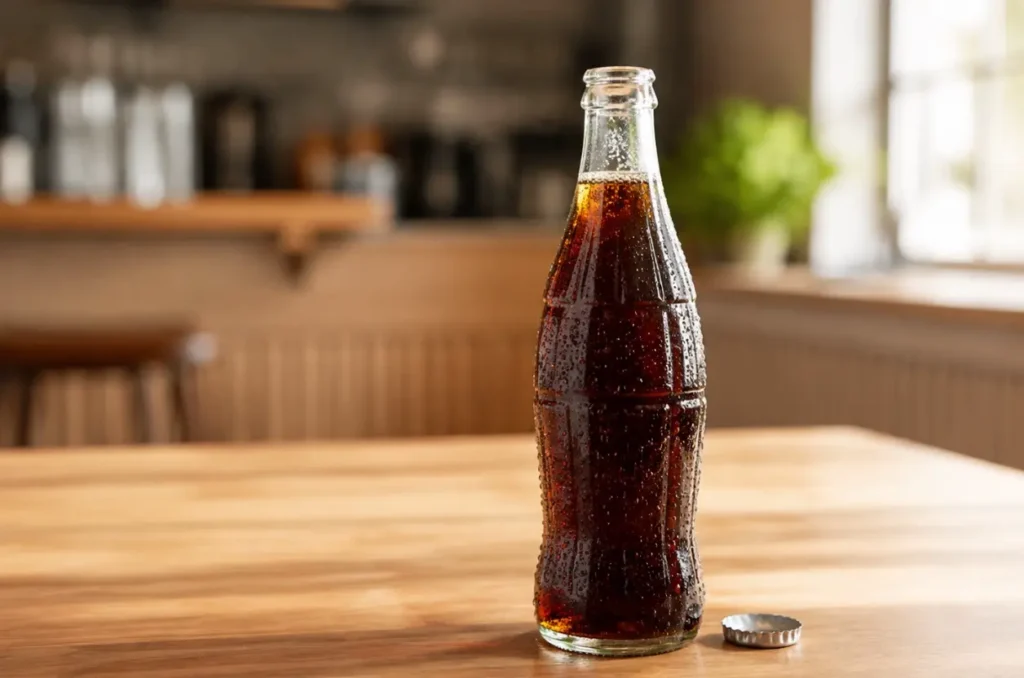
A good beverage can should not make soda taste strongly metallic. The internal coating is designed to prevent direct contact between the drink and the metal.
However, some people still describe canned soda as having a “metallic” note. This may come from the smell of the can opening, the feeling of the metal on the lips, or the way the drink is consumed directly from the can.
It may not be the soda itself changing. It may be the drinking path.
If the can is damaged, stored badly or past its best condition, off-notes are more likely. But for normal commercial soda, the metal taste is often a sensory impression rather than proof that the drink is touching bare aluminum.
Glass Bottle vs Can: Which Is Better for Soda Brands?
For beverage brands, the answer depends on the market.
Cans are light, strong, easy to stack and efficient for shipping. They are a practical choice for large-volume distribution, outdoor use and fast retail turnover.
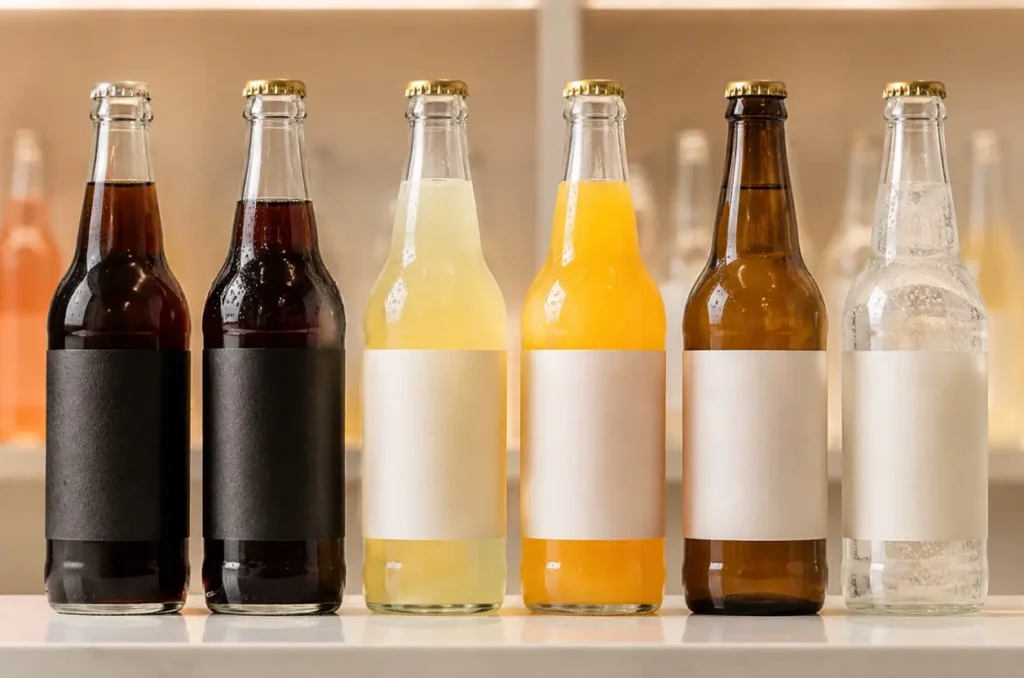
Glass bottles are heavier and need more careful packaging. But they offer a premium look and a cleaner drinking experience. They are often used for craft soda, restaurant service, gift packs, imported drinks and brands that want a higher-end feel.
A glass bottle can also show the drink color clearly. This is useful for cola, fruit soda, sparkling juice, tonic water and flavored carbonated drinks.
For brands, the choice is not only cost. It is also positioning.
When Glass Bottles Are a Good Choice
Glass soda bottles are especially suitable when the product depends on appearance, freshness and brand image.
They work well for:
Craft soda brands that want a premium shelf look.
Restaurants, cafes and hotels that serve drinks directly in the bottle.
Sparkling juice, tonic water and flavored carbonated drinks.
Export beverage projects where the bottle shape supports brand recognition.
Gift packs or limited-edition drinks.
If the target customer expects a low-cost everyday drink, cans may be more practical. If the goal is a better drinking moment and stronger shelf value, glass bottles can be a good fit.
자주 묻는 질문
Does Soda Really Taste Better in a Glass Bottle?
Many people think so. Glass gives a cleaner smell, colder mouthfeel and more premium drinking experience. However, blind tests may show smaller differences when people cannot see or touch the package.
Is Glass Better Than a Can for Carbonation?
Glass is an excellent barrier for carbonated drinks. Cans also protect carbonation well. The final result depends on filling quality, closure, storage time and serving temperature.
Why Does Canned Soda Sometimes Taste Different?
It may be caused by the can opening, metal mouth contact, aroma difference, temperature or storage condition. Modern cans normally have an internal coating between the drink and the metal.
Is Glass Soda Healthier Than Canned Soda?
The package does not change the sugar, calories or ingredients of the soda. Glass may offer a more neutral drinking experience, but the nutrition depends on the drink formula.
Why Do Premium Sodas Use Glass Bottles?
Glass bottles look more premium, feel better when served cold and help create a stronger brand experience. They are common for craft soda, restaurant drinks and export beverage packaging.
결론
Soda tastes better in a glass bottle for several reasons. Glass is neutral, has no metal mouthfeel, supports a clean aroma and gives the drink a colder, more premium feeling. Carbonation, bottle shape and memory also affect how people judge the taste.
A can is practical and efficient, but a glass bottle can make the same drink feel more enjoyable.
Jingbo Group manufactures glass bottles for beverage packaging projects, including carbonated drinks, sparkling juice and custom soda bottle designs. We can review bottle shape, capacity, closure and export packaging together before production. 저희 팀에 문의해 주세요 to discuss an existing bottle or a custom glass soda bottle project.