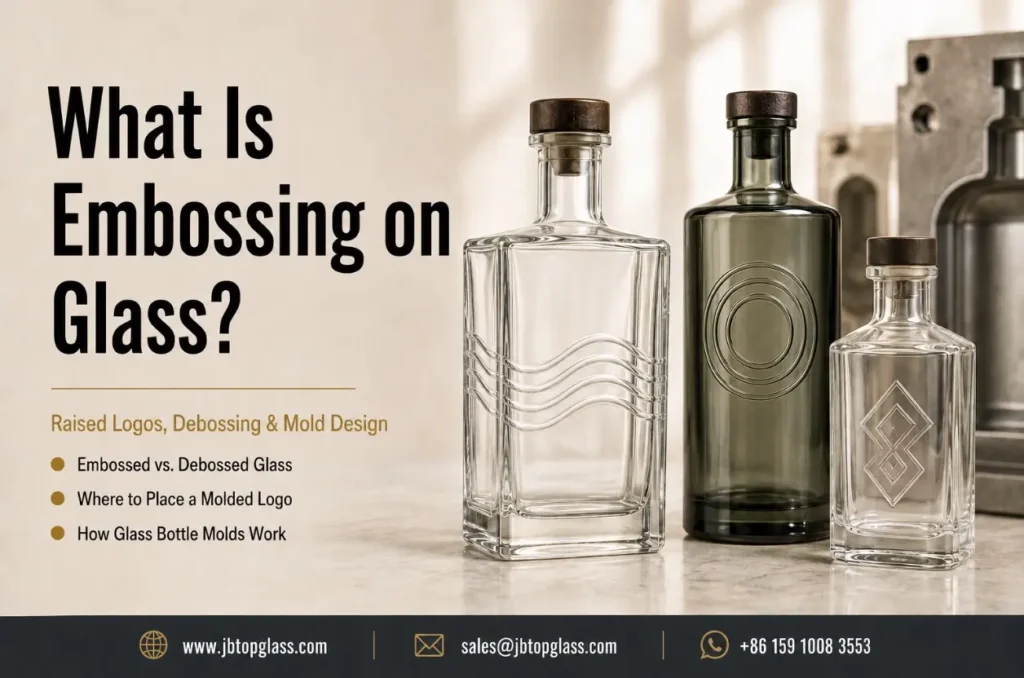
Glass bottle embossing is a process that creates raised logos, lettering or decorative patterns directly on the surface of a bottle. Unlike a printed design or paper label, the artwork becomes part of the glass itself when the bottle is formed inside its mold. This gives the finished package a permanent three-dimensional detail that customers can see and feel.
Embossing is often used for whiskey bottles, wine bottles, perfume packaging and decorative food jars. However, the design must be planned before production because it affects the mold, bottle surface, label position and sometimes the way bottles are handled.
How Does Glass Bottle Embossing Work?
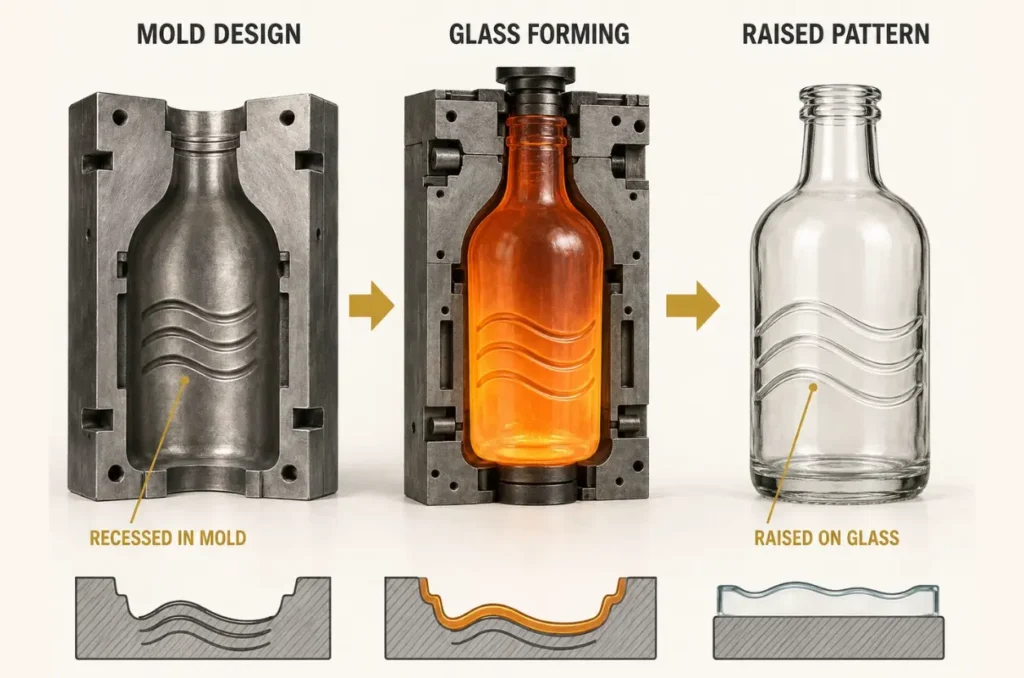
Glass bottle embossing is created during production, not after the bottle is finished. The logo or pattern is first engraved into the inside of the bottle mold. When hot glass is blown into the mold, it presses against the engraved area and forms a raised design on the bottle.
Think of it like pressing dough into a patterned baking mold. A sunken pattern inside the mold becomes a raised pattern on the finished product. The Arizona State Museum describes how reversed lettering inside a mold creates raised letters on a glass bottle.
Because the design is part of the mold, it must be confirmed before production begins. If a brand wants to add its own logo, the factory must first check whether the existing mold can be modified or whether a new mold is needed. Jingbo Group reviews these requirements during 유리병 금형 개발.
Is Embossing and Debossing the Same Thing?
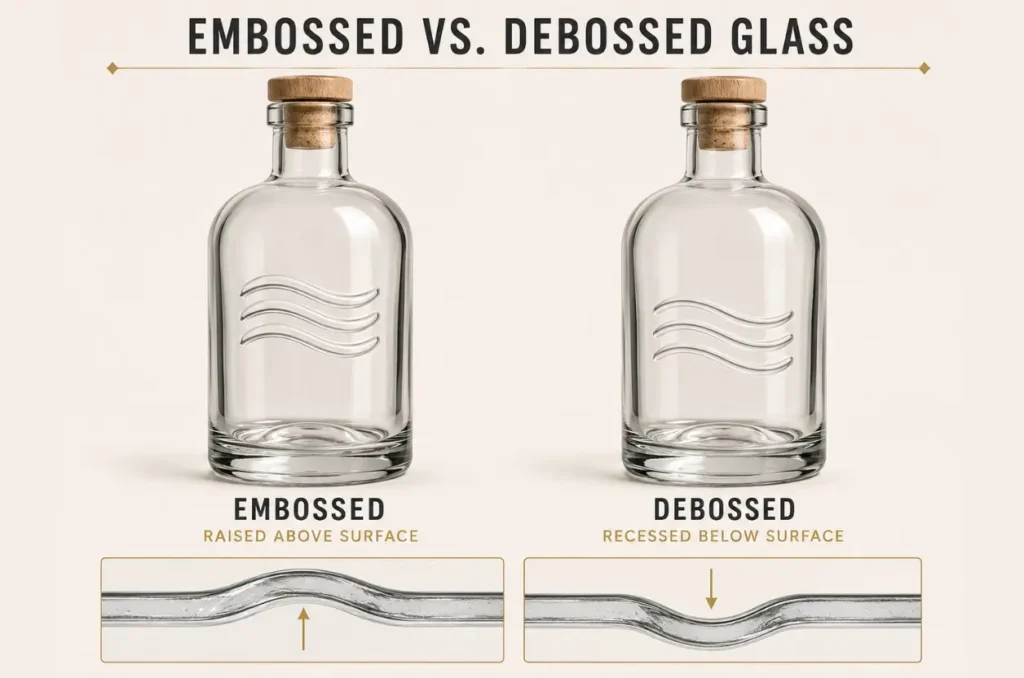
Embossing and debossing are related, but they create opposite effects. An embossed logo stands above the surrounding glass, while a debossed logo sits below it. Both become part of the bottle during molding, but their appearance, visibility and effect on the surface are different.
| 주요 기능 | 엠보싱 | Debossing |
|---|---|---|
| Logo position | Raised above the surface | Recessed below the surface |
| Visual style | More noticeable and textured | More subtle and restrained |
| Common use | Brand names, crests and decorative patterns | Recessed logos and discreet brand details |
| Main consideration | Contact with labels and adjacent bottles | Glass profile, logo visibility and mold design |
For example, a whiskey brand may choose a raised crest on the shoulder to create a traditional appearance. A perfume brand may prefer a recessed mark on the lower body because it supports a cleaner and more minimal design.
What Are the Key Differences Between Embossed and Debossed Logos?
The first difference is how the logo interacts with light. Raised edges often catch highlights and create stronger shadows, making an embossed design easier to notice from different angles. A debossed design usually appears quieter because the detail sits inside the surrounding surface.
The second difference is how the bottle feels in the hand. An embossed logo has a more obvious raised texture, which can reinforce the brand when a customer picks up the bottle. A debossed logo creates a recessed detail that may feel more controlled and less prominent.
The third difference is how the design affects other packaging elements. Raised artwork can interfere with a label or rub against neighboring bottles if it is placed in the wrong area. Recessed artwork can also create problems when a label passes over an uneven section, so both methods need to be coordinated with the final label layout.
Neither option should be selected from a flat logo file alone. The factory needs to assess the bottle shape, the proposed design location, the mold opening direction and how the detail will appear in real glass.
Where Can Embossing Be Added to a Glass Bottle?
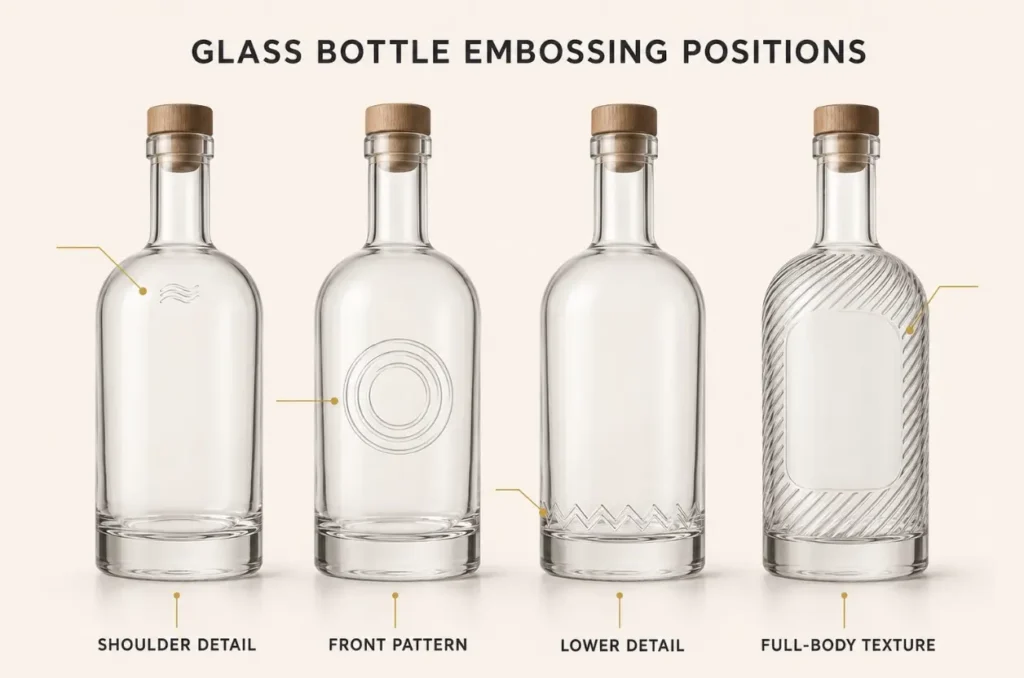
The bottle shoulder is a useful position when the main front panel needs to remain smooth. A raised crest or short brand name can sit above the label without interfering with the product information. This arrangement is common on spirits bottles because it keeps the molded detail visible even when the bottle also has a large front label.
The body is another popular location, especially when the embossed logo is intended to become the main design feature. In this case, the surrounding glass should provide enough uninterrupted space for the artwork. The label may need to move to another panel, the opposite side or a smaller area below the logo.
The lower sidewall and areas near the base can also carry a smaller brand mark. A decorative pattern can extend across more of the body, but the supplier should check whether the raised sections will touch adjacent bottles during transport or interfere with handling on the filling line.
Jingbo Group의 embossed glass liquor bottle shows how a molded pattern can become a major part of the bottle’s appearance. The same approach can also be used for food packaging, as shown by these bee-shaped honey jars.
What Are the Disadvantages of Embossing?
The main disadvantage is that the design normally requires mold work. A raised or recessed logo cannot be added to a finished stock bottle through ordinary decoration. Depending on the project, the factory may need a new mold, a modified mold or a suitable mold insert, and the final approach depends on the bottle structure and available tooling.
Embossing also reduces flexibility once the design has been approved. A paper label can be changed when the brand updates its artwork, adds a new product or enters another market. A molded logo becomes part of the bottle, so changing it later may require additional work on the mold.
Artwork detail can be another limitation. Very thin lines, small letters and closely spaced elements may not reproduce clearly in glass, even if they look sharp in a digital file. The supplier should review the actual logo rather than apply a fixed depth or minimum line width that may not suit the bottle.
Raised features can also affect label application, filling-line contact and export packing. A large logo placed directly under a label may cause wrinkles, while an exposed raised pattern may rub against the next bottle inside a carton. These risks do not mean embossing should be avoided, but they do need to be considered before the mold is approved.
Can You Add Embossing to an Existing Glass Bottle?
An existing bottle shape can sometimes serve as the starting point for a new embossed design. If the basic size, neck finish and body shape already suit the product, the supplier can review whether a customized mold or insert can add the required logo without developing an entirely different bottle.
However, this does not mean that finished bottles already in stock can be embossed afterward. True glass bottle embossing is created while the bottle is being formed, so adding a new raised design always requires an appropriate molding solution.
For brands that do not want to change the mold, other decoration methods may be more practical. Jingbo Group’s surface decoration options include screen printing, decals, frosting, coating, hot stamping and labels.
Is Embossing the Same as Laser Engraving or Printing?
Embossing changes the shape of the glass during bottle production. Laser engraving marks the surface after the bottle has been formed, while screen printing applies ink to the outside. The methods can all display a brand name, but they do not produce the same appearance or require the same production steps.
A laser-engraved logo can be a suitable option when the brand wants a permanent surface mark without adding a raised feature. Screen printing is often useful when the artwork needs color, clearer text or stronger contrast against the glass. Neither method creates the same molded three-dimensional effect as embossing.
These processes can also be combined. For example, a bottle might have an embossed symbol on the shoulder and a printed product name on a smooth front panel. This keeps the permanent brand detail separate from information that may change between products.
How Should Buyers Choose Between Embossing and Debossing?
Embossing is usually the better choice when the brand wants a noticeable logo, a stronger tactile effect or a decorative pattern that becomes part of the bottle’s identity. Debossing may be more suitable when the goal is a quieter visual effect or a recessed detail that does not stand out as strongly from the surface.
The final decision should also consider the label layout, bottle shape and production method. A brand that changes its artwork frequently may be better served by printing or labels, while a brand with a stable long-term identity may benefit more from molded details.
Before requesting a quotation, the buyer should provide the preferred bottle shape, target capacity, logo artwork, proposed design position and expected order quantity. Jingbo Group can review these requirements through its 맞춤형 유리병 디자인 서비스 and determine whether the project needs a new mold or an adapted existing design.
결론
Glass bottle embossing creates raised logos and patterns directly in the bottle mold, while debossing produces recessed details. Both methods can add permanent brand identity when the artwork, label area and bottle structure are planned together. 징보 그룹 can help buyers select a suitable design and evaluate the mold requirements before production.