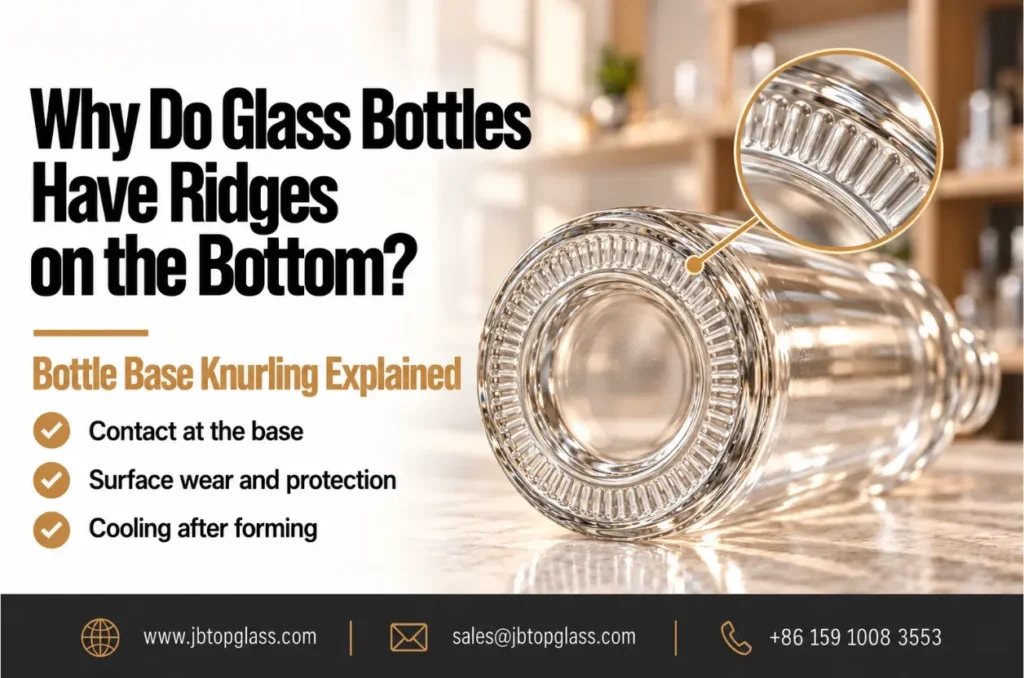
Glass bottles have ridges on the bottom to control how the base contacts conveyors and other surfaces. These raised patterns, usually called base knurling, help manage contact damage and reduce the area exposed to sudden cooling when a newly formed bottle touches a cooler surface.
The pattern is normally an intentional part of the bottle design. Its purpose goes beyond making the bottom look textured or helping a bottle grip a table.
What Are the Ridges on a Glass Bottle Called?
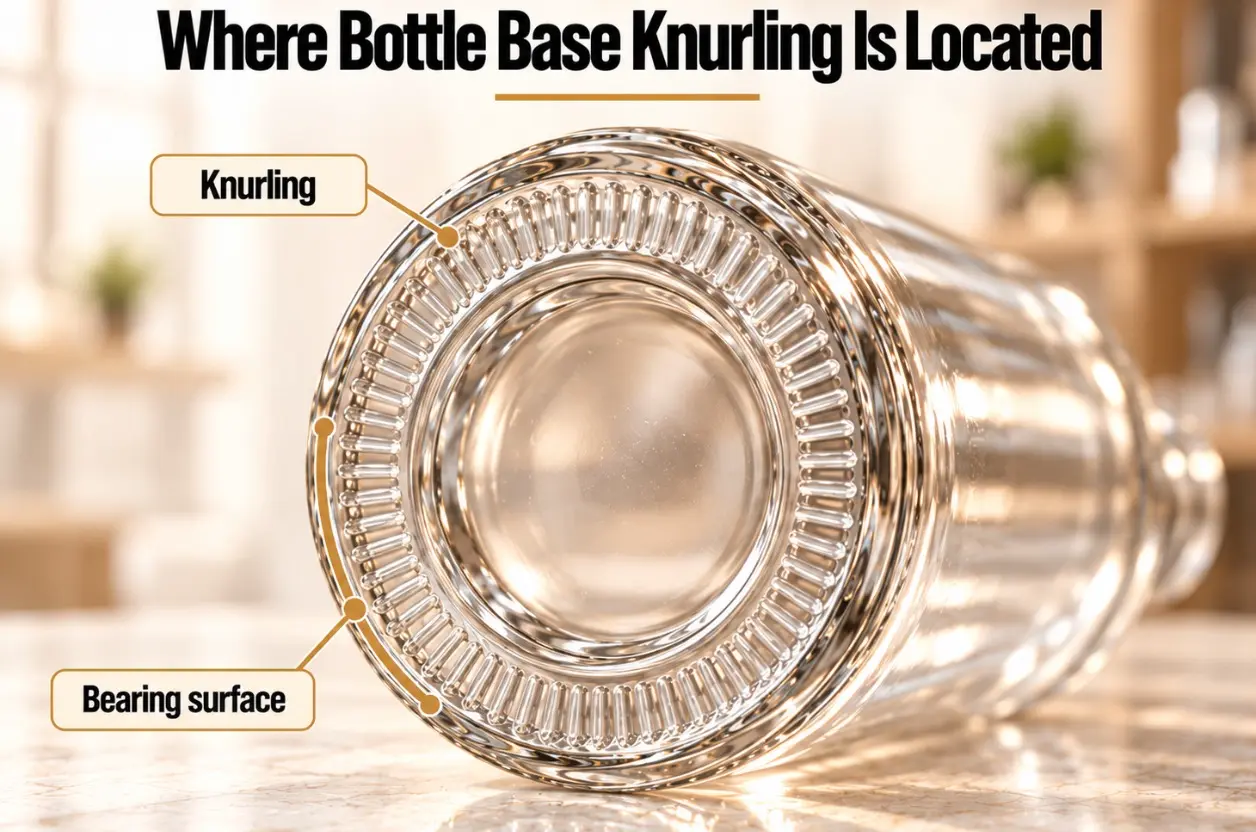
The individual raised features are called knurls. Together, they form the knurling pattern.
They usually sit on the bearing surface: the part of the base that supports the bottle when it stands upright. On many bottles, this is a ring near the outer edge. The recessed center stays above the supporting surface.
Some patterns look like short ribs. Others use curved shapes or small raised dots. Their position matters because this is where the bottle meets conveyor belts, packing surfaces and worktops.
A regular texture around this contact area serves a different purpose from a logo or a production code.
How Are These Ridges Formed?
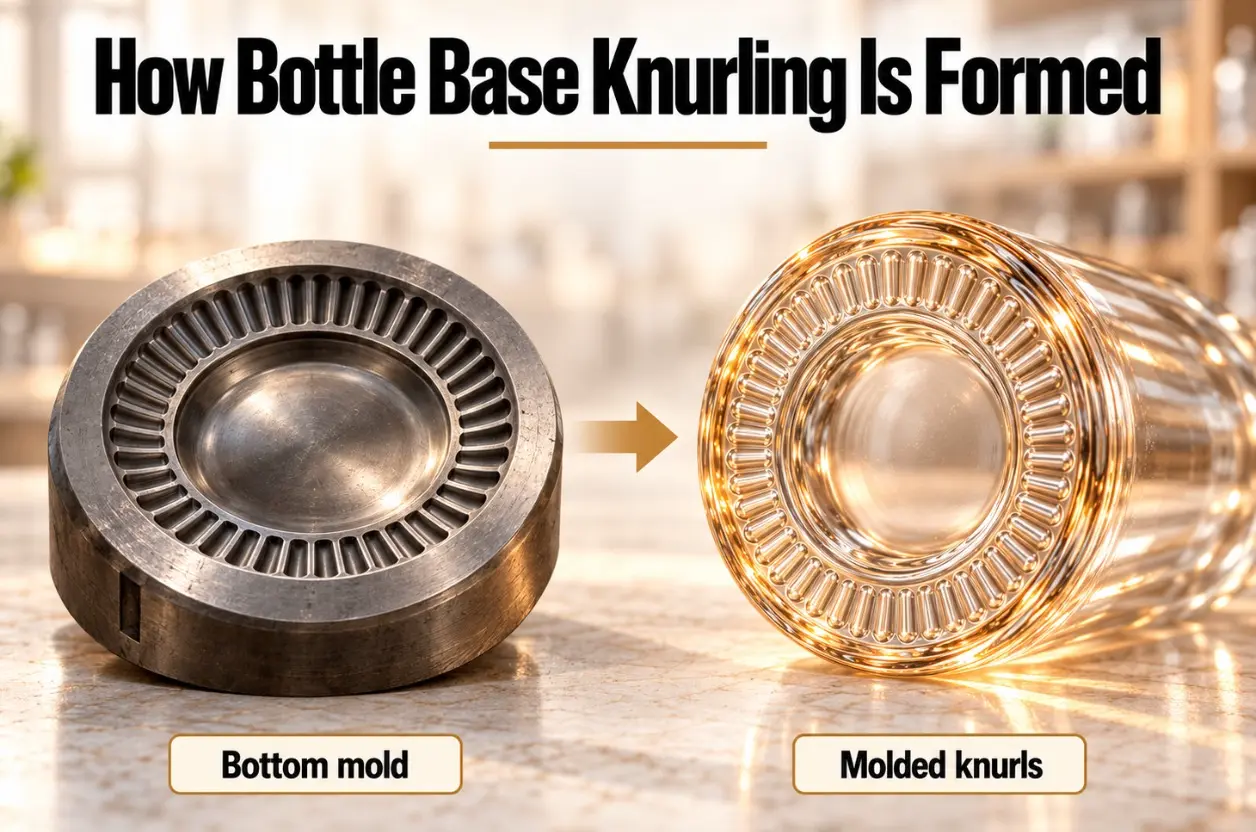
The ridges take shape in the mold while the glass is still hot.
During the 유리병 제조 공정, compressed air expands a hollow glass form into the final mold. The bottom mold shapes the underside and forms the knurling pattern.
The pattern becomes part of the glass itself. It is not normally cut into a finished bottle afterward or added as a separate coating.
Its shape therefore belongs to the glass bottle mold design. Changing the pattern involves the tooling and forming process, rather than a simple decoration change.
What Do the Ridges on the Bottom Do?
They Limit Direct Contact at the Base
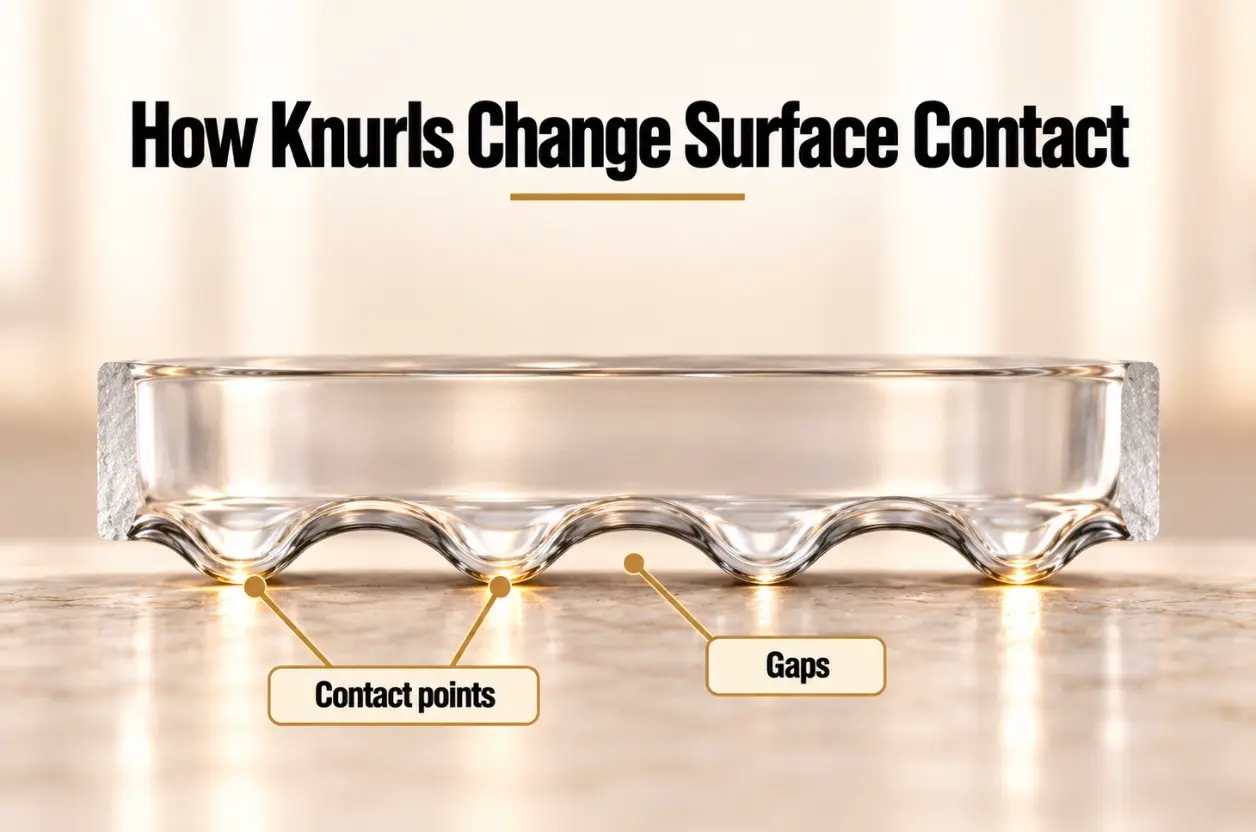
A knurled base rests on selected raised areas. The spaces between those areas remain above the supporting surface.
This changes where contact occurs. Instead of exposing a broad, continuous part of the bearing surface, the design places contact at the tops of the knurls.
The shape of each ridge also matters. A rounded contact feature meets a surface differently from a wide, flat one. The useful effect comes from the complete contact geometry, including the gaps between the raised features.
They Help Protect Important Areas from Surface Damage
A bottle base meets other surfaces throughout production and handling. Abrasive contact, including rubbing against trapped particles, can scratch the glass.
Those scratches matter because surface damage can reduce glass strength. Their location matters too: different parts of the base experience different tensile stresses under load. Tensile stress pulls the glass apart.
With suitable base knurling, routine contact damage tends to occur at the raised tips. The design helps keep that damage away from more highly stressed areas between them.
The ridges influence where contact takes place, without preventing every scratch.
They Help Manage Local Cooling After Forming
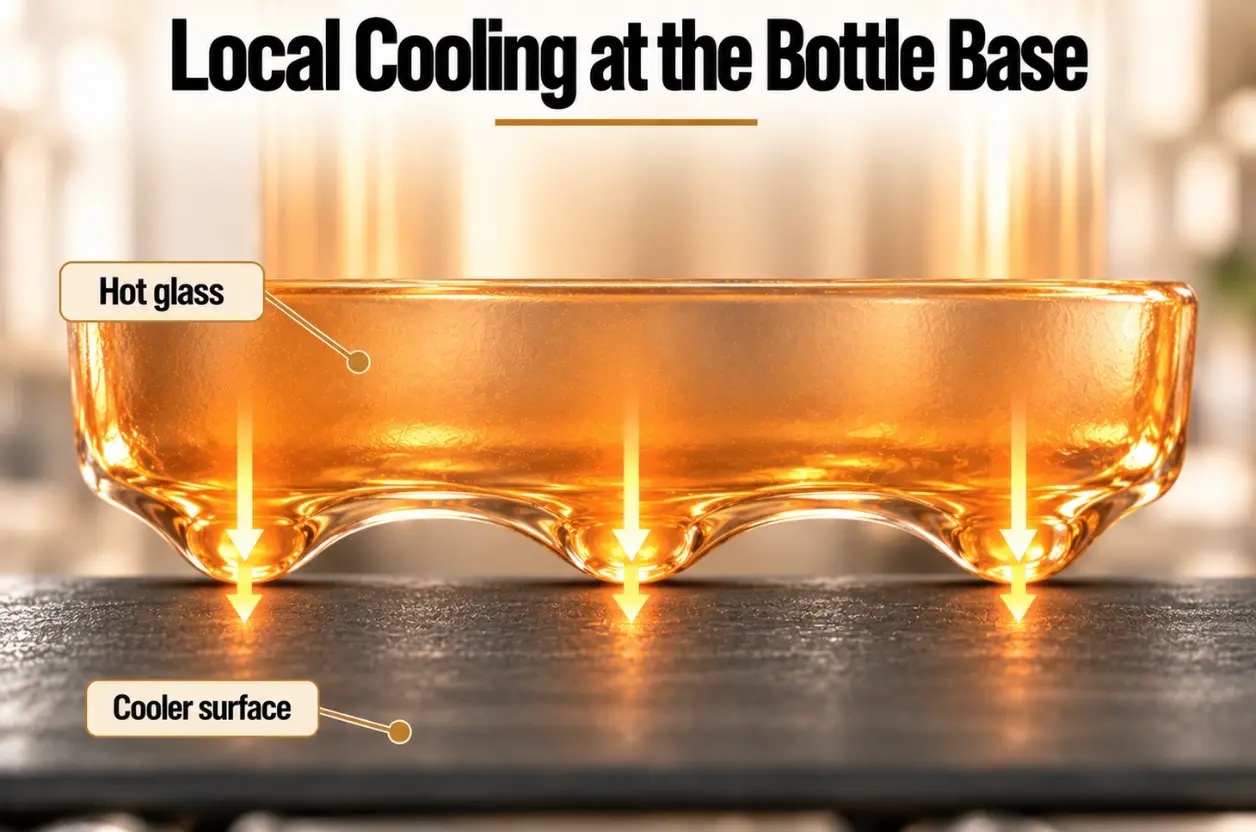
A newly formed glass bottle is still very hot when it leaves the mold.
When its bottom touches a cooler conveyor or supporting surface, heat leaves through the contact points. Local cooling creates temperature differences within the glass, which can generate stress.
A raised contact pattern reduces the area touching the cooler surface. This helps limit localized chilling at the base.
The bottle still needs controlled cooling and annealing. Knurling is one part of the manufacturing design, alongside the forming and cooling conditions.
Why Do Different Bottles Have Different Patterns?
Common patterns include straight bars, curved crescents, dots and linked shapes. A base may show radial ribs around its edge or a more continuous-looking textured ring.
The choice involves more than appearance. The pattern must suit the bottle’s support area and form reliably against the bottom mold. Ridge shape, height and spacing all contribute to how the base contacts a surface.
For that reason, two bottles with similar capacities may have different underside patterns. Different tooling and base designs do not need identical knurling.
A deeper or more complicated pattern is not, by itself, proof of a better bottle. Its suitability depends on the whole base design and the way the bottle is produced.
Do the Ridges Affect How a Bottle Stands?
The knurls are part of the surface supporting the bottle. Their contact points need to work together to provide the intended support.
A visible pattern does not mean the bottle should wobble. A properly formed base should stand as its design requires.
If a bottle rocks on a suitable flat surface, the cause needs to be checked. The regular texture alone does not explain it. An uneven or deformed bottom is a different condition from an intentional knurling pattern.
자주 묻는 질문
Are the Ridges Mainly for Preventing Slipping?
It is too simple to describe them only as an anti-slip feature. Their role includes controlling contact, managing surface damage and limiting localized cooling during manufacture. The pattern alone does not tell you how securely a bottle will grip every type of surface.
Does Every Glass Bottle Need a Knurled Bottom?
Base designs vary, and some bottles have smoother bearing surfaces. The presence or absence of a visible pattern does not establish quality on its own. The complete design and intended use matter.
Are the Small Dots Always Part of the Knurling?
Some raised dots form a contact pattern, while others identify a mold cavity. Position and layout help distinguish them. Glass bottle bottom markings explain how production codes differ from functional base features.
Are These Ridges the Same as a Punt?
A punt is an inward recess in the center of the base. Knurling consists of smaller raised features on the bearing surface. A bottle can have both because they describe different parts of its bottom design.
결론
The ridges on the bottom of glass bottles are usually molded features that control contact at the base. Their functions include managing surface wear and reducing direct thermal contact after forming.
Different patterns suit different bottle designs. The texture should be understood as part of the base structure, rather than judged by how deep or decorative it looks.
For help with a glass bottle design or custom molded details, contact Jingbo Group.