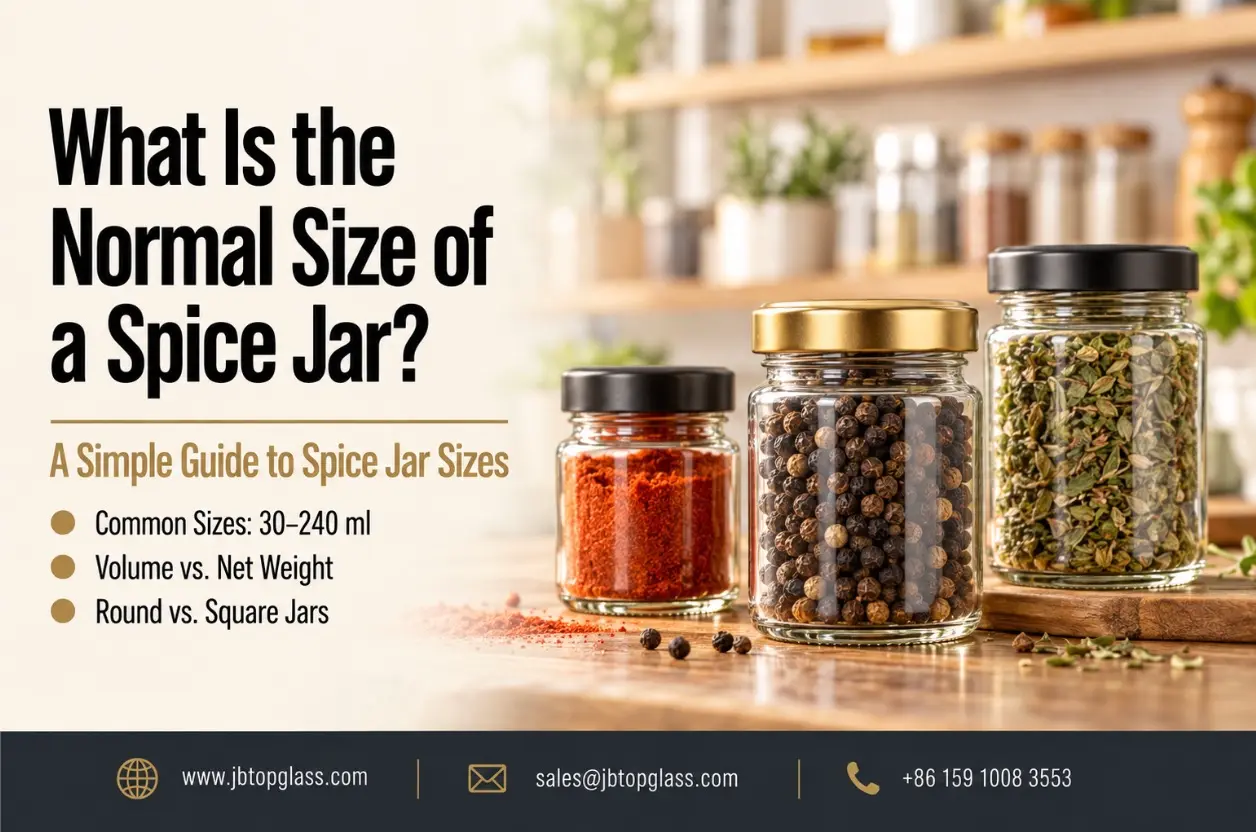
A normal retail spice jar usually holds about 4 fl oz, or 120 ml. This size is common for ground spices, dried herbs and seasoning blends.
However, there is no single standard spice jar size. Small jars may hold 30 or 60 ml, while larger retail jars may hold 180 or 240 ml. The right size depends on the spice and the amount sold in each package.
A jar marked “4 fl oz” describes its volume. It does not mean that the jar will hold four ounces of every spice by weight.
Common Spice Jar Sizes
Spice jars usually range from 30 to 240 ml for retail products. Food-service jars and refill packs may be larger.
| Jar capacity | Approximate volume | Common use |
|---|---|---|
| 1 fl oz | 30 ml | Saffron, premium spices and samples |
| 2 fl oz | 60 ml | Strong spices used in small amounts |
| 3–4 fl oz | 90–120 ml | Ground spices and everyday seasonings |
| 5–6 fl oz | 150–180 ml | Dried herbs, seeds and seasoning blends |
| 8 fl oz | 240 ml | Large retail packs and refill products |
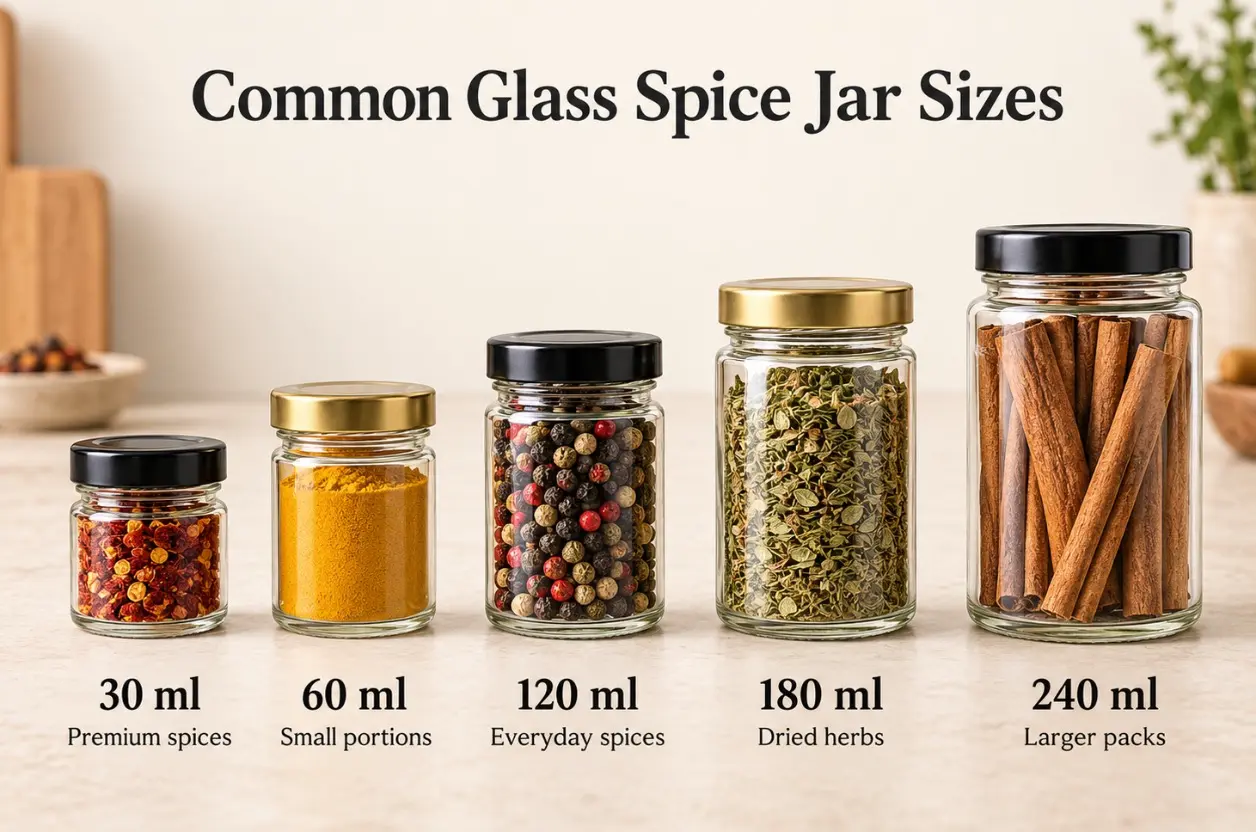
The 4 fl oz or 120 ml jar is one of the most familiar retail sizes. It is large enough for many everyday spices but still fits easily on a kitchen shelf.
This does not mean that every spice brand should use a 120 ml jar. A small amount of saffron does not need the same package as a large serving of dried rosemary. The size should match the product instead of following one general standard.
Why Is Jar Volume Different from Spice Weight?
Spice jar capacity measures the space inside the jar. The net weight on the product label measures the amount of spice inside it.
Different spices fill that space in different ways.
Fine salt packs closely together and has very little empty space between its particles. Peppercorns leave more gaps inside the jar. Dried parsley is light and contains even more air between the leaves.
As a result, the same 120 ml jar will hold different weights of these three products.
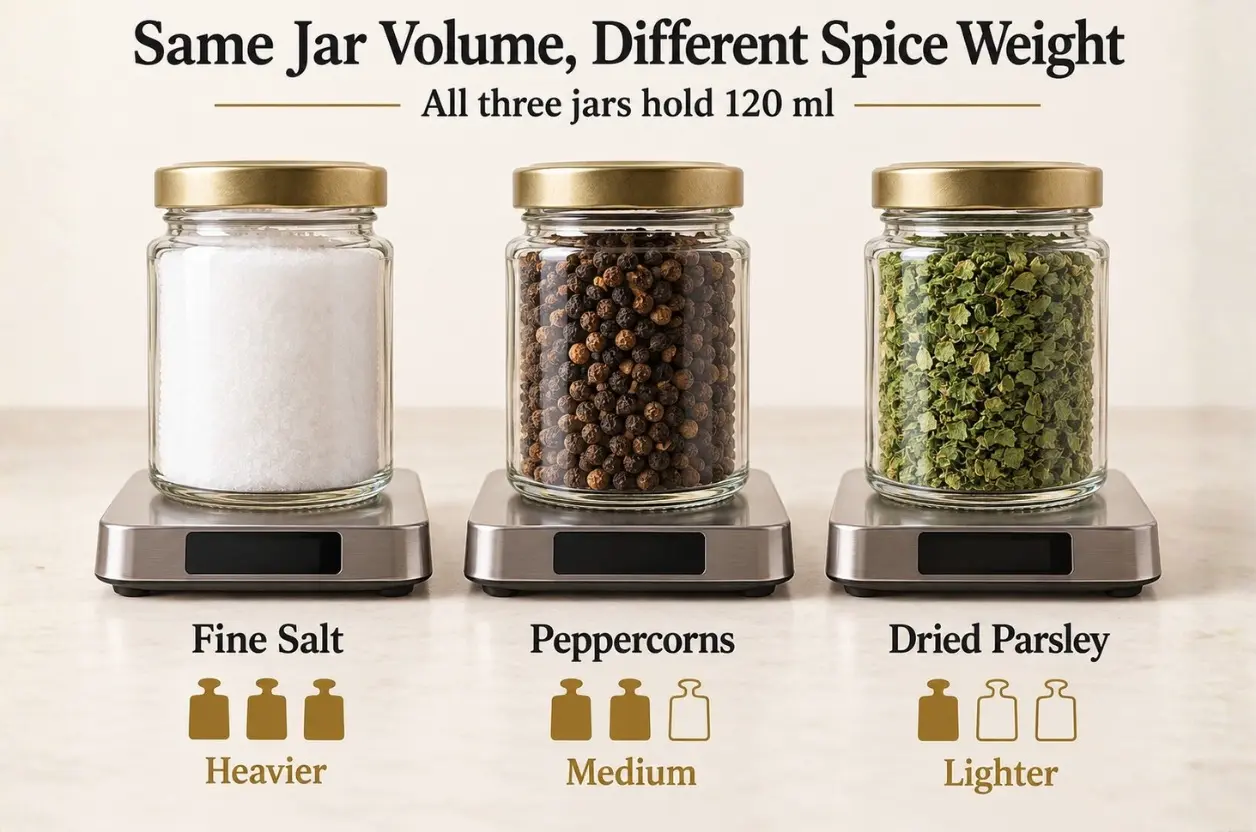
For example, a jar that holds the target weight of ground pepper may be too small for the same weight of dried basil. A larger jar does not always mean that the customer receives more product by weight.
Spice brands should therefore avoid choosing a jar from an online conversion chart alone. They should test the real spice in several jar samples.
The test is simple. The brand weighs the required amount of spice, places it in the jar and checks the fill level. The jar should look properly filled without pushing the product into the lid or shaker insert.
This test also shows how the spice settles. Fine powders may settle after filling, while dried leaves may keep more of their original volume.
What Are the Typical Dimensions of a Spice Jar?
A common 90 to 120 ml spice jar is often about 45 to 55 mm wide and 100 to 125 mm high. These measurements are only a general reference.
The exact dimensions depend on the jar shape and design. A tall round jar may be narrow, while a square jar with the same capacity may be shorter and wider.
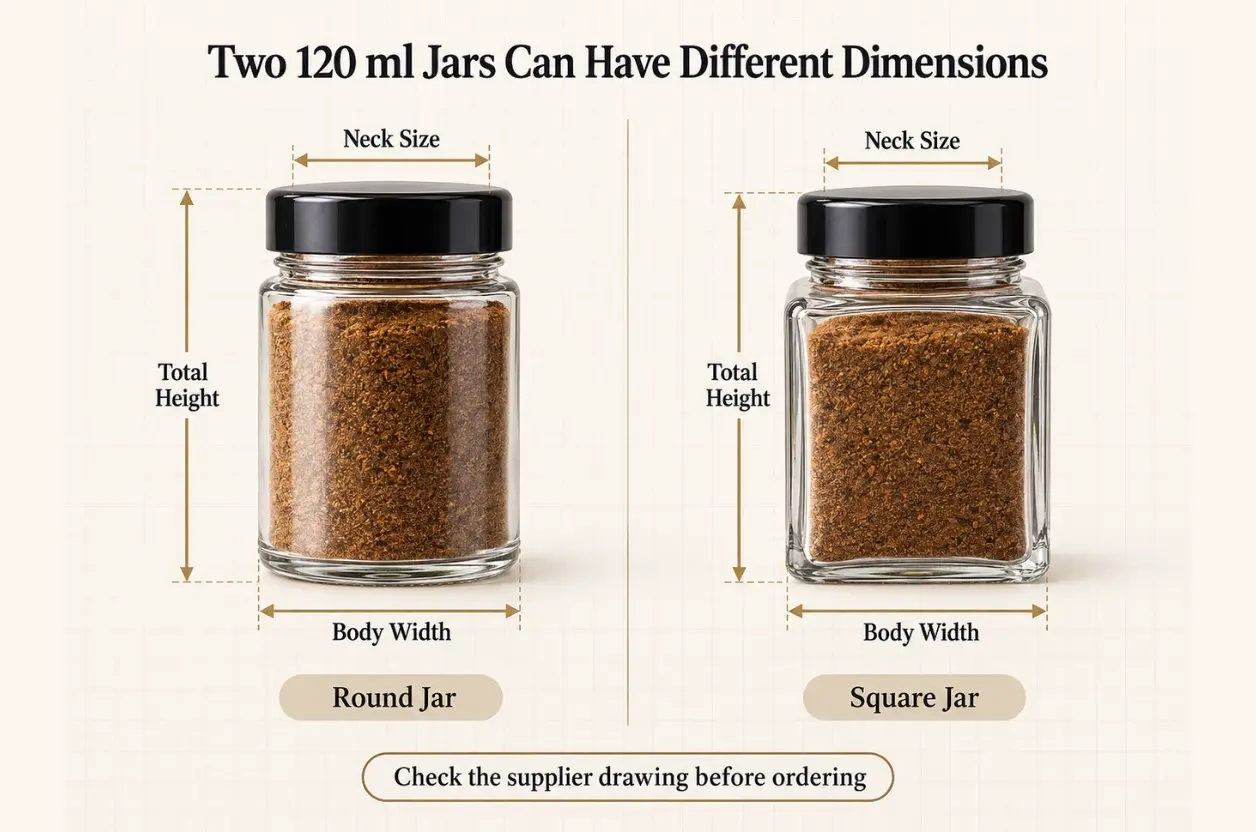
Glass thickness also changes the outside dimensions. Two jars may both hold 120 ml but have different body widths, heights and weights.
Round spice jars have a familiar retail appearance. Their curved bodies work well with wraparound labels and are easy to handle on many filling lines.
Square spice jars provide flat areas for labels. They also sit closely together on a shelf. However, their width may be greater than that of a tall round jar with the same capacity.
Buyers should not use capacity alone when checking whether a jar will fit a spice rack, carton or filling line. They should ask the supplier for a drawing that shows the total height, body width and neck size.
Which Spice Jar Size Is Right for Your Product?
The best starting point is the amount of spice that will be sold in each jar.
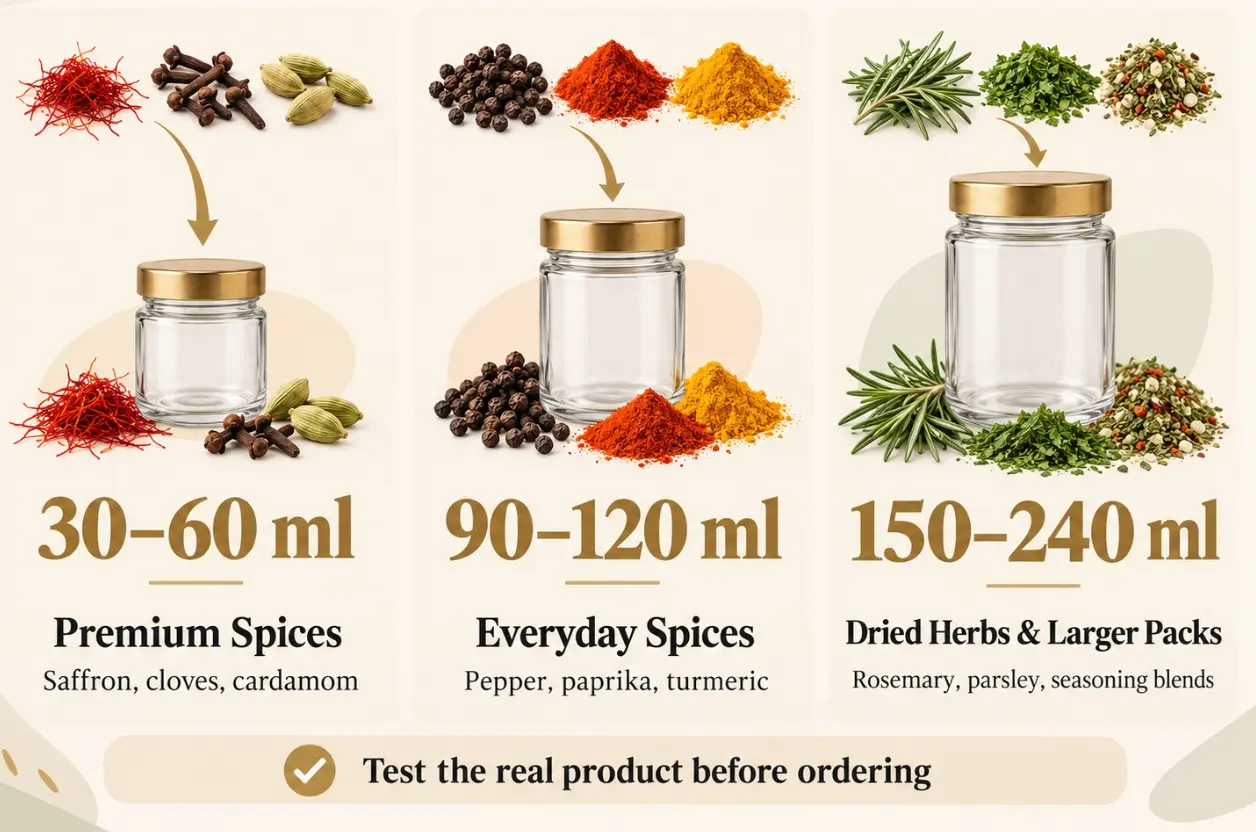
30–60 ml for Small or Premium Products
Small jars work well for expensive spices and products used in small amounts. Examples include saffron, cloves, cardamom and concentrated seasoning blends.
A small jar also suits samples, gift sets and travel packs. It keeps the package in proportion to the amount of product inside.
However, a small jar provides less space for branding and product information. The brand should check that the label remains easy to read.
90–120 ml for Common Retail Spices
A 90 or 120 ml jar suits many everyday retail products. Common examples include ground pepper, paprika, turmeric, cinnamon and mixed seasoning powders.
This size is familiar to consumers and easy to store. It also provides enough room for a product label without making the package look too large.
A brand that sells several ground spices may use one jar size for the full range. Different labels or lid colors can help customers tell the products apart.
150–240 ml for Herbs and Larger Packs
Dried herbs often need more space because leaves and stems do not pack closely together. A 150, 180 or 240 ml jar may be more suitable for rosemary, oregano, parsley and similar products.
Larger jars also work for barbecue rubs, coarse seasoning blends and family-size packs. Restaurants and food-service buyers may need even larger containers.
The brand should still check how the product looks in the jar. A large jar that appears half empty may not give customers a good impression.
Does the Spice Jar Opening Affect the Size Choice?
The opening does not change the stated capacity, but it affects how the customer uses the product.
Fine powders usually work with small shaker holes. Chili flakes, seeds and dried herbs need larger openings. Some lids have shaker holes on one side and a larger pour opening on the other.
A wide opening may also make the jar easier to fill. However, the lid and shaker insert must match the exact neck finish.
The brand should test the jar, insert and lid as one package. This test confirms that the spice flows properly and that the lid closes correctly.
The opening is important, but it does not need to decide the jar capacity. The product amount and fill result should come first.
How Many Tablespoons Are in a Standard Spice Jar?
If by “standard spice jar” you mean the common 4 fl oz size, it holds eight US tablespoons by volume.
그 NIST unit conversion table lists one US fluid ounce as about 29.57 ml. This makes 4 fl oz about 118 ml, although packaging suppliers often list this size as 120 ml.
This conversion does not tell you the weight of the spice. Eight tablespoons of salt will weigh more than eight tablespoons of dried parsley.
Tablespoon sizes may also differ between countries. A commercial spice brand should use a scale when setting the net weight of its product.
How to Confirm a Spice Jar Before Ordering
The buyer should first decide the target net weight and preferred jar style. The supplier can then suggest existing jars with a suitable capacity.
The buyer should request samples of the most suitable options. Each sample should be filled with the real spice and left long enough to see how the product settles.
The buyer should then check three points: whether the product fits, whether the jar looks properly filled and whether the spice pours easily through the selected opening.
After choosing the jar, the buyer can confirm the drawing, label area and packing method. This approach is more reliable than choosing a jar from capacity alone.
결론
A normal spice jar usually holds about 4 fl oz or 120 ml, but this is not a fixed global standard. Smaller jars suit premium spices, while larger jars work better for dried herbs and family-size products.
The correct size depends on the product’s net weight, density and appearance inside the jar. Testing the real spice in a sample jar is the easiest way to make the final choice.
Jingbo Group supplies glass spice jars and other food jars in different capacities and shapes. Contact Jingbo Group to find a jar that suits your spice product and packaging plan.