
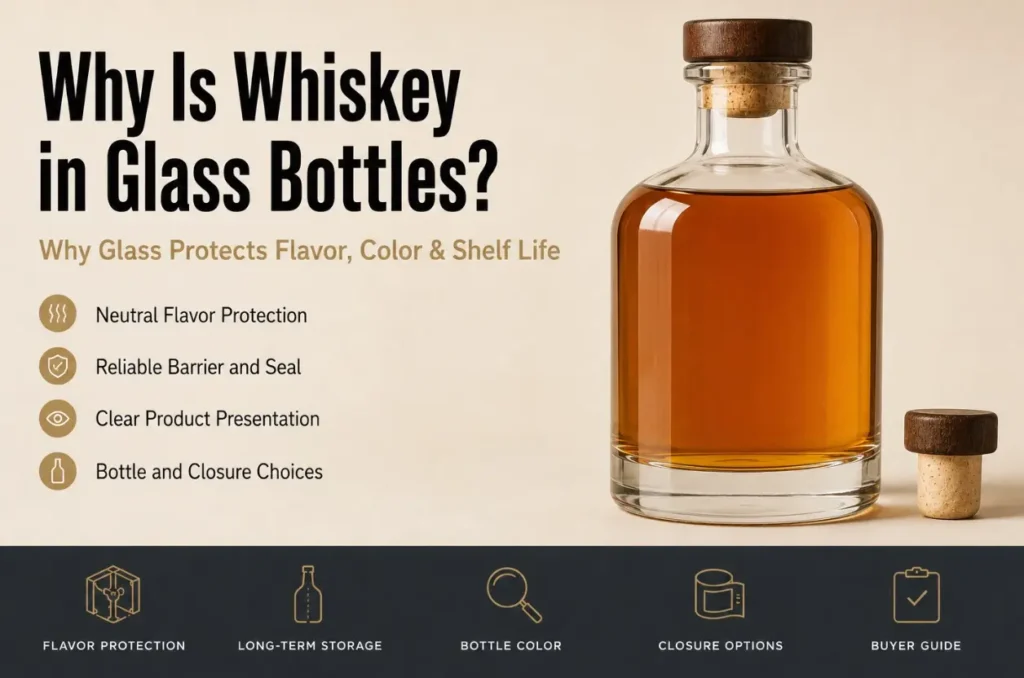
Whiskey is usually sold in glass because glass gives the spirit a stable and neutral package. It does not add taste or odor, and a suitable closure limits evaporation and outside contamination. Glass also displays the whiskey’s color and supports the premium shapes and decoration expected in the spirits market. Plastic and metal are possible in some cases, but they need separate compatibility and shelf-life checks.
Why Is Glass Good for Storing Whiskey?
Whiskey has already developed its aroma, color, and flavor before it reaches the bottling line. The package should keep that finished character as consistent as possible. It should not become another ingredient in the drink.
Glass is well suited to this task because it has a non-porous surface and strong barrier properties. It does not absorb the smell of the whiskey. It also does not pass its own odor into the liquid. The European Container Glass Federation explains that glass is virtually inert, impermeable, tasteless, and odorless. These properties help the package protect the original flavor rather than change it.
This point matters for whiskey because the product may remain in its retail bottle for years. A consumer may open a standard bottle within weeks, while a collector may keep a limited release for much longer. The brand cannot control how quickly every bottle will be consumed. It therefore needs packaging that remains stable throughout the intended shelf life.
Glass also provides a strong barrier against liquid and gas movement through the container wall. However, the bottle does not work alone. The cap, cork, liner, or stopper must maintain the seal. A poor closure can still allow leakage, evaporation, or excessive air exchange even when the glass bottle itself is suitable.
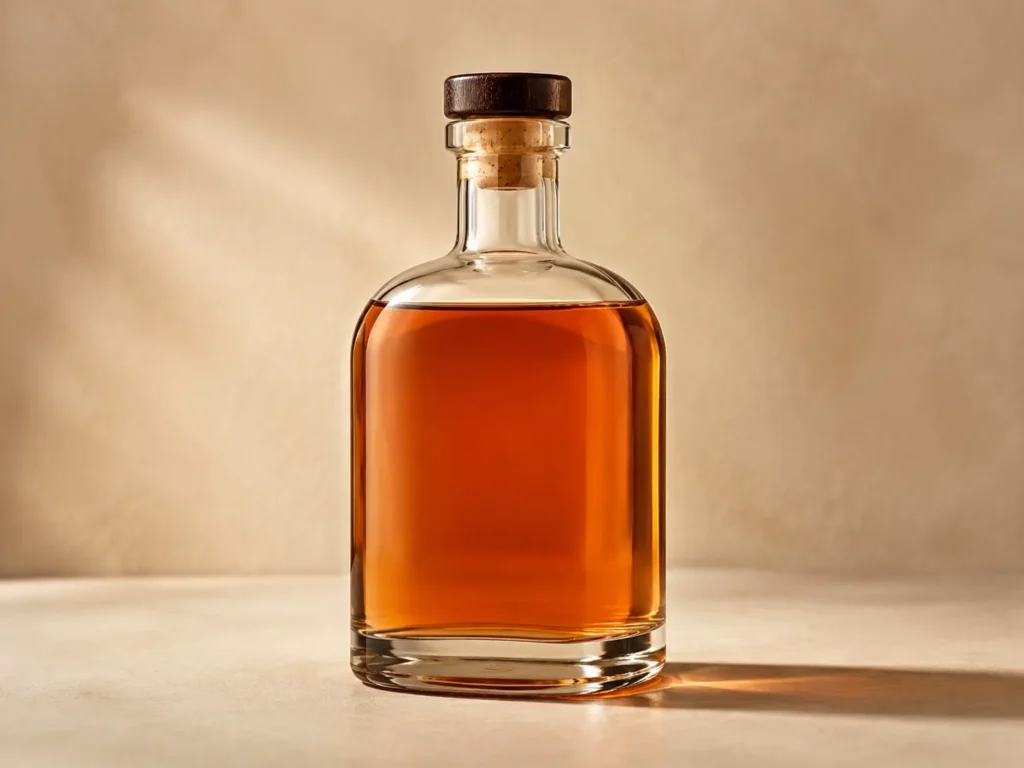
Another advantage is visibility. Whiskey producers spend years developing the color of a spirit through cask maturation and blending. Clear glass lets the buyer see that color before opening the package. The liquid becomes part of the shelf presentation.
Does Whiskey Have to Be Stored in Glass?
No. Whiskey does not have to be packaged in glass in every market or for every use. Some approved plastic, metal, and composite containers can hold distilled spirits when the material and inner contact layer are suitable.
For example, the US Alcohol and Tobacco Tax and Trade Bureau has recognized that a liquor bottle can be made from glass, earthenware, or another suitable material approved for the intended food-contact use. This means glass is not the only possible material.
However, legal permission does not make every package equally suitable for every whiskey. A brand must still confirm alcohol compatibility, shelf life, sealing, filling performance, transport conditions, and consumer expectations.
Glass remains the standard choice because it combines product protection with premium presentation. It also avoids the need to explain a less familiar packaging material to customers. This is especially important for aged whiskey, gift packaging, collector releases, and products that depend on a traditional or high-value image.
Can Whiskey Be Stored in Plastic Bottles?
Whiskey can be stored in a plastic bottle when the exact resin, closure, and package have been approved and tested for the product. A brand should not fill whiskey into an ordinary water bottle or another plastic container that was not designed for alcoholic beverages.
“Plastic” is not one material. Different resins have different barrier properties and different responses to alcohol, heat, storage time, and transport. A plastic bottle that works for a small travel format may not be the best choice for a premium whiskey with a long expected shelf life.
Before using plastic, the producer needs to confirm the alcohol concentration, contact time, storage temperature, migration requirements, odor and flavor performance, closure compatibility, and rules in the target market. The filled package should also pass a shelf-life test with the actual whiskey.
Plastic has clear practical advantages. It is lighter than glass and less likely to break during handling. These features can help products sold for airlines, outdoor events, travel, or other channels where weight and breakage are major concerns.
Glass serves a different purpose. It gives premium whiskey a more familiar appearance, offers broad decoration options, and provides reliable long-term barrier performance without depending on a specific plastic structure. Jingbo Group’s guide to glass and plastic alcohol bottles explains why the final decision should consider the product, shelf life, sales channel, filling line, and distribution route together.
Does Whiskey Age in the Bottle?
No. Whiskey does not continue to mature in a glass bottle.
Whiskey develops its mature character while it is in a wooden cask. The spirit interacts with the wood and changes over time. Once it is removed from the cask and sealed in a glass bottle, that maturation process stops. The Scotch Whisky Association confirms that whisky does not mature in the bottle.
This fact helps explain why glass is such a useful package. The bottle is not supposed to develop new cask flavors. Its job is to hold the whiskey in the condition chosen by the producer.
An unopened bottle can remain stable for a long time when the seal is sound and the package is stored correctly. An opened bottle faces a different situation. Each pour increases the air space above the liquid. Over time, air exposure and the loss of volatile compounds may change the aroma and flavor. This is not additional aging. It is a gradual change in an opened package.
The closure therefore matters throughout the life of the product. It must seal well at the factory, survive distribution, and continue to close properly after the consumer opens the bottle.
How Should Whiskey Be Stored After Bottling?
Whiskey bottles should be stored upright, away from direct sunlight, and under reasonably stable temperature conditions. The closure should remain clean, secure, and undamaged.
Upright storage keeps the whiskey from remaining in constant contact with a cork closure. A brief contact during handling is normal, but long-term horizontal storage is not required in the way it is for some wines.
Direct sunlight can affect both the liquid and the package presentation. It may fade the label, change the appearance of printed decoration, and affect the whiskey’s color over time. The Scotch Whisky Association advises keeping bottled whisky out of direct sunlight.
A glass bottle cannot correct poor storage. Clear glass displays the product well, but it does not block all light. Brands that use clear bottles may add a carton, tube, label coverage, or other secondary packaging for products that need stronger protection during display and storage.
Stable storage conditions also help protect the closure. Repeated temperature changes can affect the liquid, headspace, liner, cork, and seal. A whiskey package should therefore be tested as a complete system rather than as an empty bottle alone.
Why Are Whiskey Bottles Clear?
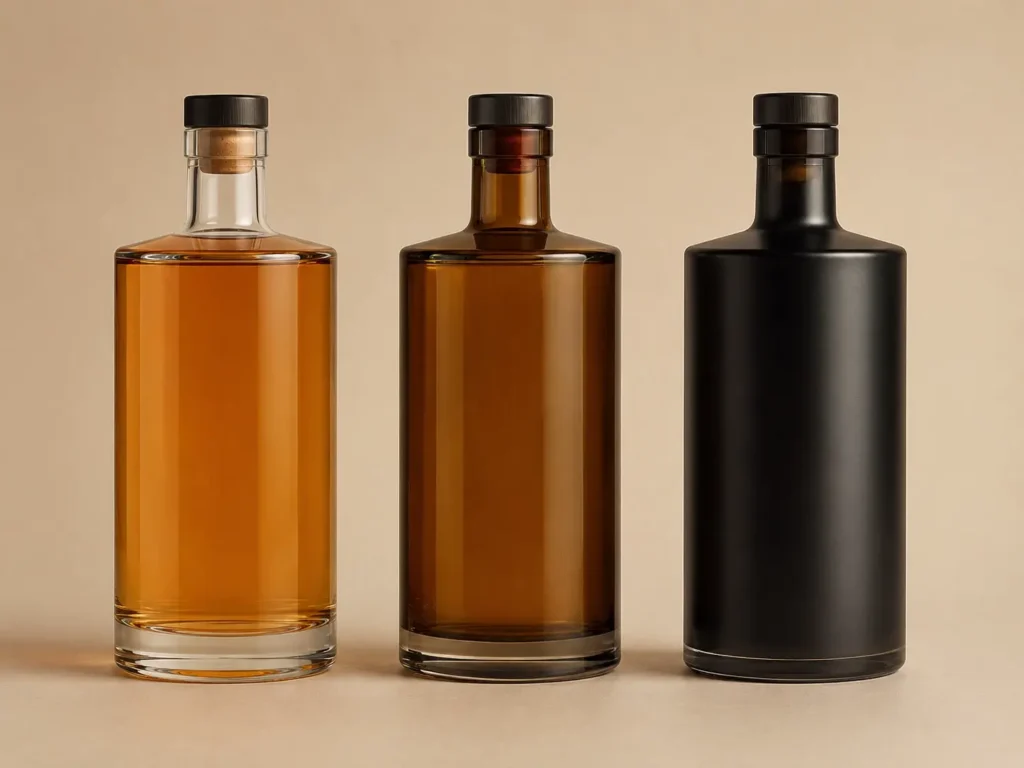
Many whiskey bottles use clear glass because the amber color of the spirit is an important part of the product. Customers can see the color, clarity, and fill level before they buy.
Clear glass also gives designers a neutral base. The brand can add a paper label, screen printing, embossing, frosting, spray coating, hot stamping, or a decorative closure without competing with a strong glass color. A bottle can look traditional, modern, or minimal while the whiskey remains visible.
The quality of clear glass affects this result. Strong green or gray tints can make an amber whiskey look different on the shelf. Brands that want high visual clarity may choose flint or higher-clarity glass, while brands with a rustic or value-focused position may accept a more visible natural tint. The article about 플린트 유리와 일반 유리 explains how clarity, tint, appearance, and cost differ.
Not every whiskey bottle needs to be clear. Amber, green, black, or coated bottles can support a stronger brand identity. Darker packaging may also reduce some light exposure. However, colored glass does not remove the need for correct storage.
The choice should come from the product and market position. Clear glass works when the whiskey color is part of the sales story. Dark or decorated glass works when protection, recognition, or a distinctive shelf silhouette matters more.
Why Do Whiskey Bottles Have Thick Bottoms?
Some whiskey bottles have heavy or thick-looking bases because the base creates a solid hand feel and a premium visual effect. A deeper glass base can make the bottle appear more substantial on the shelf. It can also help a design feel balanced when the body has broad shoulders or a large closure.
This feature does not improve the whiskey itself. It also does not prove that the bottle is stronger or better made. The result depends on the complete bottle shape and the way the glass is distributed.
A heavy base can create trade-offs. It adds material and shipping weight. A deep internal push-up can also occupy space inside the bottle. The designer may need to adjust the bottle height or diameter so the package still holds the required nominal volume.
Brands should use a heavy base only when it supports the intended market position. A premium single malt may benefit from extra visual weight. A high-volume whiskey may place more value on material efficiency, carton weight, and shipping performance.
The guide to concave bottle bottoms explains how base shape can affect appearance, capacity, glass distribution, packing, and cost. The base should be treated as one part of the design, not as a shortcut to premium quality.
Is a Cork or Screw Cap Better for Whiskey?
Both cork closures and screw caps can work well for whiskey. The better choice depends on the brand position, bottle finish, filling line, shelf life, and way the consumer will use the product.
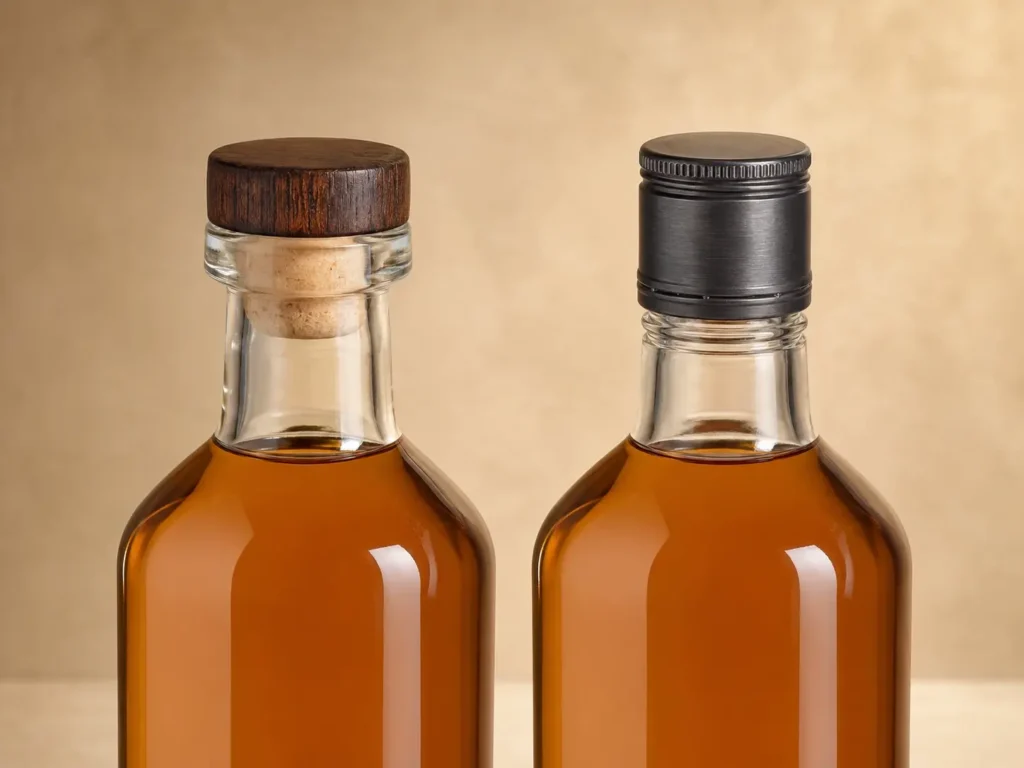
A bar-top cork gives the bottle a traditional opening experience. It works well for premium products and gift packaging. The top can use wood, metal, glass, or synthetic decorative materials. The stopper must fit the inner neck correctly and remain compatible with the whiskey.
A screw cap offers controlled application and easy reclosing. It can suit high-volume production, travel retail, and brands that want a clean modern package. The thread, liner, torque, and tamper-evident feature must all match the bottle finish and filling equipment.
Neither option should be selected from appearance alone. The producer should test leakage, evaporation, opening force, resealing, transport vibration, and storage performance with the actual bottle and whiskey. Natural cork, synthetic stoppers, liners, adhesives, and decorative top materials may behave differently.
Market rules also matter. In the United States, the TTB states that distilled spirits bottles and other containers require a securely affixed tamper-evident closure or similar device. Brands selling in other markets should confirm the local requirements before they approve the final closure.
What Is the Best Bottle for Whiskey?
Jingbo Group offers several glass bottles for different whiskey styles and market positions. These four models are practical options:
700ml Classic Whiskey Glass Bottle
그 700ml Classic Whiskey Glass Bottle uses 580g super flint glass with a curved neck, cylindrical body, heavy base, and threaded finish. Its familiar shape works well for traditional whiskey brands and regular retail product lines.

700ml 사각 플린트 유리 위스키 병
그 700ml 사각 플린트 유리 위스키 병 has a 580g rectangular body and screw-cap finish. Its flat surfaces provide clear areas for labels, screen printing, or other branding. It is suitable for modern whiskey brands that want a stronger shelf presence.

750ml Premium Nordic Glass Liquor Bottle
그 750ml Premium Nordic Glass Liquor Bottle is made from 750g super flint glass with a cylindrical body, heavy base, and bar-top finish. It is a good option for premium bourbon, single malt whiskey, and gift-box packaging.

700ml 망치로 두드린 질감의 유리 주류 병
그 700ml 망치로 두드린 질감의 유리 주류 병 combines an all-over hammered texture with a cork finish and a flat label area. It works well for craft whiskey, limited releases, and brands that want a more distinctive bottle without developing a new mold.

For a classic whiskey range, the 700ml round bottle is the most straightforward choice. The Nordic bottle creates a heavier premium feel, while the square and hammered bottles provide stronger shelf differentiation.
결론
Whiskey is stored in glass bottles because glass protects the finished spirit without adding taste or odor. It also provides the clarity, sealing options, and design freedom expected in the spirits market. The final bottle still needs to match the whiskey, closure, filling line, brand position, and destination market.
징보 그룹 supplies standard and custom whiskey glass bottles with matching closures, decoration, and export packaging. Send us your required capacity, reference bottle or drawing, closure, decoration, quantity, and destination to discuss a suitable packaging plan.