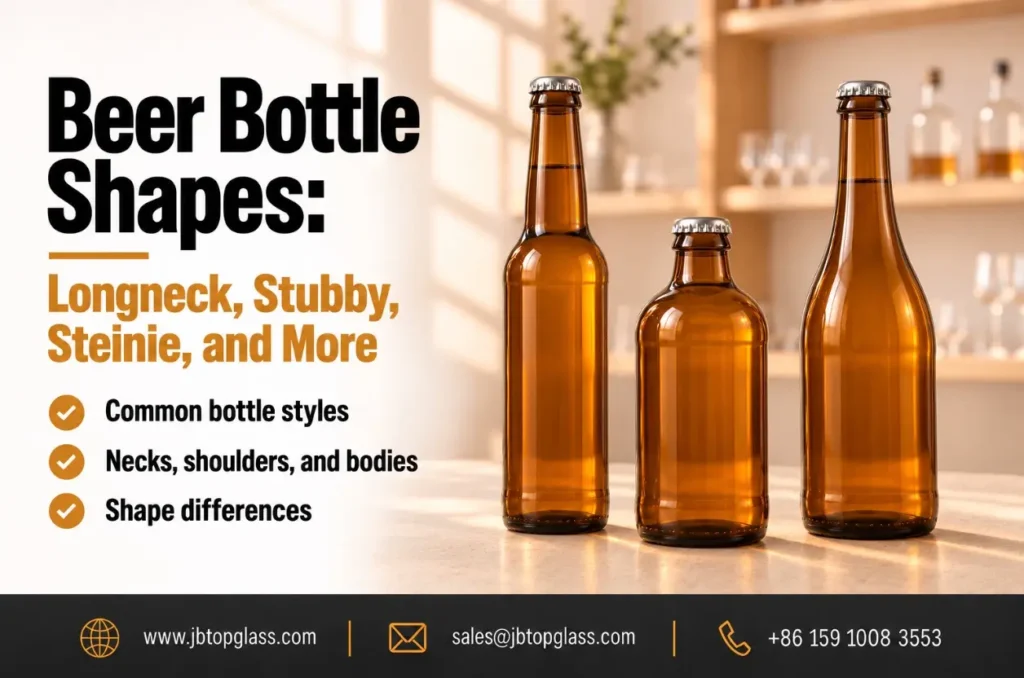
Beer bottle shapes range from tall longnecks to short, broad stubby bottles. The neck, shoulders, and body give each style its outline, even when two bottles hold the same amount of beer. This guide explains the main bottle shapes, how to recognize them, and the differences between familiar names such as Stubby, Steinie, Euro, NRW, and Vichy.
What Are the Main Beer Bottle Shapes?
The main types of beer bottles include longneck, stubby, Steinie, Euro, NRW, Vichy, Belgian-style, and Champagne-style designs. Most have a round body. You can tell them apart by looking at the body proportions, the height and curve of the shoulders, and the length of the neck.
| Beer bottle style | Typical outline |
|---|---|
| Longneck | Long, narrow neck above a relatively slim cylindrical body |
| Stubby | Short neck, broad body, and a compact overall shape |
| Steinie | Compact body with a short to moderate neck, sometimes with a fuller or stepped neck |
| Euro | Broad cylindrical body with rounded shoulders and a short upper section |
| NRW | Generally taller and slimmer than a comparable Euro bottle |
| Vichy | Narrow neck and curved shoulders, with an outline that can resemble NRW |
| Belgian-style | Rounded body and a pronounced shoulder, sometimes with a step near the neck |
| Champagne-style | Long, sloping shoulders that narrow gradually toward the mouth |
These beer bottle types contain different versions. The names help identify a general outline, while the neck and shoulder details distinguish individual designs.
Garrafas de cerveja de pescoço longo
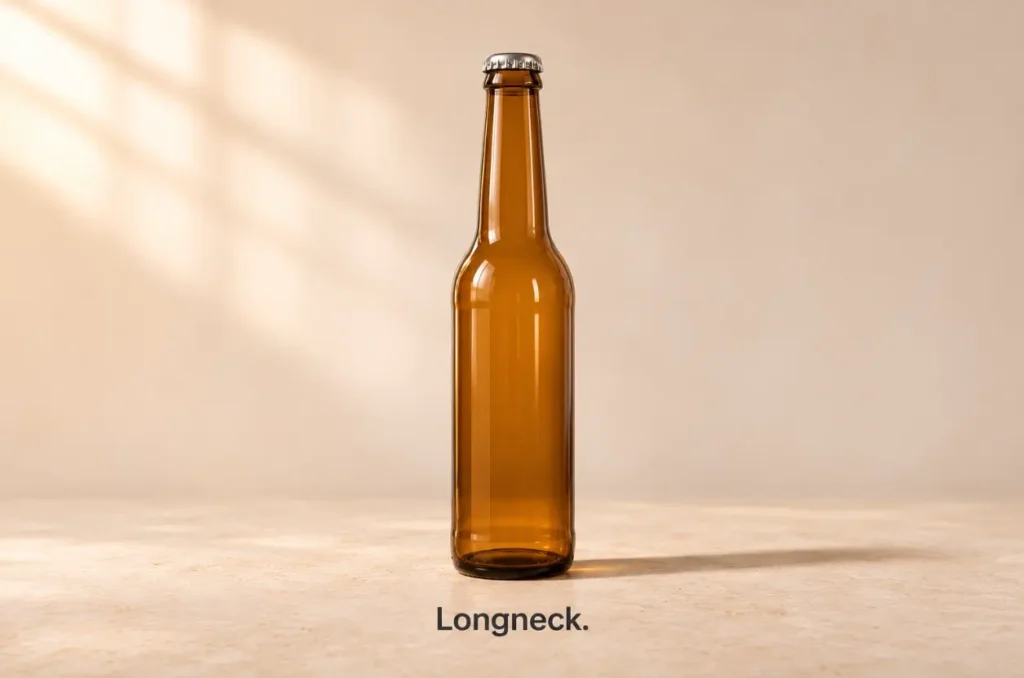
A longneck beer bottle has a tall, narrow neck that stands clearly above the shoulders. The body below is usually cylindrical, with straight or nearly straight sides. The neck is visibly narrower than the body.
The shoulder connects these two sections. On some longneck beer bottles, it is a short rounded curve. On others, it slopes inward over a longer distance. The neck itself may be almost straight or widen gradually as it approaches the shoulder.
O Grupo Jingbo 330 mL glass longneck beer bottle is one example of this familiar outline. It combines a narrow upper section with a round body and a mouth designed for a crown cap.
Long neck beer bottles are used across many beer styles. Their defining feature is the extended neck, rather than a particular capacity or glass color. A small and a large longneck can share the same basic appearance while having different neck-to-body proportions.
Stubby and Steinie Beer Bottles
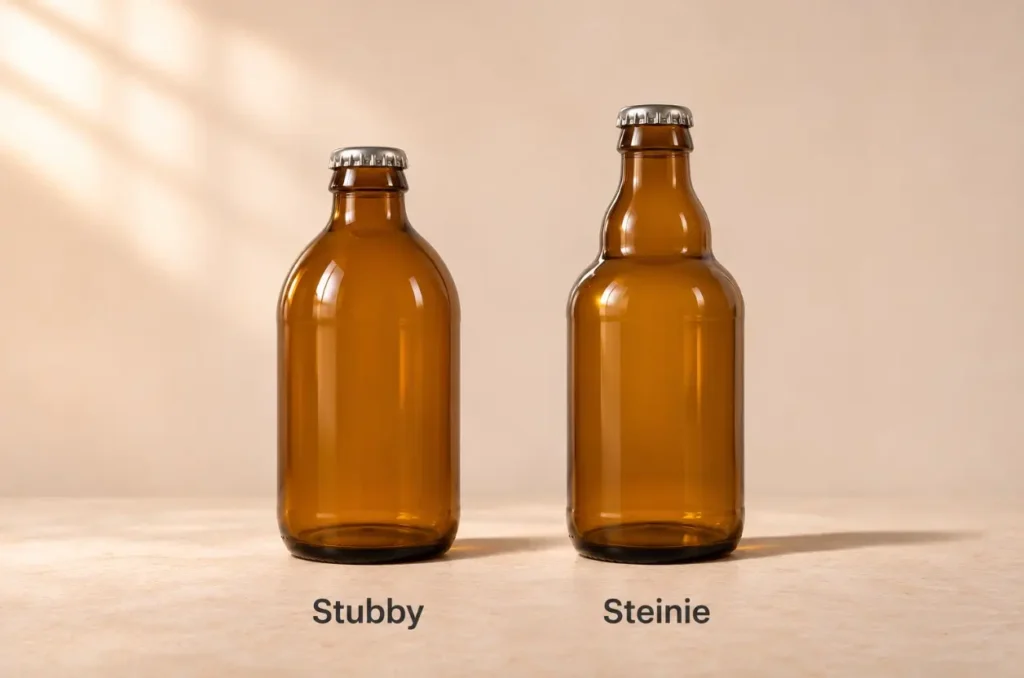
A stubby beer bottle has a short, broad outline. Its body takes up most of the visible height, with a relatively small neck above the shoulders. Beside a longneck of similar capacity, it looks lower and wider.
On a typical stubby, the body rises almost straight from the lower part of the bottle before rounding inward at the shoulder. The short neck then rises close above that curve. This combination produces the compact appearance associated with stubby beer bottles.
Steinie beer bottles also have a compact body, but the neck can be more shaped. Some versions have a fuller section or a noticeable step between the shoulder and the upper neck. Others have a smoother curve.
The names Stubby and Steinie sometimes overlap. Historically, distinct versions existed, and modern designs still vary. It is useful to look at the actual upper outline: a simple short neck, a fuller neck, and a stepped neck create different appearances within this group.
These short-neck beer bottles do not all have the same proportions. Some are broad and nearly cylindrical. Others narrow slightly toward the shoulder or have a more rounded lower body. The common feature is the compact balance between the body and neck.
Euro Beer Bottles
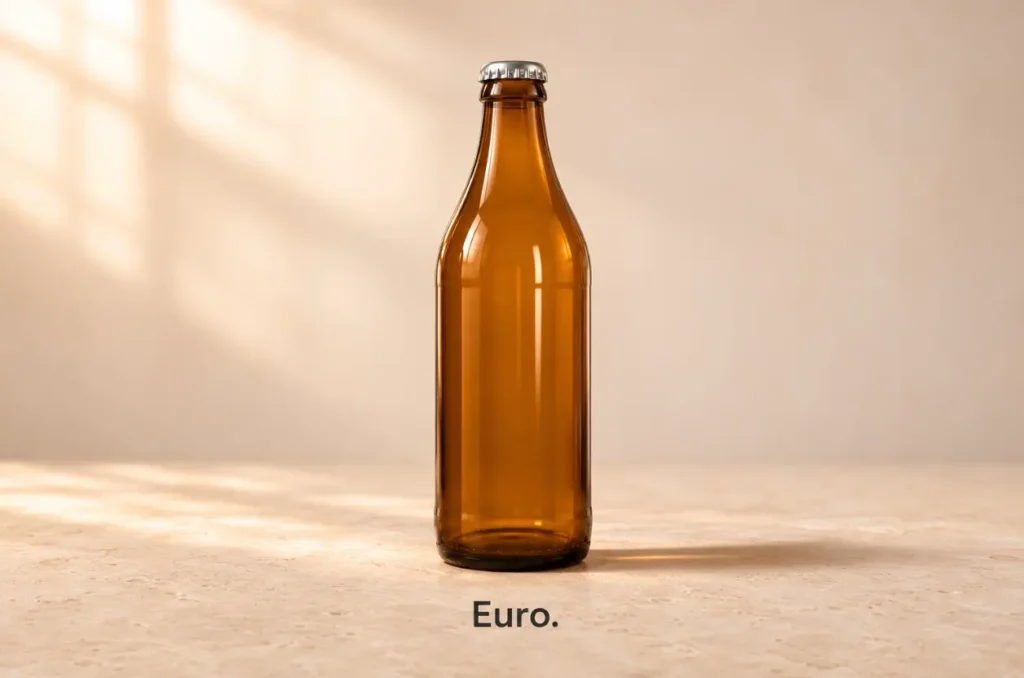
Euro beer bottles have a broad cylindrical body and a relatively short upper section. Rounded shoulders curve inward toward the neck, giving the bottle a compact outline.
The body is especially noticeable because it occupies much of the bottle’s height. The sides are generally straight, followed by a rounded shoulder and a short neck above it.
Compared with a longneck, the Euro profile places less emphasis on a long, narrow upper section. Compared with a taller NRW bottle of similar capacity, it usually looks shorter and broader.
Euro is the name of a familiar profile used in European beer packaging. It does not describe every beer bottle made in Europe. Longnecks, Steinies, NRW bottles, and other designs are also used there, each with its own neck and shoulder proportions.
NRW Beer Bottles
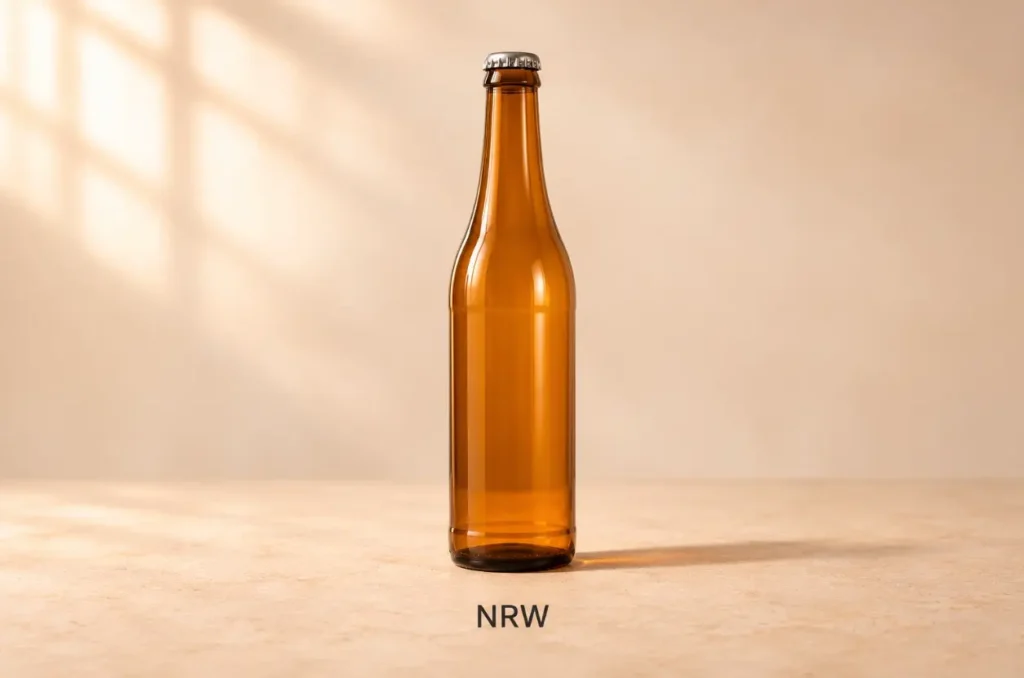
NRW beer bottles are generally taller and slimmer than comparable Euro bottles. They have a cylindrical body and rounded shoulders, with a more extended upper outline.
The difference is clear when bottles of similar capacity stand side by side. The Euro has a compact, broad appearance. The NRW carries its outline farther upward, with a narrower overall appearance.
The shoulder remains an important part of the NRW profile. It draws the body inward toward the neck through a curved transition. This gives it a different outline from a bottle with a very short neck sitting directly above a broad shoulder.
NRW is another familiar name in German and European beer packaging. As with other beer bottle shapes, it identifies a recognizable family rather than one fixed height, diameter, or weight.
Vichy Beer Bottles
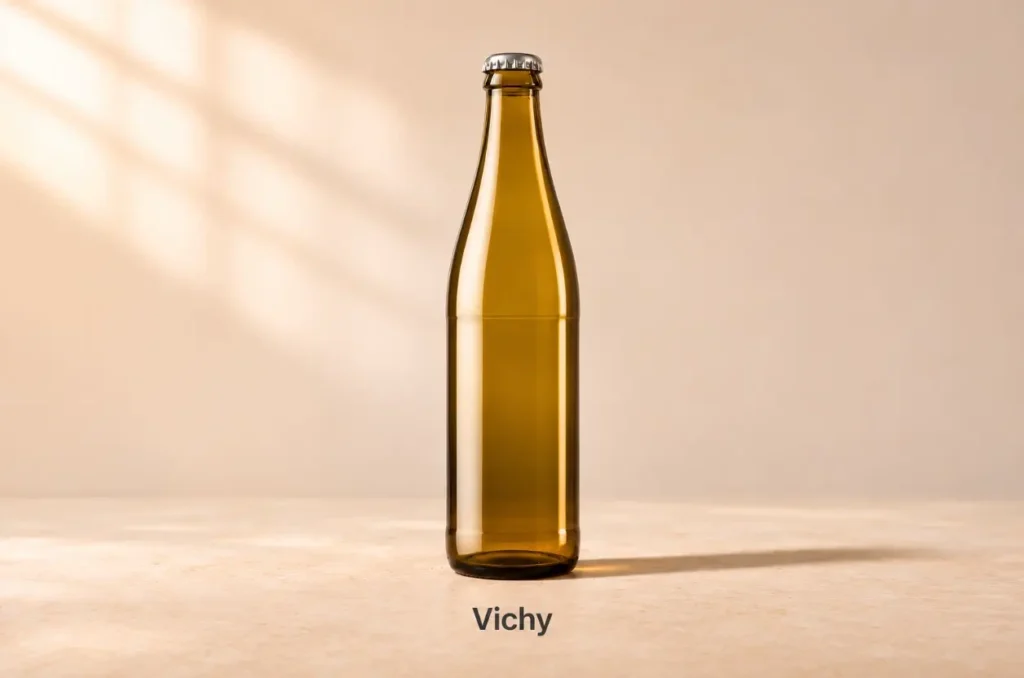
Vichy beer bottles have a narrow neck and curved shoulders above a round body. The upper outline is usually smooth, with the body narrowing into the shoulder and then the neck.
The curve is the main feature to notice. It creates a softer transition than the fuller or stepped neck found on some Steinie designs. Below the shoulder, the body is generally cylindrical.
Vichy and NRW beer bottles can look similar. Some bottle ranges use the names for closely related profiles, so the words do not always create a sharp boundary between two completely different shapes.
A useful way to recognize the particular version is to follow the outline upward. Notice where the straight body ends, how far the shoulder curves inward, and how much narrow neck remains above it. These details distinguish similar European beer bottle shapes more clearly than overall height alone.
Belgian-Style Beer Bottles
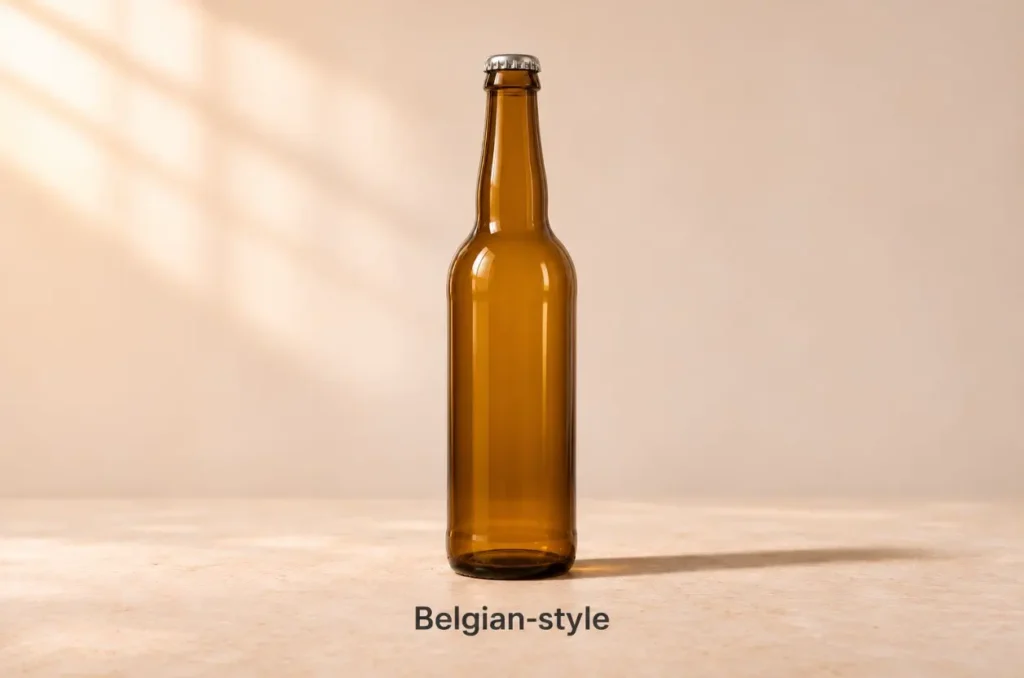
Belgian-style beer bottles often have a rounded body with a pronounced shoulder. Some include a step or a fuller section near the neck, giving the upper part a more shaped outline.
The body can look broad and substantial compared with a slim longneck. Above it, the shoulder makes a visible change in direction before the neck rises toward the mouth. The exact curve varies between designs.
This style is associated with Belgian beer traditions, although breweries elsewhere use similar bottles. Smaller versions hold individual servings, while larger versions are often used for sharing.
Belgian-style bottles are made with different mouth designs, including crown and cork finishes. A cork version may have a different upper neck from a crown-cap version while retaining a similar body and shoulder.
The body, shoulder, and neck therefore need to be viewed together. The rounded body alone does not identify a Belgian-style bottle; the more pronounced upper shape helps distinguish it from a plain cylindrical longneck.
Champagne-Style Beer Bottles
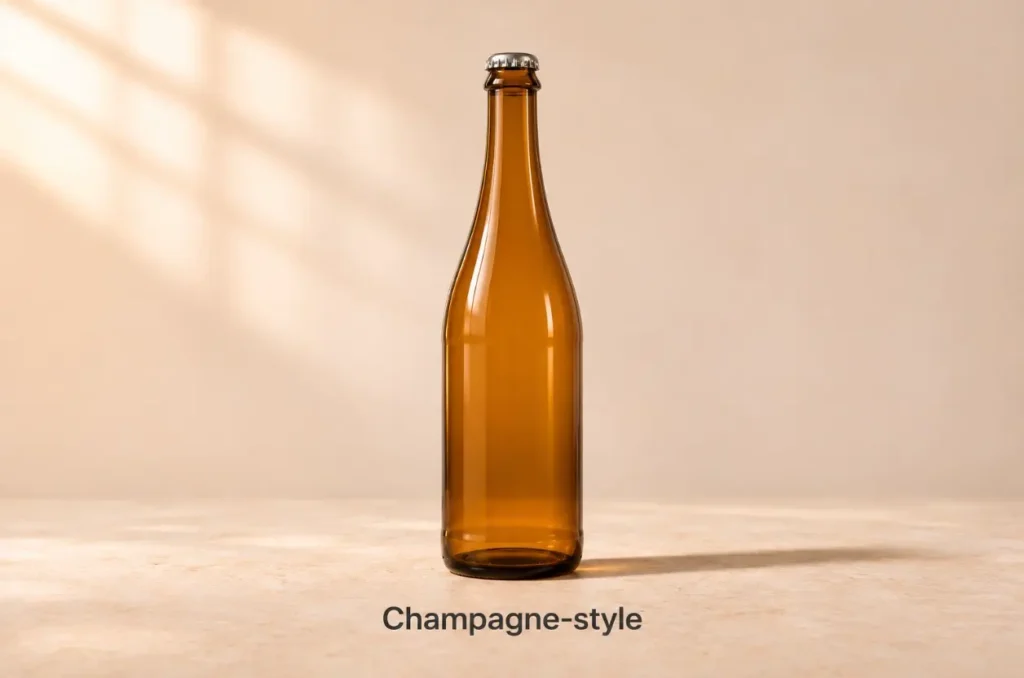
Champagne-style beer bottles have long, sloping shoulders that flow gradually toward the mouth. The upper curve extends over a larger part of the bottle than it does on a compact Euro or stubby.
The body remains round, but it narrows through a smooth shoulder into the neck. In many versions, the neck and shoulder appear to form one continuous curve.
This is the clearest visual difference from a Belgian-style design with a pronounced or stepped shoulder. The Belgian profile can have a more obvious change in direction, while the Champagne-style profile has a longer, gentler transition.
Champagne-style bottles are used for some specialty and bottle-conditioned beers. Versions can have a crown finish or a cork-and-cage arrangement. The name describes the appearance; pressure suitability depends on the particular bottle design.
Among the main beer bottle shapes, this is one of the easiest to recognize by the long shoulder curve rather than by neck length alone.
Why Are There Different Beer Bottle Shapes?
Beer bottle shapes developed through regional traditions and changes in how beer was packaged. Different markets became familiar with different outlines, and breweries continued using them.
The stubby, for example, was widely used in Canada from the early 1960s to the early 1980s before taller longnecks replaced it. In European beer packaging, names such as Euro, NRW, Vichy, and Steinie became familiar ways to describe common profiles.
These traditions explain why several beer bottle styles remain in use. A compact bottle and a tall, slim bottle can both contain lager or ale. Their shapes do not assign them to one particular recipe.
The names also describe different things. Longneck points to the extended neck. Stubby points to the short, broad form. Other names identify familiar regional designs. Capacity-based terms such as Bomber belong to a different kind of description.
Does Capacity Determine Beer Bottle Shape?
No. Different beer bottle shapes can hold the same amount of beer. A 330 mL longneck can be taller and narrower than a 330 mL Steinie because the volume is distributed differently through the body, shoulders, and neck.
The reverse is also true: the same basic profile can be made in different capacities. A larger longneck can still look like a longneck, just as a smaller Euro-style bottle can retain its compact proportions.
Capacity tells you the intended volume. Beer bottle dimensions describe the outside form, including bottle height and body diameter. Those measurements explain why two bottles with the same stated volume can look quite different.
Perguntas frequentes
Why Do Beer Bottles Have Long Necks?
A long neck gives you a narrow place to hold the bottle and creates the familiar tall outline. It also leaves room above the shoulder for a neck label or molded detail. The neck can be straight or gently tapered, and its length varies between designs. Longneck therefore describes a general bottle profile rather than one fixed neck measurement.
What Is a Bomber Beer Bottle?
A bomber beer bottle usually means a 22 oz beer bottle, roughly 650 mL. Here, “oz” refers to US fluid ounces, a measure of volume. Many bombers have a tall round body and a crown closure. The term describes a capacity format, so it does not specify one exact shoulder shape, neck length, or body diameter.
Are All Beer Bottles Round?
Most beer bottles have a round or cylindrical body, although other shapes exist. A circular wall has no sharp corners and distributes internal pressure around the body. This helps explain why round beer bottles are common for carbonated drinks. The neck and shoulders can still vary widely, producing different outlines even where the bottles share the same basic round cross-section.
Are Longneck Beer Bottles Always Twist-Off?
No. Longneck describes the bottle’s overall shape, while twist-off and pry-off describe how the crown cap opens. Both twist-off beer bottles and pry-off beer bottles can have a longneck body. They need different matching neck finishes. A twist-off crown fits a suitable threaded finish, while a pry-off crown is removed with an opener. The longneck outline alone does not tell you which one it uses.
Does a Beer Bottle’s Shape Show Whether It Is Returnable?
No. Returnable beer bottles are designed for repeated collection, washing, refilling, and handling. One-way beer bottles are intended for a single filling before recycling. Both can use familiar beer bottle shapes, including longneck and traditional European profiles. A short body, heavy feel, or rounded shoulder does not establish that a bottle is designed for repeated use. That depends on the specific container.
Does Bottle Shape Affect the Label Area?
Yes. The usable label area depends on the straight body below the shoulder, rather than the total bottle height. A tall longneck can have a shorter body panel than a more compact bottle. Curved shoulders and rounded lower edges also limit where a flat label can sit. A recessed label panel, where present, defines an area between the surrounding raised parts.
Can You Customize Beer Bottle Shapes?
Yes. Jingbo Group can develop custom beer bottles with changes to the neck, shoulders, body proportions, capacity, and molded details. Our glass bottle design service can start from a reference photo, sketch, or sample. After you confirm the drawing, we can make glass samples according to your requirements. The final design and sample are approved before bulk production.
Considerações finais
Beer bottle shapes are easiest to recognize through the neck, shoulder curve, and body proportions. Longnecks have an extended upper section, stubbies have a compact form, and European and specialty styles add other familiar outlines. Jingbo Group supplies glass beer bottles for bulk orders. Contactar-nos with your preferred bottle style, target capacity, and expected quantity to discuss your requirements.