
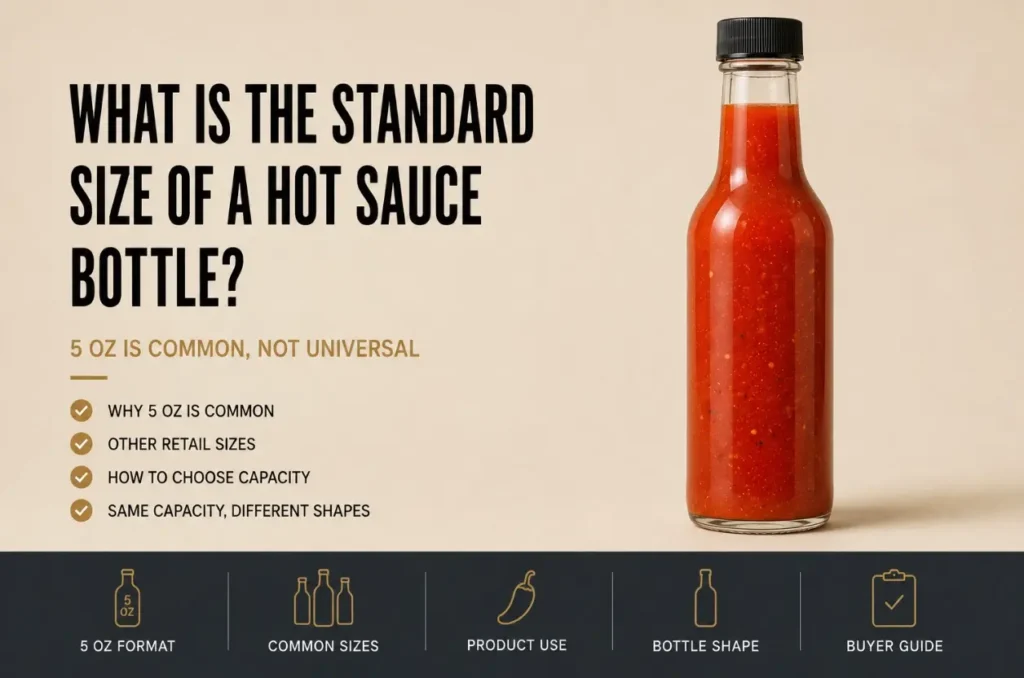
Бутылка объёмом 5 американских жидких унций является одним из наиболее распространённых стандартных размеров для розничной продажи острого соуса в США. Её объём составляет около 148 мл, поэтому покупатели часто сравнивают её с бутылками объёмом 150 мл, используемыми на рынках, где применяется метрическая система мер. Однако универсального или обязательного стандарта на размер бутылок для острого соуса не существует.
Оптимальный объем зависит от соуса и того, как клиенты его используют. Для сильноконцентрированного соуса лучше подойдет бутылка меньшего объема. А для мягкого столового соуса, который потребляется в больших количествах, может потребоваться бутылка объемом 200 мл, 250 мл или более. Для бренда, выбирающего упаковку, 5 унций — это удобная отправная точка, а не автоматический окончательный вариант.
Почему 5 унций — это стандартный объем бутылки с острым соусом?
Формат объемом 5 унций стал привычным, поскольку занимает промежуточное положение между небольшой дегустационной бутылочкой и большой упаковкой приправы. Он содержит достаточное количество продукта для многократного использования, но при этом выглядит компактно на обеденном столе или на полке в магазине. Его узкая форма также соответствует визуальному стилю, который многие покупатели ассоциируют с традиционным острым соусом.
Известные бренды только укрепляют эти ожидания. Оригинальный острый соус «Чолула» и TABASCO «Оригинал» — красный соус оба продаются в упаковках объемом 5 fl oz. Эти примеры не являются официальным стандартом, но помогают понять, почему американские покупатели сразу узнают этот размер.
Согласно Таблица пересчёта NIST, одна американская жидкая унция равна 29,5735 мл. Таким образом, пять американских жидких унций равны примерно 147,9 мл. Объем бутылки в 150 мл очень близок к этому значению, но математически он не совпадает. Заявленный чистый объем содержимого всегда должен соответствовать фактическому объему наполнения и правилам рынка сбыта.
Какие ещё размеры бутылок с острым соусом широко распространены?
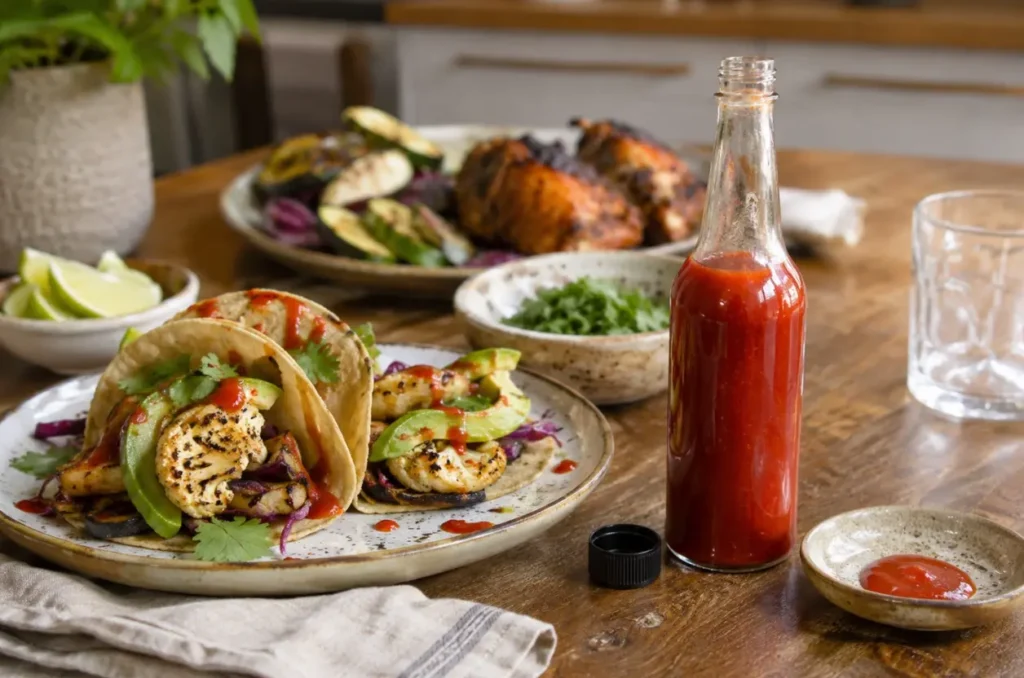
Острый соус продается в упаковках различного объёма, поскольку продукты различаются по степени остроты, цене и норме расхода. Приведённые ниже размеры упаковок следует рассматривать скорее как ориентиры на рынке, а не как жёсткие правила.
| Общая мощность | Примерные ориентировочные значения для США | Типичное расположение |
|---|---|---|
| 60 мл | 2 жидких унции | Очень острые соусы, дегустационные наборы и небольшие упаковки премиум-класса |
| 100 мл | 3,4 жидких унций | Концентрированные соусы и компактные продукты розничной торговли |
| 148–150 мл | Около 5 жидких унций | Привычный повседневный розничный формат |
| 200–250 мл | Около 7–8,5 жидких унций | Чаще используются соусы с более мягким вкусом и другие продукты |
| 300–350 мл | Около 10–12 жидких унций | Крупные форматы, ориентированные на розничную торговлю, продажу товаров по выгодным ценам или общественное питание |
Меньший объем бутылки не всегда означает более низкое качество продукта. В случае соуса премиум-класса, который используют по несколько капель за раз, объем 60 мл или 100 мл может обеспечить более оптимальное соотношение срока хранения, цены и воспринимаемого качества. Кроме того, это может облегчить покупателям пробу нового вкуса.
Более вместительные бутылки подходят для соусов, которые покупатели обильно поливают на крылышки, блюда, приготовленные на гриле, лапшу или используют в качестве маринадов. В такой ситуации бутылка объемом 150 мл может показаться слишком маленькой, даже несмотря на то, что она хорошо знакома покупателям. Правильный размер должен соответствовать реальному использованию, а не просто копировать самую узнаваемую бутылку на полке.
К метрическим и американским мерным единицам также следует относиться с осторожностью. Бутылка объёмом 250 мл не совсем соответствует бутылке объёмом 8 жидких унций, а бутылка объёмом 150 мл не совсем соответствует 5 жидким унциям. Бренду следует выбрать один заявленный вес нетто для целевого рынка и подобрать бутылку, рассчитанную именно на этот объём наполнения.
Как бренду выбрать размер бутылки для острого соуса?
Начните с того количества, которое, по всей вероятности, будут использовать покупатели. Степень остроты — один из ориентиров, но не единственный. Мягкий соус, который можно разливать и щедро добавлять в блюда, может расходоваться гораздо быстрее, чем концентрированный перцовый соус, который добавляют по несколько капель за раз.
На выбор также влияет планируемая розничная цена. Компактная бутылка может способствовать позиционированию продукта в сегменте премиум-класса, поскольку покупатели платят за насыщенность, вкус или уникальную рецептуру, а не только за объем. Более крупная бутылка может подчеркивать выгодность предложения, но при этом занимает больше места на полке и увеличивает вес продукта и упаковки в каждой коробке.
Важное значение имеет и рынок сбыта. Упаковка объемом 5 fl oz привычна для покупателей в США, тогда как на рынках, где используется метрическая система мер, более привычны объемы 100 мл, 150 мл, 200 мл и 250 мл. Объем упаковки также должен соответствовать планируемому каналу сбыта. Для одной бутылки премиум-класса, дегустационного набора и продукта для активного использования в сфере общественного питания требуется разное количество соуса.
Брендам также следует учитывать всю линейку продукции. Использование бутылок одного размера для сортов с мягким, средним и очень острым вкусом может упростить оформление и упаковку, а также обеспечить более единообразное представление товара на полках. Однако если продукты расходуются с очень разной скоростью, с коммерческой точки зрения может быть целесообразнее предлагать бутылки разного объема.
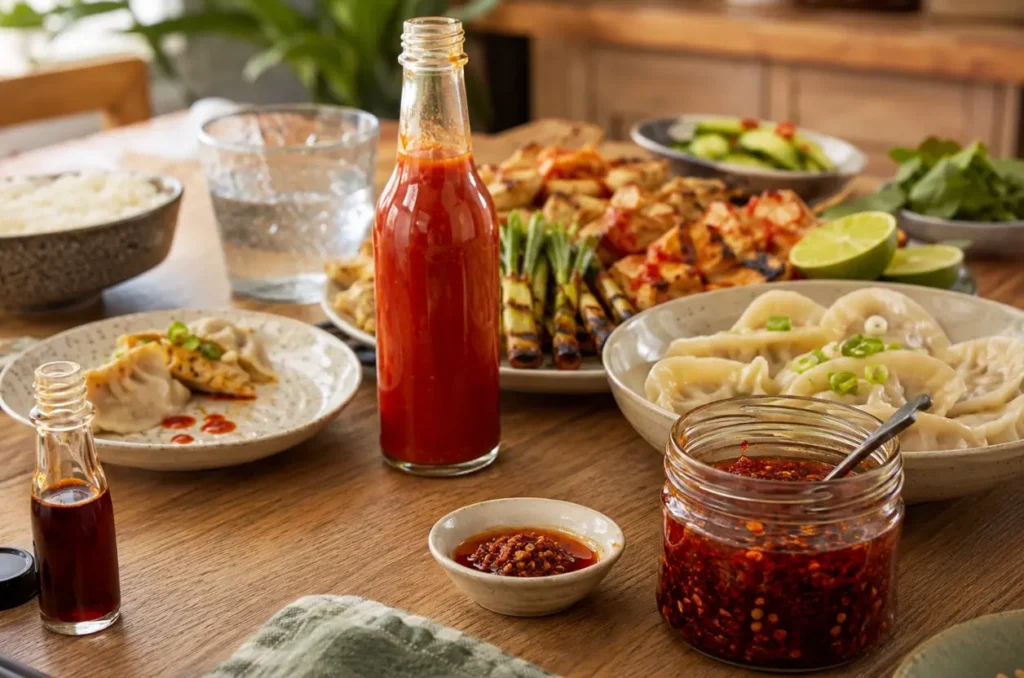
Не каждый соус чили следует разливать в бутылки с узким горлышком. Жидкие острые соусы, как правило, хорошо хранятся в бутылках с регулируемым отверстием. Густые пасты чили, соусы «чили-чеснок» и чили-чипсы, содержащие видимые твердые частицы, часто лучше подходят для стеклянных банок с широким горлышком, которые позволяют покупателям использовать ложку. При выборе упаковки для этих продуктов первоочередное значение имеет не только объем. Бренду необходимо сначала определить, будут ли покупатели наливать соус, дозировать его или есть ложкой.
Почему бутылки одной и той же ёмкости могут выглядеть по-разному?
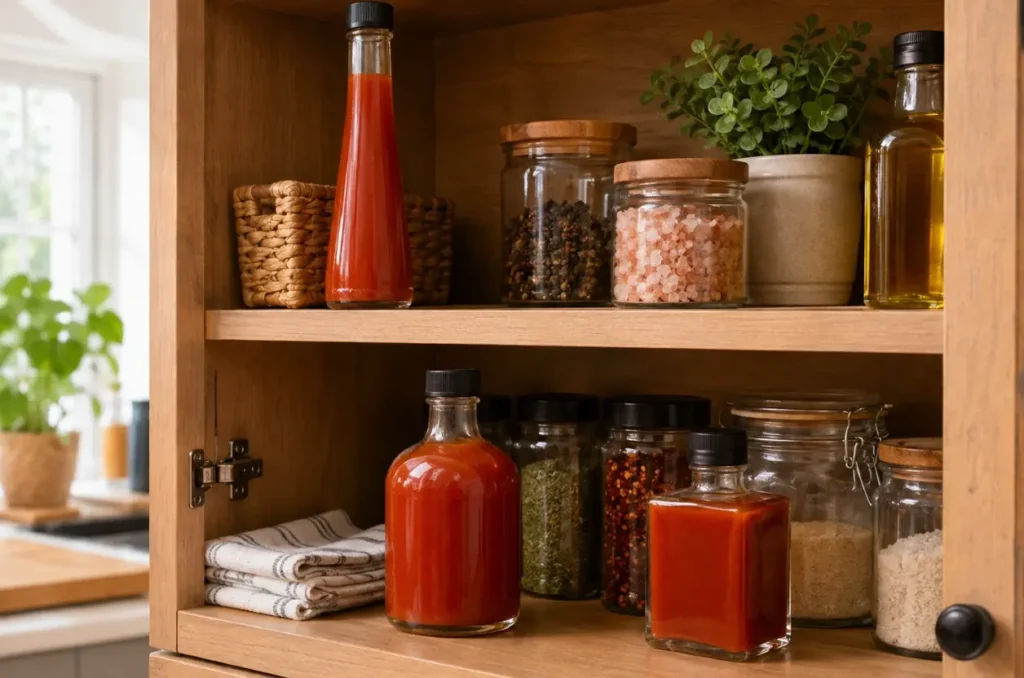
Вместимость не определяет какую-то фиксированную высоту, диаметр или форму. Две бутылки могут иметь одинаковую вместимость — 150 мл, — при этом одна из них будет высокой и узкой, а другая — более короткой с расширенными плечами. Они могут относиться к одному и тому же диапазону вместимости, но занимать разное пространство на полке и создавать разные зоны для декора.
Это важно для покупателей, которые начинают с привычного образа 5 унций. Классическая узкая бутылка для острого соуса — лишь один из возможных вариантов дизайна. Более широкая бутылка может предоставить больше места для брендинга. Квадратная бутылка может создать более выразительный вид с лицевой стороны. Компактная круглая бутылка может более эффективно вписаться в подарочный набор или внешнюю коробку.
Отверстие также должно подходить к соусу. Узкое горлышко может помочь контролировать подачу жидкого соуса, в то время как для продукта, содержащего видимые кусочки перца, может потребоваться иной способ подачи. Это не влияет на номинальную вместимость, но может повлиять на выбор наиболее практичной конструкции бутылки.
По этой причине покупателю не следует принимать решение о выборе бутылки, ориентируясь исключительно на её вместимость. В техническом чертеже должны быть указаны высота бутылки, максимальный диаметр, форма горлышка, предполагаемый уровень наполнения и полезная площадь для нанесения декора. Реальный образец, наполненный настоящим соусом, даст гораздо более чёткое представление, чем изображение в каталоге.
Что следует уточнить покупателям перед размещением оптового заказа?
Первый показатель, который необходимо проверить, — это заявленная чистая масса продукта. Это количество соуса, продаваемое покупателю. Его не следует путать с объемом бутылки «по горло», то есть объемом, когда тара заполнена до верха. В бутылке необходимо оставить достаточное свободное пространство над обычным уровнем наполнения, поэтому вместимость тары, как правило, превышает заявленное содержание.
Покупателям следует сравнивать реальные размеры бутылок, а не исходить из того, что любая бутылка объемом 150 мл подойдет к одной и той же полке, линии розлива или картонной упаковке. Кроме того, бутылка должна быть совместима с предполагаемой крышкой и обеспечивать розлив соуса с приемлемой скоростью. Эти проверки напрямую связаны с выбором размера; они не являются отдельными решениями, касающимися оформления или маркетинга.
В случае с новым продуктом тестирование одного физического образца дает больше информации, чем сравнение множества фотографий из каталога. Наполните образец настоящим соусом. Проверьте уровень наполнения, баланс бутылки, удобство розлива и общие пропорции. Затем, перед запуском серийного производства, убедитесь, что окончательный технический чертеж соответствует утвержденному образцу.
Как компания Jingbo Group реализует проекты по производству бутылок для острого соуса?
Группа Цзинбо Сотрудничает с зарубежными брендами острых соусов, производителями продуктов питания, импортерами и компаниями, занимающимися розливом, которым требуются бутылки для проектов по оптовой упаковке. Данный процесс предназначен для коммерческих заказов, а не для розничных партий пустых бутылок в небольших количествах.
Мы не исходим из того, что каждому бренду нужна новая форма. Первым делом мы сравниваем целевой вес нетто, предпочтительные пропорции, характеристики соуса, рынок сбыта и план заказов с уже имеющимися моделями бутылок, которые можно изготовить.
Если для проекта подходит уже существующая бутылка, компания Jingbo Group может предоставить соответствующий чертеж и организовать поставку образца бутылки для утверждения. Такой подход позволяет заказчику оценить реальную вместимость, габариты, тип горлышка и результат розлива перед утверждением упаковки. Затем крышку, декорирование и экспортную упаковку можно подобрать в соответствии с утвержденной бутылкой, а не рассматривать их как отдельные закупки.
Если имеющиеся формы бутылок не обеспечивают требуемую вместимость, пропорции для размещения на полках или размер горлышка, проект может перейти в индивидуальный дизайн стеклянной бутылки. Компания Jingbo Group может совместно с вами проанализировать форму и объём бутылки перед разработкой технического проекта, плана изготовления пресс-формы и изготовлением пробной бутылки.
Такой подход, при котором в первую очередь используются готовые бутылки, а индивидуальные решения разрабатываются только при необходимости, позволяет покупателям избежать затрат на ненужную разработку, при этом оставляя возможность создать уникальную упаковку.
Заключение
Стандартный размер бутылки с острым соусом следует рассматривать скорее как рыночный ориентир, а не как жесткое правило. Бутылка объемом 5 унций, что соответствует примерно 148 мл, является привычным форматом розничной продажи в США, тогда как бутылка объемом 150 мл играет аналогичную роль на многих рынках, где используется метрическая система. Бутылки меньшего объёма подходят для концентрированных или соусов премиум-класса, а бутылки большего объёма — для продуктов, которые используются в больших количествах.
Компания Jingbo Group производит стеклянные бутылки для проектов по фасовке навалом и может подобрать бутылку для острого соуса из имеющегося ассортимента или рассмотреть возможность разработки индивидуального дизайна, если стандартные варианты не подходят. Отправьте нам Укажите желаемый вес нетто, тип соуса, предпочтительный вид бутылки, предполагаемый объем заказа и пункт назначения, и мы подберем для вас наиболее подходящий маршрут доставки.