
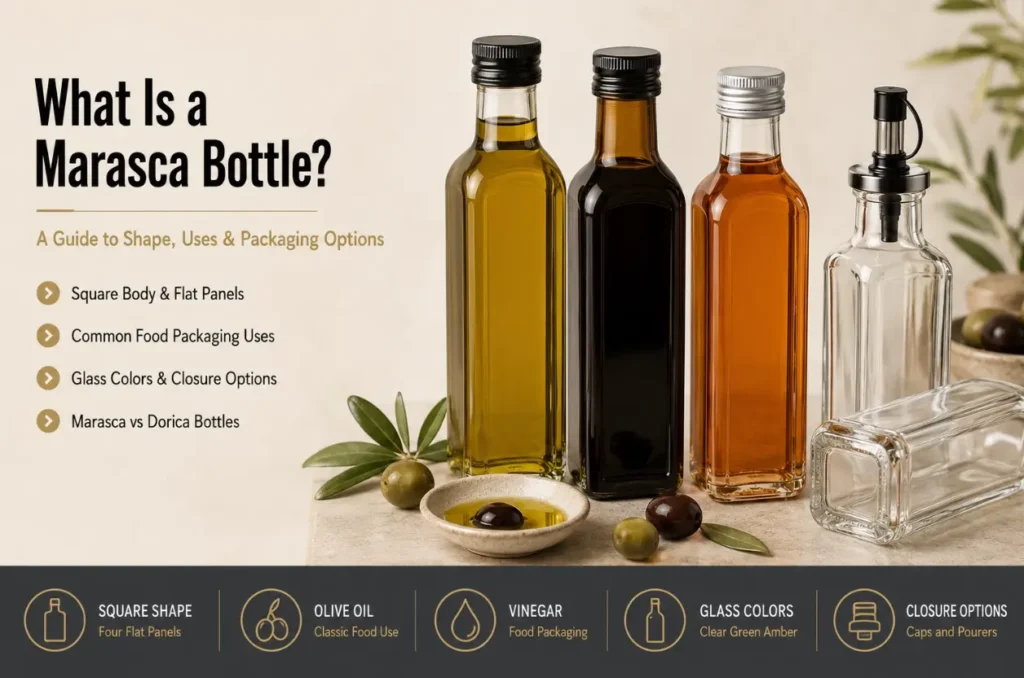
马拉斯卡瓶是一种高身玻璃瓶,瓶身呈方形或长方形,具有四个分明的侧面,瓶肩呈斜坡状,瓶颈狭窄。它广泛用于盛装橄榄油、醋、沙拉酱、糖浆及其他特色产品。其平整的侧面为标签留出了清晰的展示区域,而结构分明的造型则赋予包装一种传统且高档的外观。.
“Marasca”指的是一种瓶型,而非固定的规格。不同型号的容量、尺寸、重量、颜色和瓶口处理方式各不相同,因此买家仍需查看图纸和样品。.
马拉斯卡酒瓶长什么样?
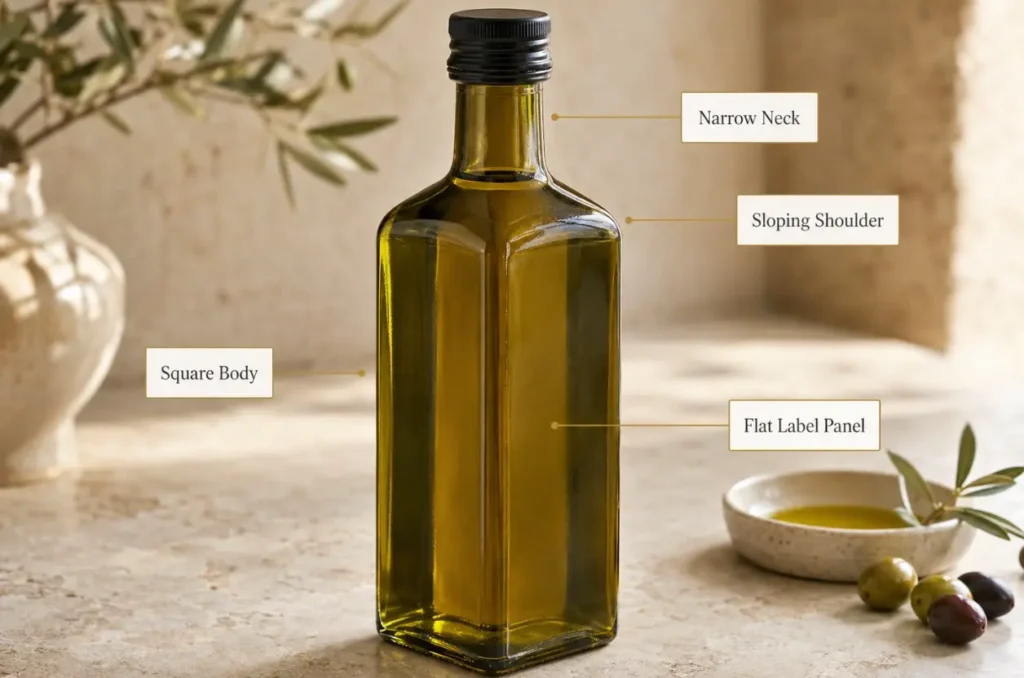
识别马拉斯卡酒瓶最简单的方法是从上方观察其瓶身。典型的马拉斯卡酒瓶横截面呈方形或略带长方形,而非圆形。 四面通常由圆角连接,因此瓶身并非棱角分明的玻璃盒。这些圆角有助于瓶身轮廓在各面板之间自然过渡,也是瓶身模压结构的一部分。.
瓶肩向内倾斜,延伸至细窄的瓶颈。有些款式采用棱角分明的瓶肩,而另一些则采用过渡更为平缓的设计。瓶身的稳定性取决于瓶身高度、底面面积和装满时的重量。.
平坦的侧面板使瓶身具有清晰的前面、背面和两个侧面。正面可印制主要品牌标识,背面则用于展示产品信息。由于标签不应紧贴弯曲的角部、肩部或瓶底半径,因此实际可用的标签区域比整个侧面板要小。.
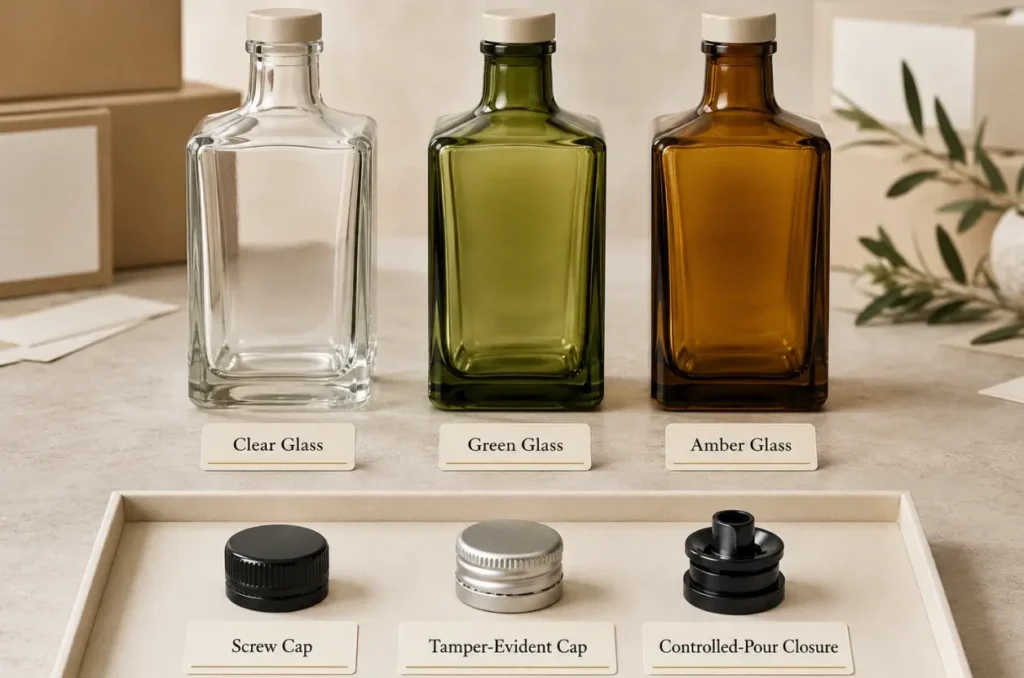
马拉斯卡酒瓶通常采用透明、绿色或琥珀色的玻璃制成。瓶盖可能采用螺旋盖、防篡改金属盖、带倒酒口的瓶盖,或是专为该瓶颈设计的其他封口方式。.
马拉斯卡瓶与多里卡瓶:有什么区别?
在橄榄油和醋的包装中,马拉斯卡瓶和多里卡瓶都很常见,两者通常都呈高身细颈的形状。主要区别在于横截面形状:马拉斯卡瓶的横截面为方形或长方形,而多里卡瓶的横截面则为圆形且呈圆柱状。.
| 功能 | 马拉斯卡酒瓶 | 多里卡瓶 |
|---|---|---|
| 体型 | 正方形或长方形,由四个面板组成 | 圆形和圆柱形 |
| 肩膀 | 通常呈棱角状或明显倾斜 | 通常呈弯曲状或缓坡状 |
| 标签主区域 | 轮廓分明的平直前板和后板 | 曲面设计,适用于正面、背面或环绕式标签 |
| 行方向 | 在贴标或打印前,可能需要对面板进行对齐 | 通常可以更自由地旋转,具体取决于装饰和设备 |
| 纸箱排列 | 矩形底面形状可有效利用纸箱空间 | 圆形底面形成了独特的隔板和托盘图案 |
| 货架外观 | 结构化、传统与建筑风格 | 纤细、简约且流畅 |
| 常见应用 | 橄榄油、醋、沙拉酱、糖浆、调味汁和特色产品 | 橄榄油、醋、沙拉酱、利口酒和特色产品 |
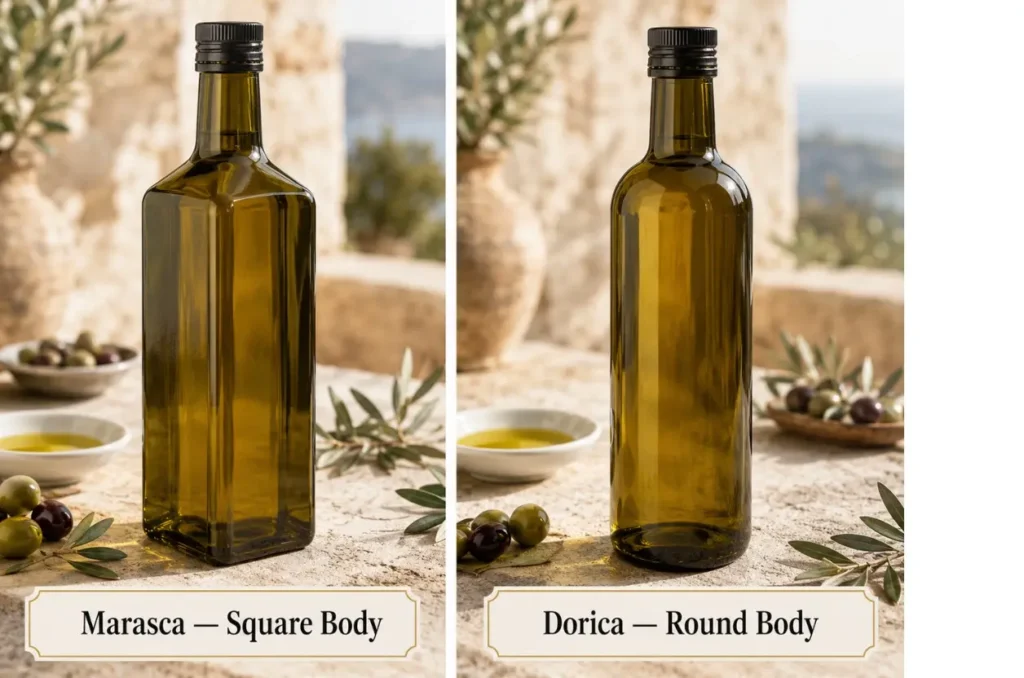
这些只是大致的区别,并非对每只瓶子的承诺。两款马拉斯卡(Marasca)瓶在高度、棱角半径、瓶肩角度和重量方面可能存在显著差异。多里卡(Dorica)瓶也是如此。买家应比较实际的技术图纸,而不是仅凭商品名称就确定选用某款瓶子。.
形状和货架展示效果
马拉斯卡瓶以结构分明的方式呈现产品。当瓶身在货架上摆放整齐时,其正面直接面向顾客,而瓶身的棱角则形成了清晰的视觉边界。这种设计特别适合需要突出矩形轮廓的产品。.
多里卡(Dorica)瓶具有连续的圆形瓶身,通常显得较为修长。这种瓶型适合搭配窄版正面标签、环绕式标签或直接印刷装饰。这两种瓶型本身并不一定意味着更高档;比例、瓶盖和图案设计才是更关键的因素。.
标签与生产线管理
平整的马拉斯卡面板形成了清晰的正面和背面,但可能会带来方向要求。如果标签必须位于其中一个面板的中央或与压花对齐,那么生产线必须确保每瓶酒的摆放方向一致。.
圆形的Dorica标签通常可以在生产线上旋转,这可能会简化某些标签的贴标过程。带有压花或套准印刷的Dorica标签可能仍需调整方向。.
将图纸和样品发送给灌装合作伙伴。确认高度、瓶身宽度、瓶底、瓶颈加工以及任何前板对齐要求。.
纸箱和托盘样式
马拉斯卡酒瓶的方形底面形状能高效利用长方形纸箱,尤其是配备独立隔板时。实际装箱数量仍取决于外形尺寸、圆角半径、酒瓶重量以及所需的间隔距离。.
圆形多利卡瓶采用不同的隔板图案。这两种形状在空间利用率上并没有绝对的优势。最可靠的比较方式是根据所选型号绘制的装箱图。.
产品保护
仅凭形状无法决定产品的保护效果。光照主要取决于玻璃颜色、涂层、标签覆盖范围以及储存条件。氧气接触则受封口、密封、头部空间以及开封后使用情况的影响。.
对于橄榄油而言,在零售店或仓库的照明环境下,深色或不透明的包装通常更安全。A 加州大学戴维斯分校对橄榄油包装的评估 指出这可以减少可能加速氧化的光照。先根据品牌形象和操作需求选择形状,然后分别评估颜色和封口方式。.
Marasca 瓶子用于哪些产品?
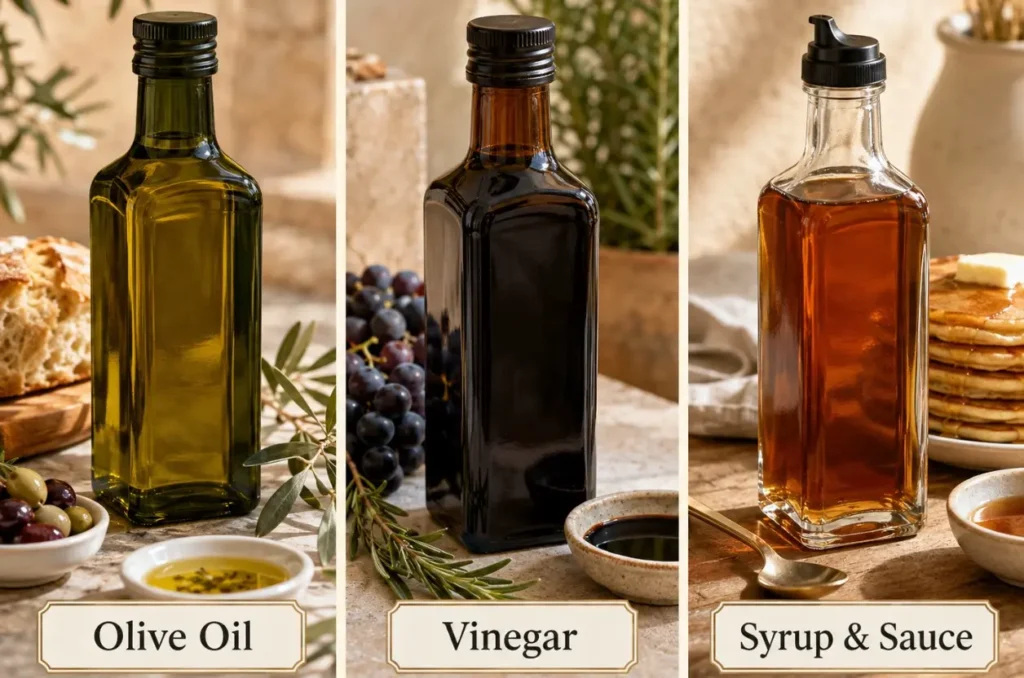
橄榄油是与马拉斯卡(Marasca)瓶关联最紧密的用途。其窄口设计便于控制倒油量,而方正的瓶身则形成了极具辨识度的陈列造型。小瓶装可用于样品、风味橄榄油及礼品套装;大瓶装则适合盛装日常烹饪用油或高端特级初榨橄榄油。.
瓶身形状并非决定透明玻璃是否适用于所有油类产品的唯一因素。如果防光要求较高,深绿色或琥珀色的玻璃通常是更佳的选择。当产品可见性是品牌设计的一部分时,仍可选择透明玻璃,但应考虑储存条件、标签覆盖情况以及二次包装等因素。我们的指南关于 最适合装橄榄油的玻璃瓶 explains this choice in more detail.
Vinegar is another common use. Marasca bottle can suit balsamic vinegar, wine vinegar, fruit vinegar and flavored vinegar. Its flat panels provide space for origin information, ingredients and brand artwork. The closure must be compatible with the product and should provide the required seal during transport and storage.
Dressings, marinades, syrups and some sauces may also be packed in Marasca-style bottles. Here, the product’s flow behavior matters. A narrow opening that works well for olive oil may be too restrictive for a thick dressing or sauce. Particles, herbs and spices can also affect the required opening and pourer. The bottle supplier and filling partner should review the product before the neck finish is confirmed.
Marasca bottles are sometimes used for liqueurs, infused spirits and specialty beverages. The square panels create a distinctive alternative to a round spirits bottle. If the product contains alcohol, the closure liner, decoration and destination-market requirements still need separate review. The same bottle should not be assumed suitable for oil, vinegar and spirits only because the outside shape is similar.
Choosing the Capacity, Glass Color and Closure
The best Marasca bottle is not determined by shape alone. Capacity, glass color and closure have a direct effect on how the package looks and works.
容量
Commercial Marasca bottles are available in several capacities. Examples often include 100 ml, 250 ml, 500 ml, 750 ml and 1 L, but these are not universal Marasca standards. A manufacturer may have some sizes in existing molds and other sizes only as custom projects.
Capacity should match the product, sales channel and destination. Small formats suit samples, gifts and flavored oils. Larger bottles may fit household or food-service use, but they increase filled weight and change pouring comfort.
Do not select a size from a photo. Ask for nominal and overflow capacity, dimensions, weight and neck finish. Two 500 ml Marasca bottles can have different proportions, affecting labels, cartons and filling equipment.
Glass Color
Clear glass shows the natural color and clarity of the product. It can be attractive for vinegar, syrup, infused oil and products where visual appearance supports the sale. It also allows more light to reach the contents, so it needs more careful evaluation for light-sensitive oils.
Antique green and dark green glass are strongly associated with olive oil. They reduce light transmission and create a traditional shelf appearance. Amber glass offers another dark option and can help a brand stand apart from the large number of green oil bottles. Actual light transmission varies with glass composition, color depth and bottle wall, so color names alone should not be treated as performance data.
Coating can change a clear bottle’s appearance, but it must suit the product, filling process and transport conditions. If light protection is critical, request relevant test information rather than relying on appearance.
瓶颈处理与封口
Many Marasca bottles use screw-type neck finishes. Depending on the model, the closure may be a plastic screw cap, an aluminum cap, a tamper-evident cap or a cap combined with a pouring insert. A decorative stopper may be possible on a bottle designed for it, but it should not be fitted to a screw-finish bottle without engineering confirmation.
The finish name and nominal diameter do not guarantee a match. Thread profile, sealing surface, liner and pourer dimensions matter. A cap that appears to fit may still leak or fail on the capping machine.
For oils and vinegars, a controlled-pour insert can improve use after opening. The insert must match the neck and the product’s viscosity. A tamper-evident feature may also be required by the brand, retailer or destination market. Buyers can compare common 玻璃瓶封口件和瓶盖 before confirming the bottle finish.
Test the bottle, cap, liner, insert and filled product together, including transport and opening tests.
Labeling and Decorating a Marasca Bottle
The four panels create a clear visual hierarchy. The front can carry the logo and product name, while the back holds ingredients, origin, instructions and legal information.
Pressure-sensitive paper or film labels are common. The label should fit inside the usable flat area and avoid crossing the rounded corners unless the material and application method have been tested for that shape. A label that is too wide may lift at the edges or show wrinkles where the panel begins to curve.
Direct screen printing can place a logo or simple artwork on one or more panels. Decals can support more detailed graphics. Spray coating, frosting and hot stamping can also change the appearance, while embossing or debossing must be included in the bottle mold. Jingbo Group’s 玻璃瓶表面装饰 page compares these options.
Designers should use the final bottle drawing, which shows the true panel width, shoulder and base radius. A physical sample is still important because glass reflections and product color change the finished appearance.
For olive oil, the label also has a legal function. Product name, net contents, origin and other required information depend on the destination market. The International Olive Council’s current standards and methods and applicable national rules should be checked before artwork is approved. The bottle supplier can provide the label area, but the brand owner or importer remains responsible for final labeling compliance.
Should You Choose an Existing Marasca Bottle or Create a Custom One?
An existing Marasca bottle is usually the practical starting point. Buyers can evaluate its defined capacity, dimensions, neck finish and label panels before preparing the package.
Jingbo Group’s existing square Marasca glass bottle is one example that buyers can review when comparing bottle proportions and screw-finish options. Availability, order quantity and decoration choices should still be confirmed for the actual project.
A custom design makes sense when existing bottles cannot provide the required capacity, proportions, neck finish or identity. Changes to shoulders, panels, embossing or the base should be reviewed for forming, line handling, labeling and packing—not appearance alone.
If you already have a cap, label, carton or filling-line limit, include those specifications at the beginning. A good custom glass bottle design should be built around the complete packaging system. It is much harder to adjust the bottle after the mold and artwork have been approved.
常见问题
Is a Marasca Bottle Always Square?
In packaging trade terminology, a Marasca bottle normally has a square or rectangular body with four defined panels. The corners are usually rounded rather than sharp. A tall cylindrical oil bottle is generally described as a Dorica bottle.
What Is the Difference Between a Marasca Bottle and a Dorica Bottle?
Marasca bottle has a square or rectangular cross-section. A Dorica bottle is round and cylindrical. This difference changes the label area, shelf appearance, line orientation and carton layout. It does not by itself determine product protection.
Are Marasca Bottle Sizes Standardized?
No. Marasca describes the general shape, not one fixed capacity or set of dimensions. Common commercial capacities may include 100 ml, 250 ml, 500 ml, 750 ml and 1 L, but availability varies by manufacturer and mold.
Is a Marasca Bottle Good for Olive Oil?
Yes. Marasca bottles are widely used for olive oil because they offer a recognizable shelf shape, a narrow neck and defined label panels. For light-sensitive oil, glass color and storage conditions should be evaluated as carefully as the bottle shape.
Can Clear Marasca Bottles Be Used for Olive Oil?
They can be used when product visibility is important, but clear glass allows more light to reach the oil. Dark green or amber glass is normally a safer starting point for longer storage or bright retail conditions. A full label, carton or controlled storage may provide additional protection, but the complete package should be tested.
What Closure Is Used on a Marasca Bottle?
Many Marasca bottles use screw caps or tamper-evident metal caps, sometimes with a pouring insert. The correct closure depends on the exact neck finish, product, filling process and market requirements. Always test the bottle and closure together.
Can Marasca Bottles Hold Sauces and Syrups?
Yes, when the opening and closure suit the product. Thick sauces, dressings with particles and viscous syrups may need a wider opening or a different dispensing system than olive oil. The product and filling method should be reviewed before choosing the bottle.
Can a Marasca Bottle Be Customized?
Yes. Existing bottles can often be customized with labels, printing, coating, frosting, closures and export packaging. A new mold can be developed when the project requires different proportions, capacity, neck finish, embossing or another structural feature.
结论
Marasca bottle is defined mainly by its tall square or rectangular body, flat panels, sloping shoulders and narrow neck. Compared with a round Dorica bottle, it creates a more structured shelf appearance and a different approach to labeling, line orientation and packing. The final choice should also consider capacity, glass color, closure, filling conditions and export packaging.
Jingbo Group manufactures glass bottles for oils, vinegars, sauces, syrups and specialty products. We can help you compare an existing Marasca bottle with a custom design and match it with suitable decoration, closures and export packaging. 联系我们的团队 with your product, capacity, quantity and target market for review.