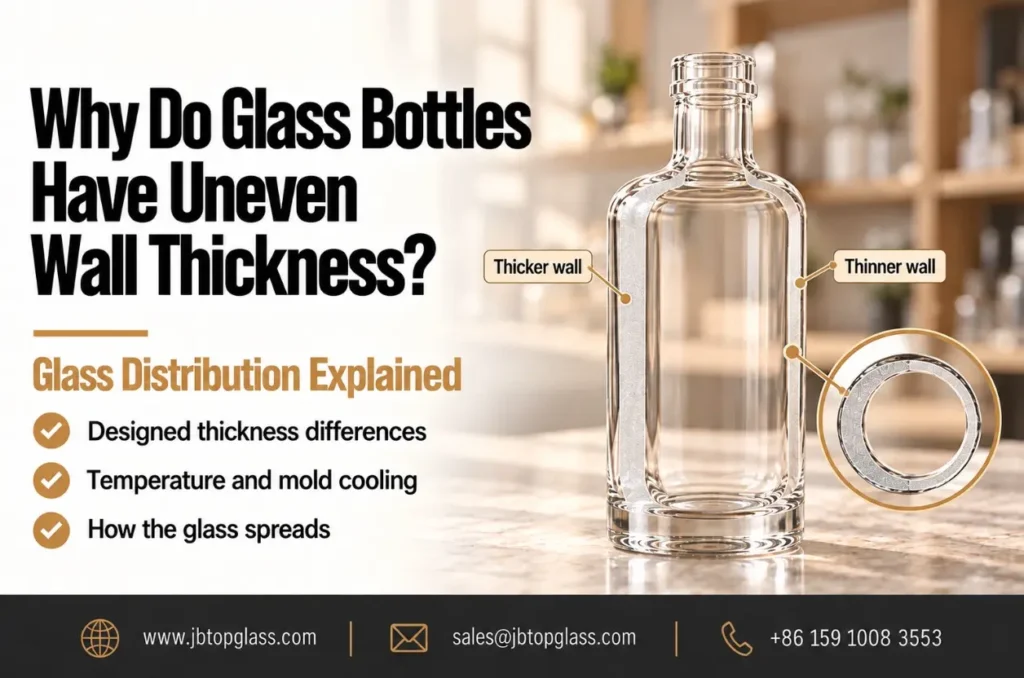
Glass bottles have uneven wall thickness for two main reasons: the design calls for thicker glass in certain areas, or the glass spreads unevenly during forming. Temperature, gob loading, mold cooling and forming timing all affect where the glass ends up.
A bottle does not need the same thickness everywhere. Its glass distribution needs to match the design and support the intended use. A visible thickness difference does not automatically mean the bottle is defective.
Should a Glass Bottle Have the Same Thickness Everywhere?
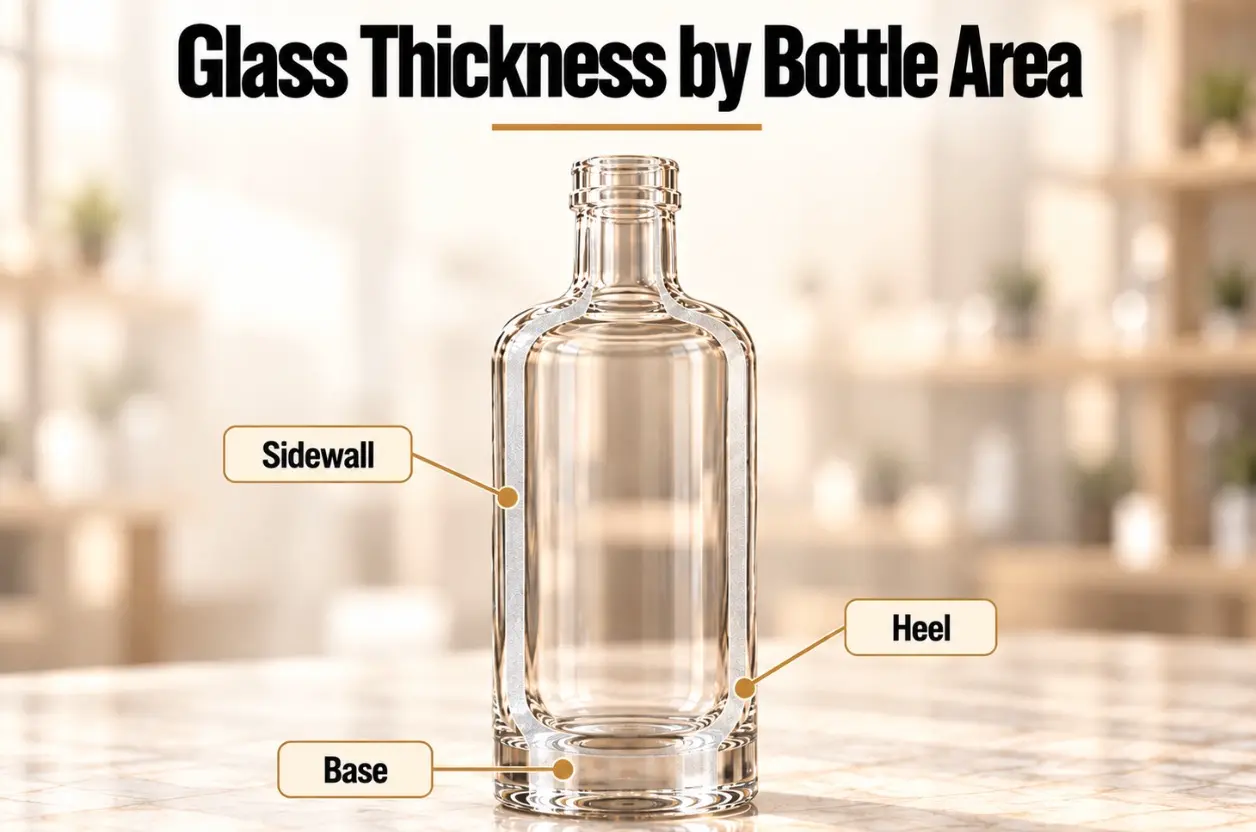
A bottle’s neck, shoulder, body, heel and base have different shapes and functions. Their thicknesses do not have to match.
A heavy-bottom spirits bottle, for example, deliberately contains more glass at the base. The base and sidewalls are designed together to achieve the required shape, weight and internal capacity. Their different thicknesses are intentional.
A difference between opposite sides of a symmetrical bottle needs a separate explanation. One side might be thicker than the other at the same height. Small production variations are expected, but the acceptable range depends on the bottle specification.
Good glass distribution places material where the bottle design needs it.
How Does Glass Become a Hollow Bottle?
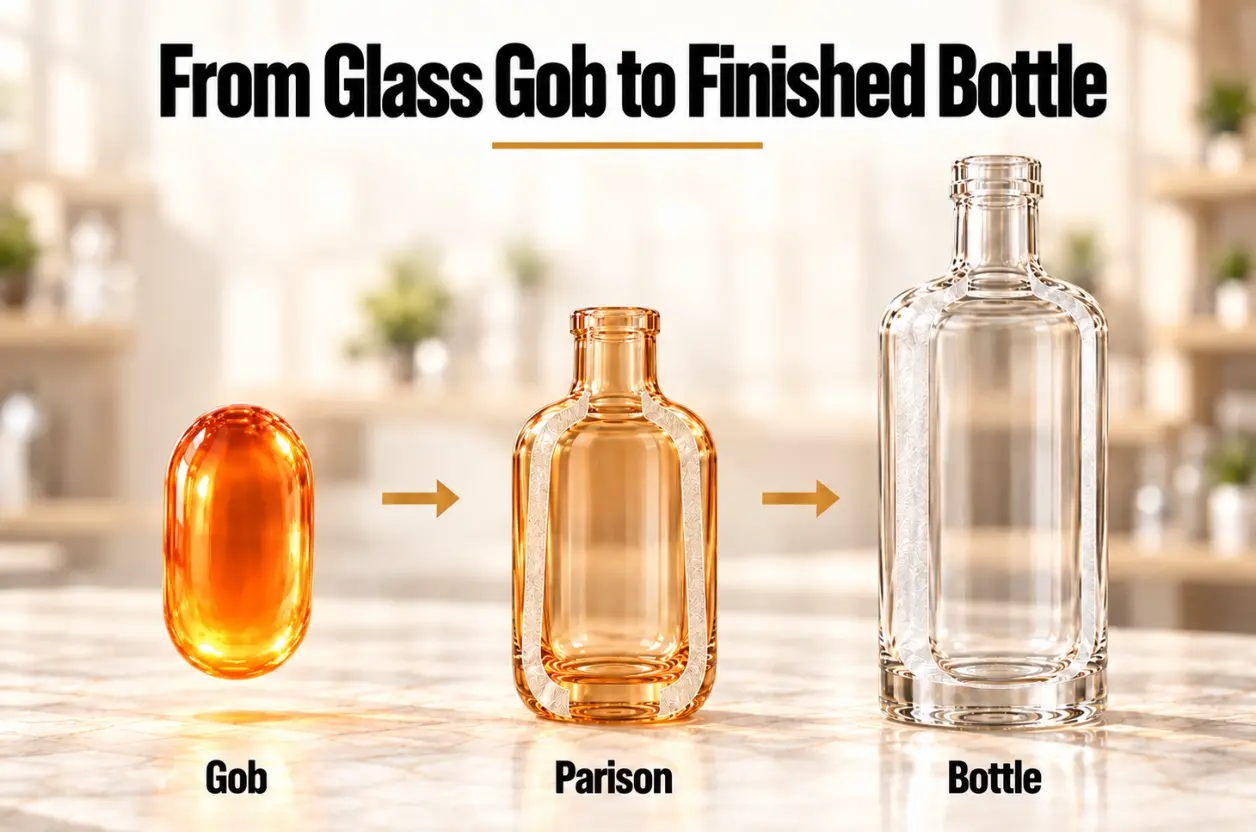
The forming stage of the عملية تصنيع الزجاجات الزجاجية begins with a measured portion of hot glass called a gob.
The gob enters a blank mold. Air or a metal plunger shapes it into a hollow form called a parison. The machine then transfers the parison into the final blow mold, where compressed air expands it against the mold walls.
The final mold controls the bottle’s outer shape. During final blowing, the inner surface changes as the hot glass stretches. No mold holds that inner surface in place.
This explains how a bottle can have a regular outer shape while its wall thickness varies. The result depends on how glass is distributed in the parison and how it expands.
What Causes Uneven Wall Thickness in Glass Bottles?
Differences in Glass Temperature
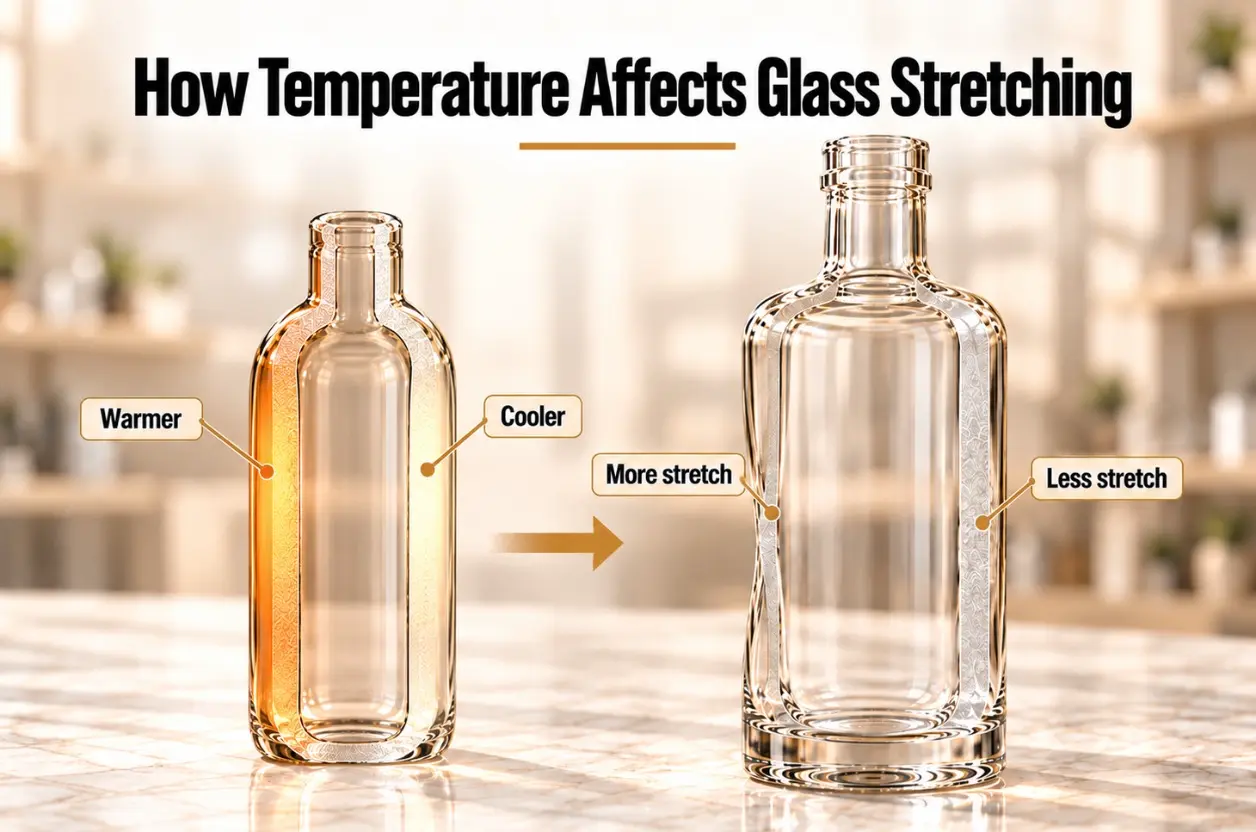
Hotter glass flows more easily than cooler glass. When temperature varies within the gob or parison, some areas stretch more readily than others.
The softer areas tend to spread further and become thinner. Cooler areas resist stretching and can remain thicker.
Both the temperature and its distribution matter. Two gobs with the same weight may form differently if their internal temperatures differ.
Uneven Cooling in the Blank Mold
The blank mold draws heat from the glass as the parison takes shape. The amount of heat removed depends on the cooling conditions and how long the glass stays against the mold.
This leaves a temperature pattern in the parison that affects its later expansion. If some areas lose too much heat, they resist stretching during final blowing.
الـ blank mold temperature profile therefore plays a central role in glass distribution. It needs to suit the bottle design. The process does not necessarily require the same temperature at every point.
Gob Shape and Loading Position
The gob needs to enter the blank mold at the right time and in the correct position.
An unsuitable gob shape or poor loading can cause the glass to spread unevenly from the start. Final blowing does not necessarily remove that initial imbalance.
Forming systems monitor gob position, dimensions and arrival timing because these conditions affect the process. The correct gob weight alone does not guarantee proper loading.
Parison Design and Forming Timing
The parison must suit the bottle it will become. Its shape determines where glass is available as the body expands.
An unsuitable blank or plunger design makes the required distribution harder to achieve. Forming timing also affects how long the glass stays against the mold and how much it stretches before final blowing.
These factors work together. A change that helps one bottle shape may be unsuitable for another. Explaining a particular thickness pattern requires a look at the actual forming process.
Does Uneven Wall Thickness Mean Poor Quality?
Not automatically. A planned thick base, a normal transition around the heel and a local thin spot need to be evaluated differently.
A local area below the specified minimum thickness is a quality concern. A designed thickness change is part of the bottle’s structure. The location, measured thickness and bottle requirements help determine whether a difference is acceptable.
Bottle shape also affects how forces act on the glass. For this reason, container performance assessments consider both geometry and thickness distribution.
Extra glass in one area does not necessarily compensate for a thin spot elsewhere. Appearance alone is also a poor basis for predicting failure. Measurements and relevant performance checks provide a more reliable assessment.
The required wall thickness depends on the bottle design and application. One value cannot cover every spirits bottle, perfume bottle and food jar.
الأسئلة الشائعة
Is a Heavier Glass Bottle Always More Uniform?
No. The total bottle weight tells you how much glass the bottle contains, but it does not show where that glass sits. A thick base adds weight without necessarily making the sidewalls thicker or more uniform.
Does Higher-Clarity Glass Have More Even Walls?
A higher clarity grade does not guarantee more uniform wall thickness. Clear glass grades describe differences in appearance. Wall thickness also depends on bottle design and forming conditions, so clarity and glass distribution need to be considered separately.
Can Annealing Correct Uneven Wall Thickness?
Annealing reduces internal stress through controlled heating and cooling. It does not move glass from a thick area into a thin one. The required glass distribution must be established during forming.
How Is Glass Bottle Wall Thickness Measured?
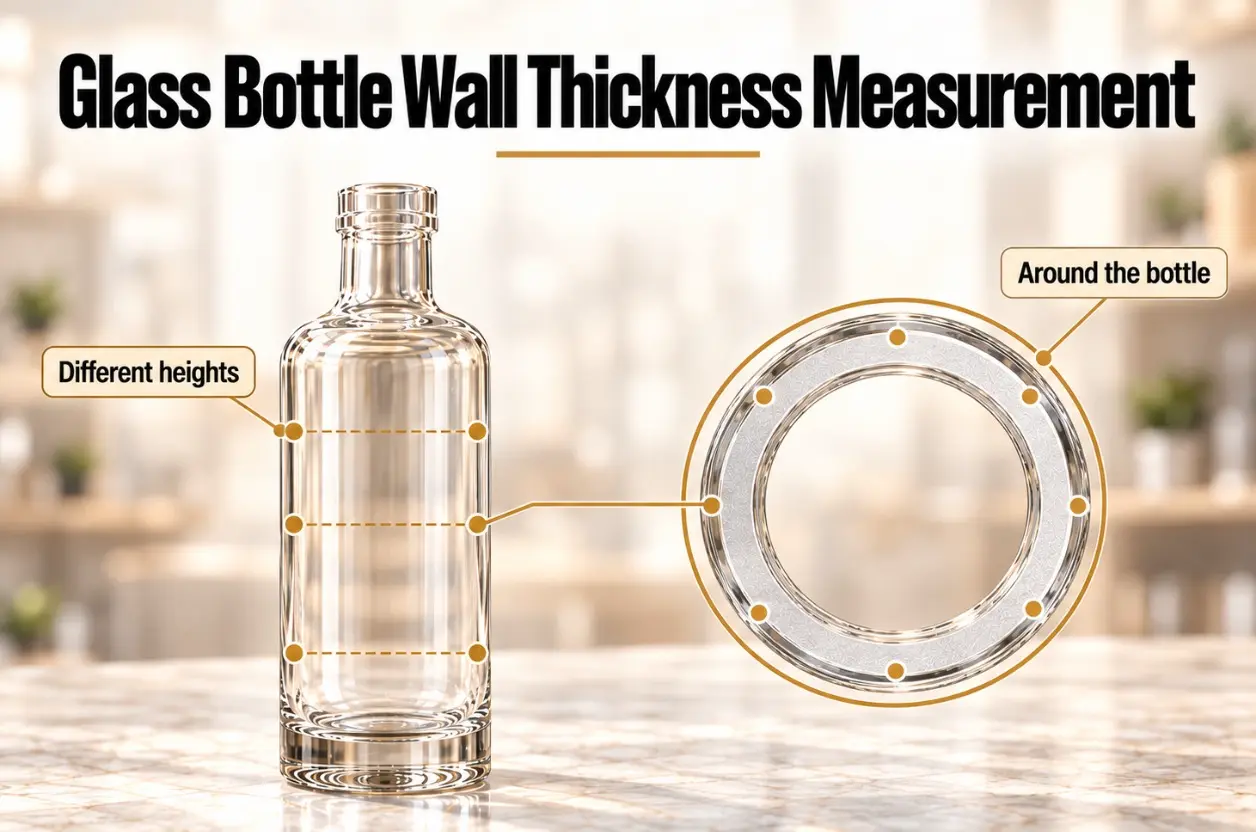
A suitable thickness gauge takes readings at selected locations. Measurements around the bottle and at different heights show variations that a single reading would miss. Automated wall-thickness measurement systems use this approach to check the distribution more fully.
الخاتمة
Uneven wall thickness in glass bottles comes from both design choices and forming conditions. Glass temperature, gob loading, blank mold cooling and parison development influence how the material spreads.
Some thickness differences are intentional. Others fall within accepted production limits or outside the bottle specification. What matters is whether the finished glass distribution meets the bottle’s design and performance requirements.
For help choosing or developing a glass bottle for your product, اتصل بـ Jingbo Group.