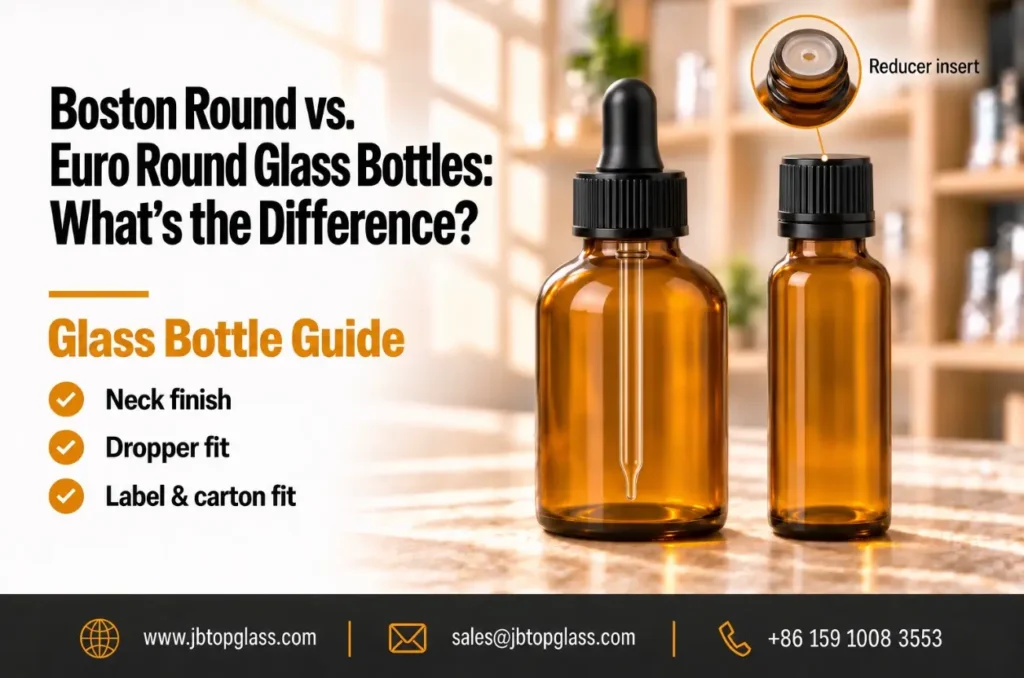
Two 30 ml glass bottles can look alike in a photo. The difference gets easier to see when you try to fit the dropper you already have. If you’re considering a Euro Round in place of a Boston Round, look at the neck first. Then check how your label sits on the new bottle. For a new product, start with how you want customers to get the liquid out.
How Are Boston Round and Euro Round Bottles Different?
A Boston Round has a round body and shoulders that curve inward toward the neck. You’ll see the same shape sold with different neck finishes. The finish is the part of the glass neck that your cap or dropper fits onto and seals against.
A Euro Round, often called a Euro dropper bottle, can look much like a Boston Round. Look for a ring just below the threads. Many Euro models have one. When you unscrew a matching tamper-evident cap for the first time, the ring holds the band back so it breaks away from the cap.
| What to compare | Boston Round | Euro Round |
|---|---|---|
| What you’ll see | A round body with curved shoulders | A similar body, often with a ring below the threads |
| Example neck finish | 20-400 on some small bottles | GL 18, also called DIN 18, on many dropper bottles |
| Good starting point | You want the round shape and already have a cap or pipette in mind | You want to dispense a few drops at a time and use a tamper-evident cap |
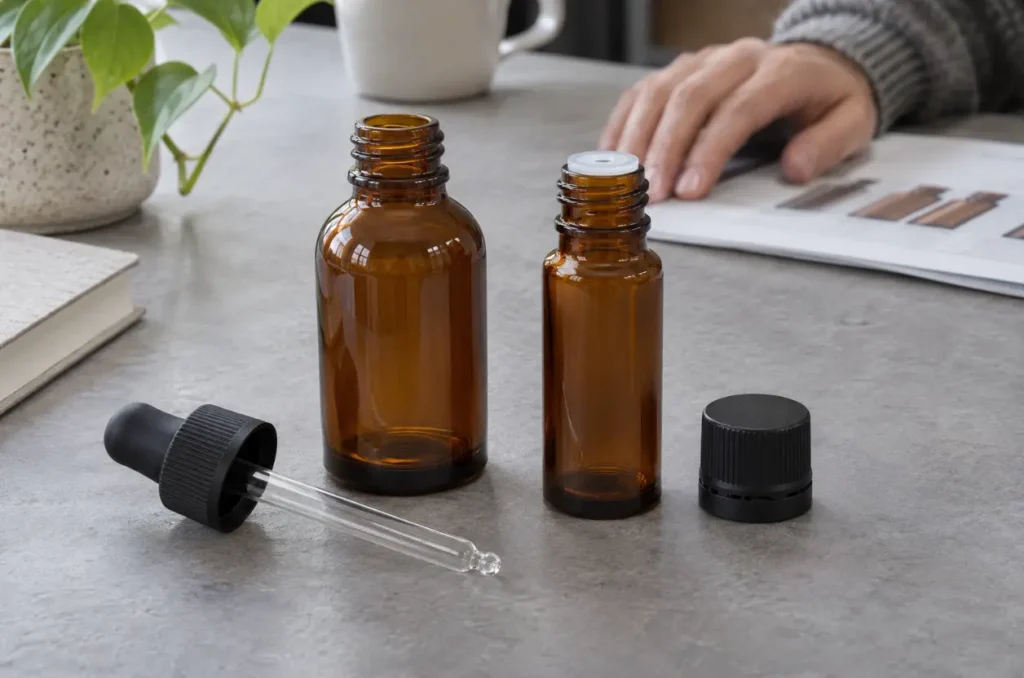
Some suppliers use both names for the same bottle. If you’re looking at photos, ask for a side view with the cap off. You’ll see more of the neck and where it meets the shoulder. Once you’ve found a shape that looks right, the drawing gives you the finish code.
Which Bottle Should You Choose?
You Already Have a Cap or Pipette
If you already buy a 20-400 pipette, look for a Boston Round with the same finish. A quote that says “30 ml round bottle” gives you the capacity and general shape. To compare it with the pipette you have, ask the supplier to put the full finish code on the quote.
When the sample comes in, try your own cap or pipette on it. If the collar sits high, see where it stops. It may be catching on the glass before it reaches the surface that forms the seal. With some of your product in the bottle, you can check for leaks and see whether the pipette picks up the liquid as expected.
You Want to Pour a Few Drops at a Time
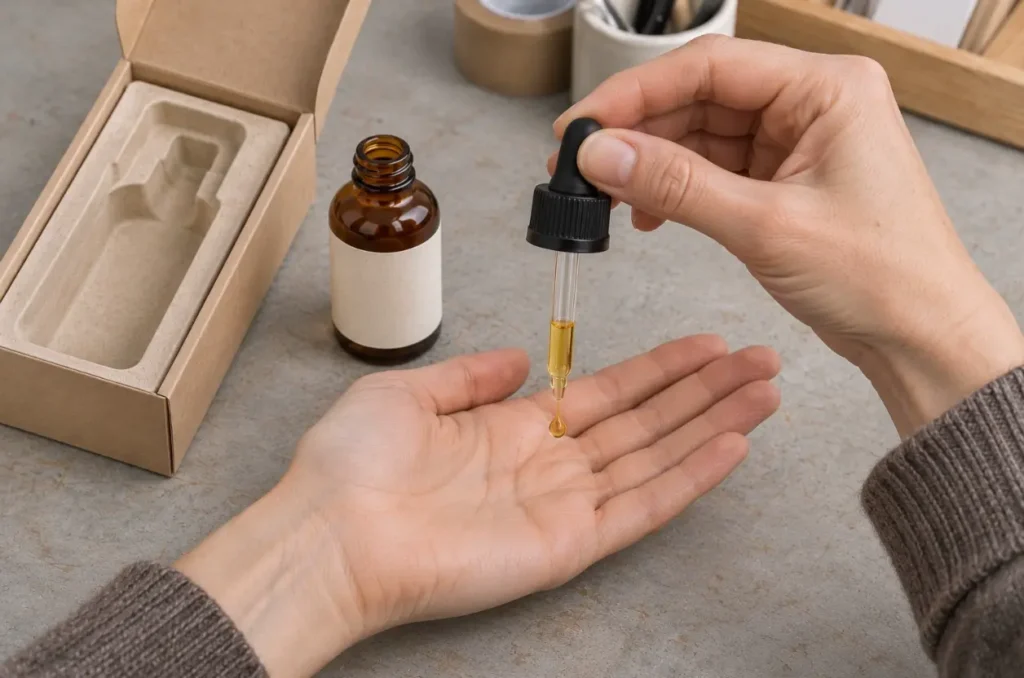
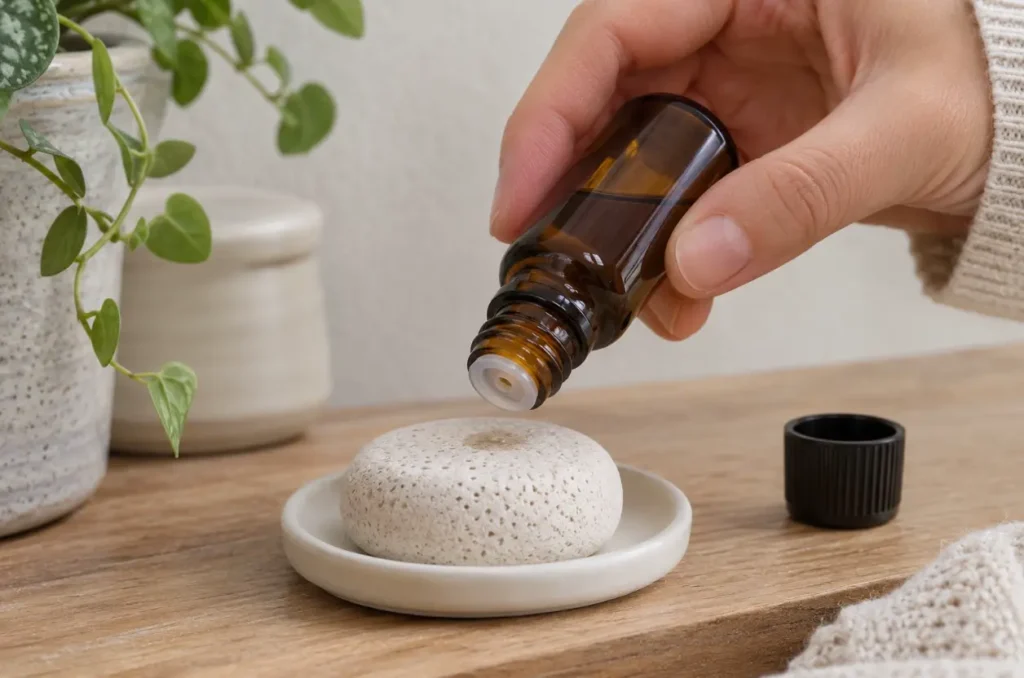
For an essential oil that people use a few drops at a time, try a Euro Round with a matching reducer and tamper-evident cap. The reducer is the small insert you see in the mouth of the bottle. You tip the bottle to let the oil drip out. With a pipette, you draw the oil into a tube and squeeze it out where you need it.
Try the bottle with the oil you plan to sell. A thin oil might come out faster than you’d like. With a thicker oil, you might have to wait for each drop. If you’re using a tamper-evident cap, open the sample and see how the band separates. You can also use a pipette with some Euro Rounds. Ask for the bottle and pipette as a matched set.
Can You Keep Your Label and Carton if You Switch?
A slightly wider 30 ml bottle can leave a gap where your wraparound label used to overlap. You might only see it when you turn the bottle around. With a front label, the space you need is the straight glass between the shoulder and the curve at the base. Put one of your printed labels on the sample. You’ll see where the artwork sits and whether the edges lie flat.
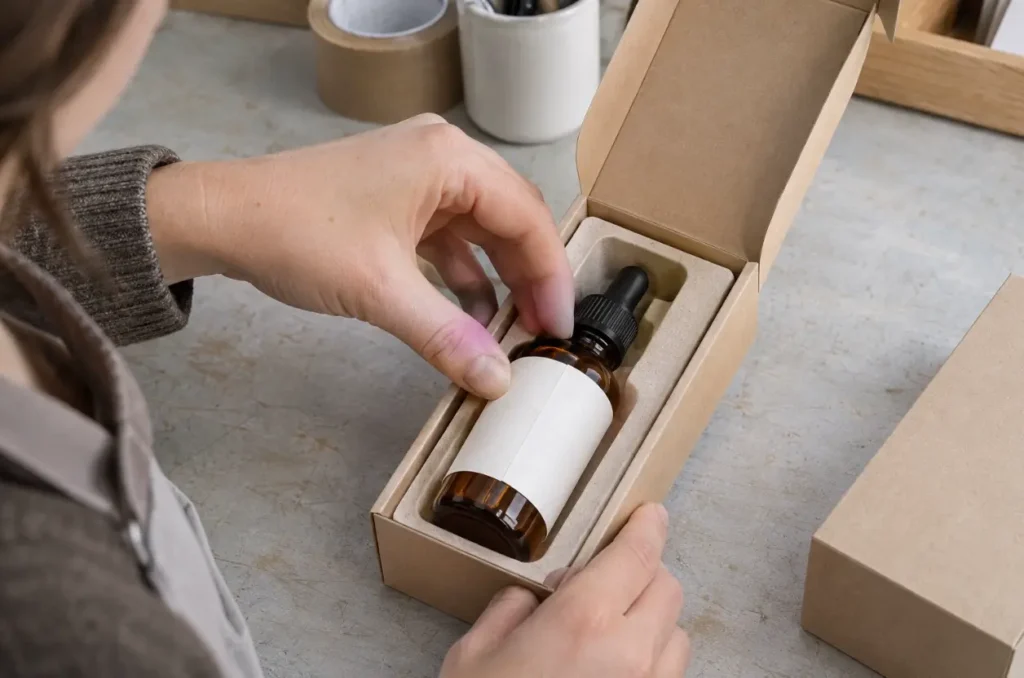
The dropper makes a difference to the carton fit too. The empty bottle might slide into the insert easily, then sit too high for the lid to close once you put the dropper on. If you need a different insert, add that cost when you compare the quotes. You might use the new bottle for a new product and keep the original for repeat orders.
Foire aux questions
Your Cap Says 18 mm. What Should You Ask the Bottle Supplier For?
Ask for the full neck finish code and the drawing for the bottle on the quote. The 18 mm marking gives you the size. The drawing shows the thread and where the cap should seat. With a tamper-evident cap, the glass below the thread needs to fit the band too. If you have the cap’s part number or a sample, send it to the supplier.
Can You Keep the Same Pipette if the New Bottle Is Shorter?
You can if the tube still reaches the liquid and clears the inside base when you close the cap. Try your current pipette in the new bottle and look at where the tip ends. If it touches the base, the cap may stop before it seals. If the tip sits too high, you’ll leave more liquid behind. Try it with a little of your product.
Can You Fill 30 ml in a Bottle Listed as 1 US fl oz?
One US fluid ounce is about 29.57 ml, and some suppliers round it to 30 ml on the listing. To see whether the bottle works for your product, measure 30 ml into the sample and fit the closure. Check how much space is left above the liquid. The supplier can tell you whether the figure on the drawing is the fill capacity or the brimful capacity.
Can You Check an Amber Bottle Order With a Clear Sample?
A clear sample is useful for checking the cap, label and carton if the supplier confirms that it follows the same drawing and tolerances as the amber bottle. For the color, ask for a sample in amber. Put it next to the bottle you already sell, with the same liquid inside and the same label on both. That’s how you’ll see the difference in the finished pack.
What Can You Send if Your Old Bottle Has No Drawing?
Send one photo from the side and another looking down at the mouth. A close-up with the cap off helps the supplier see the thread. Include the overall height and body width. If you need to keep your cap or dropper, it helps to send it with the old bottle. The supplier can measure both parts and see where they meet.
Your Sample Just Fits the Divider. Can You Approve the Order?
First, compare the largest bottle width allowed on the drawing with the smallest opening in your divider. If there’s very little room, try several samples in dividers from different cartons. One bottle may slide into a slot that another one catches on. Agree on the clearance you need and add it to the specification your team uses to check the production lot.
Conclusion
For a new product, choose a bottle that suits the way people will dispense it. If you’re reordering, try the replacement with the cap, label and carton you already use. When you need a quote for glass aromatherapy bottles, contacter Jingbo Group with your sample or drawing, the capacity and the quantity you need for each size.