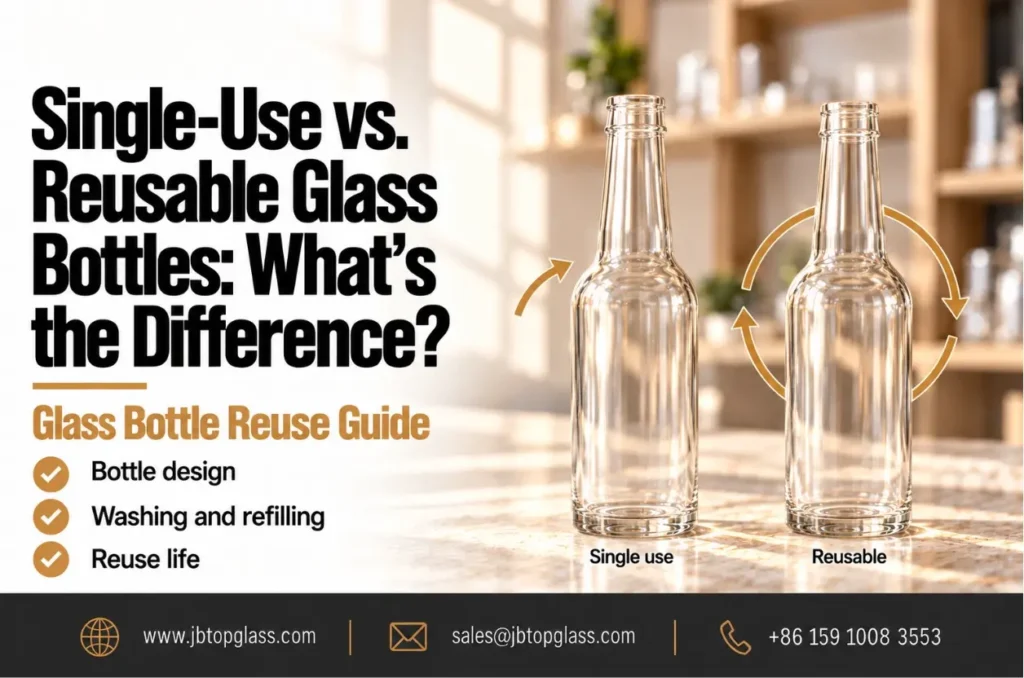
Reusable glass bottles are designed for repeated filling, washing and handling. Single-use glass bottles are intended for one commercial filling cycle. Both can be recycled, but recyclability alone does not make a bottle suitable for repeated use.
The difference is not always obvious in a new sample. Two bottles may have similar shapes and capacities. A heavy single-use bottle may even feel sturdier than a lighter reusable one. What you cannot see from those samples is how each design will perform after repeated washing, contact and handling.
For beverage brands and packaging buyers, the comparison comes down to three questions: what makes the designs different, whether an existing bottle can be refilled commercially, and how many times a reusable bottle can stay in use.
What Does “Single-Use” Mean for a Glass Bottle?
A single-use glass bottle, also called a one-way or non-returnable bottle, is made for one commercial filling and use cycle. The producer fills it, the customer uses the product, and the empty container then leaves that packaging cycle.
The glass can enter a recycling stream. It is processed and melted to make new containers, rather than keeping the original bottle in circulation.
Single-use describes the application, not the quality. A premium spirits bottle with a thick base can be a single-use package, just as a lightweight beverage bottle can.
Each still needs to work with its contents and filling process. A bottle for a carbonated drink faces different demands from one for a still product. Its design has to handle those demands throughout filling, transport and customer use. Repeated washing and commercial refilling add another set of demands.
What Are Reusable Glass Bottles?
Reusable glass bottles are developed for more than one filling and use cycle. The same physical container stays in service instead of being melted down after its first use.
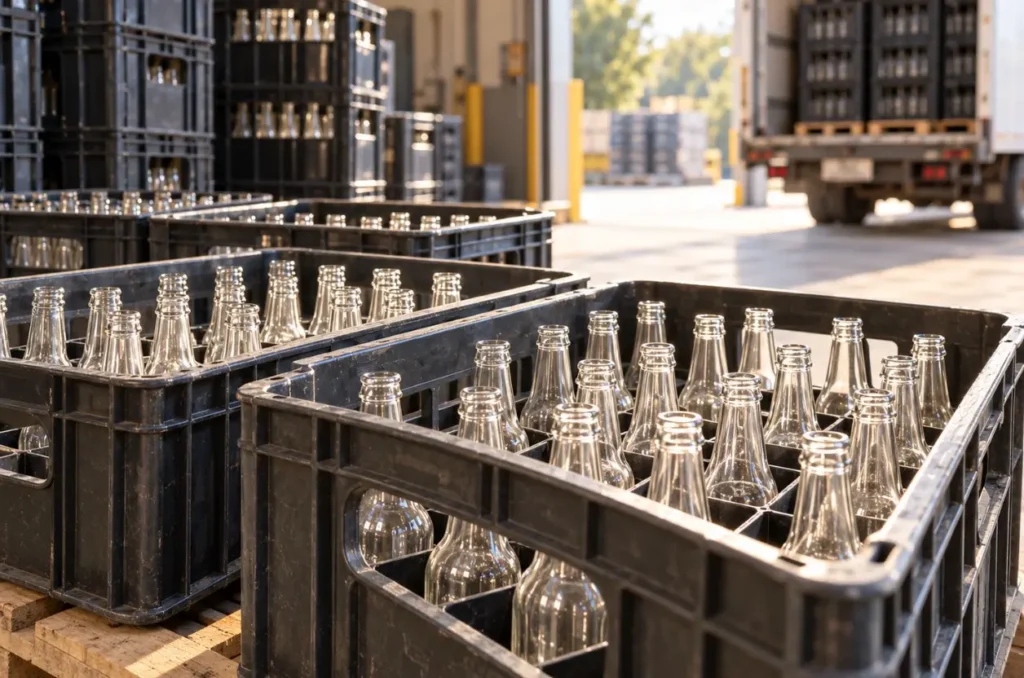
In commercial packaging, that means the bottle needs to remain suitable through repeated cleaning, handling and filling. Where a return system is used, empty containers are collected, sorted, washed and checked before going back to the filler.
You will also see the terms refillable 그리고 returnable.
Reusable describes repeated use. Refillable emphasizes filling the container again. Returnable refers to bringing the empty container back through a collection arrangement.
A bottle can be all three. A reusable beverage bottle may be returned to an operator, washed and refilled for another sale. However, collection alone does not tell you whether the bottle will be reused or recycled. Refilling also does not always involve returning the container to the original producer.
For this comparison, the focus is glass packaging designed for repeated commercial use.
How Do Single-Use and Reusable Glass Bottles Differ?
Bottle Design and Strength
The two categories can share the same basic glass composition and manufacturing process. Their expected working lives create different design requirements.
Traditional reusable bottles often have thicker walls, particularly where containers make contact. Those areas face repeated impacts as bottles move through filling, distribution, collection and washing.
Extra weight is not the only approach. Strengthened lightweight reusable designs also exist, so there is no universal bottle weight that separates the two categories.
A thick base, for example, adds weight. It does not establish how the sidewall or neck will perform after repeated washing and handling.
When you compare samples, look beyond how substantial they feel. The manufacturer’s information and testing for that design provide a clearer answer about its suitability for repeated use.
Repeated Washing
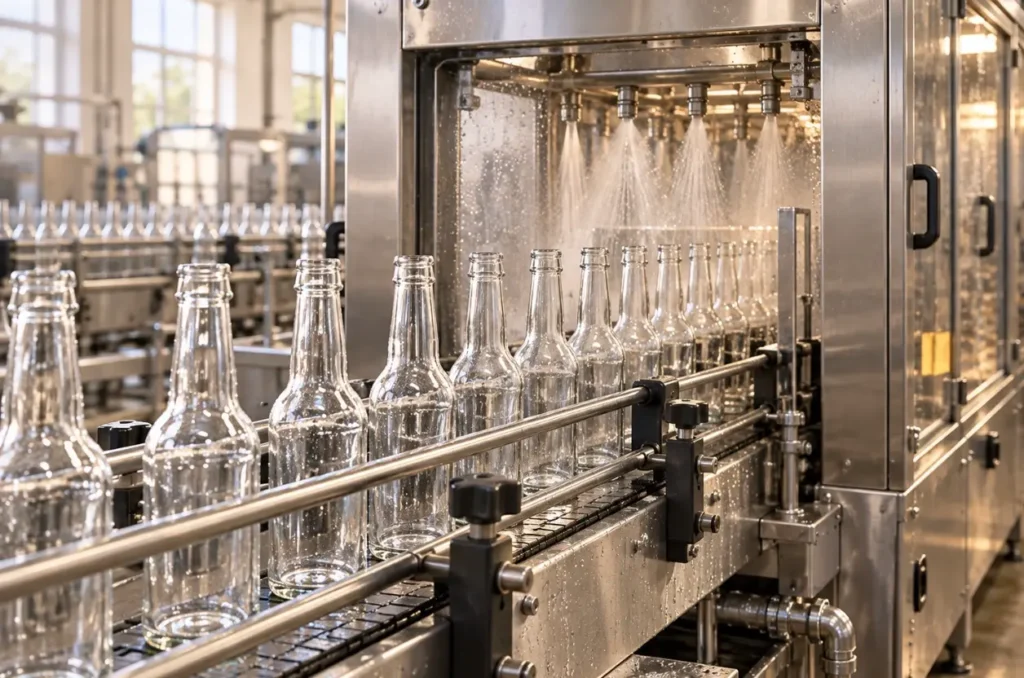
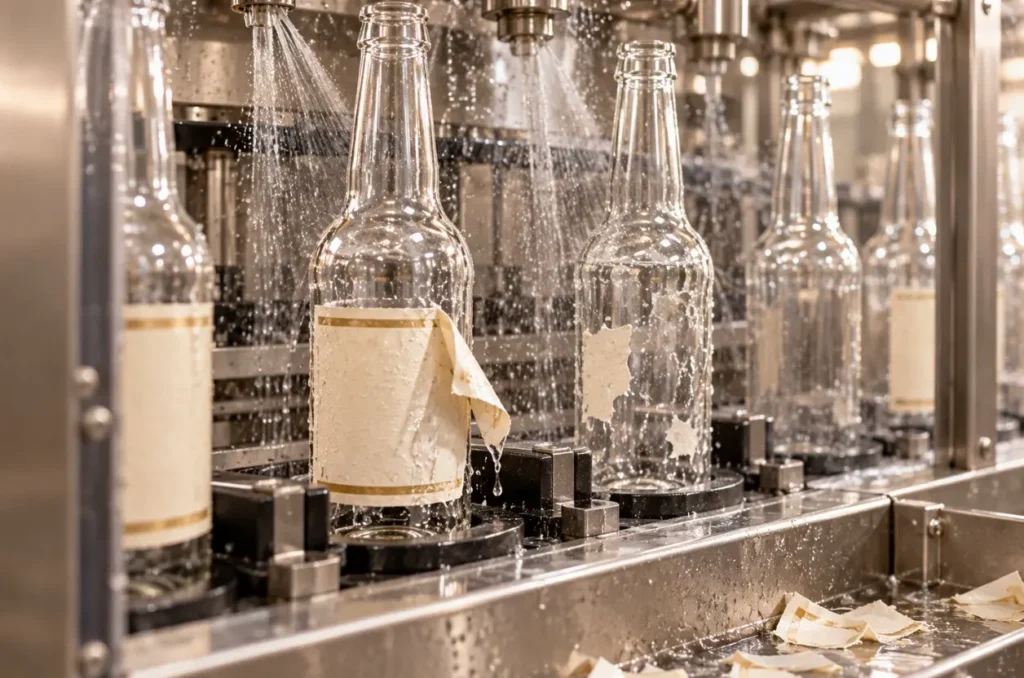
Commercial washing does more than rinse away the last of the drink. Bottles may pass through hot washing solutions, rinses and temperature changes before reaching the filler again.
Repeated exposure to heat and cleaning chemicals can affect the glass surface. This surface attack, often called etching, can make the glass more susceptible to wear. The washing conditions therefore influence bottle life, as well as cleanliness.
The process must remove contamination while leaving the container ready for another fill. A reusable design and an appropriate washing process work together.
Hot-fill suitability answers a separate question. It concerns the filling conditions for that package; it does not, on its own, demonstrate that the bottle can handle repeated industrial washing.
Surface Protection and Scuffing
Bottles rub against neighboring containers, conveyors, guide rails and crates. Over repeated trips, that contact can leave pale scuff marks, especially around the shoulder and lower body.
Surface protection helps manage the friction. Lubricating coatings developed for returnable bottles can reduce damage from bottle-to-bottle contact during handling.
Washing can affect protective surface treatments too. Some systems apply a lubricating treatment after washing to help protect containers as they move through the line again.
A white rubbing mark and a crack are different conditions. Scuffing can be part of a reusable bottle’s working appearance, but the amount and severity still need to be assessed. An operator needs clear limits for acceptable wear rather than treating every visible mark as the same problem.
Labels and Decoration
A reusable bottle also needs decoration that works beyond the first sale.
If the old label has to come off in the washer, both the label and adhesive must suit that process. Wash-off labels are designed to stay in place during sale and use, then release under specified washing conditions.
Permanent decoration raises another question: how will the printed or decorated surface look after repeated cleaning and handling?
A new sample shows the starting appearance. For reusable glass bottles, the finished package needs to be considered after washing too. The label, printing or other decoration should work with the planned cleaning cycle.
Can an Ordinary Glass Bottle Be Used for Commercial Refilling?
A bottle supplied for single-use packaging should not be treated as reusable simply because it survives a second fill.
For commercial reuse, the particular container should be designed and tested for that purpose, with the manufacturer identifying it as suitable for reuse. Similar dimensions, extra weight or a familiar beer-bottle shape do not establish that suitability.
A general statement that “glass is reusable” gives no information about the additional impacts or repeated washing a particular bottle can handle.
For an existing model, the manufacturer’s drawing and product information are useful starting points. If it is specified for single use, that is the application the buyer should work from. An unmentioned refill capability should not be assumed.
A Home Refill Is a Different Application
Keeping a bottle at home and filling it again does not demonstrate performance in a commercial refill system.
Returned containers arrive with different histories. Customers may have handled, stored or used them in different ways. The operator is no longer working only with new bottles of a known specification.
Sorting, cleaning and checking help manage that variation. One successful refill shows what happened to one bottle on one occasion. It does not establish how a batch will perform over repeated commercial cycles.
Washing and Checking Have Different Jobs
Washing removes contamination. Checking determines whether the cleaned container can go forward to filling.
A clean bottle can still have a chipped rim or damaged thread. An undamaged-looking bottle can still contain foreign material or washing liquid.
Empty-bottle checks between the washer and filler address these different concerns. Depending on the equipment, they can cover the base, sidewall, neck, sealing surface and remaining liquid.
The checks also explain why choosing a reusable design is only part of the job. Each returned container has to be assessed again. Bottles that no longer meet the operation’s requirements are removed before they receive more product.
How Many Times Can Reusable Glass Bottles Be Used?
There is no single refill count for every reusable glass bottle.
Published figures apply to particular designs and systems. For example, the dedicated bottles in Oregon’s BottleDrop refillable programme can be washed and refilled up to 25 times. That figure applies to those bottles and that programme, rather than to glass packaging in general.
The number achieved in another operation depends on its bottle design, washing conditions, handling and reasons for removing containers.
A Test Result and an Average Lifetime Mean Different Things
A bottle may be tested through a stated number of cycles under defined conditions. That result describes the test.
An average number of trips in service describes what happens across a working group of bottles. It reflects differences in handling, washing, damage and returns. Some containers may also disappear from the system without reaching the end of their useful physical life.
These figures answer different questions. Completing a laboratory test does not guarantee that every bottle will complete an identical number of commercial trips.
A useful lifetime claim explains which design was assessed, what the cycles involved and whether the figure is a test result, a target or an observed average.
Wear Builds Up Across Several Stages
A bottle’s working life includes more than its time in the washer. Contact during filling, packing, transport, storage and returns also contributes to its condition.
Two containers of the same design can therefore age differently. One may receive an impact early in its life, while another completes many trips with less damage.
Washing cleans the bottle, but it does not restore chipped glass or erase its handling history. The container still carries the effects of earlier use into the next cycle.
This is why an advertised refill count needs to be understood alongside the actual operating conditions.
Bottles Can Leave Service Before They Break
A reusable bottle does not have to break before it is removed.
A chip, crack, persistent contamination or excessive wear may be enough to keep it out of the next filling cycle. Appearance requirements can also lead an operator to retire a container.
Those are different reasons for removal. A bottle that no longer meets a brand’s presentation standard is not necessarily in the same condition as one with a damaged sealing surface.
Clear removal criteria help the team make those decisions consistently. The aim is to keep acceptable containers in use while taking unsuitable ones out before another fill.
Once a bottle leaves the reuse system, its glass can enter an appropriate recycling stream. The end of its refill life does not have to be the end of the material’s use.
자주 묻는 질문
Are Reusable Glass Bottles Always Heavier?
Traditional reusable designs are often heavier than comparable single-use bottles, but strengthened lightweight designs also exist. Weight alone cannot confirm whether a bottle is reusable.
Does a Bottle Deposit Mean the Container Will Be Refilled?
No. A deposit concerns the collection arrangement. Returned containers may go for recycling or enter a washing and refilling system. What happens after collection determines which route they follow.
Can You Identify a Reusable Bottle by Its Shape?
Shape alone is not reliable. Similar-looking bottles can have different specifications and intended uses. The manufacturer’s information for the particular model is more useful than its resemblance to a familiar reusable bottle.
Can Reusable Glass Bottles Still Be Recycled?
Yes. Reuse and recycling can happen at different stages of the same bottle’s life. Once a reusable bottle is removed from service, it can enter an appropriate glass recycling stream.
결론
Single-use and reusable glass bottles have different intended working lives. A reusable bottle needs to handle repeated cleaning and handling, while checks before refilling determine whether each container can continue in service.
The choice should follow the bottle’s specified use and performance, rather than weight or appearance alone.
Contact Jingbo Group to discuss your bottle design and filling process. If commercial reuse is part of the project, include it in the brief from the start.