
丝网印刷是将油墨直接印在玻璃瓶上。热压印则是将一层薄箔转印到瓶子上。.
丝网印刷通常更适合印制彩色徽标、产品名称、文字和简单图形。烫金则更适合呈现金色、银色及其他反光细节。一个瓶身也可以同时采用这两种工艺:丝网印刷用于呈现主要信息,而烫金则用于突出徽标或设计中的其他重要部分。.
这两种工艺并没有哪一种总是更优。正确的选择取决于图案设计、瓶身形状、表面处理、耐用性要求以及预算。.
什么是玻璃瓶丝网印刷?
丝网印刷 也称为丝网印刷。这两个名称指的都是同一基本工艺。.
丝网印刷是将油墨直接印在玻璃瓶上的工艺。印刷机使用印有图案的网版,刮刀将油墨从网版的网孔中挤压出来,印在玻璃上。随后,工厂对油墨进行固化处理,使其与瓶身表面牢固结合。.
每种颜色都需要单独的网版。印有白色标志的瓶子只需一个网版,而印有白色、红色和黑色图案的瓶子则需要三个。工厂在生产过程中必须确保每种颜色都处于正确的位置。如果颜色对不齐,细边框和相连的图形可能会显得模糊。.
丝网印刷最适合用于纯色、徽标、文字和简单图形。该工艺广泛应用于香水、烈酒、饮料、食品和化妆品的玻璃瓶上。若设计稿中包含照片、柔和的渐变或大量细微的色彩变化,则可能更适合采用转印或数字印刷。.
Jingbo Group 是如何打印多色设计的?
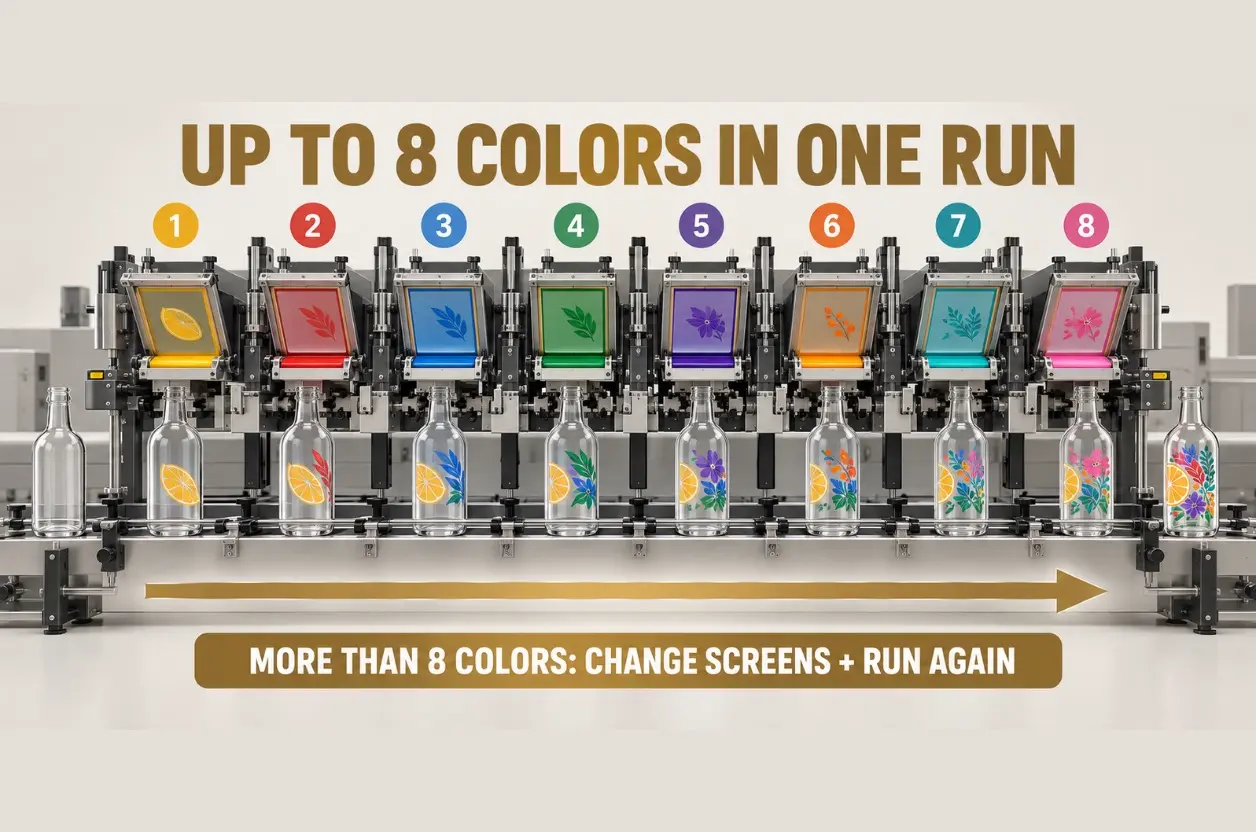
Jingbo Group 使用八色丝网印刷机对玻璃瓶进行装饰。每种颜色都有专用的网版和印刷工位。该机器可在一次连续生产过程中完成最多八色的图案印刷。.
这种设置减少了重复装版和机器调整的次数。它还有助于工厂将颜色保持在更稳定的位置。当图稿中包含相连的线条、边框或细微细节时,这一优势尤为重要。.
如果一个设计包含超过八种颜色,工厂就需要更换网版,并让瓶子再次通过机器。额外的印刷工序会增加生产时间,并使颜色对位变得更加困难。.
Jingbo Group 会在报价和打样前对设计稿进行审核。我们的团队可以检查所有颜色是否都必不可少,或者在不改变设计整体外观的前提下,是否可以对设计进行简化。.
有机墨水与陶瓷珐琅
玻璃瓶的丝网印刷可使用有机油墨或陶瓷釉料。这两种材料所需的固化方法不同。.
有机油墨通常在较低温度下或在紫外线照射下固化。它具有丰富的色彩范围,便于进行定制配色。如果油墨与表面相容,也可用于磨砂或喷涂处理的瓶子。.
陶瓷釉料需要高温烧制。烧制过程使装饰图案与玻璃紧密结合。这种方法通常能提供更强的防潮、耐洗、耐刮擦以及抗化学腐蚀性能。.
然而,陶瓷搪瓷并不适合所有瓶口。高温可能会影响瓶身已施加的喷涂、光泽或其他装饰效果。工厂必须根据瓶子的整体设计来选择油墨和固化方法。.
什么是玻璃瓶上的热压印?
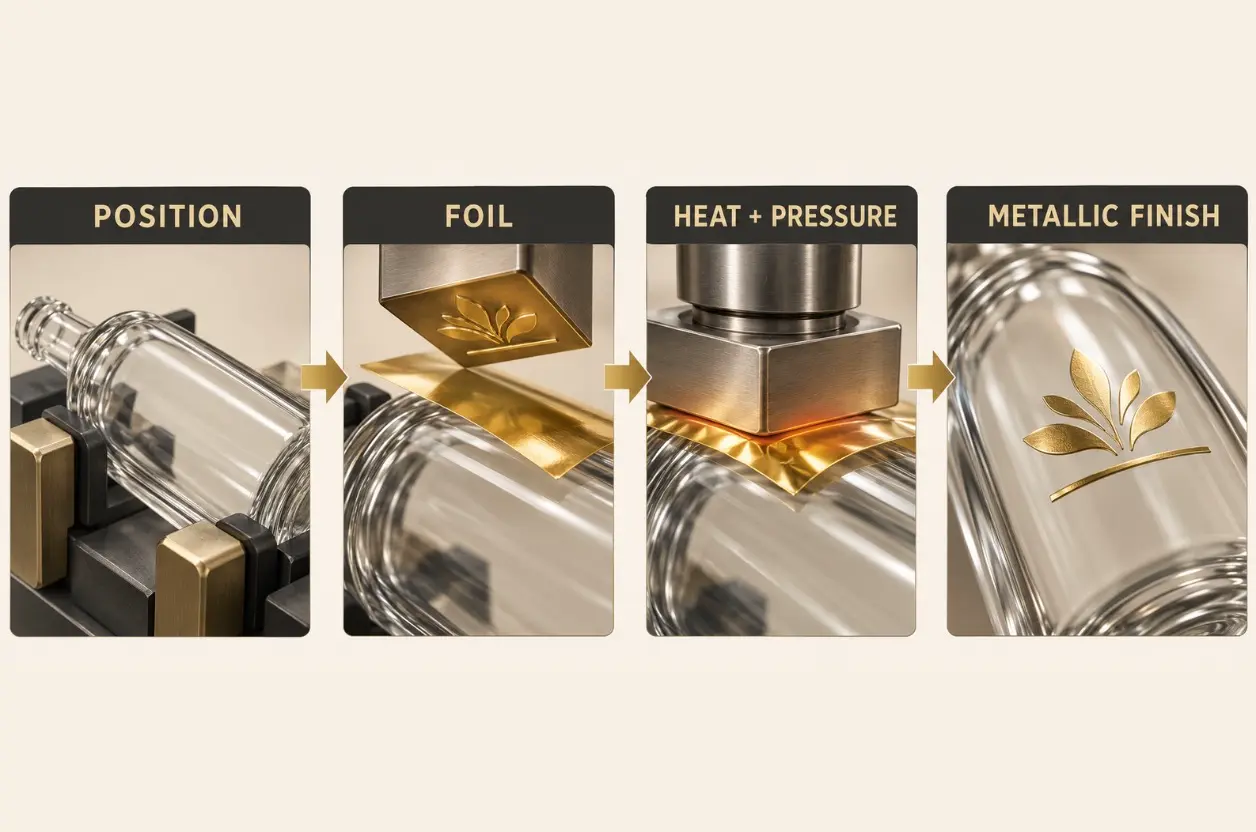
热压印 将箔片上的装饰层转移到瓶体上。通过模具或辊筒将箔片压在所需区域。在热和压力的作用下,装饰层从背衬上剥离,并附着在预处理过的表面上。.
金色和银色是最常见的表面处理效果。供应商还可能提供玫瑰金、铜色、彩色金属、珠光和全息箔。.
与金属丝网印刷油墨相比,烫金通常能呈现出更亮丽、反光性更强的效果。品牌方常将其用于徽标、产品名称、边框以及细微的设计细节。.
金色热压印标志通常并不含有真正的黄金。该术语通常指的是箔片的颜色和金属质感。如果对金色的具体色调有要求,买家应索要箔片样品。.
热转印并不总能直接转移到未经处理的玻璃上。某些生产系统会使用兼容的底漆、涂层或丝网印刷的粘合层。例如,有一种工艺是先通过丝网印刷涂覆UV底漆,然后箔片仅与该预处理区域结合。.
其他工厂可能采用不同的箔片或转印系统。买家应要求供应商详细说明整个生产流程,而不是想当然地认为每只热压印瓶都是以相同的方式生产的。.
丝网印刷与烫金:主要区别
| 比较 | 丝网印刷 | 热压印 |
|---|---|---|
| 装饰材料 | 墨水 | 转印箔 |
| 主要外观 | 纯色印花 | 反光或金属质感 |
| 最佳用途 | 徽标、文字和简单图形 | 高端徽标、线条和装饰元素 |
| 颜色匹配 | 自定义颜色更容易搭配 | 颜色取决于可选的箔纸 |
| 颜色数量 | 通常每种颜色都需要另一块网版 | 每种箔纸颜色可能还需要多一道工序 |
| 装饰面积大 | 通常更合适 | 通常更适合呈现特定细节 |
| 弧形瓶 | 适用于机器能够旋转瓶子的情况 | 对接触不均匀更为敏感 |
| 主要成本因素 | 颜色数量、尺寸和瓶身形状 | Die, foil type, size and bottle shape |
| Common problems | Poor adhesion, rough edges and color movement | Missing foil, broken edges and peeling |
| Typical applications | Spirits, beverages, food, perfume and cosmetics | Premium spirits, perfume and gift packaging |
The table gives a general comparison. The final result still depends on the bottle, artwork and production method.
Which Process Is Better for Colored Logos and Text?
Screen printing is usually the better choice when the design uses a solid brand color.
The factory can mix the ink according to a Pantone number or an approved physical reference. This makes screen printing suitable for logos that need to match other parts of the packaging.
The bottle color still affects the final result. White ink may look bright on clear glass but less even on a dark coating. The factory may need to adjust the ink opacity or print thickness.
Small text also needs enough space. Very thin lines may lose sharpness, especially on a textured or sharply curved surface. The supplier should check the artwork on the bottle drawing before making the screen.
Screen printing also works well when the bottle needs more than a decorative logo. Beverage, sauce, oil and spirit bottles may need the brand name, product type or volume directly on the glass.
Screen printing is less suitable for photographs, detailed color gradients and artwork with many small color changes. A decal, label or digital printing process may be more suitable for that type of design.
Which Process Is Better for Gold or Silver?
Hot stamping is usually the better choice when the brand wants a bright, mirror-like gold or silver effect.
Metallic screen-printing ink can also create a gold or silver appearance. However, it normally looks more like metallic paint. The ink contains reflective particles, so the finish may appear softer or slightly textured.
Hot-stamping foil creates a smoother and more reflective surface. It stands out clearly on matte black, white, dark green, blue and frosted bottles.
This effect is often used on premium whiskey, vodka, perfume and cosmetic bottles. A small metallic detail can attract attention without covering the entire package.
A large area of hot stamping is more difficult to transfer evenly. Dust, surface differences and uneven pressure may leave small missing areas. Hot stamping often gives a better result when the brand uses it for a logo, line or controlled design detail.
If the design needs a mirror-like finish over a large part of the bottle, metallization may be more suitable. Hot stamping and metallization are not the same process. Hot stamping transfers selected artwork, while metallization can create a larger reflective surface.
How Does Bottle Shape Affect the Result?
The bottle shape determines how the screen, die or roller contacts the surface.
A flat bottle panel is usually easier to print or stamp. The decoration tool can apply even pressure across the artwork.
A round bottle can also support screen printing. The bottle rotates while the screen transfers the ink. The equipment needs a clear position point so that the artwork begins and ends in the correct place.
Square bottles often have rounded corners. A logo placed too close to the corner may become distorted because the screen or stamping tool cannot maintain even contact.
Bottles with deep curves, raised patterns, recessed areas or changing diameters require more attention. The factory may need to reduce the artwork size or move it to a flatter area.
Hot stamping is usually more sensitive to shape than screen printing. One part of a logo may transfer clearly while another part appears incomplete if the surface pressure is uneven.
The buyer should send the artwork before approving the decoration area. The supplier can place the design on the bottle drawing and check whether the equipment can reach the complete area.
How Does the Bottle Surface Affect Printing?
Clear glass, frosted glass and spray-coated glass do not have the same surface.
An ink that bonds well to clear glass may not bond equally well to a matte coating. A foil that transfers well onto a glossy coating may give a different result on a rough surface.
The factory must match the ink, primer or foil with the actual bottle finish. The order of production also matters. The bottle normally receives its base color or frosting before the factory adds the logo. However, the exact order depends on the selected materials.
A spray coating must cure fully before the next decoration step. If the factory prints or stamps the bottle too early, the logo may peel or the coating may become marked.
The buyer should request a sample that includes every planned finish. A logo printed on untreated clear glass does not prove that the same logo will work on a coated bottle.
京博集团 glass bottle surface decoration page compares screen printing, spray coating, frosting, hot stamping and other decoration options.
Is Screen Printing More Durable Than Hot Stamping?
Screen printing is not always more durable, and hot stamping is not automatically easy to remove.
The final result depends on the glass surface, ink, foil, primer and curing method.
High-temperature ceramic enamel usually provides strong resistance because the firing process bonds the decoration closely with the glass. Organic screen-printing ink can also resist scratching, moisture and chemical contact when the factory uses the correct ink and curing method.
Hot stamping can remain stable during normal handling when the foil transfers evenly and bonds to a suitable surface. However, thin lines and sharp edges may be more sensitive to repeated rubbing.
The buyer should not accept a general statement such as “the decoration is permanent.” The buyer and supplier should agree on the required tests and acceptable results before mass production.
Which Process Costs More?
Neither process has one fixed price.
Screen-printing cost mainly depends on the number of colors, artwork size, bottle shape and order quantity. Each additional color requires another screen, ink preparation and printing step.
A one-color logo is therefore simpler than a four-color design. Multi-color artwork also creates a greater risk of position differences between colors.
Hot-stamping cost depends on the die, foil type, stamping area and bottle shape. A small gold logo on a flat surface is easier to produce than a large design that extends across a curved bottle.
Special foil colors may cost more or require a higher minimum quantity. The supplier may need to order the foil before sampling or production.
Both processes include setup costs. A larger order spreads those costs across more bottles and normally reduces the decoration cost per unit.
What Problems Can Occur with Screen Printing?
Poor adhesion may cause the ink to peel from the bottle. Dust, oil, moisture, incompatible ink or incomplete curing can cause this problem.
Rough edges can make small text difficult to read. The artwork, screen condition, ink thickness and bottle surface all affect edge quality.
Pinholes appear as small empty spots inside a printed area. Surface contamination, bubbles or uneven ink transfer may cause them.
Color variation may occur when the factory does not keep the ink mixture and print thickness consistent. The approved sample should provide the color reference for mass production.
Multi-color artwork may also show position differences. Each color needs to align with the previous printing step. Thin outlines and closely connected colors make small differences easier to see.
What Problems Can Occur with Hot Stamping?
Missing foil appears when part of a letter or logo does not transfer. Dust, low pressure, surface differences or poor contact may cause this problem.
Broken edges make thin text look rough. A larger or simpler design may produce a more stable result.
Too much pressure may spread the foil beyond the artwork. Too little pressure may leave the design incomplete.
Curved or uneven bottles can produce different results across the same logo. The supplier may need to change the transfer head, die or artwork position.
Foil may also peel when the bottle surface, primer and foil do not work together. Increasing the temperature does not always solve the problem. The supplier needs to check the complete material combination.
Can Screen Printing and Hot Stamping Be Used Together?
Yes. Many premium glass bottles use both processes.
Screen printing can carry the main information, while hot stamping highlights the brand name or another important detail. A whiskey bottle may use white screen-printed text with a small gold-stamped logo.
A perfume bottle may use black screen printing for the fragrance name and silver hot stamping for a line or symbol. An olive oil bottle may use cream-colored printing with a copper metallic accent.
The two processes should have different jobs. Screen printing provides readable information and brand colors. Hot stamping draws attention to selected areas.
Each additional process adds another production step. It also creates another chance for position movement, surface damage or color variation. The brand should only combine the two methods when each one adds a clear visual purpose.
Three Common Glass Bottle Projects
Clear Beverage or Food Bottle with a Colored Logo
Screen printing is usually the practical choice. The process provides clear color and works well for a brand name, symbol or short product information.
Matte Black Spirit or Perfume Bottle with a Gold Logo
Hot stamping is usually the stronger choice. The gold reflection creates clear contrast against the dark matte surface. The supplier still needs to test foil adhesion on the coating.
Frosted Bottle with White Text and a Metallic Detail
The project can combine both methods. Screen printing creates readable white text, while hot stamping adds a gold or silver highlight.
What Should Buyers Send for an Accurate Quote?
The buyer should send the bottle model or drawing together with the final artwork. Editable AI, EPS or PDF files are usually more useful than a screenshot.
The artwork should show the required size and position. The buyer should also provide a Pantone number for printed colors or select a foil from a physical sample chart.
The supplier needs to know whether the bottle will remain clear or receive frosting, spray coating or another finish. The buyer should also explain what the bottle will contain when chemical resistance is important.
These details allow the buyer to compare quotations based on the same decoration plan.
结论
Choose screen printing when the bottle needs solid colors, readable text or a specific brand color. It is usually the more practical choice for logos, product names and simple graphics.
Choose hot stamping when the design needs a bright metallic logo or premium detail. It works best when the bottle has a suitable surface and a stable decoration area.
Choose both when screen printing needs to carry the main information and hot stamping needs to highlight one part of the design.
Jingbo Group provides screen printing, hot stamping, spray coating, frosting and other decoration services for perfume, spirits, beverage, food and cosmetic glass bottles. Contact Jingbo Group to review your bottle, artwork and required finish before sampling.