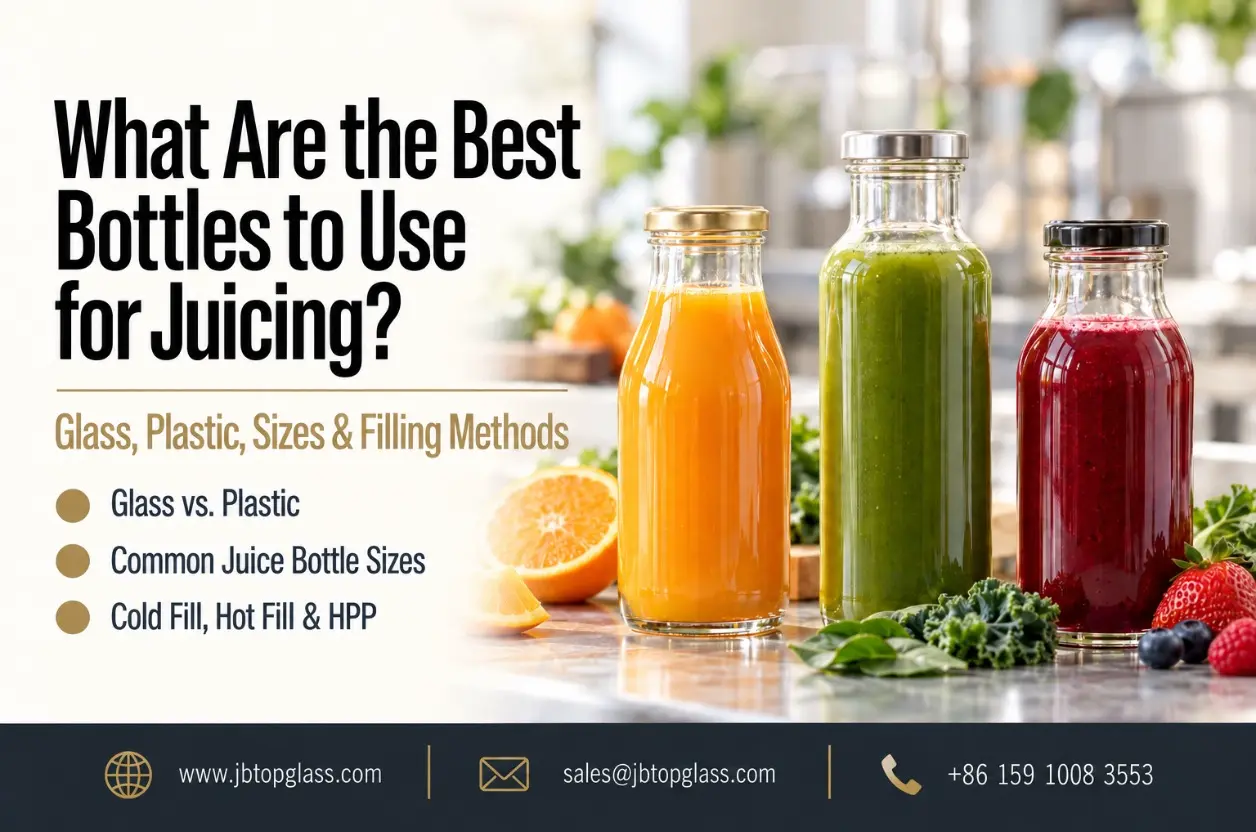
For fresh juice stored in a refrigerator, a food-safe glass bottle with a secure cap is often a good choice. Glass does not absorb odors or change the taste of the drink. Clear glass also shows the natural color of the juice.
However, the best bottle still depends on how the juice is processed. Cold-filled juice, hot-filled juice and HPP juice do not always use the same packaging.
Is Glass or Plastic Better for Juicing?
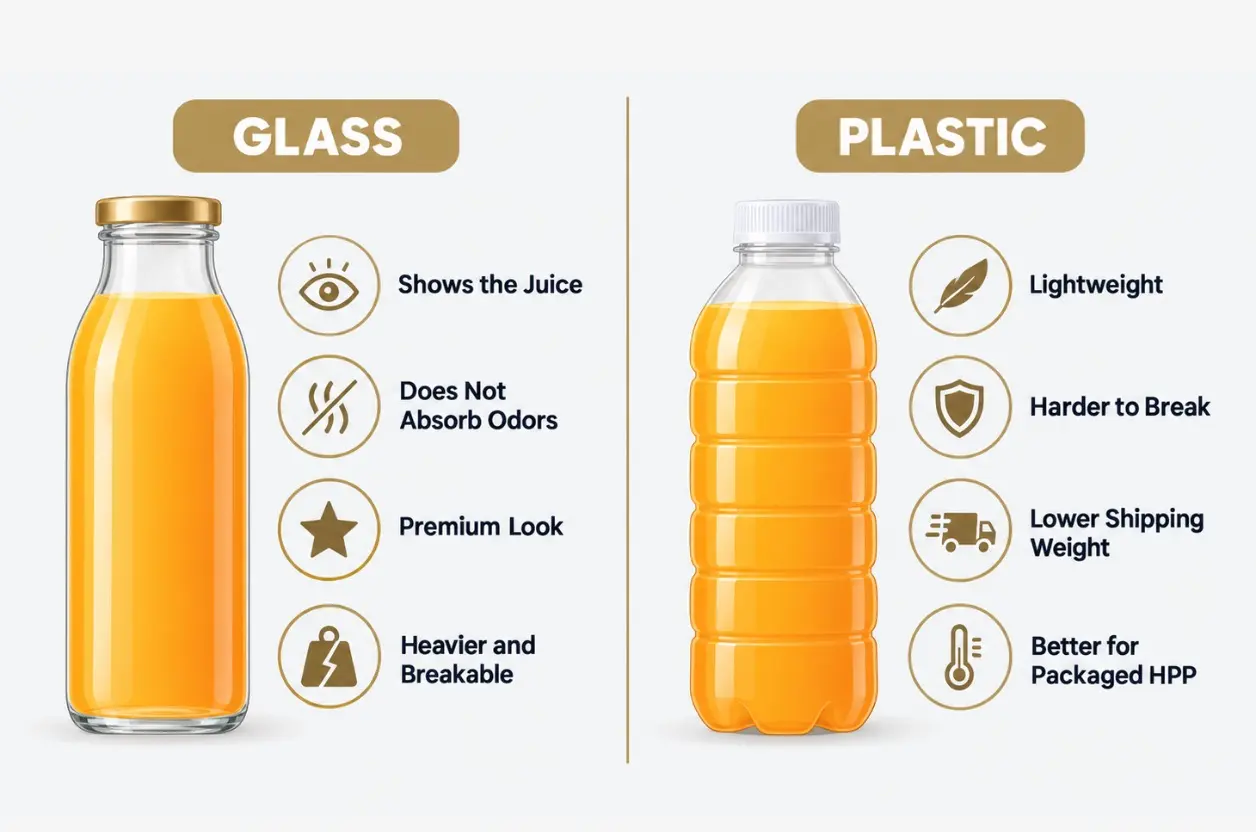
Glass is a popular choice for fresh juice, cold-pressed juice and premium ready-to-drink products.
The smooth glass surface does not absorb the color, smell or flavor of the juice. The 玻璃包装协会 also explains that glass is nonporous and does not interact with packaged food or beverages.
Clear glass gives customers a direct view of the product. This works well for orange, apple, watermelon and green vegetable juice. The color of the drink becomes part of the package design.
Amber glass provides more protection from light, but it also hides the natural color of the juice. It may suit products that need added light protection, while clear glass is normally better when product display is more important.
Plastic has different advantages. It is lighter, harder to break and usually cheaper to transport. It can be more practical for gyms, outdoor events, delivery services and other places where broken glass could create a problem.
Plastic is also more suitable for juice that goes through HPP after packaging. HPP requires a package that can flex under pressure and return to its original shape. Standard glass bottles cannot do this.
In simple terms, glass is often better for taste, appearance and premium branding. Plastic is better when low weight, break resistance or HPP compatibility is more important.
What Size Bottle Is Best for Juice?
The right bottle size depends on the serving and where the juice will be sold.
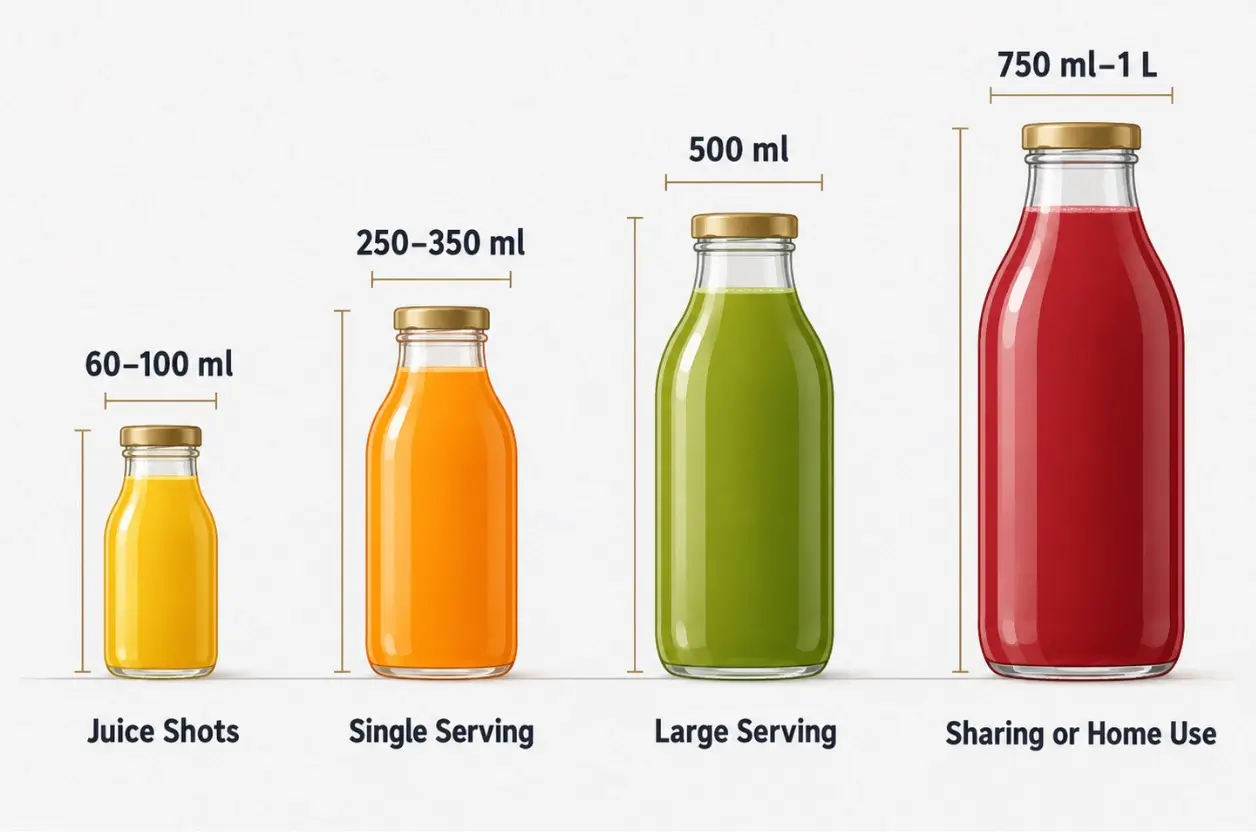
Small bottles from 50 ml to 100 ml are commonly used for ginger shots, turmeric shots and other concentrated drinks. These products usually have a strong flavor and are consumed in one serving.
Bottles from 250 ml to 350 ml work well for single-serving juice. They are suitable for cafés, juice bars, vending machines and grab-and-go retail.
A 500 ml bottle offers a larger serving. It can be used for juice cleanses, meal drinks or products intended for more than one serving.
Bottles from 750 ml to 1 liter are more suitable for sharing or home use. Glass bottles become heavier at these capacities, so shipping and customer handling also need to be considered.
The stated capacity normally refers to the amount of juice the brand plans to sell. It is not always the maximum amount the bottle can hold. The bottle also needs space above the liquid for filling and closing.
Read our guide to overflow and brimful capacity if you need to compare nominal fill volume with total bottle capacity.
What Bottle Shape Is Best for Juice?
Round glass bottles are the most common choice. They are easy to hold and work with many filling and labeling machines.
Square bottles create a different shelf appearance. Their flat sides also provide clear areas for labels. However, the filling company should check how the bottles move and turn on its production line.
A tall, narrow bottle can look clean and modern. A shorter bottle can feel more stable and practical. Neither shape is automatically better. The bottle should suit the product, serving size and sales channel.
The outside shape does not show whether a bottle is suitable for hot filling or another production process. Two bottles can look similar but perform differently during filling.
Is a Wide-Mouth or Narrow-Mouth Bottle Better for Juice?
A narrow-mouth bottle works well for thin fruit and vegetable juices. The smaller opening makes drinking and pouring easier to control.
A wider opening can be useful for smoothies, thick juice or drinks with pulp. It gives the product more room to move during filling and pouring.
The bottle opening must also match the cap and filling nozzle. A juice brand should therefore check the complete neck finish instead of comparing only the opening diameter.

Does the Juice Process Change the Bottle You Need?
Yes. The juice process should be confirmed before the bottle is selected.
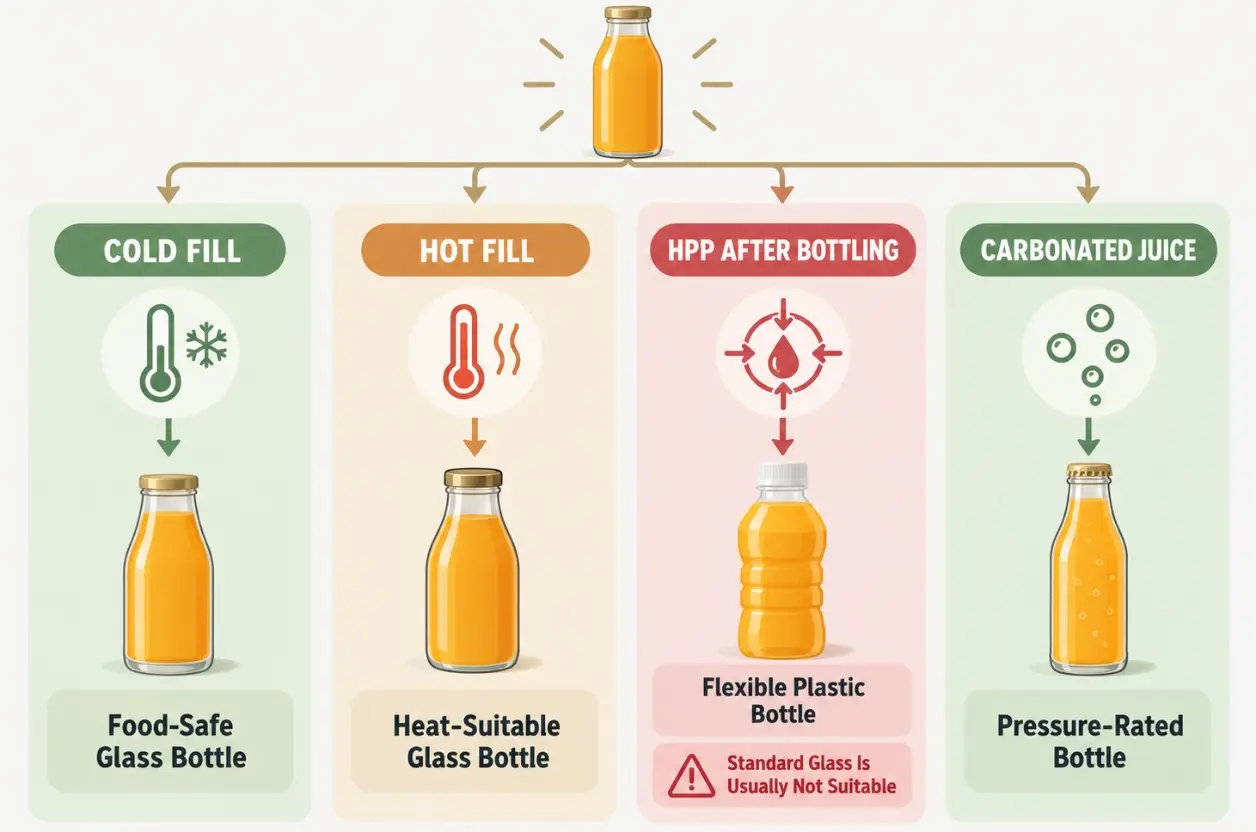
Cold-Filled Juice
Cold-filled juice can use a food-safe glass bottle when the product remains refrigerated and the complete package suits the intended shelf life.
The bottle, cap and filling equipment still need to work together. A secure cap is important because a good glass bottle cannot protect the juice if the package does not seal correctly.
Hot-Filled Juice
Hot-filled juice needs a glass bottle that can handle the filling temperature and the cooling stage that follows.
A bottle designed only for cold filling may crack under a sudden temperature change. The juice producer should give the supplier the real product temperature, bottle temperature and cooling process.
我们的指南: 热灌装和冷灌装瓶 explains this process in more detail.
HPP Juice
If the sealed bottle goes through HPP, standard glass is usually not suitable. Most HPP systems use flexible or semi-rigid plastic packaging.
A company that plans to use HPP should speak with its HPP provider before ordering bottles. The provider can confirm the required material, bottle shape and headspace.
Carbonated Juice Drinks
A juice drink that contains added carbonation needs a bottle made for internal pressure.
A normal still-juice bottle should not be used only because it has a similar capacity or shape. The bottle and closure need to be tested for the intended carbonation level.
结论
A food-safe glass bottle is a good choice for many fresh and refrigerated juices. It protects the natural taste of the drink and allows customers to see the product.
Plastic is more practical when the package needs to be light, hard to break or suitable for HPP. Hot-filled and carbonated drinks also need bottles made for their specific production conditions.
Jingbo Group supplies custom glass beverage bottles for juice and other ready-to-drink products. 联系我们 to discuss your required capacity, bottle style, filling method and order quantity.