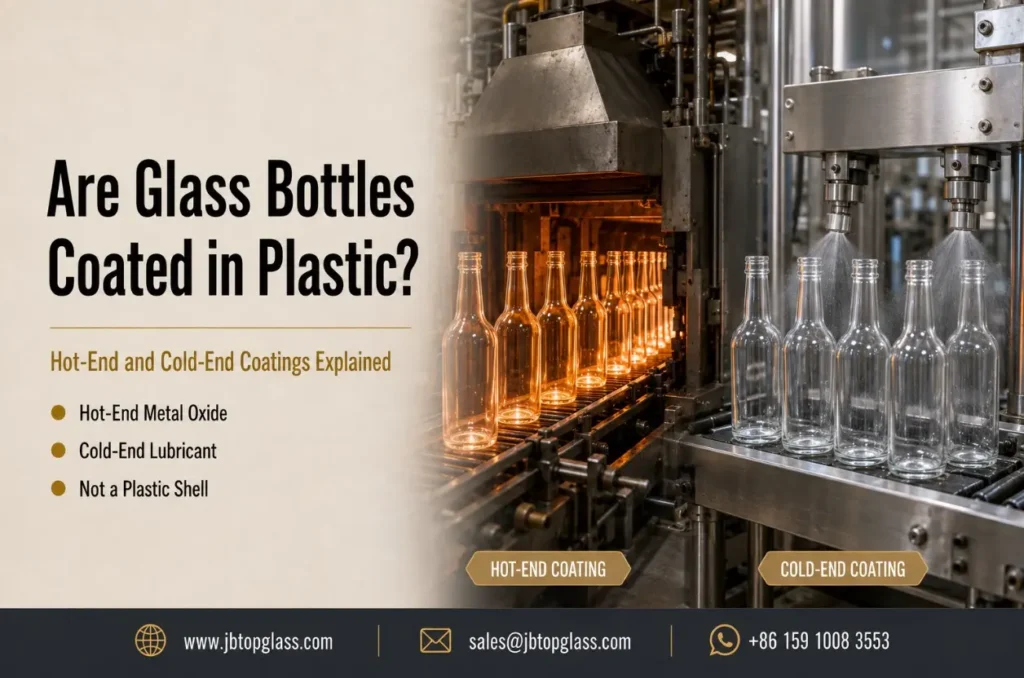
Some glass bottles receive a polyethylene-based surface treatment. However, standard food and beverage bottles are not wrapped in a visible plastic shell.
Most commercial glass containers receive two very thin treatments on their outer surface. The hot-end coating is applied while the bottle is still hot. The cold-end coating is applied after annealing. The cold-end material may contain polyethylene wax, which is a type of polymer.
This is why the most accurate answer is: some glass bottles contain a plastic-based coating material, but they are not “plastic-coated” in the usual sense.
The thin production coating reduces friction and protects the glass from scratches. It does not replace the glass wall, hold the bottle together or act as the main barrier between the product and its surroundings.
Thick plastic coatings also exist, but manufacturers mainly use them on laboratory and chemical containers. They serve a different purpose.
What Coatings Are Used on Glass Bottles?
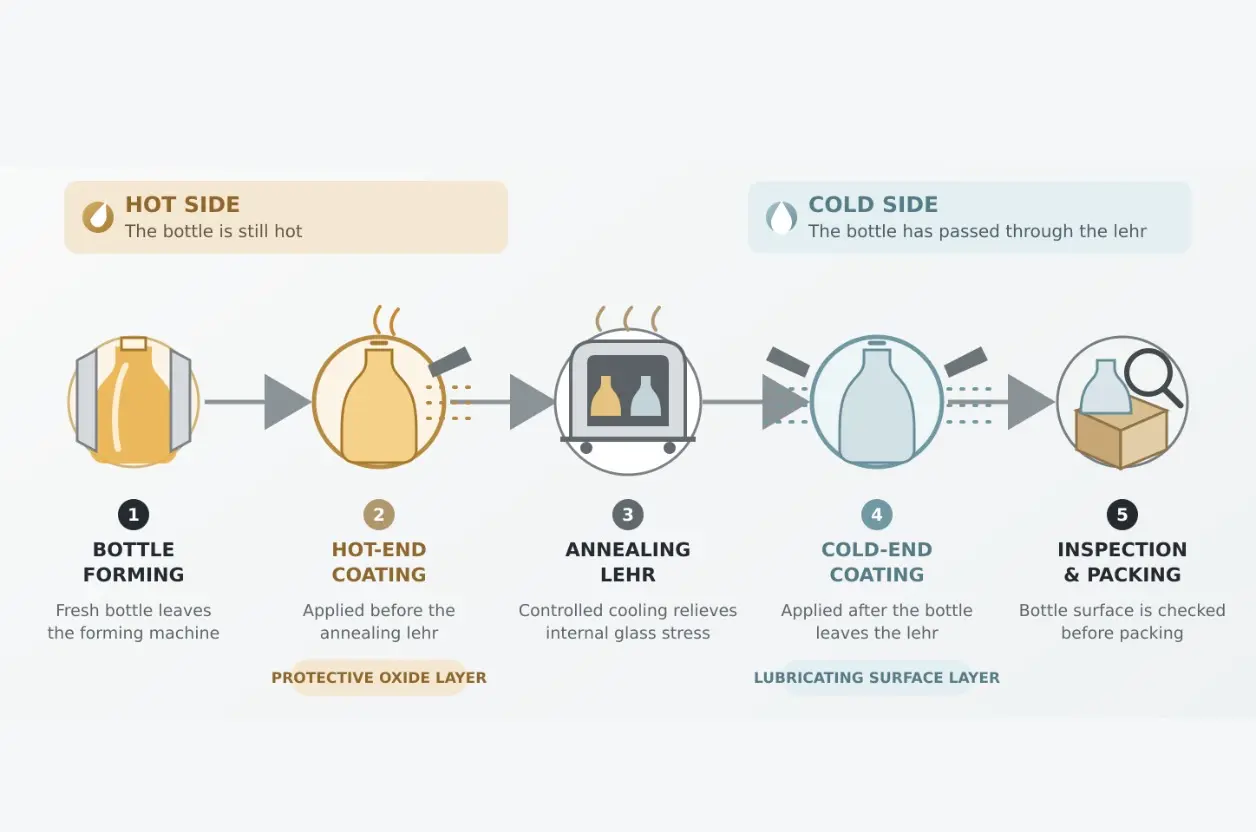
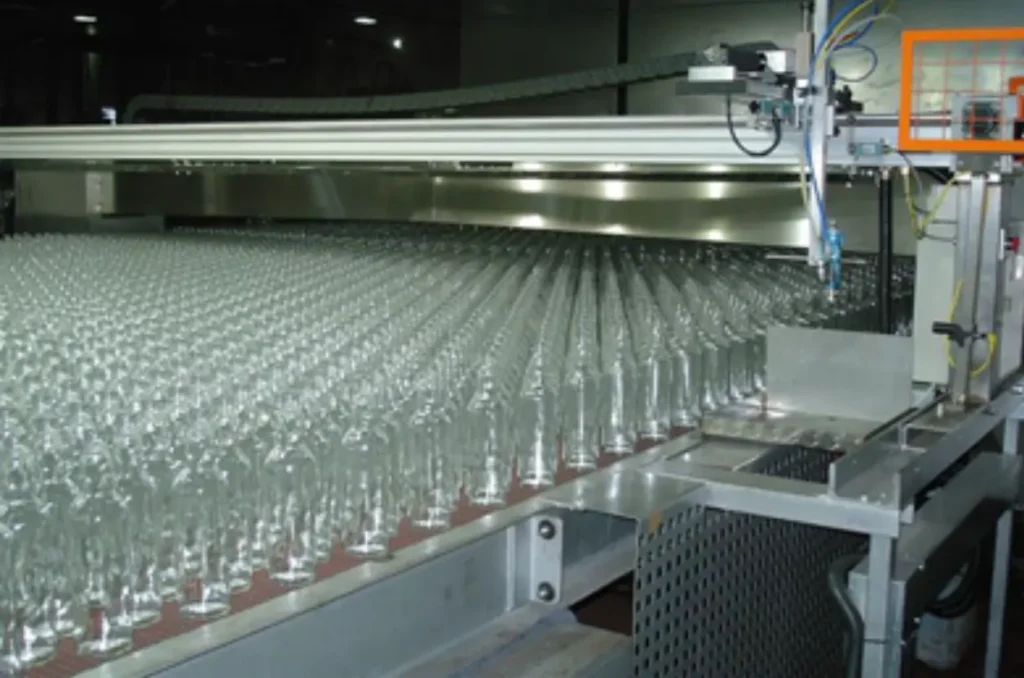
Modern glass bottles normally receive two surface treatments during production: a hot-end coating before the annealing lehr and a cold-end coating after it. These treatments are not interchangeable. The hot-end layer helps the cold-end coating bond to the glass. The cold-end layer reduces friction between bottles. Some special containers use a different coating system, but most standard bottles receive both treatments.
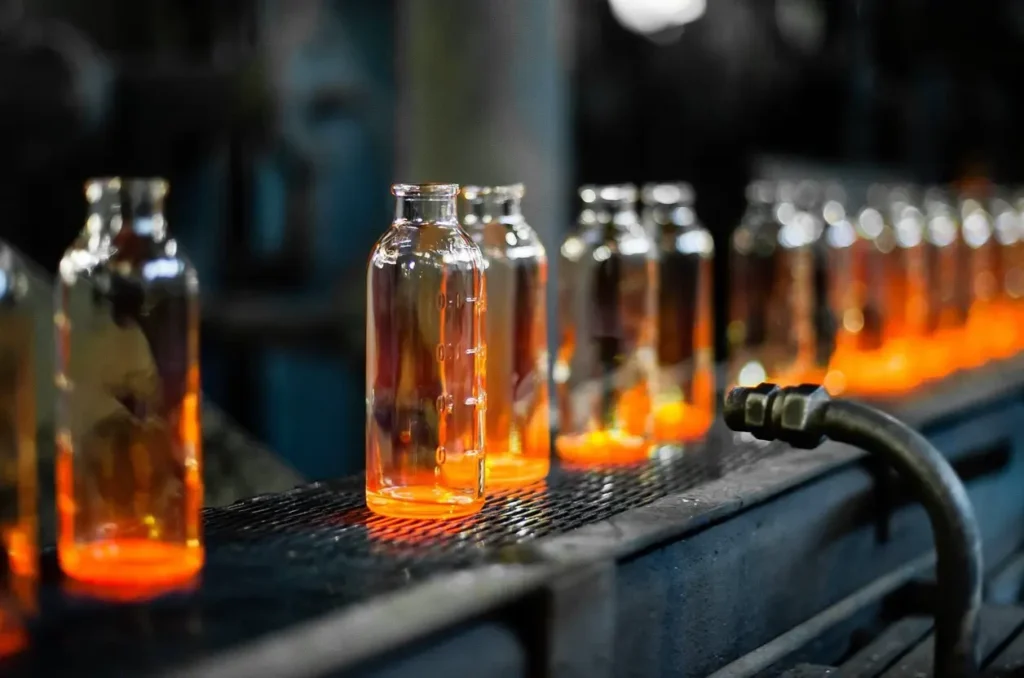
The hot-end treatment takes place shortly after the bottle leaves the forming machine. The bottle is still hot at this stage. The treatment forms a very thin metal oxide layer on the outer glass surface.
Tin oxide is a common choice. Titanium-based treatments are also available. BNT Chemicals explains that an organotin material reacts on the hot surface, leaving a transparent tin oxide layer.
The bottle then passes through the annealing lehr. The lehr cools the bottle at a controlled rate and reduces internal stress.
The cold-end treatment takes place after annealing. A water-based coating is sprayed onto the warm bottle. Polyethylene wax, oleic acid and other lubricating materials may be used, depending on the production system.
The cold-end layer gives the bottle a smoother surface. It reduces friction when bottles touch each other on conveyors, filling lines and packing equipment. Arkema produces several cold-end container glass coatings for different filling and labeling requirements.
| Treatment | When It Is Applied | Common Material | Main Purpose |
|---|---|---|---|
| Hot-end coating | Before annealing | Tin oxide or another metal oxide | Supports surface protection and cold-end coating performance |
| Cold-end coating | After annealing | Polyethylene-based or other lubricant | Reduces friction, scratching and scuffing |
| Decorative coating | After bottle production | Paint, lacquer or another decorative material | Changes the bottle’s color, texture or appearance |
| Safety coating | Applied to special glassware | PVC, polyamide or another polymer | Helps contain glass fragments after breakage |
Jingbo Group的指南:关于 玻璃瓶的生产工艺 explains where annealing, surface treatment and inspection fit into the production line.
Why Do Glass Bottles Need a Surface Coating?
Glass is strong under the right conditions, but its surface is sensitive to abrasion.
An empty bottle may contact guide rails, conveyors and nearby bottles many times before it reaches the customer. Each contact can create small scratches or scuff marks. Some marks affect appearance. Deeper surface damage can reduce the bottle’s practical strength.
The coating lowers friction between glass surfaces. Bottles can move through the production and filling lines without sticking together or grinding against each other.
This protection becomes more important as line speeds increase. It also supports lightweight bottle production. A lightweight bottle has less extra glass available to absorb damage, so its surface condition and glass distribution require careful control.
The coating does not turn a weak design into a strong bottle. The bottle still needs suitable wall distribution, a stable base, a correct neck finish and proper annealing. It must also pass the required mechanical tests.
Our article about lighter glass bottle quality explains why bottle weight alone does not determine performance.
Is Polyethylene Coating the Same as Plastic Packaging?
No. A polyethylene-based cold-end coating is not the same as a plastic bottle, plastic sleeve or thick polymer shell.
The cold-end layer is extremely thin. Customers normally cannot see it. The layer does not give the bottle its shape or structural support. The glass remains the main packaging material.
The word “polyethylene” causes some confusion because polyethylene is widely used to make plastic bottles, films and bags. In this application, the material is used in a small amount as part of an external surface treatment.
The bottle may feel smoother after treatment, but touch alone cannot confirm which coating was used. Bottle cleanliness, storage conditions and surface decoration can also change how the glass feels.
A standard beverage bottle with a cold-end treatment should therefore be described as a coated glass bottle, not a plastic-coated bottle.
Are Some Glass Bottles Covered with a Thick Plastic Layer?
Yes. Some laboratory, pharmaceutical and chemical containers use a noticeable polymer safety coating.
This coating helps hold broken glass and liquid for a short time if the bottle fails. It reduces the risk of flying fragments and hazardous spills. The coating may use PVC, polyamide or another polymer.
For example, DWK Life Sciences supplies safety-coated glassware with a PVC layer designed to keep fragments together after accidental breakage. DWK also produces bottles with external polyamide coatings for laboratory use.
These products are different from ordinary wine, spirits, beer, food and beverage bottles.
A safety coating is thicker and performs a containment function. A standard cold-end coating is much thinner and mainly controls friction and surface damage.
Does the Coating Touch the Product Inside the Bottle?
Standard hot-end and cold-end coatings are applied to the outside of the container. The product inside the bottle remains in contact with the internal glass surface.
Buyers should not assume that every coating system follows the same specification. The bottle supplier should confirm the treatment used and provide suitable compliance documents for the product and destination market.
Special internal treatments also exist for some pharmaceutical, chemical and technical applications. Those treatments are separate from normal hot-end and cold-end coatings.
A decorative spray finish is also different. Decorative coatings add color, gloss, a matte effect or another visual finish. They may cover most of the bottle surface and remain clearly visible.
京博集团 玻璃瓶表面装饰 page explains the differences between spray coating, printing, frosting, decals, metallization and other decoration methods.
Can Bottle Coating Affect Labels and Printing?
Yes. The coating level and the label system must work together.
A properly controlled production coating helps bottles move through the line. However, an unsuitable or excessive surface treatment can contribute to label adhesion or printing problems.
American Glass Research lists label adhesion, ink beading and filling-line friction among the problems that can occur when glass container coatings are not properly controlled.
The coating is not the only possible cause. Label performance also depends on the adhesive, paper or film material, bottle cleanliness, surface moisture, application pressure and temperature.
The packaging team should test the actual combination before mass production. A label that works on one glass bottle may not perform the same way on another bottle with a different surface treatment.
Direct screen printing, decals and decorative spray coatings also require sample approval. The decorator may need to clean or prepare the bottle surface before applying the final finish.
Can Coated Glass Bottles Be Recycled?
A standard production coating does not turn a glass bottle into a plastic bottle. The container still enters the glass recycling stream where local systems accept that bottle type.
The thin coating represents only a very small part of the complete package. Glass remains the main material.
Buyers should still check local recycling requirements. Closures, pumps, labels, sleeves and thick decorative finishes may need separate consideration. Recycling rules also differ by country and collection system.
Returnable bottles require additional planning. Repeated washing can reduce the cold-end coating. The filling plant may need to restore surface protection so the bottles continue to move safely through the line.
The bottle design, coating system, washing process and expected number of trips should be reviewed together for a refillable project.
常见问题
What Is Coated Glass?
Coated glass is glass with a thin material added to one or more surfaces to change its performance or appearance.
The term may refer to architectural glass, optical glass, decorative bottles or container production coatings. Buyers should identify the application before comparing specifications.
For glass bottles, the term commonly refers to protective production treatments, decorative finishes or special safety coatings.
What Paint Is Used on Glass Bottles?
Glass bottle decoration may use water-based, solvent-based, organic or ceramic coating systems. No single paint works for every bottle.
The selected material must suit the required color, finish, curing method, product use and destination-market requirements. The decorator should test adhesion and appearance on the actual bottle.
Are All Glass Bottles Coated?
Most modern mass-produced container glass receives protective surface treatment. However, the exact coating system depends on the factory, bottle type and intended use.
Buyers should ask the manufacturer when the coating specification matters to labeling, printing, washing or reuse.
Can You Remove the Coating From a Glass Bottle?
Some cold-end treatments can be reduced or removed through washing or surface preparation. Hot-end metal oxide treatments are more closely bonded to the glass.
The correct method depends on the coating and the reason for removing it. The decorator or bottle manufacturer should confirm the preparation process before printing or recoating.
结论
Some glass bottles receive a polyethylene-based cold-end treatment, but ordinary food and beverage bottles are not covered with a plastic shell.
The hot-end and cold-end coatings form a thin protective system on the outside of the bottle. They reduce friction, limit surface damage and help bottles move through production, filling and transportation.
Thick plastic safety coatings are a separate product category. Decorative spray coatings are also different from normal production treatments.
京博集团 supplies glass bottles with suitable production surface treatment and optional decoration. Share your product type, capacity, bottle design, label or printing method, filling process and order quantity with our team. We can prepare a complete bottle and decoration proposal for your project.