
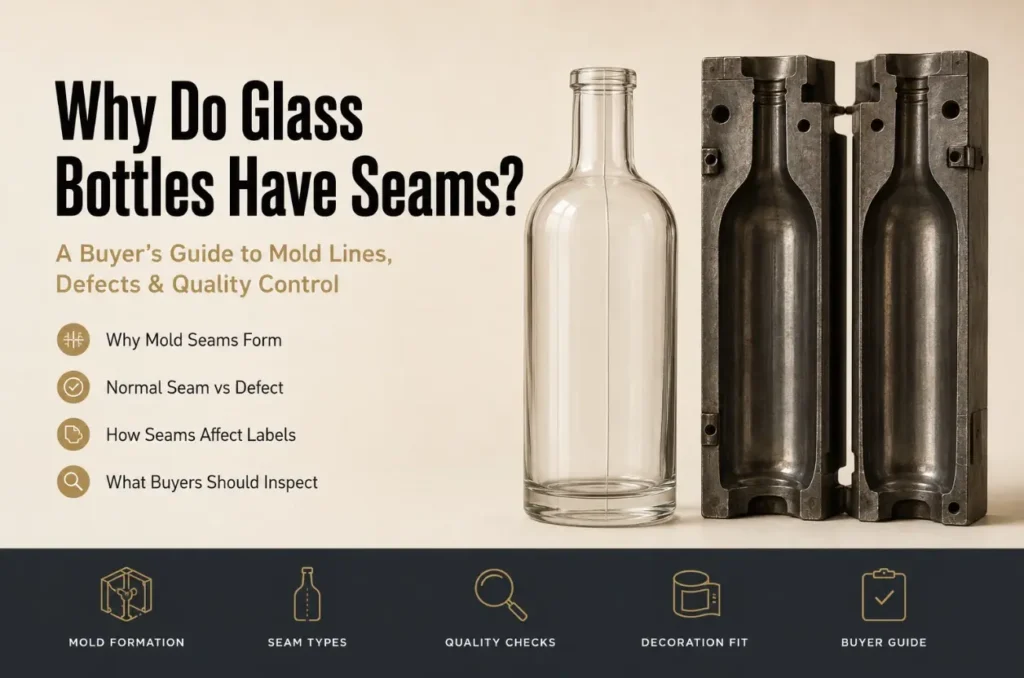
تحتوي الزجاجات على خطوط التماس لأن معظم الزجاجات التجارية تُشكَّل داخل قوالب معدنية مكونة من قسمين أو أكثر. وعند نقطة التقاء أجزاء القالب هذه، قد يترك ذلك خطًا رفيعًا بارزًا على الزجاج. يُسمى هذا الخط «خط التماس القالب» أو «خط الفصل»، وعادةً ما يُعد خط التماس الناعم والمتحكم فيه جزءًا من عملية التصنيع وليس عيبًا.
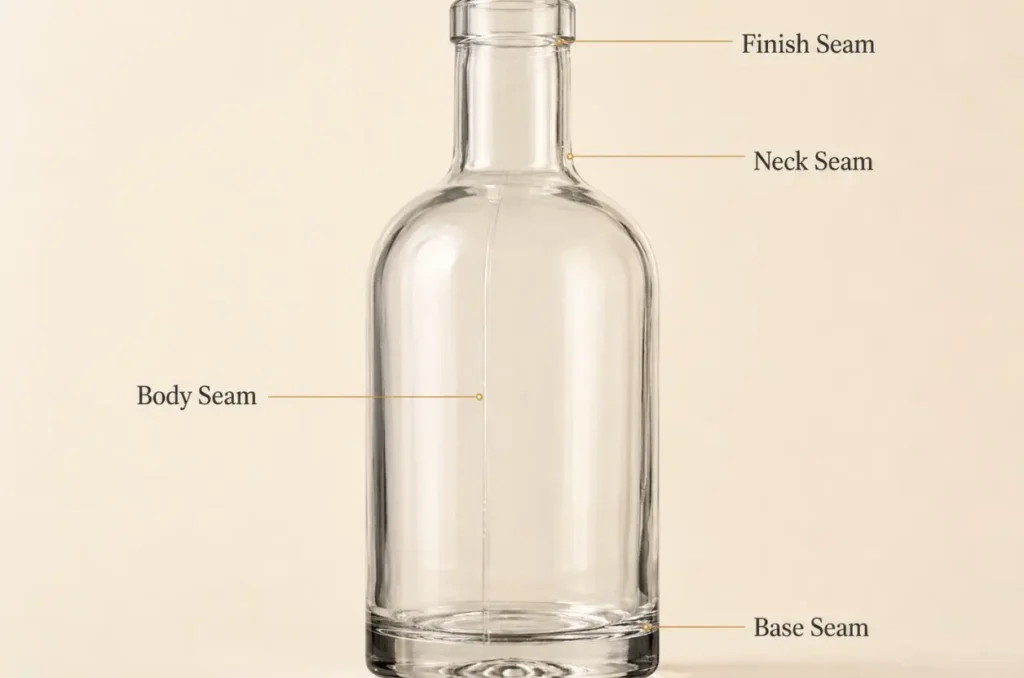
قد يمتد خط التماس عموديًا على طول جسم الزجاجة، أو يمتد عبر الكتف، أو يظهر حول العنق، أو يشكل خطًا دائريًّا بالقرب من القاعدة. ويعتمد موضعه على هيكل القالب وطريقة تشكيل الزجاجة.
بعض خطوط اللحام يمكن رؤيتها بسهولة، لا سيما على الزجاجات الشفافة ذات الجوانب المستوية. أما خطوط اللحام الأخرى فتكون موضوعة على طول الزوايا أو المنحنيات أو في مناطق أقل وضوحًا، بحيث تندمج مع الشكل.
السؤال المهم ليس ما إذا كانت الزجاجة تحتوي على خط التماس أم لا. فمعظم الزجاجات المصنوعة آليًّا تحتوي على خط التماس. السؤال الحقيقي هو ما إذا كان خط التماس ناعمًا ومحاذيًا بشكل صحيح، ويستوفي معايير المظهر المعتمدة.
ما هو خط التماس في الزجاجة الزجاجية؟
خط التماس في الزجاجة هو الخط الذي يتشكل عند نقطة التقاء مكوني القالب.
يُشير المصطلح الفني “خط الفصل” إلى المكان الذي ينفتح فيه القالب بعد تشكيل الزجاجة. ويضغط الزجاج الساخن على جانبي هذا الوصلة، مما قد يتسبب في ظهور خط خفيف على سطحه.
قد تشعر بأن خط التماس بارز قليلاً عند تمرير إصبعك عليه. وفي الزجاجة المصنوعة بعناية، يجب أن يكون هذا الخط ضيقاً وناعماً ومتناسقاً.
لا يمكن الخلط بين خطوط التماس في الزجاجات والشقوق. فالشق هو انكسار في بنية الزجاج وقد يؤثر على السلامة أو الأداء. أما خط التماس العادي الناتج عن القالب فهو سمة سطحية تنشأ بفعل معدات التشكيل.
كما تختلف خطوط التماس عن خطوط التدفق أو الحبال. فقد تظهر خطوط التدفق على شكل أنماط متموجة أو شبيهة بالخطوط داخل الزجاج، في حين أن خطوط التماس الناتجة عن القالب تتبع الوصلات المحددة في القالب.
كيف تتشكل خطوط التماس في الزجاجات؟
تبدأ عملية تصنيع الأوعية الزجاجية الحديثة بقطع محددة الحجم من الزجاج المنصهر تُسمى «الكتل». تدخل كل كتلة إلى قالب فارغ ويتم تشكيلها لتتخذ شكلاً مجوفاً أولياً يُسمى «الباريزون».
ثم تنقل الآلة قطعة الزجاج الأولية إلى قالب النفخ النهائي. ويقوم الهواء المضغوط بتوسيع الزجاج الساخن حتى يصل إلى السطح الداخلي للقالب ويتخذ الشكل النهائي للزجاجة.
يجب أن ينفتح قالب النفخ حتى يمكن إخراج الزجاجة النهائية. ولذلك، فإنه مقسم إلى أقسام منفصلة. وتشكل الوصلات بين هذه الأقسام خطوط التماس في الجسم الرئيسي.
يوضح معهد التغليف الزجاجي أن زجاج العبوات الحديث يتم صهره وتشكيله من خلال عمليات مثل الضغط والنفخ. دليل Jingbo Group حول عملية تصنيع الزجاجات الزجاجية يوضح كيف تعمل الكتلة الأولية (gob) والقطعة الأولية (parison) والقالب النهائي معًا خلال عملية إنتاج الزجاجات على نطاق تجاري.
الدرزات الجانبية
عادةً ما تمتد خطوط التماس على الجسم عموديًا على طول الجانبين المتقابلين للزجاجة الدائرية.
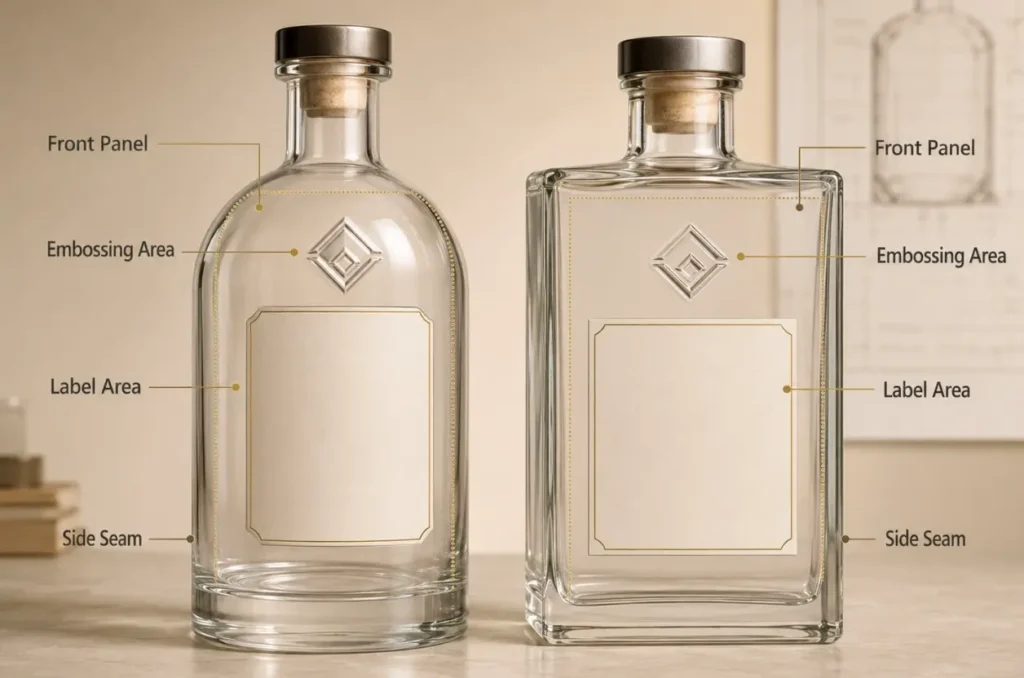
في الزجاجات المربعة أو المستطيلة، قد يضع مصمم القوالب هذه العناصر على طول الألواح الجانبية الضيقة أو الحواف أو الزوايا الدائرية. ويساعد ذلك في الحفاظ على مظهر أنظف لمنطقتي العرض الرئيسيتين الأمامية والخلفية.
غالبًا ما يبدأ هذا الخط بالقرب من الكعب ويمتد عبر الجسم والكتف. ويعتمد مساره الدقيق على شكل الزجاجة وتصميم القالب.
عادةً ما تحتوي الزجاجة المصنوعة في قالب جسم مكون من جزأين على خطي فاصل رأسيين متقابلين. وقد تنتج القوالب الأكثر تعقيدًا خطوط فاصل إضافية حول مناطق هيكلية أو زخرفية محددة.
الدرزات الأساسية
قد يظهر خط دائري أو منحني حول الجزء السفلي من الزجاجة.
قد يظهر هذا الخط عند نقطة التقاء قالب الجسم باللوحة السفلية أو مكون القاعدة. وقد يمتد على طول الحافة الخارجية للكعب أو يظهر داخل المنطقة المُغلفة أسفل الزجاجة.
غالبًا ما تكون خطوط التماس السفلية أقل وضوحًا لأنها تقع خارج منطقة العرض الرئيسية. ومع ذلك، يجب أن تكون ناعمة وخالية من الزجاج الحاد.
لا ينبغي الخلط بين الخط الموجود على القاعدة والشق أو علامة الصدم أو القاع غير المستقر. فهذه الحالات تتطلب فحصًا منفصلاً.
درزات العنق واللمسات النهائية
قد يتم تشكيل العنق واللمسة النهائية بواسطة أجزاء منفصلة من القالب. وقد يؤدي ذلك إلى ظهور خطوط دقيقة حول حلقة العنق أو الحافة أو الشفة أو اللمسة النهائية للإغلاق.
في العديد من الزجاجات المصنوعة آليًّا، يمتد خط التماس الجانبي العمودي من جسم الزجاجة نحو الجزء العلوي. كما يستخدم المتخصصون في الزجاجات التاريخية الطريقة التي ينتهي بها خط التماس أو يمتد عبر حافة الزجاجة كدليل من الدلائل عند دراسة كيفية وموعد صنع الزجاجة.
تشير «هيئة المتنزهات الوطنية الأمريكية» إلى أن الطلاء المطبق على زجاجة قديمة قد يقطع خط التماس الجانبي، في حين أن استمرار خط التماس الرفيع حتى حافة الزجاجة يُعد سمة مميزة للإنتاج الآلي اللاحق. وتُعد هذه الطريقة مفيدة في تحديد العمر التاريخي للزجاجة، على الرغم من أن خط التماس وحده لا يمكن أن يوفر تاريخ تصنيع دقيقًا.
لماذا تبدو بعض خطوط التماس في الزجاجات أكثر وضوحًا من غيرها؟
ليست كل خطوط التماس في القوالب متشابهة في الشكل.
يعتمد مدى وضوحه على القالب، وتصميم الزجاجة، ودرجة حرارة الزجاج، وضغط التشكيل، وإعدادات الآلة، وحالة وصلة القالب. كما يؤثر لون الزجاجة والمعالجة السطحية على مدى سهولة رؤية الخط.
شكل الزجاجة
من الأسهل ملاحظة خط التماس على لوح عريض ومسطح مقارنةً بسطح منحني.
قد تظهر خطوط التماس بوضوح في الزجاجات المربعة إذا كانت هذه الخطوط تعبر منتصف الألواح الجانبية. وعادةً ما يتم وضعها، في القوالب المصممة بعناية، على طول الزوايا أو الحواف أو الأسطح الأقل أهمية.
غالبًا ما تخفي الزجاجات المستديرة الخط بشكل أكثر فعالية لأن الانعكاسات تتحرك عبر الجسم المنحني.
لون الزجاج وشفافيته
يمكن أن يجعل الزجاج الشفاف رؤية كل من خط التماس وظله أكثر سهولة.
قد تقلل الزجاجات ذات اللون الكهرماني أو الأخضر الداكن أو المطلية من ظهور خط التماس الدقيق بصريًّا. ومع ذلك، فإن اللون لا يزيل هذا الخط، بل يغير فقط مدى وضوحه تحت الإضاءة العادية.
كما أن الزجاج الفاخر عالي الشفافية يمكنه الكشف عن التفاصيل السطحية الدقيقة جدًّا. ولهذا السبب، فإن خط التماس الذي يبدو طفيفًا على زجاجة كهرمانية اللون قد يبدو أكثر وضوحًا على زجاجة شفافة للمشروبات الروحية أو العطور.
محاذاة القوالب
يجب أن يتطابق نصفا القالب بشكل صحيح.
إذا تم محاذاة الجوانب بشكل صحيح، فيجب أن يظل خط التماس ناعماً ومتساوياً. أما إذا كان أحد الجانبين أعلى قليلاً من الآخر، فقد يظهر على الزجاجة خط غير متوازٍ أو نتوء صغير على سطحها.
لا يُعتبر التباين الكبير مماثلاً للخط الطبيعي. فقد يشير ذلك إلى الحاجة إلى تعديل محاذاة القالب أو إعدادات الآلة.
حالة العفن
تخضع القوالب لدورات متكررة من التسخين والتبريد والفتح والإغلاق.
قد يؤدي التآكل أو وجود بقايا أو تلف بالقرب من سطح الفصل إلى زيادة وضوح الخط. ويساعد التنظيف والصيانة المنتظمان للقالب في الحفاظ على مظهر الوصلة تحت السيطرة.
تحتاج الزجاجة المصممة خصيصًا أيضًا إلى مكونات قالب مصنوعة بدقة. فحتى التصميم الجيد قد ينتج عنه خط التماس غير جذاب إذا لم تتطابق أسطح القالب بشكل صحيح.
درجة حرارة الزجاج وظروف التشكيل
يحتاج الزجاج المنصهر إلى درجة الحرارة واللزوجة المناسبتين عند دخوله القالب.
قد يتوغل الزجاج شديد السيولة بشكل أكبر في الفجوات الصغيرة عند مفاصل القالب. أما الزجاج شديد البرودة فقد لا يعكس شكل الزجاجة بشكل متساوٍ.
تساعد ظروف التشكيل المستقرة على الحفاظ على اتساق خط التماس طوال دورة الإنتاج.
هل تُعد خطوط التماس في الزجاجات عيبًا؟
لا يُعتبر التماس الرفيع والناعم عادةً عيبًا.
وهذه نتيجة متوقعة لعملية تشكيل الزجاج داخل قالب يجب فتحه. وعادةً ما تركز المعايير التجارية الخاصة بالزجاجات على ما إذا كان خط التماس يؤثر على المظهر، أو سهولة الاستخدام، أو ملاءمة الغطاء، أو الزخرفة، أو أداء الزجاجة.
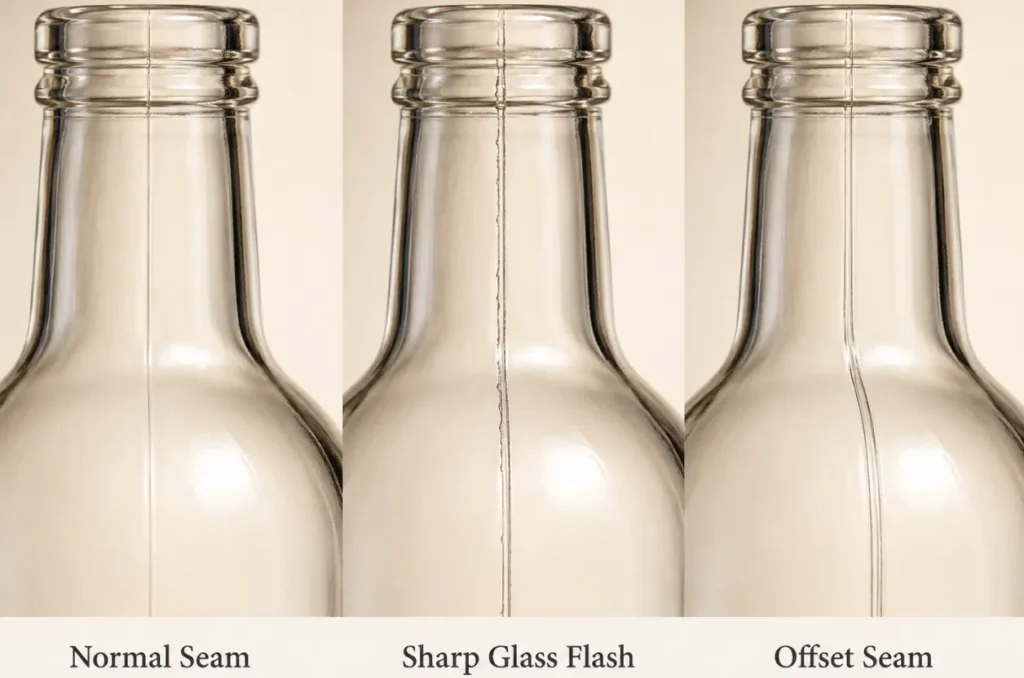
يصبح خط التماس مدعاة للقلق عندما يكون حادًا بشكل غير عادي، أو ثقيلًا، أو غير متوازي، أو متصدعًا، أو متكسرًا، أو غير متوافق مع العينة المعتمدة.
| حالة التماس | هل هذا أمر طبيعي أم مدعاة للقلق؟ | كيف يبدو الأمر |
|---|---|---|
| خط رفيع وناعم | مقبول في العادة | خط رفيع ومتساوٍ على طول خط التماس بين القوالب |
| خط التماس مرئي قليلاً | مقبول في العادة | تظهر تحت الضوء لكنها ناعمة الملمس |
| حافة حادة مرتفعة | مخاوف تتعلق بالجودة | يمكن الشعور بالحافة بوضوح أو قد تسبب خدوشًا |
| وميض زجاجي شديد | مخاوف تتعلق بالجودة | الزجاج الزائد المتدلي من الوصلة |
| الدرز المتباعد | مخاوف تتعلق بالجودة | جانبان من الزجاجة غير متوازيين |
| منطقة التماس المتصدع | عيب | يمتد الكسر إلى داخل الزجاج |
| زخرفة على شكل خط خياطة | مشكلة التصميم | الخط يتداخل مع الشعار أو لوحة الملصق |
| خط التماس غير المنتظم في القاعدة | يتطلب الفحص | قد يؤثر على المظهر أو ثبات القاعدة |
يعتمد مستوى الجودة المعتمد جزئيًا على المنتج. فقد تختلف المتطلبات التجميلية بين زجاجة مشروبات عادية وزجاجة عطر أو مشروب كحولي فاخر.
ومع ذلك، لا ينبغي التسامح مع الحواف الحادة والشقوق واختلالات المحاذاة الشديدة لمجرد أن خطوط التماس في القوالب أمر طبيعي.
ما هو «جلاس فلاش»؟
يُقصد بـ«الزجاج المتدفق» المادة الزائدة التي تتشكل على طول خط التماس بين أجزاء القالب.
قد يظهر على شكل زعنفة رفيعة، أو حافة حادة، أو نتوء صغير يمتد من خط التماس الطبيعي. وقد يحدث «الفلاش» عندما يتسلل الزجاج الساخن إلى الفجوة الموجودة بين مكونات القالب.
قد يظل الخط البارز الصغير جدًّا ضمن المعايير المعتمدة. أما البروز الواضح أو الحاد فهو مشكلة تتعلق بالجودة لأنه قد يؤثر على سهولة الاستخدام والمظهر.
تتطلب الحواف البارزة المحيطة بفوهة الزجاجة عناية خاصة. فقد تتداخل مع السدادة أو الغطاء أو البطانة أو أي مكون يهدف إلى إظهار أي محاولة فتح غير مصرح بها.
كما يجب فحص خط التماس في الهيكل قبل عملية التزيين. فقد يظل نتوء بارز مرئيًا تحت الطلاء أو يتسبب في عدم استواء وضع الملصق.
ما هو خط التماس غير المتماثل في القالب؟
يظهر خط التماس المنحرف عندما لا يتوافق جانبا الزجاجة بشكل صحيح عند نقطة التوصيل في القالب.
بدلاً من خط واحد سلس، قد يحتوي السطح على فجوة ملحوظة. كما قد لا تتوافق الأنماط المنقوشة أو الحواف أو تفاصيل القاعدة مع بعضها على نفس المستوى.
قد تحدث اختلافات بصرية طفيفة أثناء إنتاج الزجاج، لكن أي انحراف واضح قد يشير إلى سوء محاذاة القالب أو عدم استقرار ظروف التشكيل.
في الزجاجة المربعة، قد يؤدي الانحراف إلى جعل الزاوية تبدو ملتوية. أما في الزجاجة المستديرة، فقد يؤدي ذلك إلى ظهور مظهر غير متساوٍ عند النظر إلى الوعاء من الجانب.
يُعد التشطيب الذي يعاني من انحراف شديد في المحاذاة مشكلة أكثر خطورة لأنه قد يؤثر على كيفية استقرار الغطاء على الزجاجة.
هل تحتوي الزجاجات المصنوعة يدويًّا على خطوط التماس؟
ليست كل زجاجة مصنوعة يدويًّا تحتوي على خط التماس الناتج عن القالب.
يتم تشكيل الزجاجة المصنوعة بالكامل بالنفخ اليدوي دون استخدام قالب كامل للجسم، لذا قد لا تحتوي على الخطوط الرأسية المستقيمة التي تظهر في الحاويات المصنوعة آليًّا. وبدلاً من ذلك، قد تظهر عليها آثار التشكيل اليدوي، أو توزيع غير متساوٍ للزجاج، أو ندبة «بونتيل» في القاعدة.
قد تظهر خطوط التماس الناتجة عن القالب حتى في الزجاجة المصنوعة بالنفخ الفموي داخل قالب متعدد الأجزاء. والعامل الرئيسي في ذلك هو ما إذا كان جسم الزجاجة قد لامس أجزاء من القالب، وليس ما إذا كان الهواء قد تم ضخه بواسطة شخص أم آلة.
ولهذا السبب، فإن عبارة “مصنوع يدويًّا” لا تعني دائمًا “خاليًّا من العيوب”.”
قد تجمع الزجاجات الزخرفية الحديثة أيضًا بين التشطيب اليدوي والمكونات المصبوبة. وتعتمد العلامات الظاهرة عليها على طريقة الإنتاج المحددة.
هل يمكن أن تساعد خطوط العفن في تحديد عمر الزجاجة؟
نعم، ولكن يجب استخدامها جنبًا إلى جنب مع أدلة أخرى.
يدرس الباحثون في مجال التاريخ موقع وارتفاع خط التماس، وشكل فوهة الزجاجة، وعلامات القاعدة، وآثار علامة الصب، والنقوش البارزة، ولون الزجاج، وأي عيوب في التصنيع.
على سبيل المثال، قد يشير خط التماس الذي يتوقف أسفل الحافة الملحقة إلى طريقة تصنيع مختلفة عن خط التماس الذي يمتد عبر التشطيب بالكامل.
أصبحت الزجاجات المصنوعة آليًّا شائعةً خلال أواخر القرن التاسع عشر وأوائل القرن العشرين. وتحتفظ جمعية الآثار التاريخية بسجل مفصّل مصدر تاريخي لتحديد الزجاجات لفحص علامات التصنيع وطرق التصنيع.
لا ينبغي الاعتماد على خط التماس وحده لتحديد سنة تصنيع محددة. فقد استخدم مصنعو الزجاجات آلات وقوالب وطرق تشطيب مختلفة خلال الفترات المتداخلة.
هل يمكن تصنيع الزجاجات الزجاجية بدون خطوط ربط مرئية؟
عادةً ما تحتاج الزجاجة المصنوعة بالقالب إلى خطوط فصل، لأن القالب يجب أن يُفتح.
يمكن تصغير هذه الخطوط أو تغيير موضعها أو جعلها أقل وضوحًا، لكن إزالة كل أثر منها تمامًا أمر صعب في عمليات الإنتاج التجاري ذات الحجم الكبير.
تتيح تقنيات هندسة القوالب المتطورة وضع خطوط التماس بعيدًا عن لوحة العرض الرئيسية. كما يمكن أن تقلل الزوايا الدائرية والأسطح المزخرفة والنقوش والزخارف المختارة من تأثيرها البصري.
تخضع بعض المنتجات الزجاجية الزخرفية لعمليات الصقل أو التلميع أو التشطيب باللهب، أو تُصنع من خلال عمليات متخصصة. ولا تُعد هذه الخيارات معيارية بالنسبة لزجاجات التعبئة العادية، وقد تؤدي إلى زيادة التكلفة أو إحداث اختلافات أخرى في السطح.
بالنسبة لمعظم العلامات التجارية، لا يتمثل الهدف الأفضل في الحصول على خط خياطة غير مرئي تمامًا، بل في الحصول على خط خياطة رفيع ومتناسق يقع في مكان لا يتعارض مع التصميم.
هل تؤدي اللحامات إلى إضعاف الزجاجة؟
إن وجود خط لحام عادي ومتناسق لا يعني بالضرورة أن الزجاجة ضعيفة.
تعتمد متانة الزجاجة على تركيبة الزجاج، وتوزيعه، وحالة سطحه، وعملية التلدين، وشكله، وقاعدته، وتاريخ استخدامه. أما خط الفصل الناعم فهو ببساطة أثر لوصلة القالب.
أما الحواف الحادة أو الشقوق أو الكسور أو الاختلافات الجسيمة في الشكل فهي أمور مختلفة. فقد تؤدي هذه الحالات إلى تكوين تجمعات إجهاد أو تشير إلى أن الزجاجة لم تُشكَّل بشكل صحيح.
لذلك، ينبغي تقييم خط التماس بناءً على حالته وليس بناءً على مدى ظهوره فحسب.
قد يكون التماس المرئي ولكن الناعم مقبولاً. أما التماس الأقل وضوحاً الذي يحتوي على شق دقيق، فهو غير مقبول.
كيف تؤثر خطوط القوالب على الملصقات والزخارف؟
يجب مراعاة موضع خط التماس قبل الانتهاء من التصميم.
يمكن للملصق الورقي أن يغطي خط التماس الدقيق، لكن قد يظل الخط البارز أو الذي تم وضعه بشكل غير دقيق مرئيًا من تحته. وعادةً ما تتجنب الملصقات الصغيرة التي توضع بالكامل على أحد الألواح حدوث هذه المشكلة.
تتطلب الطباعة المباشرة تخطيطًا مشابهًا. لا ينبغي توسيط النص الصغير أو التفاصيل المعدنية أو الشعار فوق خط الفصل إذا كان هناك موقع آخر متاح.
يتطلب النقش مزيدًا من العناية لأن التصميم مدمج في القالب. وقد يظهر الشعار المقسّم بين نصفي القالب اختلافات طفيفة في المحاذاة.
بالنسبة للزجاجات المربعة والمستطيلة، عادةً ما يتم الحفاظ على نظافة اللوحة الأمامية قدر الإمكان. وقد تُوضع خطوط التماس بدلاً من ذلك على طول الحواف الجانبية أو الزوايا.
يمكن للعلامات التجارية التي تفكر في استخدام الطباعة الحريرية، أو الطلاء، أو الطلاء الشفاف، أو الختم بالحرارة، أو الملصقات، أو النقش، الاطلاع على دليل Jingbo Group الخاص بـ زخرفة الزجاجات الزجاجية.
أين يجب وضع خطوط التماس على زجاجة مصنوعة حسب الطلب؟
يُعد تحديد موضع خطوط التماس جزءًا من عملية تطوير القالب، وليس قرارًا ينبغي تأجيله حتى بدء مرحلة الزخرفة.
يأخذ مهندس القوالب في الاعتبار شكل الزجاجة، واتجاه إخراج المنتج من القالب، والزوايا، والمقابض، والنقوش البارزة، ومساحات الملصقات، وهيكل التشطيب.
في حالة الزجاجة المستديرة، يمتد خط التماس عادةً على طول جانبين متقابلين. ومن ثم يمكن وضع تصميم الملصق بين هذين الخطين.
في حالة الزجاجة المربعة، غالبًا ما يؤدي وضع التصميم على الزاوية أو على الجانب الضيق إلى حماية المنظر الأمامي الرئيسي. أما الزجاجة المنحوتة، فقد تتطلب خطوط فصل تتبع منحنياتها أو المناطق المقعرة فيها.
تتطلب الزجاجة المصممة خصيصًا والتي تحمل شعارًا كبيرًا منقوشًا مزيدًا من التخطيط. وينبغي أن تبقى الحروف الرئيسية بعيدة عن مفصل القالب قدر الإمكان.
كيف يتحكم نظام Jingbo Group في خطوط التماس الزجاجات
تأخذ Jingbo Group موضع خط التماس في الاعتبار أثناء تصميم الزجاجة وتطوير القالب. وبالنسبة للمشاريع المخصصة، يمكن تخطيط هيكل القالب بحيث يراعي لوحة الملصق الرئيسية، والشعار المنقوش، وزوايا الزجاجة، وغيرها من التفاصيل المرئية.
أثناء عملية الإنتاج، تؤثر حالة القالب ومحاذاة الأجزاء ودرجة حرارة التشكيل ومظهر الزجاجة جميعها على شكل خط التماس النهائي. ويساعد الفحص على تحديد الحواف الحادة، والتباعدات الشديدة، والشقوق، وغيرها من الحالات التي تتجاوز حدود خط الفصل الطبيعي.
يمكن للمشترين استخدام عينة زجاجة موجودة بالفعل للموافقة على الشكل المقبول للخط التماس قبل بدء الإنتاج بكميات كبيرة. أما في حالة القوالب المصممة خصيصًا، فإن مرحلة أخذ العينات تتيح أيضًا فرصة لمراجعة موضع خط التماس قبل الانتهاء من تصميم الملصقات أو الزخارف.
الأسئلة الشائعة حول وصلات الزجاجات الزجاجية
لماذا تحتوي الزجاجات على خطوط التماس؟
تحتوي الزجاجات على خطوط التماس لأن قوالب الزجاجات التجارية تُصنع من أجزاء معدنية منفصلة. ويظهر هذا الخط في المكان الذي تلتقي فيه تلك الأجزاء أثناء عملية التشكيل.
هل وجود خطوط على الزجاجات أمر طبيعي؟
نعم. من الطبيعي أن تظهر خطوط رفيعة وناعمة عند مفاصل القوالب في معظم الزجاجات المصنوعة آليًّا.
هل وجود خط التماس يعني أن الزجاجة رخيصة؟
لا. يمكن أن تحتوي الزجاجات المصنوعة بالقالب، سواء العادية أو الفاخرة، على خطوط التماس. وتعتمد الجودة على مدى دقة خط التماس ونعومته ومحاذاة أجزائه ومدى دقة وضعه.
هل يُعتبر خط التماس في الزجاجة شقًّا؟
لا. التماس العادي هو خط سطحي ينشأ عن القالب. أما الشق فهو كسر في الزجاج ويتطلب فحصًا منفصلاً.
لماذا تحتوي بعض الزجاجات على خطين عموديين؟
عادةً ما يترك القالب المكون من جزأين خطًا واحدًا على كل جانب من جوانب الزجاجة. ويشير هذان الخطان إلى المكان الذي التقى فيه قسمان متقابلان من القالب.
لماذا يكون خط التماس حادًا؟
قد ينتج التماس الحاد عن دخول كمية زائدة من الزجاج إلى الفجوة الموجودة عند مفصل القالب. وينبغي التعامل مع البروز الحاد الواضح باعتباره مشكلة تتعلق بالجودة.
لماذا يمتد خط التماس عبر عنق الزجاجة؟
تتكون القالب من أجزاء مختلفة تشكل الجسم والعنق واللمسة النهائية. وقد تترك نقاط التوصيل بين هذه الأجزاء خطوطًا عمودية أو دائرية حول هذه المناطق.
هل يمكن إزالة خطوط الصب؟
ويمكن في بعض الأحيان تقليلها من خلال تحسين دقة القوالب، أو الصيانة، أو التحكم في عملية التشكيل، أو عمليات التشطيب المتخصصة. ولا يُعد إزالة كل خطوط الفصل تمامًا أمرًا معتادًا في معظم الزجاجات التجارية.
هل تحتوي الزجاجات المصنوعة يدويًّا على خطوط ربط؟
قد لا تحتوي الزجاجات المصنوعة بالنفخ الحر على خطوط التماس الناتجة عن القوالب. أما الزجاجات المصنوعة يدويًّا داخل قوالب متعددة الأجزاء، فقد تظل تظهر عليها هذه الخطوط.
هل يمكن أن يؤثر خط الصب على ملصق الزجاجة؟
قد يتم تغطية خط التماس الرفيع بواسطة ملصق، لكن خط التماس البارز قد يظل مرئيًا أو يؤثر على قوة الالتصاق. وينبغي تخطيط مناطق الملصقات والطباعة بحيث تراعي موضع خط التماس.
هل يمكن استخدام خطوط اللحام لتحديد عمر الزجاجات العتيقة؟
ويمكن أن توفر هذه العناصر أدلة حول طريقة التصنيع والفترة الزمنية التقريبية. غير أن تحديد التاريخ بدقة يتطلب أدلة أخرى مثل التشطيب وعلامات القاعدة والنقوش وخصائص الزجاج.
الخاتمة
تتشكل خطوط التماس في الزجاجات عند نقاط التقاء الأجزاء المنفصلة لقالب الزجاجة. ويُعد وجود خط رفيع وناعم سمة طبيعية لمعظم الزجاجات المصنوعة آليًّا، ولا يُشير تلقائيًّا إلى رداءة الجودة.
يصبح خط التماس مصدر قلق عندما يكون حاداً، أو بارزاً بشكل كبير، أو متصدعاً، أو غير متوازٍ بشكل كبير، أو موجوداً في مكان يتعارض مع الزخرفة. وتعد حالته وموقعه أكثر أهمية من كونه مرئياً أم لا.
Jingbo Group تستخدم الشركة تخطيط القوالب وأخذ العينات وفحص الإنتاج للمساعدة في ضمان التحكم في خطوط التماس.