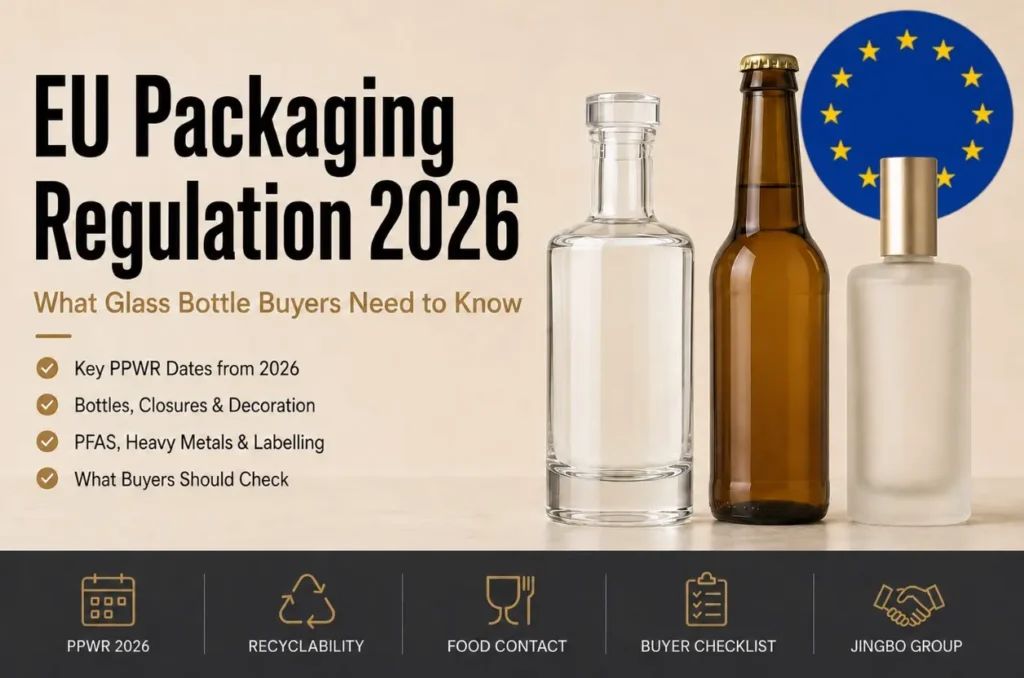
If your brand sells glass-bottled products in the EU, the new packaging rules may affect your next order. You do not need to stop using glass or replace every bottle immediately.
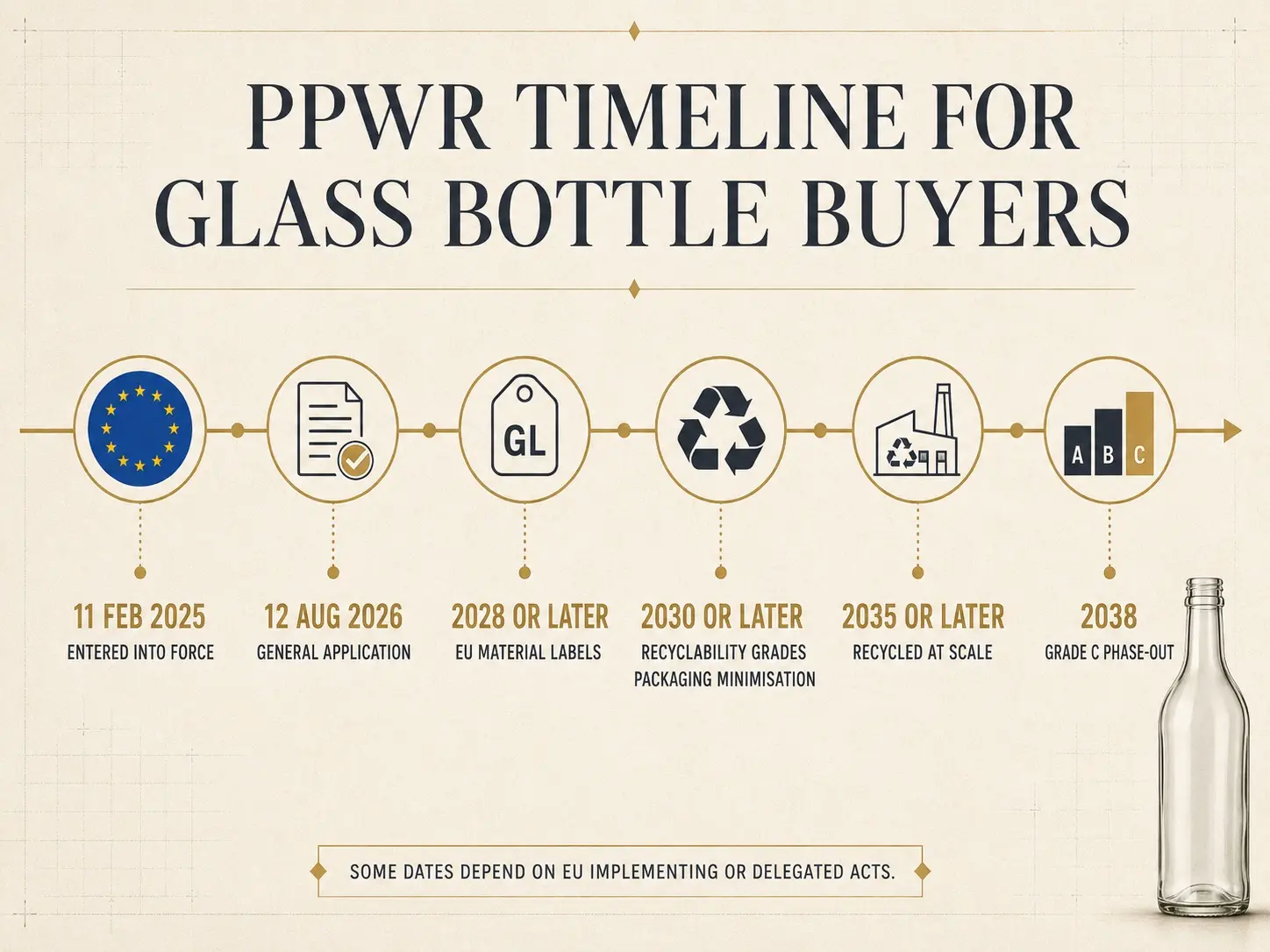
Regulation (EU) 2025/40, known as the Packaging and Packaging Waste Regulation or PPWR, entered into force on February 11, 2025. It generally applies from August 12, 2026. Rules on labelling, packaging minimisation, and recyclability grading follow later.
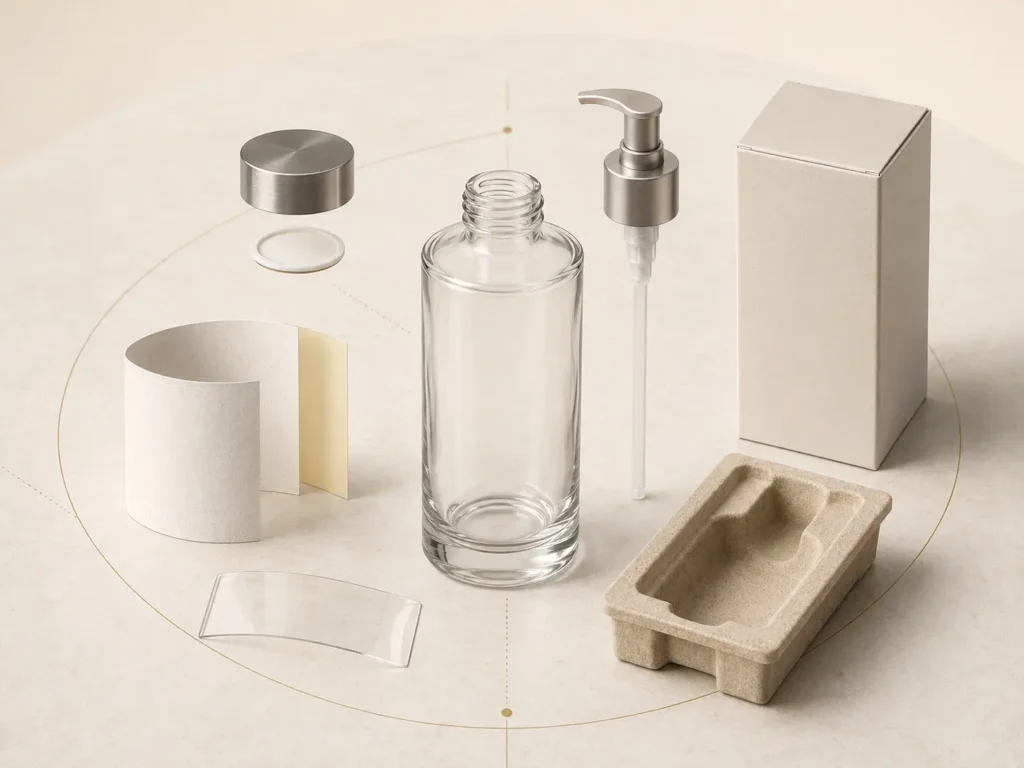
The change for buyers is that the finished pack matters, not just the bottle. Closures, liners, pumps, labels, coatings, boxes, and inserts may also affect compliance. This guide explains what brands, importers, distributors, and packaging buyers should check before ordering for the EU market.
Can You Continue Using Your Current Glass Bottles?
In many cases, yes. The PPWR does not impose a general ban on clear, amber, green, flint, frosted, coated, embossed, or heavy-bottom glass bottles. Nor does it require every existing bottle to be replaced on August 12, 2026.
A simple bottle with a removable closure and label may need little change. A pack with a permanent metal fitting, full-body sleeve, thick coating, complex pump, or oversized gift box deserves closer review. Food jars should be assessed with their cap, liner, and sealing compound; perfume bottles with their pump, overcap, decoration, and box.
Which PPWR Dates Matter to Glass Bottle Buyers?
August 12, 2026 is the general application date, but not every PPWR rule starts then. Technical methods and detailed criteria will be introduced in stages.
| Date | What Changes | What Buyers Should Do |
|---|---|---|
| February 11, 2025 | The PPWR entered into force. | Start reviewing packaging used for EU sales and identify the final components in each pack. |
| August 12, 2026 | The regulation generally starts to apply. Substance limits, food-contact PFAS restrictions, and important conformity and traceability duties become relevant. | Confirm the intended market and product use with suppliers before new orders are produced. |
| August 12, 2028, or 24 months after the relevant implementing acts enter into force, whichever is later | Harmonised EU material-composition labelling begins. | Leave room in future artwork and monitor the final label format before printing large stocks. |
| January 1, 2030, or 24 months after the relevant delegated acts enter into force, whichever is later | Design-for-recycling criteria and recyclability grades begin. | Review closures, labels, sleeves, decoration, and other non-glass parts together with the bottle. |
| January 1, 2030 | Packaging minimisation requirements apply. | Avoid unexplained extra weight, oversized boxes, unnecessary layers, and excess empty space. |
| January 1, 2035, or five years after the relevant implementing acts enter into force, whichever is later | Packaging must also be recycled at scale. | Follow collection, sorting, and recycling developments for the packaging category. |
| January 1, 2038 | Grade C packaging is phased out. | Plan future designs to reach grade A or B when the final assessment rules are available. |
The European Commission confirms that the PPWR generally applies from August 12, 2026. Its 2026 PPWR guidance explains the transition in more detail.

What Does “Recyclable” Mean for a Glass Bottle?
Glass has an established collection and recycling route in Europe, but not every finished pack will receive the same result.
Under the PPWR, recyclability will be assessed using detailed design-for-recycling criteria. The future performance grades are:
- Grade A: at least 95% recyclable by weight
- Grade B: at least 80% recyclable by weight
- Grade C: at least 70% recyclable by weight
Packaging below grade C will not meet the future performance requirement. From 2038, only grades A and B will remain.
These percentages do not refer to recycled-glass content or a country’s collection rate. They measure the packaging unit under the future EU assessment method. A removable cap and small paper label may perform differently from a permanent decorative frame, bonded sleeve, or large mixed-material pump.
Does the PPWR Require a Minimum Recycled-Glass Content?
The PPWR does not set a mandatory recycled-glass percentage equivalent to its targets for plastic packaging and plastic parts.
Factories may still use clean recycled container glass, known as cullet. Recycled content and recyclability are different claims, however. A bottle can contain cullet while its closure or decoration still needs review.
Jingbo Group’s guide to the 玻璃瓶的生产工艺 explains how cullet is prepared and returned to glass production.
Will Heavy-Bottom or Custom Glass Bottles Be Banned?
The PPWR does not set one maximum weight for every bottle. Spirits, sauce, and perfume packaging have different needs, so weight must be considered alongside filling, impact resistance, transport, closure performance, and product protection.
From 2030, packaging weight and volume must be reduced to the minimum needed for its function. Premium or heavy-bottom bottles are not automatically prohibited, but avoid weight that serves no clear purpose.
For a new custom bottle, discuss weight before approving the mold. A heavy base may improve stability or support the intended shape. Excessive lightweighting can also create thin areas and increase breakage. If you already use a heavy bottle, review its drawing, capacity, filling conditions, and transport performance before changing it.
Are Coated, Frosted, Printed, or Labelled Bottles Still Allowed?
Yes. Spray coating, screen printing, hot stamping, frosting, decals, labels, and embossing can still be used. What matters is how the process affects material composition, separation, sorting, and recycling.
Embossing is formed in the glass, while printing, coatings, labels, and sleeves add other materials. Their coverage, chemistry, adhesive, and removability may affect future design-for-recycling assessments. You can keep strong branding while choosing decoration that works with the rest of the pack. Jingbo Group’s guide to 玻璃瓶装饰 compares the main options.
Why Food and Beverage Bottles Need an Extra PFAS Review
From August 12, 2026, food-contact packaging cannot be placed on the EU market if PFAS concentrations reach or exceed the Article 5 limits. These are 25 ppb for an individual PFAS measured by targeted analysis, 250 ppb for the sum of targeted PFAS, and 50 ppm for PFAS including polymeric PFAS.
This applies to bottles and jars for water, juice, beer, wine, spirits, edible oil, vinegar, sauces, honey, jam, and other food or beverage products.
The PPWR does not identify which part of a glass package is most likely to contain PFAS. Depending on the final design, buyers may need to check:
- cap liners and sealing compounds;
- fluorinated or grease-resistant treatments;
- coatings, inks, and adhesives;
- pumps, valves, or dispensing components that contact the product.
A general “food grade” statement does not answer every PFAS question. Select the final closure and liner before requesting evidence, as a later cap change can alter the packaging configuration.
The Commission’s 2026 guidance states that there is no general stock-exhaustion period for this restriction. Food-contact packaging placed on the EU market after August 12, 2026 must meet the limits even if it was produced earlier. Brands and importers should therefore review older stock before that date.
This specific food-contact PFAS rule does not apply to perfume and cosmetic bottles merely because they use glass. Other relevant PPWR requirements still apply.

What Is the Heavy-Metal Rule for Glass Packaging?
The PPWR maintains a general combined limit of 100 mg/kg for lead, cadmium, mercury, and hexavalent chromium in packaging or packaging components. It is not a separate 100 mg/kg limit for each substance.
Glass packaging may qualify for a specific derogation under Commission Decision 2001/171/EC. The derogation can apply when an exceedance results from the use of recycled glass and none of the four metals is intentionally introduced during manufacturing. The decision also sets monitoring and reporting conditions. Buyers should therefore ask whether the general limit or this derogation applies to the supplied glass and what supporting records are available.
Ask for evidence that matches the actual order. A plain bottle and one with metallic decoration do not contain the same components. During quotation, specify the EU destination, bottle colour, decoration, and closure so the supplier can confirm what information is available.
Do You Need a New EU Label in August 2026?
The new harmonised EU material-composition label does not generally begin on August 12, 2026. It starts from August 12, 2028 or 24 months after the relevant implementing acts enter into force, whichever is later.
Brands should not invent a PPWR symbol or guess the future format. Leave space in new artwork and avoid printing several years of packaging before the harmonised requirements are final.
National sorting marks, deposit-return labels, food-contact information, and extended producer responsibility requirements may still apply. The PPWR does not remove every local obligation at once.
What Should Different Glass Bottle Buyers Check First?
The first checks depend on the product and the buyer’s role.
| Buyer or Product Type | First Priorities |
| Spirits, wine, beer, and beverage brands | Bottle weight, cap or cork components, liner PFAS information, labels or sleeves, and gift-box design |
| Oil, vinegar, sauce, juice, and food brands | Food-contact closure, liner or sealing compound, coatings and adhesives, batch records, and old stock planned for sale after August 2026 |
| Perfume and cosmetic brands | Pump and overcap materials, decoration coverage, ability to separate components, bottle weight, and secondary packaging |
| Glass bottle distributors | Clear specifications for each bottle-and-closure combination, document availability, batch traceability, and control of supplier changes |
| Importers of finished branded products | Complete packaging bill of materials, supplier evidence, EU label planning, and confirmation of who holds the required conformity documents |
“Is this glass bottle PPWR compliant?” is too broad. A useful answer requires the product, market, closure, decoration, and final pack.
What Should You Confirm Before Your Next EU Glass Bottle Order?
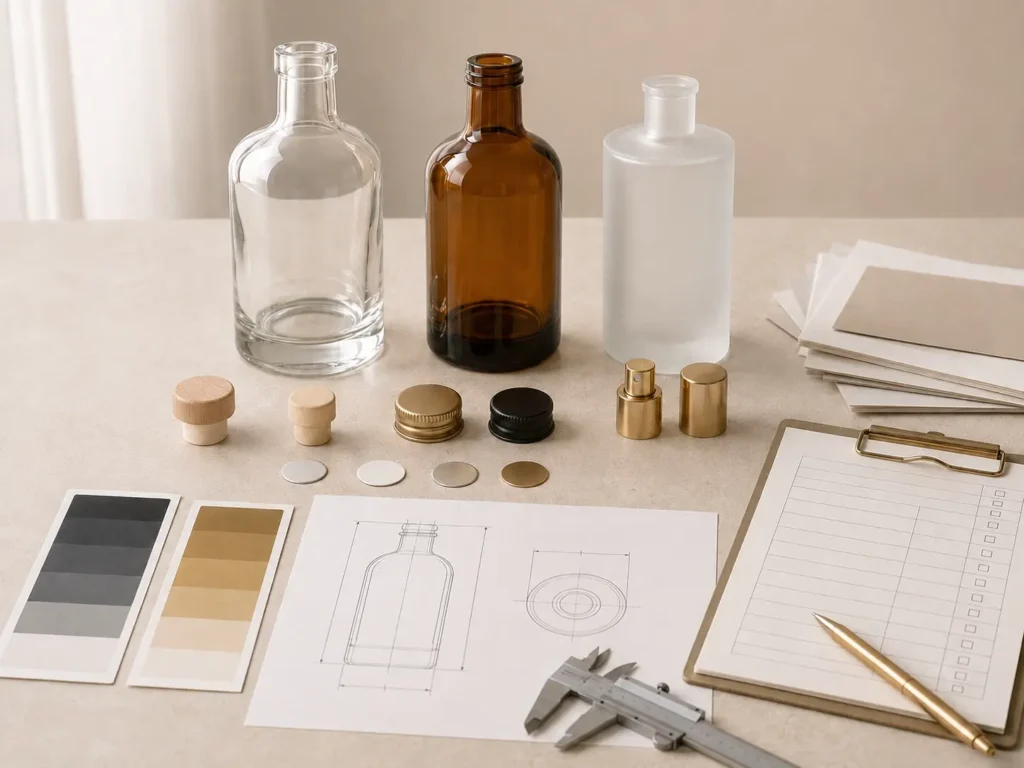
Tell the supplier that the order is for the EU and what the bottle will hold. Then confirm its capacity, weight, colour, neck finish, and drawing.
Bottle approval is not final until the closure has been selected. Match the cap, cork, pump, sprayer, or liner to the bottle and product. Jingbo Group’s guide to 瓶颈尺寸 explains why the complete finish matters.
Also fix the decoration process, colour, coverage, label material, adhesive, and any sleeve or metallic part. Evidence for a plain bottle may not cover the finished retail version.
Before mass production, buyers should agree on:
- the documents and test evidence that will be supplied;
- the batch or order information used for traceability;
- the approved bottle, closure, liner, and decoration versions;
- written approval before a supplier changes a material or component;
- the final sales pack, including gift box, insert, carton, and other relevant packaging.
Record these points in the purchase order or approved specification. A sample photo alone cannot control every material in a repeat order.

How Can Jingbo Group Support Your EU Packaging Project?
京博集团 supplies glass bottles and jars for spirits, wine, beverages, edible oils, sauces, food, perfume, cosmetics, and other branded products. You can select an existing design or develop a custom bottle.
For an EU order, share the target country, product type, capacity, closure, decoration, quantity, and document requirements. Our team can compare bottle options, confirm the neck finish, coordinate matching closures, review decoration, prepare samples, and plan export packaging. For custom projects, we review weight and shape before mold production; for existing bottles, we confirm available specifications and decoration options. Final compliance also depends on your product, filling process, complete pack, and role in the EU supply chain. See our glass bottle manufacturing and custom packaging page for more details.
Got a bottle project in mind? Tell us what you need, and we’ll help you sort out the right options, finishes, and details — just reach out and start the conversation.
结论
The EU packaging regulation 2026 does not ban glass bottles. Before your next EU order, confirm the product use, bottle weight, closure, liner, decoration, label, gift box, supplier evidence, and change-control process. Early review is easier than correcting the pack after production.