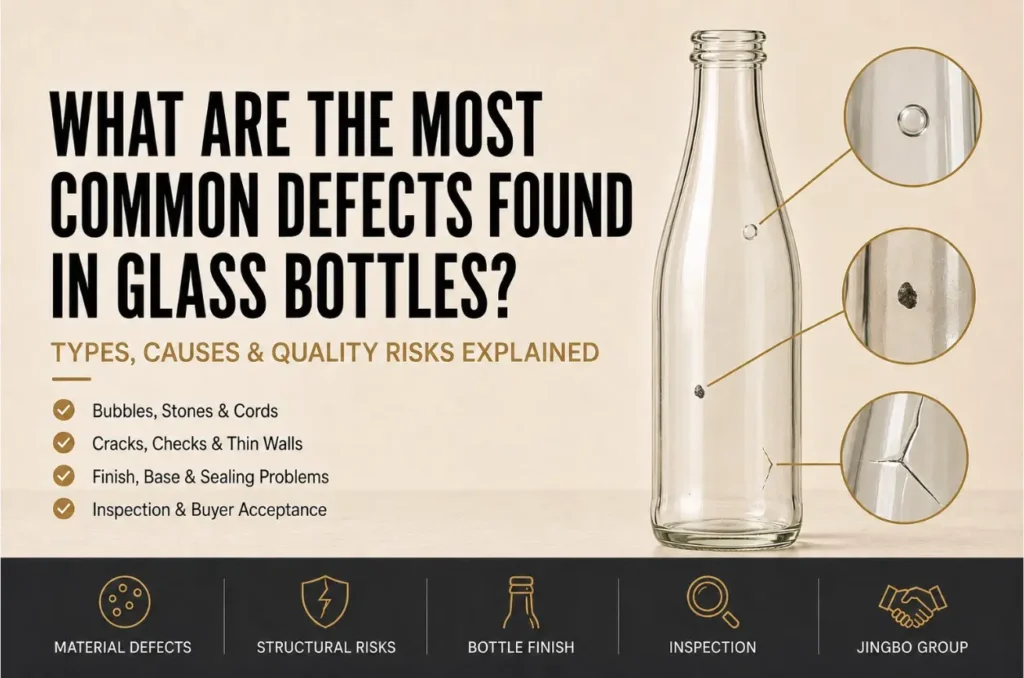
最常见的玻璃瓶缺陷包括气泡、气泡瘤、石点、丝状缺陷、裂纹、龟裂、缺口、壁薄、鸟翼状缺陷、瓶口变形、玻璃分布不均、瓶身变形、瓶底不稳以及内部应力过大。.
这些缺陷带来的风险并不尽相同。一个微小的封闭气泡可能主要影响外观。而瓶底附近的裂纹、密封面受损或瓶内有玻璃凸起,则可能导致该容器不适合灌装。.
有些缺陷是在原材料熔化时形成的,有些则是在成型、退火、检验、运输或灌装过程中产生的。这些缺陷的严重程度取决于其尺寸、形状、深度、位置以及瓶子的预期用途。.
什么算作玻璃瓶的缺陷?
玻璃瓶缺陷是指影响瓶子外观、尺寸、清洁度、密封性能、机械性能或灌装适用性的瑕疵。.
缺陷可分为三类。.
| 缺陷组 | 典型示例 | 可能的影响 |
|---|---|---|
| 化妆品 | 细小的封闭气泡、轻微划痕、浅色霉斑、轻微色差 | 外观或装饰质量发生变化 |
| 功能性 | 瓶身倾斜、瓶颈尺寸不正确、底座不稳、椭圆度过大 | 影响灌装、封盖、贴标、包装或生产线运行 |
| 结构性或与安全相关的 | 裂纹、破裂的水泡、鸟类撞击痕迹、玻璃内部的凸起、渗漏 | 可能会导致破损、污染或产品损失 |
这种分类方法虽然有用,但并非放之四海皆准。在某个项目中属于外观瑕疵的问题,在另一个项目中可能无法接受。例如,在琥珀色的酱汁瓶中,一个小气泡或许可以容忍;但在透明的香水瓶中——尤其是那些装饰较少、展示面积较大的瓶子上——则会被视为不合格。.
官方检验系统还会根据风险对缺陷进行分类。例如, 美国农业部《食品容器状况手册》 在其食品容器检验体系中,将鸟类啄咬造成的凹陷以及破损或漏液的容器视为关键缺陷。裂纹、薄点、大气泡和结构性鼓包的严重程度高于表面细小凹坑或轻微视觉痕迹。.
不应将这些美国农业部(USDA)的分类直接作为通用的瓶体规格照搬。它们说明了为什么缺陷的类型和后果比标记是否可见更为重要。.
ISO 7348 提供了玻璃容器制造中使用的标准化术语。不过,最终的验收标准仍需由瓶子制造商、采购方、灌装商以及任何相关检测实验室共同商定。.
玻璃内部会出现哪些材料缺陷?
某些玻璃容器的缺陷是在瓶坯进入模具之前就已形成的。这些缺陷是由熔融不完全、气体滞留、原材料污染、耐火颗粒或熔融玻璃内部的不均匀性造成的。.
气泡、种子和水疱
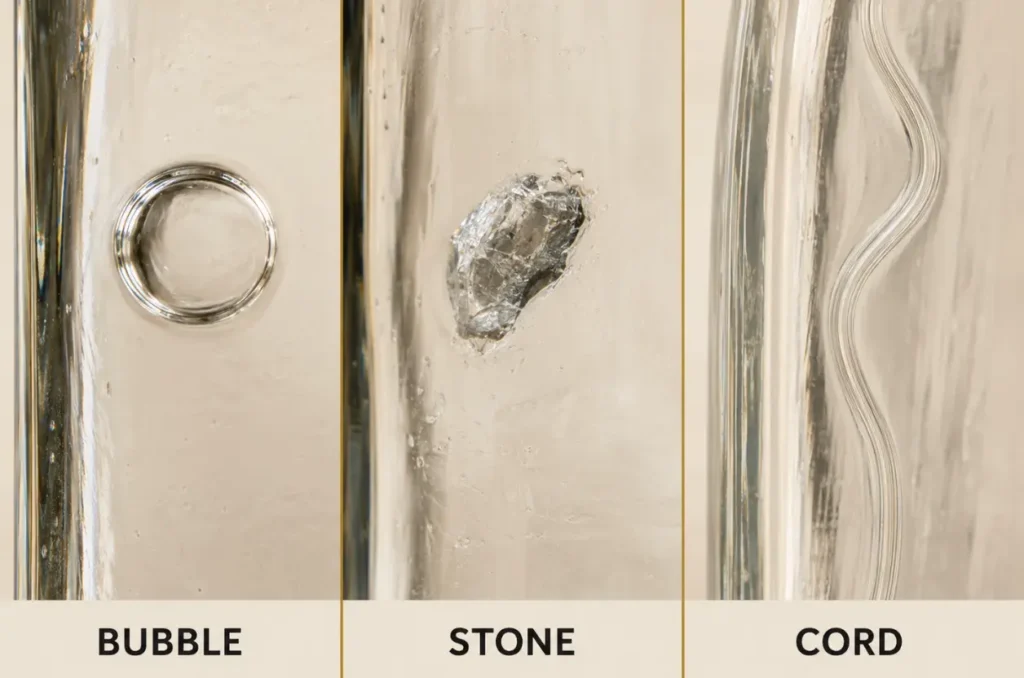
气泡是指被困在玻璃内部、充满气体的空隙。非常小的气泡通常被称为“气泡核”,而较大的空隙则可称为“气泡”或“气泡斑”。具体术语和尺寸范围可能因制造商而异。.
一个小而圆、完全封闭的气泡并不一定意味着该玻璃瓶不安全。其是否可接受取决于其直径、形状、壁面位置、周围玻璃的厚度以及项目的视觉要求。.
细长或拉长的气泡需要格外注意。它们可能会在瓶壁上形成薄壁区域。如果气泡延伸到内壁或外壁,可能会形成开放性气泡,从而留下空洞或粗糙区域。.
出现在瓶口、瓶底、瓶身底部或瓶身天然较薄部位附近的气泡,可能比那些被均匀分布的玻璃包围的气泡更严重。此外,在透明的高档玻璃瓶中,这类气泡比在琥珀色、绿色、带涂层或贴有大量标签的瓶子中更为明显。.
石块及其他固体夹杂物
石子是指被困在玻璃内部的固体颗粒。它可能来自熔化不完全的原料、熔炉中的耐火材料、受污染的碎玻璃,或是其他异物。.
结石通常表现为不透明的白色、灰色、深色或晶体状斑点。它们与气泡不同,因为其中含有固体物质而非气体。.
有些石头主要影响外观。另一些则可能形成局部应力点,因为在冷却过程中,内含物与周围玻璃的行为可能不同。风险程度取决于材料、尺寸、位置以及瓶子的预期用途。.
位于表面、表面处理层、底面或薄壁附近的石点,比位于低应力区域的小而孤立的夹杂物更值得关注。用于碳酸饮料、热灌装、巴氏杀菌或重复使用的瓶子通常需要更严格的审查。.
绳纹、妊娠纹和流纹
丝状纹和条纹表现为玻璃内部呈波浪状、丝状或条纹状的区域。它们是由玻璃成分、温度或粘度上的差异造成的,这些差异在成型前未能完全均匀化。.
丝状纹与裂纹不同。它通常顺着玻璃的流向延伸,当在光线下旋转瓶身时,看起来会在瓶壁内移动。.
细小的筋纹主要可能只是外观问题。粗大的筋纹会扭曲透过瓶身看到的景象,使透明玻璃看起来不够均匀,或者表明玻璃结构在局部存在差异。.
可接受的标准在很大程度上取决于产品本身。高档燧石瓶、香水瓶和透明烈酒瓶的外观要求通常比标准食品或饮料包装更为严格。.
哪些结构性玻璃瓶缺陷最为严重?
结构缺陷会导致玻璃壁出现断裂、形成危险的薄弱区域,或使容器内部残留不需要的玻璃。与普通的视觉差异相比,此类缺陷需要更加谨慎对待。.
检查与裂缝
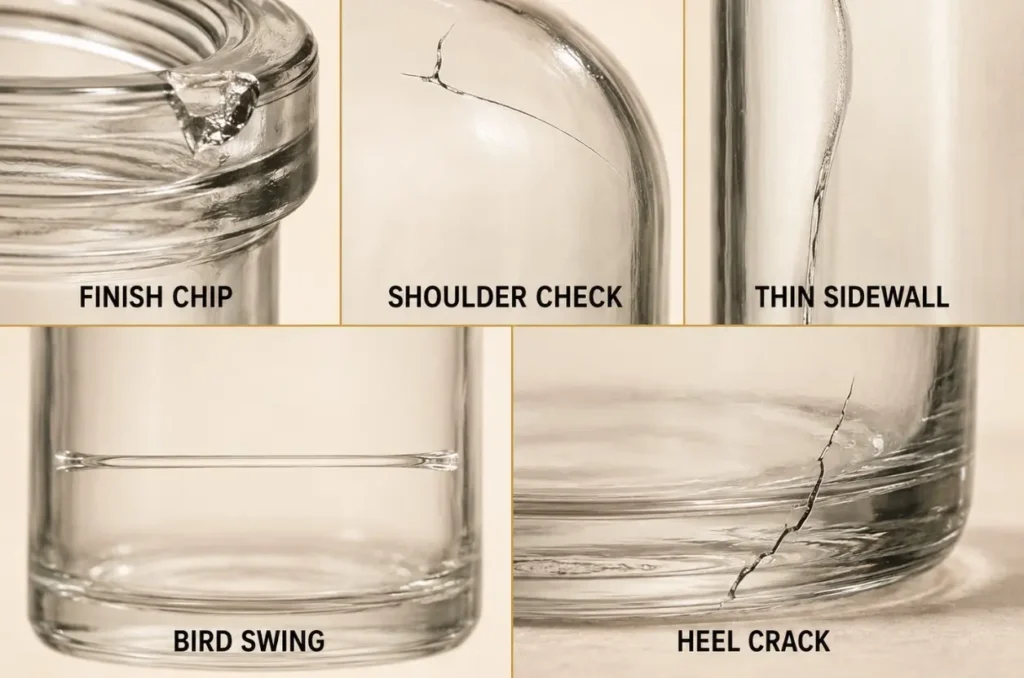
“裂纹”是指玻璃上出现的小裂缝或部分断裂。它可能出现在口沿、颈环、肩部、瓶身、瓶底、底座或模具接缝处。.
有些瑕疵在普通光线下很难察觉。当将瓶子在明亮的背景前旋转时,该瑕疵可能会反射光线,呈现为一条锐利的线条。它看起来可能比正常的模具接缝更亮、更不规则。.
裂纹可能会进一步向玻璃壁内部延伸,甚至贯穿玻璃壁。无论哪种情况,都会降低瓶子承受冲击、内部压力、垂直载荷或温度变化的能力。.
对瓶底和瓶颈周围的检查尤为重要,因为这些部位在输送和包装过程中会受到冲击。在封盖过程中,表面检查结果可能会恶化。瓶肩和瓶壁的裂纹可能会在灌装、巴氏杀菌、运输或产品储存过程中扩大。.
肉眼可见的裂纹不应被视为可接受的外观瑕疵。应将受影响的瓶子剔除,并在必要时对相关生产批次进行调查。.
缺口和边缘损伤
缺口是指玻璃片脱落形成的缺损区域。缺口通常出现在瓶口、密封面、螺纹处、瓶底或瓶底接触面周围。.
受应力影响区域外侧的轻微缺口,其分类可能与密封台面上的缺口不同。然而,松动或部分脱落的玻璃始终会引发污染隐患。.
瓶口处的缺口问题尤为严重。它们可能会损坏封口衬垫,导致无法形成可靠的密封,造成泄漏,或在封盖和开盖过程中释放出玻璃碎片。.
瓶底的缺口可能导致瓶身不稳,或形成新的裂纹起始点。瓶底边缘的缺口在受力时可能会扩大。任何带有锐利边缘、玻璃松动或与裂纹相连的缺口,均应予以淘汰。.
玻璃薄点和分布不均
玻璃瓶的各个部位并不需要具有完全相同的壁厚。瓶肩、瓶身、瓶底、瓶底和瓶口自然会使用不同量的玻璃。.
当某个区域的厚度明显小于批准的设计值,或者瓶子两侧的玻璃分布不均匀时,问题便会出现。.
薄壁现象可能由坯料重量不正确、坯料温度不均匀、坯体成形不良、模具冷却不均或吹塑条件不稳定等原因引起。使用适当的设备检查时,该现象可能表现为浅色斑块、变形或外观异常柔软的区域。.
分布不均还可能导致瓶子的另一部分玻璃过多。一个瓶子即使符合总重量规格,仍可能存在薄弱且较薄的部位。因此,仅凭瓶子重量无法证明玻璃已分布均匀。.
对于那些会受到碳酸化压力、热灌装、热冲击、重物垂直堆放或反复搬运影响的瓶子而言,薄壁问题更值得关注。.
鸟形秋千、尖刺和内部玻璃凸出物
鸟形吊坠是指横跨瓶内的一条玻璃丝或玻璃桥。它可能连接两个侧壁,也可能连接侧壁与瓶底。.
尖刺是指容器内部的尖锐玻璃突起。卡在容器内的玻璃颗粒或内部翅片也可能造成类似的危险。.
这些缺陷可能会影响冲洗、灌装或产品流动。更重要的是,这些凸起可能会断裂,导致玻璃碎片在包装内松动。.
鸟嘴状凹陷和内部尖刺不属于正常的外观差异。含有此类缺陷的瓶子应予以剔除。出现此类缺陷时,可能还需要对成型条件和检测设备进行调查。.
针孔和泄漏
针孔是指瓶壁上一个非常小的孔洞。虽然可能难以察觉,但会导致产品、气体或真空压力泄漏。.
瓶身漏液可能会弄湿纸箱、损坏标签、污染附近的包装单元,或导致碳酸气泡流失。在热加工食品包装中,漏液还可能导致包装密封失效。.
泄漏检测可能需要采用压力、真空、电气或其他自动化检测方法。即使从外观上看完全正常的瓶子,内部仍可能存在极小的孔洞。.
瓶颈和瓶口周围会出现哪些缺陷?
瓶口是瓶身顶部用于安装瓶盖、软木塞、泵头、滴管、喷头或其他封口装置的部分。该部位的微小尺寸误差可能会导致灌装线出现严重问题。.
表面有缺口或裂纹可能会影响密封效果,并在封口过程中导致玻璃脱落。表面处理不完整会导致预期的玻璃形状出现缺失。玻璃过多则可能导致密封区域过厚、不平整或变形。.
瓶口若不圆,可能会导致螺旋盖或封口衬垫无法均匀就位。瓶口倾斜会导致封盖压力不均。螺纹几何形状不正确可能会导致螺纹错位、扭矩过低、扭矩过大、泄漏或封口损坏。.
当过量的玻璃碎屑部分堵塞瓶口时,就会导致瓶口堵塞。这可能会影响灌装管、软木塞的插入、滴管、泵或产品的分装。而瓶口过大则可能因密封配合不足而引发其他问题。.
顶部密封面也必须保持足够平整。这一点对于使用真空凸耳盖的罐子和采用衬垫式封口的瓶子尤为重要。.
应将瓶体和瓶盖作为一个整体系统进行评估。不能仅仅因为两个瓶口的直径描述大致相同,就认为适用于某种瓶口的瓶盖也能适用于另一种瓶口。.
瓶身形状在何种情况下会成为功能性缺陷?
瓶身形状独特并不一定就是缺陷。锥形瓶、扁平瓶、不对称瓶身、多面体表面、宽肩、窄腰以及雕塑感轮廓,这些设计都可能是为了塑造独特的品牌形象而刻意设计的。.
这些瓶子可能需要定制模具、专用包装,或者对灌装线设备进行调整。但这并不意味着设计存在缺陷。对于定制玻璃瓶而言,经批准的技术图纸、确认的样品、灌装要求以及包装方案共同界定了其应有的正确形状。.
当制造出的瓶子与批准的设计不符、超出约定的尺寸公差范围,或者无法履行预期的包装功能时,形状问题就会演变为功能缺陷。.
自定义几何形状还是意外变形?
锥形瓶是“有意几何”的一个典型例子。虽然其锥形瓶身与标准圆柱形瓶外观大不相同,但它依然能够保持稳定、准确灌装、正确密封,并在生产过程中安全运输。.
在开发过程中,应考虑锥度角、容量、壁厚分布、底径、加工位置和重心。当这些特征与批准的设计相符时,该形状不属于缺陷。.
非预期的变形则有所不同。圆柱形瓶子可能会变得比允许范围更椭圆;方形瓶子的棱角可能会发生扭曲;平板可能会向内凹陷或向外凸起;而原本设计为对称的瓶子,其两侧形状可能会出现不均匀。.
大型平板、锐利的过渡、深浮雕、窄腰部以及其他特殊特征可能会增加成型的难度。不过,这些应被视为工程设计上的考量,而非自动判定为缺陷。在模具制造之前,应先评估其可行性,随后进行取样和测试。.
只有当可见差异超出批准的外观或尺寸标准、改变容量、影响装饰效果或影响瓶子的性能时,才应予以拒收。.
垂直度与表面对齐
仅凭定制酒瓶的轮廓,并不总能判断其垂直度。一个不对称的酒瓶,即使符合设计初衷,在视觉上也可能显得不协调。有些酒瓶还会刻意采用偏移的瓶身或瓶颈设计。.
因此,应在技术图纸中明确定义正确的基准点。这些基准点可能包括基座接触面、瓶体中心线、加工完成位置、密封面或其他尺寸基准。.
对于常规的直立瓶,过度倾斜可能会导致与导轨接触、灌装不准确、封口歪斜,或是在纸箱内摆放不均匀。对于非对称的定制瓶,应根据其经批准的参考点来判断,而非仅凭肉眼观察其是否笔直。.
当瓶口实际位置或角度超出约定公差范围,并影响灌装、封盖、密封、分装或外观时,即视为瓶口存在缺陷。符合批准设计要求的故意偏移瓶颈不属于缺陷。.
底座稳定性与接触面
定制酒瓶并不一定非要采用传统的那种平坦瓶底。它的底部可以是深凹的、带有雕塑感、厚实的瓶跟、内凹的中心,或者带有多种装饰性轮廓。.
关键在于支撑瓶子的表面。预定的接触环或支撑点必须在灌装、贴标、包装、运输、陈列和使用等预期条件下,确保瓶子保持稳定。.
一个底座宽大且设计合理的锥形瓶,其稳定性可能比高大的圆柱形瓶更好。如果外部接触面保持水平且均匀,则不规则的底座轮廓也是可以接受的。.
“摇摆瓶”是指一种瓶子,尽管其设计初衷是稳稳地立在平面上,但实际放置在平面上时却会晃动或摇摆。这可能是由于接触环不平整、瓶底变形、玻璃过量、瓶底成型偏心,或者冷却不均匀所致。.
当瓶子无法按预期直立、在传送带上发生不可预测的移动、在包装内倾斜,或导致载荷分布不均时,底座状况即构成功能性缺陷。如果可见的模具痕迹、凸起或装饰性底座特征符合批准的设计且不影响性能,则不自动视为缺陷。.
异形瓶的灌装与包装
并非所有定制瓶都必须在不作任何调整的情况下通过标准灌装线。对于特殊形状的瓶子,可能需要使用瓶托、定制导轨、定位系统、专用星形轮、异形纸箱隔板、模压托盘,或者采用不同的托盘排列方式。.
这些要求是定制包装开发的一部分。这并不意味着瓶子本身有缺陷。.
如果买家需要该瓶子能在现有的灌装线上运行或适配现有的纸箱,应在模具开发之前提供这些限制条件。这样,供应商就能对瓶身高度、最大宽度、瓶颈位置、瓶底接触面积、标签表面、输送机运行情况以及包装方向进行评估。.
在条件允许的情况下,生产线试运行应使用实际的瓶子、瓶盖、标签和搬运设备进行。对于瓶身呈锥形、肩部突出、重量分布不均或相邻瓶子之间接触面有限的瓶子,可能还需要进行包装和运输测试。.
一旦瓶子被批准用于特定的灌装线和包装系统,因尺寸偏差、变形或不稳定而无法通过检测的生产单位可被视为有缺陷。设计上的特殊性本身不应被归类为缺陷。.
模具分型线和表面痕迹总是缺陷吗?
大多数机器制造的瓶子上都能看到模具接缝。模具必须打开才能取出成型的瓶子,而模具各部分的接合处会在玻璃上留下分型线。.
一条细、平滑且对齐良好的线通常不属于缺陷。但当该线边缘锋利、明显凸起、出现裂纹、严重偏移,或位于会影响密封或装饰的位置时,就会成为质量问题。.
玻璃飞边是指沿模具接缝处多余的材料。明显的飞边摸起来会像一道锋利的棱脊。瓶颈处周围的飞边可能会影响瓶盖的闭合,而瓶身接缝处较厚的飞边则可能在标签或涂层下依然可见。.
Jingbo Group的指南: 玻璃瓶的接缝 解释了正常的躯干、底座和颈部接缝与裂纹、尖锐飞边以及模具错位之间的区别。.
其他表面状况包括划痕、磨损痕迹、拖痕、链条痕迹、模具油渍、积碳以及玻璃粘连导致的粗糙区域。.
轻微的划痕主要影响外观。深划痕和撞击痕迹则更为严重,因为表面损伤会降低玻璃的实际强度。瓶子在输送、散装处理、包装、运输或客户灌装线上移动的过程中,可能会出现此类损伤。.
脏瓶也需要单独处理。瓶子表面或内部可能残留油渍、碳垢、灰尘、玻璃颗粒、水、包装碎屑或其他异物。不能仅仅因为玻璃结构本身完好无损,就对内部污染视而不见。.
该 美国食品药品监督管理局(FDA)关于果汁的HACCP指南 该文件专门讨论了旨在防止玻璃碎片混入食品的检查和控制措施。建议对空容器进行检查,并在收货、储存、输送、灌装和封盖过程中可能发生瓶子破裂的区域进行监控。.
是什么导致了玻璃瓶的缺陷?
不同的缺陷源于不同的生产阶段。.
在熔化与精炼过程中,夹杂的气体可能会形成气泡,而未完全熔化的材料或熔炉污染则可能导致出现石点。玻璃均匀性差可能会产生条纹、斑痕或颜色不均匀。.
玻璃坯的重量和温度会影响进入机器的玻璃量,以及玻璃在模具内流动的顺畅程度。玻璃坯规格不正确可能会导致壁厚过薄、表面处理不完全、容量不均匀,或者底座处玻璃过多。.
在成型过程中,坯体必须先形成正确的内部形状,然后才能转移到最终模具中。如果气压、柱塞运动、模具温度、冷却、时间控制或对位不正确,可能会导致玻璃坯体摆动、接缝、裂纹、表面变形以及玻璃分布不均。.
成型后,瓶子必须在退火炉中逐渐冷却。如果玻璃内层和外层的冷却速度差异很大,容器内部可能会残留残余应力。虽然瓶子外观可能正常,但在灌装、封盖、温度变化或运输过程中,其脆弱性可能会增加。.
Jingbo Group的指南中详细介绍了整个流程,内容涉及 玻璃瓶是如何制造的.
并非所有在客户工厂发现的缺陷都源于玻璃厂。划痕、缺口、冲击裂纹、污染物以及玻璃破损,也可能在托盘搬运、仓库储存、集装箱卸货、卸垛、输送、冲洗、灌装和封盖过程中产生。.
因此,确定缺陷位置和断裂形态有助于判断缺陷是源于熔炼、成形、冷却、装箱、运输还是灌装线。.
玻璃瓶是如何进行检验的?
玻璃瓶的质量检验通常结合了自动检测、尺寸测量、实验室测试和目视抽样。没有任何一种方法能够检测出所有可能存在的缺陷。.
摄像头系统可对瓶口、瓶身侧壁、瓶底和瓶底边缘进行检查。通过调整不同的照明角度,有助于发现裂纹、异物、气泡、污垢、模具缺陷以及形状不规则等问题。内部摄像头或光学系统可通过瓶口检查瓶内是否存在污染物和玻璃凸起。.
机械量具用于测量瓶身高度、直径、垂直度、瓶口尺寸、瓶口、螺纹及密封面。容量和重量可参照批准的图纸进行核对。.
偏光镜可以揭示在普通光线下无法看到的应力分布。该 ASTM玻璃容器标准 包括偏光检查、内压强度、耐热冲击性以及玻璃容器取样等方法。.
性能测试应反映产品的实际情况。. ISO 7458 规定了测试内部耐压性能的方法。. ISO 7459 涵盖了耐热冲击性和热冲击耐久性。.
碳酸饮料瓶可能需要进行内压测试。热灌装玻璃罐可能需要进行热冲击评估。堆放在高托盘上的瓶子可能需要进行垂直载荷测试。高档装饰瓶可能需要对涂层、印刷、标签附着力或耐磨性进行额外检查。.
装饰缺陷应与基底玻璃的缺陷分开记录。即使底层瓶体成型正确,涂层剥落、喷涂颜色不均匀、印刷针孔、套准不良、附着力差以及金属化层划伤等仍属于表面处理问题。.
买家应如何设定验收标准?
质量规范应基于瓶子的实际用途,而非“无瑕疵”或“高品质玻璃”等笼统表述。”
买方应首先确认产品、灌装温度、碳酸含量、封口方式、加工方法、目标保质期、装饰要求、运输方式以及灌装线要求。.
经批准的图纸应明确标注瓶体的主要尺寸、公称容量、重量、瓶口形状、开口、密封面及相关公差。其他性能要求可能包括内压、热冲击、垂直载荷、冲击、泄漏或残余应力。.
应通过具有代表性的样品就外观要求达成一致。这一点对于透明酒类、香水、化妆品及高端饮料瓶尤为重要,因为即使不影响酒精度数的标记,仍可能影响产品在货架上的预期外观。.
检验协议应明确针对具体项目,哪些缺陷属于关键缺陷、主要缺陷或次要缺陷。此外,还应规定抽样方案、检验条件、可接受质量水平、试验方法以及处理不合格批次的程序。.
买家应避免仅凭一张缺陷照片就作为判断标准。光线、瓶身颜色、壁厚、拍摄角度和图像放大倍率等因素,都可能导致同一处痕迹看起来截然不同。.
经批准的实物样品、技术图纸、缺陷参考样品以及书面验收标准,为批量生产提供了更可靠的基础。.
何时应将玻璃瓶作为次品剔除?
当瓶子出现裂纹、危险的缺口、鸟嘴状凸起、内部尖刺、玻璃松动、针孔、泄漏、瓶口破损或其他可能导致碎片脱落或造成故障的缺陷时,应停止使用该瓶子。.
壁厚严重不足、出现开裂、底座不稳、内径堵塞、瓶口规格不符,或未通过压力和热测试的瓶子,也应从预期用途中剔除。.
只要不影响性能且符合批准的外观标准,细小的闭孔气泡、轻微划痕、细微的线纹以及可见的模线均可接受。.
绝不应仅根据缺陷是否容易被察觉来做出决定。一条非常明显但表面光滑的模具接缝可能无害,而一条细微的后跟裂纹虽然难以察觉,却可能带来严重风险。.
发现可疑瓶子时,应将其隔离,而非将其装满以进行非正式测试。应尽可能记录批次、模具编号、托盘、生产时间及缺陷位置。这些信息有助于制造商判断问题是孤立的,还是与特定的生产条件有关。.
结论
常见的玻璃瓶缺陷包括轻微气泡、表面划痕、裂纹、壁薄、瓶口损坏、瓶身歪斜以及内部玻璃碎片等。.
正确的判断取决于缺陷出现在何处,以及它是否影响外观、密封性、填充性、强度或产品安全。明确的技术规范、具有代表性的样品、可靠的检验以及针对具体应用的测试,是区分正常玻璃差异与不可接受缺陷的最佳方法。.
如需进行玻璃瓶项目,请联系 Jingbo Group,地址为 sales@jbtopglass.com 请提供您的瓶型、容量、产品、瓶盖、灌装工艺、装饰、数量及目的地。.