
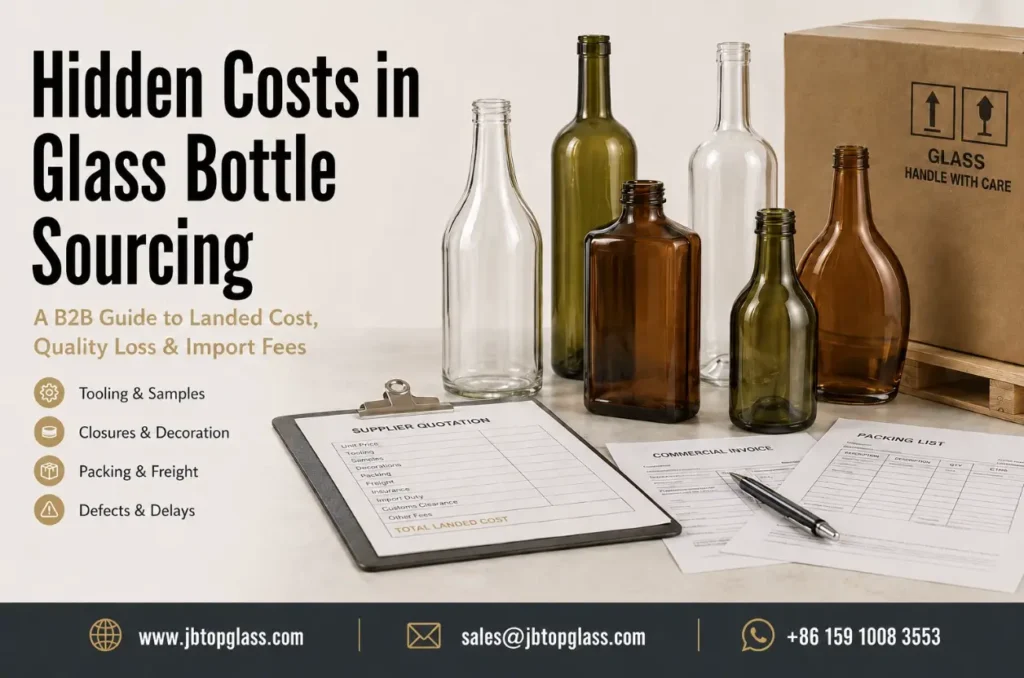
The hidden costs of sourcing glass bottles are the expenses that appear before, during or after production but are not always included in the first unit-price quote. They may include mold work, samples, closure matching, decoration setup, export packing, freight, inspection, import charges, rejected bottles, storage and delays.
None of these costs is automatically dishonest or unusual. The problem begins when a buyer compares quotations without confirming what each quotation includes.
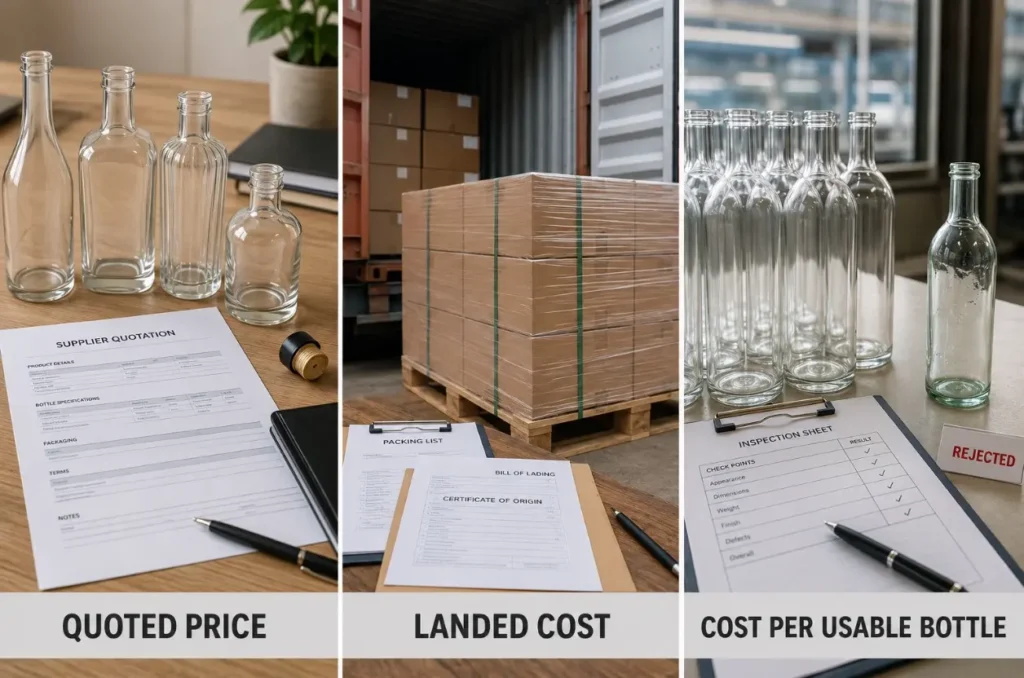
A useful sourcing decision therefore needs three numbers: the quoted bottle price, the landed cost and the cost per usable bottle. The last number is often the most important. A bottle that looks cheaper at the factory can cost more after caps, cartons, import fees, breakage and filling-line losses are added.
This guide does not explain raw materials, furnace energy or how bottles are manufactured. Jingbo Group’s separate guide to تكلفة الزجاجة الزجاجية covers the factors that influence the bottle itself. This article focuses on the additional procurement costs buyers should identify before approving an order.
Why the Lowest Bottle Price May Not Be the Lowest Cost
A unit price only makes sense when the product specification and quotation scope are the same.
A quotation for an undecorated bottle in bulk pallet packing cannot be compared directly with a quotation that includes a cap, printing, cartons, pallets and delivery to port. Even when both suppliers use the same capacity and quantity, differences in bottle weight, neck finish, quality standard, packing method and trade term can change the final cost.
| مستوى التكلفة | What It Includes |
|---|---|
| Quoted bottle price | The bottle and only the items specifically listed in the supplier’s quotation. |
| التكلفة الشاملة | The product plus packing, freight, insurance, customs-related charges, duties or taxes where applicable, and delivery to the agreed destination. |
| التكلفة لكل زجاجة صالحة للاستخدام | The landed cost plus losses from rejects, breakage, shortages, rework, replacement shipments, storage and delays, divided by the bottles that can actually be filled and sold. |
The calculation does not need to be complicated. Add every cost needed to make the bottles ready at your filling or packing site. Then divide that amount by the quantity that passes inspection and can be used.
This approach exposes false savings without assuming that every project will have the same expenses.
1. Product Development, Mold and Approval Costs
An existing bottle usually needs less development than a fully custom design. A custom project can require technical drawings, 3D review, mold machining, mold trials, measurement and one or more approval rounds.
These tasks may be quoted separately from mass production. Changes made after drawing approval can also create additional tooling work or delay the production schedule.
Before paying a tooling fee, confirm exactly what it covers. Ask whether the price includes the production mold, trial bottles, initial adjustments, mold ownership, storage, maintenance and future replacement.
The buyer should also confirm which changes are included after the first trial. Some minor adjustments may be included, while a major change to the bottle shape, capacity, base or neck can require new mold work.
مجموعة جينغبو custom bottle mold development page explains the normal process from an approved drawing to a trial glass bottle.
The budget should also allow enough time for approval. A delayed trial sample can postpone decoration, filling tests and the product launch even when the tooling charge itself is relatively small.
2. Samples and International Courier Costs
A stock bottle sample may be inexpensive or free, but international courier charges can exceed the value of the glass.
Decorated samples cost more because the supplier must prepare the color, screen, decal, coating or other small-batch work. A second or third sample round may be required when the artwork changes or the first result does not match the approved standard.
Do not approve only the empty bottle when the final package uses a custom closure or decoration.
A useful approval set contains the bottle, its actual closure, the selected finish, label or printing, and representative packing. It may also need to travel to a filler, testing laboratory or brand office.
Confirm who pays for each shipment. Buyers should also ask whether the sample charge can be credited against a future order.
Combining several checks into one complete sample round is usually cheaper than sending separate bottles, caps and decorated pieces at different times.
3. Closures, Accessories and Compatibility Work
A bottle-only quotation may not include a cork, stopper, screw cap, liner, dropper, pump, tamper-evident band or decorative overcap.
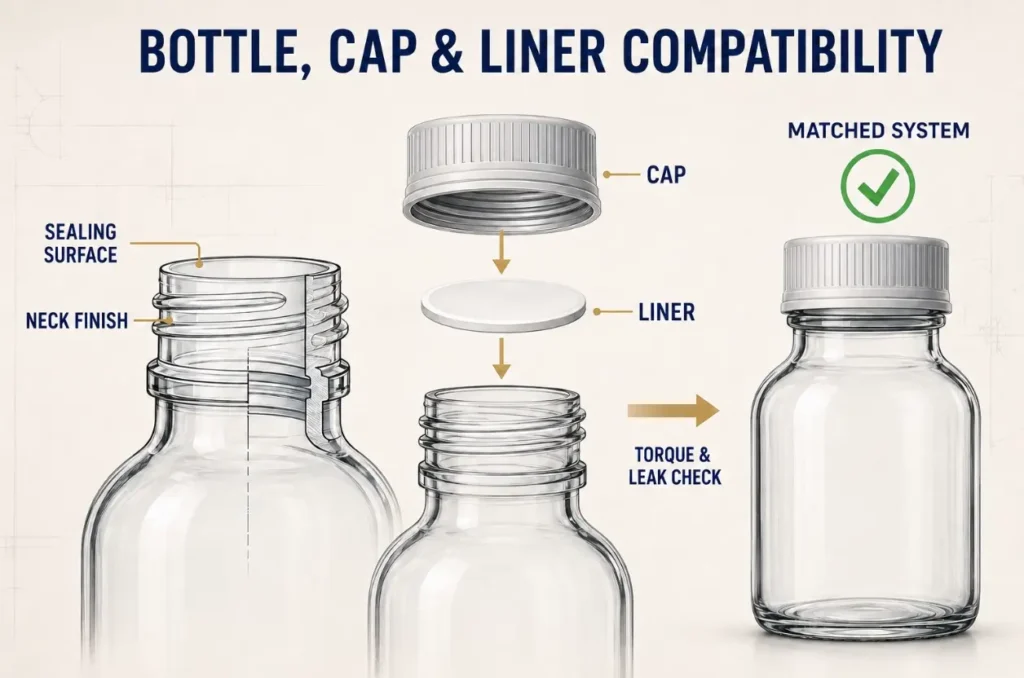
The accessory price is only one part of the total cost. The closure must fit the bottle neck, provide the required seal, work with the product and run on the buyer’s capping equipment.
A visually attractive cap can become expensive if its dimensions or liner do not match the bottle.
Ask the supplier to identify the closure material, dimensions, liner, color, decoration, packing quantity and compatibility checks included in the offer.
For critical products, the filled package may require leakage, torque, pull-out or product-compatibility testing under conditions agreed upon by the buyer and filler.
Jingbo Group’s range of أغطية وأغطية الزجاجات الزجاجية shows why the neck and closure should be selected as one complete system instead of being purchased as unrelated components.
4. Decoration Setup and Color-Matching Costs
Printing, spray coating, frosting, hot stamping, decals, metallization and labeling can all require setup work before normal production begins.
Common expenses include artwork preparation, screen or plate making, color sampling, jigs, small-batch setup and additional inspection.
Some decoration methods also require separate packing or more careful handling to prevent scratches and rubbing marks.
Color descriptions such as matte black, gold or frosted blue are not precise enough for production approval. The buyer should provide a color reference, artwork file, printing position, tolerance and approved physical sample when appearance is important.
A small change in logo size or coating coverage can require a new setup. Buyers should confirm whether the quotation includes the decoration sample, mass-production setup, rejected decoration allowance and packing required for the finished surface.
The available glass bottle surface decoration methods should be compared by both their visual results and the work required to keep those results consistent.
5. Export Packing and Freight Efficiency
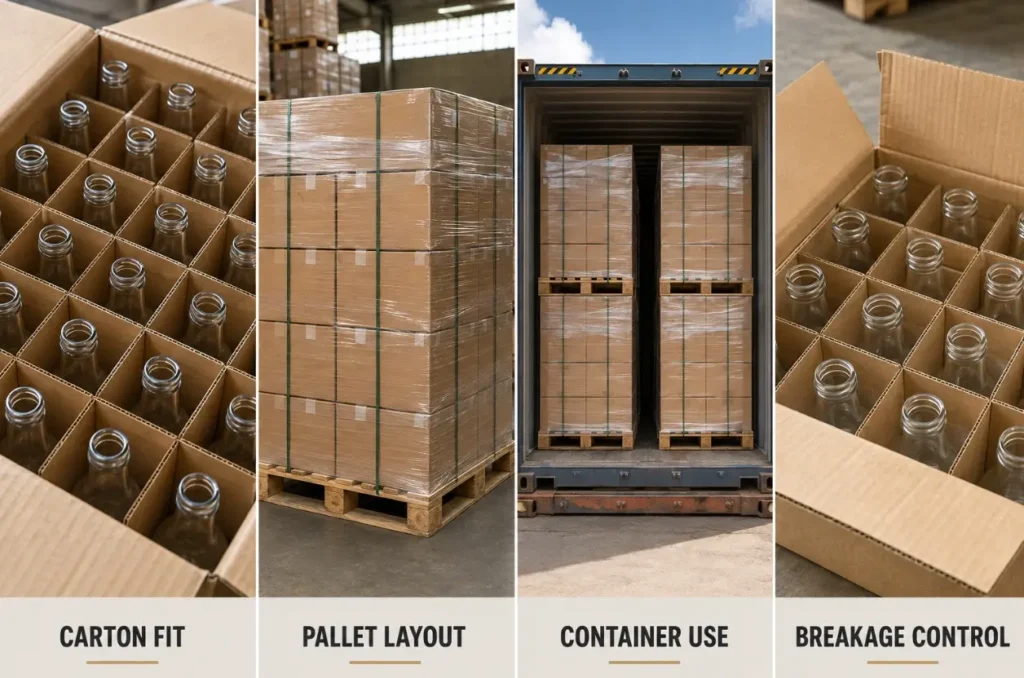
Export packing is not only a protective expense. It also determines carton size, pallet count, container utilization, handling method and freight cost per bottle.
Low-cost packing may result in more breakage. Heavy protective packing may reduce damage but use more container space.
The right option balances bottle protection, surface protection, warehouse handling, unloading equipment and transport efficiency.
Ask the supplier for the number of bottles per carton, carton dimensions, gross weight, cartons per pallet, pallet dimensions, pallet height, total cubic volume and estimated quantity per container.
These figures are more useful than a simple statement that export packing is included.
مجموعة جينغبو glass bottle packaging solutions include cartons with dividers, direct pallet packing and cartons secured on pallets.
The guide to the best way to ship glass bottles explains how the bottle shape, decoration, order quantity and unloading conditions affect the packing decision.
6. Inspection, Testing and Compliance Costs
Quality requirements should be agreed upon before production. They should not be created after the shipment arrives.
Depending on the project, inspection may cover appearance, dimensions, capacity, weight, neck finish, verticality, decoration, closure fit, packing and quantity.
A buyer may use the supplier’s inspection, appoint a third-party inspection company, send samples to a laboratory or combine these methods. Each option has a cost, but unclear standards can create a much larger dispute later.
A sampling plan should identify the inspection level, defect categories and acceptance limits instead of using the vague phrase “good quality.”
ISO 2859-1:2026 provides an international system for acceptance sampling by attributes. However, the buyer and supplier still need to agree on how the standard applies to the actual bottle order.
Compliance documents and tests also depend on the product and destination market. Food-contact, pharmaceutical, cosmetic and pressure-containing packages may require different evidence.
Confirm the required documents before ordering so they do not become an urgent extra expense after production.
7. Import Duty, Port and Local Delivery Charges
International quotations often use a short trade term, but the three letters alone are not enough.
The named place or port and the version of the rule matter. EXW, FOB, CIF, DAP and DDP allocate different responsibilities, costs and risks between the seller and buyer.
The International Chamber of Commerce explains that Incoterms rules clarify delivery responsibilities. They do not make every charge disappear.
Depending on the trade term and destination, the buyer may still face customs brokerage, import duty, tax, terminal handling, document fees, port storage, inspection fees, demurrage, container delivery, unloading and inland transportation.
Rates and procedures vary by country, product classification, shipment and timing.
U.S. buyers can use the U.S. Customs and Border Protection importing guidance as a starting point. Buyers in other markets should verify the costs with their customs authority and broker.
Two quotations should only be compared when the named place and cost responsibility are equivalent.
8. Defects, Breakage, Shortages and Replacement Costs
The invoice quantity is not always the usable quantity.
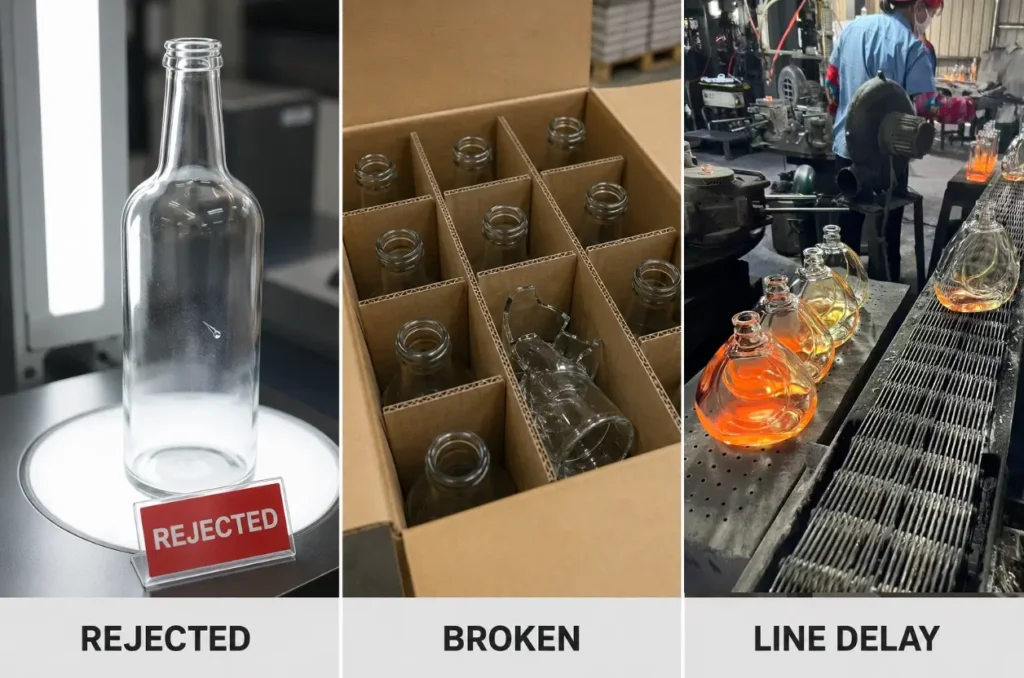
Bottles may be rejected because of functional defects, serious appearance problems, incorrect decoration, damaged packing, transport breakage or a shortage.
The direct loss is the value of the unusable bottles. The indirect loss can be larger. It may include sorting labor, warehouse handling, disposal, repacking, claim documentation, replacement freight and changes to the filling schedule.
A fair quotation review should consider the supplier’s quality history, packing method, inspection plan and claim procedure. The stated unit price alone does not show these risks.
The buyer and supplier should agree on how damage or nonconformity will be documented, when notice must be given and whether the solution will be a credit, replacement or another remedy.
A replacement bottle that arrives after the filling date may not solve the buyer’s real problem.
Reviewing examples of common glass bottle defects can also help buyers separate minor cosmetic variations from problems that affect filling, sealing, safety or saleability.
9. MOQ, Inventory, Storage and Delay Costs
A larger order may reduce the unit price, but it also increases the amount of cash tied up in inventory.
The buyer may require more warehouse space, pallet handling, insurance, stock control and protection from dust or damage.
A bottle can also become obsolete if the label, formula, legal information, brand design or closure changes before the stock is used.
The cheapest quantity shown on a quotation is not automatically the most economical order quantity.
Low inventory creates the opposite risk. If bottle production, decoration, ocean transport, customs clearance or local delivery takes longer than planned, the filler may run out of packaging.
The resulting line downtime, rescheduling, overtime or missed customer delivery can cost more than the bottles.
Ask for realistic lead times for every stage. The schedule should include drawing approval, sampling, decoration, production, inspection, shipping and customs clearance.
Seasonal shipping pressure and a reasonable amount of safety stock should also be considered.
The goal is not to hold the maximum possible inventory. The goal is to maintain enough confirmed supply to protect the production plan without creating unnecessary storage costs.
How to Compare Glass Bottle Quotations Fairly
A fair comparison begins with one written specification sent to every supplier.
It should identify the bottle model or drawing, capacity method, target weight, glass color or clarity, dimensions, neck finish, closure, decoration, quality requirements, quantity, packing method and delivery destination.
If one detail is undecided, mark it as an open point instead of allowing each supplier to make a different assumption.
Use the Same Commercial Scope
Ask each supplier to separate the bottle, mold, sample, closure, decoration, packing, inspection, documentation and freight costs.
Confirm the quotation currency, validity period, payment terms, MOQ, production lead time and whether taxes are included.
The purpose is not to force every supplier to use the same accounting format. It is to identify which items are included, optional, estimated or excluded.
Compare the Same Trade Term and Named Place
Write the full Incoterms rule and named location, such as FOB Qingdao, Incoterms 2020, instead of writing only FOB.
For destination quotations, confirm whether the offer ends at the port, terminal, warehouse door or another location.
Ask your forwarder or customs broker which costs remain on the buyer’s side. Freight estimates should also state whether they are current estimates or fixed contractual amounts.
Request Packing and Shipment Data
The supplier should provide enough information for the buyer or forwarder to check the logistics cost.
Request the packing quantity, carton and pallet dimensions, gross weight, total volume, pallet count and estimated container load.
When decorated bottles require additional separation, confirm whether the lower loading quantity has already been used in the freight calculation.
Agree on Approval and Claims Before Production
Keep the approved drawing, physical sample, artwork, color standard, closure sample, packing specification and quality criteria together as the order reference.
Record the inspection and claim process in the purchase documents.
This reduces disagreements about what was expected and makes a genuine problem easier to investigate. It also helps the supplier quote the project accurately instead of adding a large contingency for unclear requirements.
Calculate the Cost per Usable Bottle
After the offer is complete, add the expected product, development, accessory, decoration, packing, freight, import, inspection, storage and loss costs.
Divide the total by the expected number of bottles that will be accepted and ready for filling.
Use a realistic loss assumption based on the bottle design, decoration, shipping route and supplier performance.
A small difference in unit price may become irrelevant if one option provides better container utilization, fewer rejected bottles or lower operational risk.
الأسئلة الشائعة
Is the Cheapest Glass Bottle Quote Always the Cheapest Option?
No. A low quotation may still be the best option, but only after the specification and scope are confirmed.
If it excludes caps, decoration setup, suitable export packing, inspection or destination charges, the final cost may exceed a more complete offer.
Compare landed cost and cost per usable bottle instead of the empty bottle price alone.
What Should a Glass Bottle Quotation Include?
The quotation should identify the bottle specification, quantity, unit price, mold or setup fees, sample terms, closure and decoration scope, packing method, quality reference, lead time, payment terms, quotation validity, Incoterms rule, named place and exclusions.
Not every quotation needs to include every service. However, every exclusion should be visible before the order is placed.
Does CIF Include Import Duty and Local Delivery?
CIF normally requires the seller to arrange cost, insurance and freight to the named destination port under the applicable Incoterms rule.
It does not generally mean that the seller pays the buyer’s import duty, import clearance or delivery from the port to the buyer’s warehouse.
The contract, named port and local charges should be checked with a qualified customs broker or freight forwarder for the specific shipment.
Are Samples and Mold Fees the Same Cost?
Not necessarily.
A mold fee may cover drawing, tooling and an initial undecorated trial. Decoration samples, closure samples, repeated changes and international courier charges may be calculated separately.
Buyers should ask what the mold fee includes, how many sample rounds are covered and which changes will create a new charge.
How Can Buyers Reduce Hidden Sourcing Costs?
Confirm the complete package early. Approve a representative sample. Compare equivalent quotation scopes. Request packing data. Agree on quality standards and claim procedures before production.
Use an existing bottle when it meets the product requirements. Combine sample checks where practical. Involve the filler, forwarder and customs broker before the shipment is booked.
الخاتمة
Glass bottle sourcing costs extend beyond the factory unit price. Development, samples, closures, decoration, export packing, freight, inspection, importing, quality losses, inventory and delays can all change the final result.
A complete quotation makes these costs visible. The cost per usable bottle then shows which sourcing option is genuinely economical.
Jingbo Group manufactures glass bottles and can quote bottles, compatible closures, surface decoration, export packing and shipment data as one complete project. Share your bottle style, capacity, quantity, closure, decoration and destination so our team can help you compare the complete sourcing cost rather than the unit price alone.