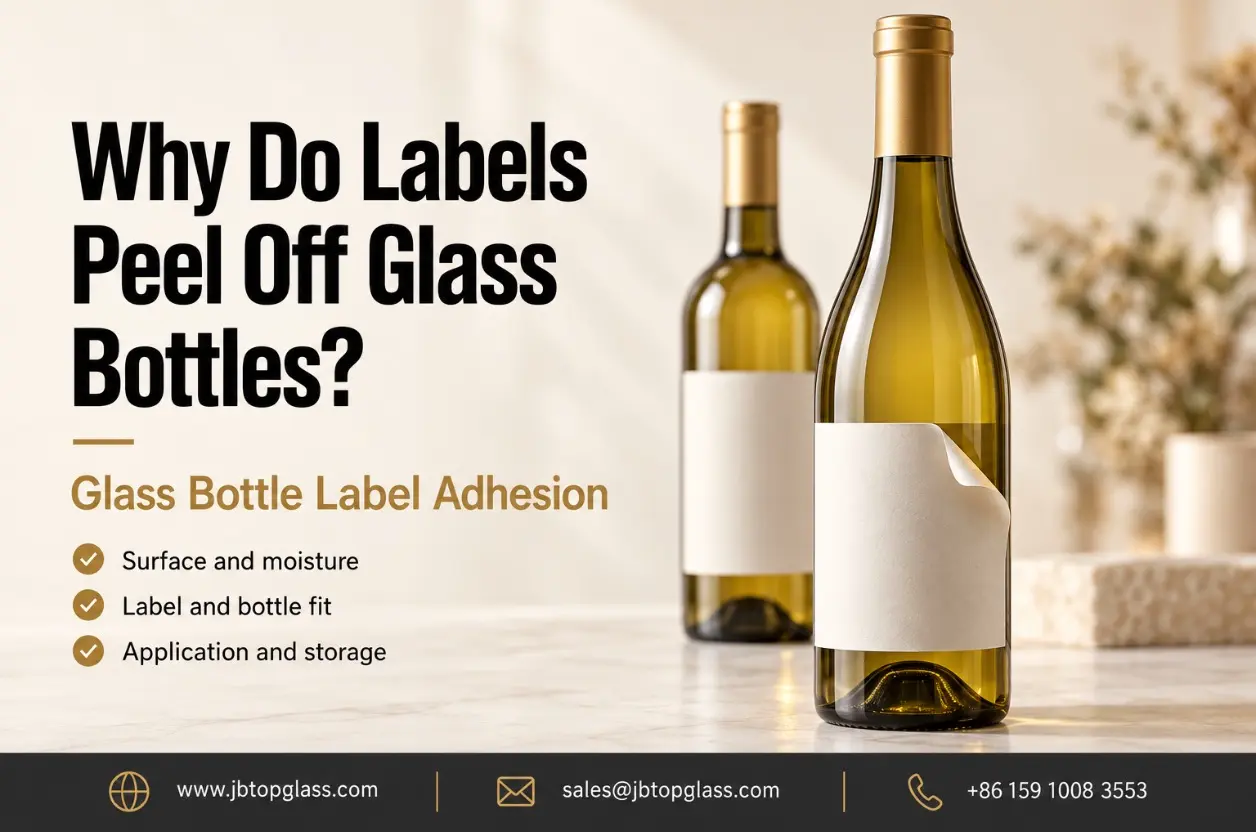
Labels peel off glass bottles when they do not make firm contact with the glass or cannot keep that bond during storage and handling. Moisture or residue on the bottle, a curved label area, an unsuitable label material, and poor application pressure can all cause trouble.
The first question is when the label starts to fail. A label that slides as soon as it is applied needs a different investigation from one that lifts after refrigeration. Buyers should check the bottle, label and labeling process together before changing any one component.
This guide focuses on commercial paper and film labels. Pressure-sensitive labels and labels applied with wet glue use different materials, so the same remedy will not work for every line.
What Does a Peeling Label Tell You?
The position and timing of the failure provide useful clues. They do not prove the cause on their own.
| What you see | What to check first |
|---|---|
| The label slides or shifts during application | Moisture on the glass, initial adhesive grip and applicator settings |
| One edge lifts on many bottles in the same place | Label position, bottle curvature, label stiffness and wiping pressure |
| Bubbles appear near a bottle seam or raised detail | Whether the label makes full contact with that part of the glass |
| Labels look sound at first but lift after chilling | Label and adhesive performance under the actual storage conditions |
| One bottle batch has more failures than another | Differences in bottle surface condition, dimensions or treatment |
A production team should keep both a good bottle and a failed bottle. The team can then compare the same label on both bottles under the same conditions. That comparison is more useful than guessing from a photograph of one loose label.
Is the Glass Clean and Dry When the Label Is Applied?
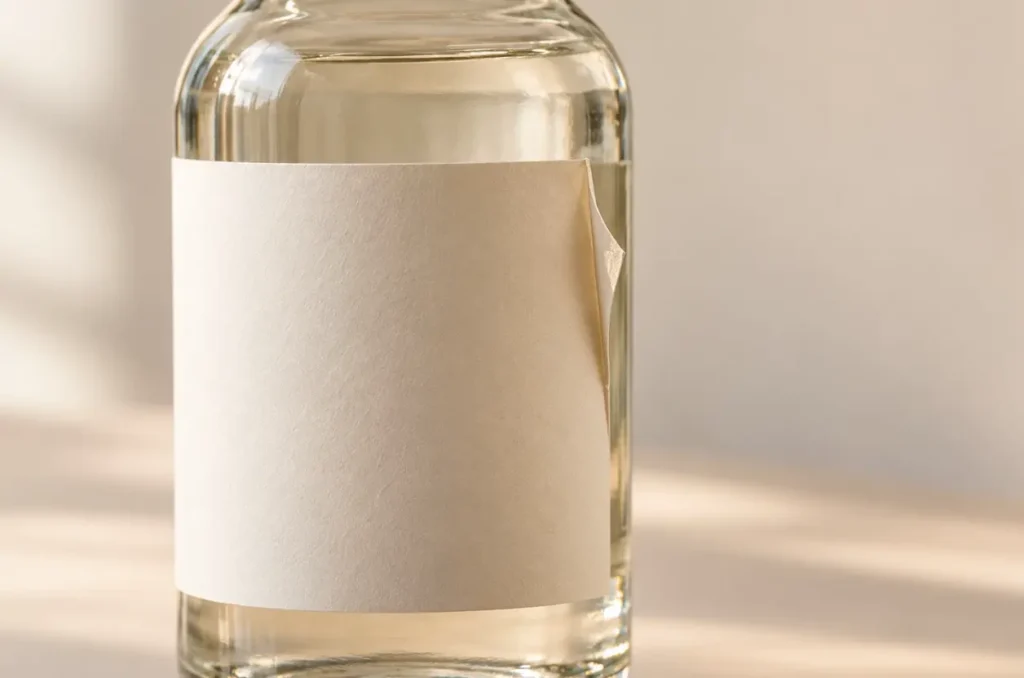
A label needs direct contact with the bottle surface. Dust, product residue and condensation can sit between the adhesive and the glass. The label may appear to be in place while part of its adhesive has never formed a proper bond.
Cold-filled bottles deserve particular attention. Moisture can form on the outside when a cold bottle enters a warmer, humid labeling area. The water may be hard to see. Avery Dennison’s wine-labeling handbook identifies dirt, moisture and condensation as factors that reduce adhesive contact. Its guidance for pressure-sensitive labels includes removing surface water before application.
The filling team should inspect the bottle at the labeling head, not only when empty bottles arrive. Filling, rinsing and changes in room conditions can alter the surface before the label touches it.
Why Do Labels Peel Off Glass Bottles After Chilling?
Two situations need to be separated. In the first, the team applies a label to an already cold or damp bottle. In the second, the team labels a dry bottle and chills the finished product later.
Cold, wet application makes it harder for some pressure-sensitive adhesives to grip the glass at first contact. Excess condensation can also let a newly applied label slide. Avery Dennison’s technical bulletin on cold and wet bottle labeling explains both effects and notes that even an adhesive designed for those conditions has limits.
A label applied to a dry bottle faces a different test. Its adhesive and face material must stay suitable for the product’s later conditions. A beverage bottle may move from a warehouse to a refrigerator or an ice bucket. Moisture may affect the label paper, its edges or the bond to the glass.
Buyers should therefore tell the label supplier when the label is applied و what happens to the finished bottle afterward. “The product will be refrigerated” does not fully describe the labeling conditions.
Can the Bottle Surface or Shape Cause Edge Lifting?
Commercial glass bottles often receive thin external surface treatments during production. These treatments help bottles move through handling and filling equipment while limiting surface damage. Their presence does not automatically cause labels to peel.
The exact treatment can matter to a particular labeling system. American Glass Research examined how glass-container coatings affect paper labels applied with casein-type glue. Buyers should not apply that study’s results unchanged to every pressure-sensitive label. If failures appear after a bottle or labeling-material change, the bottle supplier and label supplier should test that specific combination.
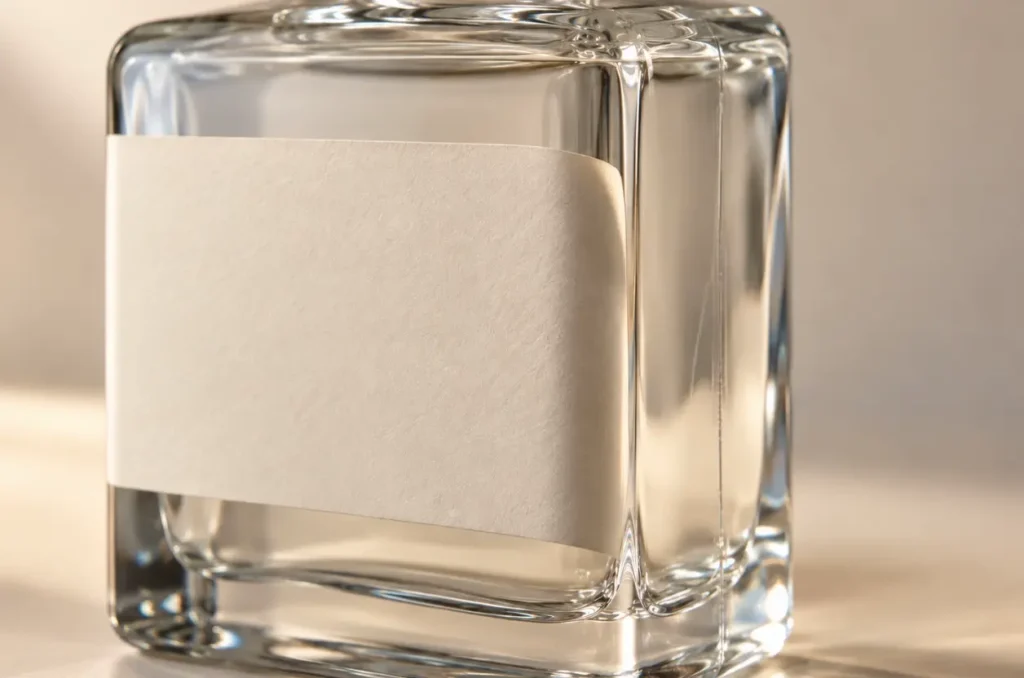
Bottle geometry matters too. A label may bridge a seam, a raised design or a slight change in the label panel instead of touching the glass evenly. A stiff label may also pull away from a narrow neck or curved shoulder. Avery Dennison’s handbook identifies seams, label-panel variation and rigid label materials as possible application difficulties.
A buyer should check the usable label area on the physical bottle before approving artwork. A label that fits the dimensions on a flat drawing may still lift when it wraps around the finished glass.
Does the Label Material Match the Bottle?
A pressure-sensitive label combines a face material and an adhesive. The label supplier selects that combination for the bottle surface, application method and finished product’s environment.
A thick, heavily decorated paper label may be harder to hold against a tight curve than a more flexible construction. Some papers can also absorb moisture and develop bubbles. A film label may suit a damp environment better in some projects, but changing to film does not correct a wet bottle, the wrong adhesive or poor application pressure.
The buyer should share the bottle sample and intended label area with the label supplier. The supplier needs to know whether the bottle will be chilled, exposed to water, transported in cartons or washed for reuse. The team can then test the proposed label on the actual bottle, rather than approving the materials separately.
Can the Labeling Line Cause the Problem?
Yes. A suitable bottle and label can still fail if the machine does not press the whole label against the glass.
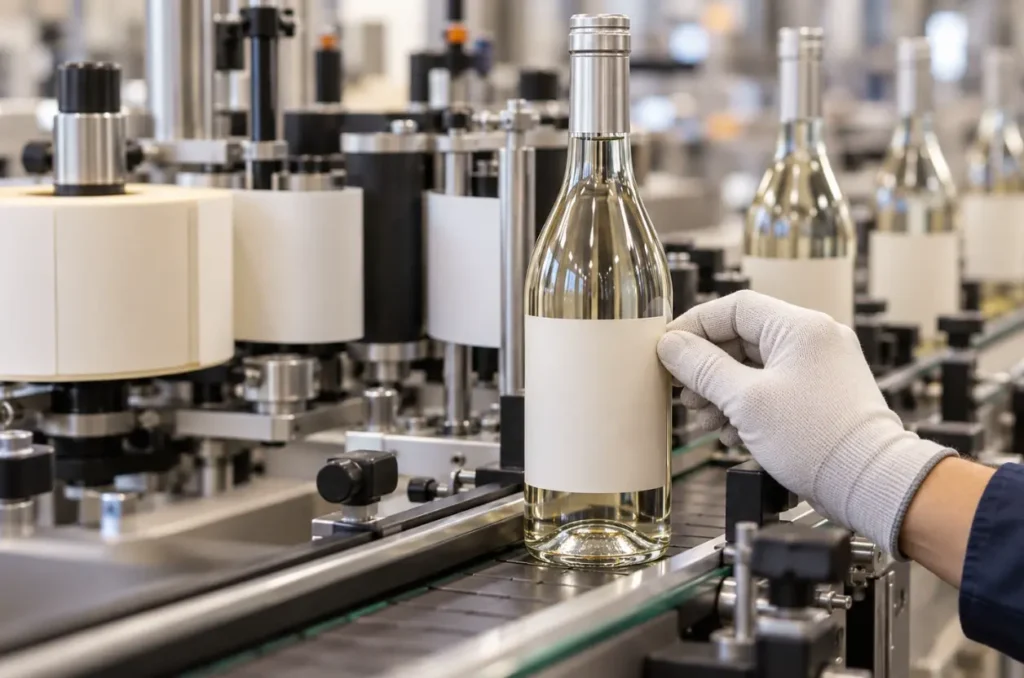
Pressure-sensitive labels need firm, even contact during application. The applicator must place the label correctly and wipe it onto the bottle, including its edges. A change in label size, paper stiffness or bottle shape may require a change in machine settings.
Before approving the package, the filling team should apply the actual printed labels to the intended bottles at the planned line speed. A label applied by hand cannot confirm how the automatic line will perform. Inspect the bottles again after the wait time recommended by the label supplier and under the product’s actual storage conditions. If labels lift, compare failed bottles with good ones and change one factor at a time.
الخاتمة
A peeling label does not point to one universal defect. The failure may begin at the glass surface, in the label construction or on the labeling line. Buyers can narrow the cause by recording where and when the label lifts, then testing the complete package under its real conditions of use.
Planning a labeled glass bottle? Contact Jingbo Group with your label dimensions and bottle requirements. We’ll help you select or develop a bottle with a label area that suits your design.