
The main parts of a glass bottle are the opening, finish, neck, shoulder, body, heel and base. Some bottles also have a label panel, a push-up or punt, and molded details such as embossing.
These names are more than industry terms. Each part affects the way the bottle is filled, sealed, decorated, packed or used.
For example, the finish must match the cap or stopper. The body provides space for the product and branding. The base keeps the bottle standing, while the shoulder helps connect the body to the neck.
Knowing these basic names makes it easier to discuss a drawing, mark changes on a sample and explain a bottle requirement to a supplier.
Glass Bottle Parts at a Glance

Not every bottle shows these parts in the same way. A straight-sided bottle may have only a small shoulder. A jar may have almost no visible neck. A wine bottle may have a deep punt, while a juice bottle may use a much shallower base recess.
What Is the Opening or Mouth of a Bottle?
The opening, often called the mouth, is the hole through which the bottle is filled and emptied. On a technical drawing, the inner opening may also be called the bore.
The opening size affects how quickly the product enters or leaves the bottle. A narrow opening works well for many drinks, oils, spirits and liquid products. A wider opening is usually better for thick sauces, powders, spices or food pieces.
The opening also needs to work with the filling equipment. A bottle may look suitable in a photograph but still have an opening that is too narrow for the product or the filling nozzle.
However, the opening diameter alone does not tell you which cap will fit. Closure fit depends on the complete bottle finish.
What Is the Bottle Finish?
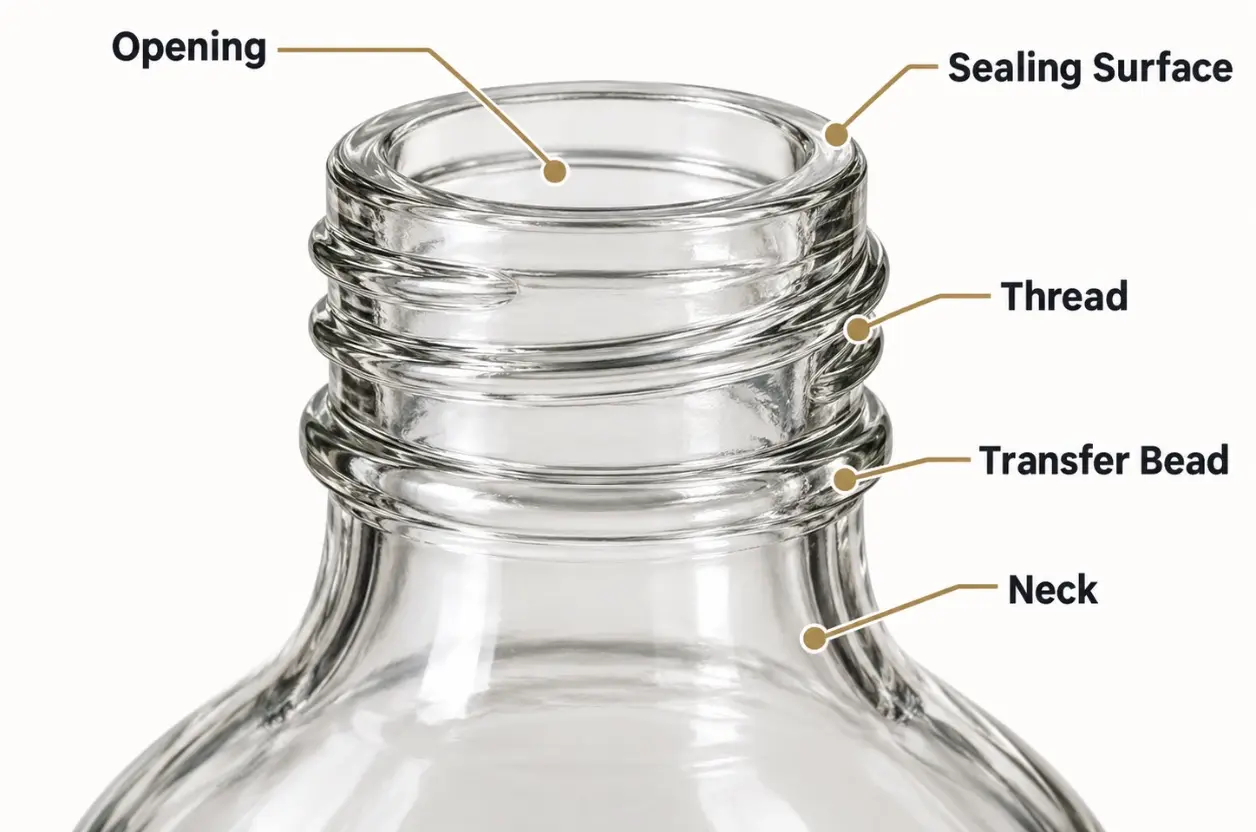
The finish is the complete top section of the bottle that is designed to accept a closure. It surrounds the opening and may include a sealing surface, threads, lugs, a bead or another closure-fitting structure.
The name can sound confusing because “finish” also describes the appearance of a surface, such as a glossy, frosted or matte finish. On a bottle drawing, however, the term “bottle finish” or “neck finish” normally refers to the closure-fitting structure at the top.
Different products use different finish styles. A beverage bottle may have a crown finish. A spirits bottle may use a bar-top finish. A food jar may have a lug finish, while a cosmetic bottle may use a threaded finish for a pump or sprayer.
The finish must match the closure design, not only its stated diameter. Two finishes may both be described as 28 mm but use different threads, sealing surfaces or heights.
For more detail, read Jingbo Group’s guide to bottle neck size and closure fit.
British Glass also publishes technical information about commonly used glass container finish specifications. These specifications show why a complete finish drawing is more useful than a simple diameter.
What Is the Sealing Surface?
The sealing surface is the part of the finish that makes contact with the cap liner, gasket, stopper or another sealing component.
Its position depends on the closure system. Some packages seal across the top of the bottle. Others seal against the inside or outside of the finish.
A damaged, uneven or incorrectly sized sealing surface may cause leakage even when the cap appears to fit.
What Is the Neck of a Glass Bottle?
The neck is the narrower section below the finish and above the shoulder. It supports the finish and creates the transition toward the wider bottle body.
The neck and finish are related, but they are not the same part. The closure attaches to the finish. The neck sits below it.
Neck length has a strong effect on the bottle’s appearance. A long neck can create a slim profile, while a short neck can make the bottle look compact and heavy.
The neck also affects filling and pouring. Its inner shape needs to let the product move without unwanted restriction. A product that pours easily may work with a narrow neck, while a thicker product may need more space.
Decoration can also appear on the neck. Wine bottles often use neck labels or capsules. Beverage and spirits bottles may use screen printing, embossing or a tamper-evident band in this area.
What Is the Shoulder of a Bottle?
The shoulder is the part that connects the neck to the main body.
A bottle may have a high shoulder, a rounded shoulder, a sloping shoulder or almost no visible shoulder. The design changes the bottle’s shape and the way the liquid appears inside it.
The shoulder also affects pouring. A smooth slope usually allows liquid to move toward the neck in a controlled way. A wide or sharply shaped shoulder may change the flow.
The fill level often sits near the shoulder or lower neck. A small change to the shoulder height can therefore change how full the bottle looks, even when the product volume stays the same.
Brands sometimes place embossing around the shoulder because it remains visible above the main label. This area still needs enough space for the design, and the mold seam should not run through an important logo when another position is possible.
What Is the Body of a Glass Bottle?
The body is the main section between the shoulder and the heel. It usually holds most of the product and provides the largest area for branding.
Bottle bodies can be round, square, rectangular, oval or irregular. The shape affects shelf appearance, handling, carton size and the available decoration area.
A round body provides a continuous curved surface. A square or rectangular bottle can provide clear front and back panels, although its corners and side seams need to be considered.
The body also determines much of the bottle’s internal capacity. Two bottles may have the same height but hold different amounts because their body widths, shoulders and bases are different.
What Is a Label Panel?
A label panel is an area of the body designed to receive a paper label, pressure-sensitive label, screen print or another decoration.
The panel may be flat, slightly curved or recessed. Not every bottle has a clearly defined label panel. Some bottles use the full body as the decoration area.
A good label panel needs enough width and height for the artwork. It should also avoid heavy curves, raised embossing and poorly placed mold seams.
Most machine-made bottles have thin lines where the mold sections meet. Jingbo Group’s guide to حواف الزجاجات الزجاجية explains which lines are normal and when a seam may become a quality or decoration problem.
If the design will be molded into the glass, read our guide to glass bottle embossing. Embossed artwork needs to be planned together with the body shape, label area and mold structure.

What Is the Heel of a Bottle?
The heel is the curved transition between the bottle body and the base.
People sometimes call this area the bottom, but the heel is not the complete base. It is the section where the vertical sidewall begins to curve underneath the bottle.
A sharp heel can create a clear, modern outline. A rounded heel can make the shape look softer. The selected curve also affects the way the bottle moves across a conveyor and fits inside its packing divider.
Decoration normally stops above the heel. Labels and direct printing may not sit evenly when they extend onto the curved lower surface.
When reviewing a sample, the buyer can also check whether the heel looks even around the bottle. An irregular lower profile may affect the bottle’s appearance or movement on a production line.
What Is the Base of a Glass Bottle?
The base is the bottom structure that supports the bottle.
The part that touches the shelf or conveyor is often called the bearing surface. It needs to provide stable contact so the bottle does not rock during filling, packing or display.
Many bottle bases are not completely flat inside. They have a raised inner area known as a push-up. A deeper push-up in a wine or spirits bottle is often called a punt or kick-up.
The depth and shape of the push-up can affect appearance, glass distribution and internal volume. A heavy-looking base may make a spirits or perfume bottle feel more premium, but it also uses space and glass.
A deep base does not automatically make every bottle stronger. The correct design depends on the product, pressure, bottle shape, glass distribution and production method.
The base may also carry molded information. Capacity marks, mold numbers, recycling symbols or manufacturer marks often appear underneath the bottle.

Why Do Glass Bottle Parts Matter When Ordering?
Bottle terminology helps the buyer and supplier discuss the same area without guessing.
If a cap leaks, the finish and sealing surface need attention. Changing the entire neck may not solve the problem.
If a printed logo looks too small, the usable body or label panel needs to be checked. Increasing the overall bottle height will not always create more printing space.
If a filled bottle looks half-empty, the body, shoulder and fill level may need adjustment. The stated capacity alone does not explain how the product will look inside the bottle.
The article on overflow and brimful capacity explains how the body, shoulder, neck and base work together to create the bottle’s internal volume.
The correct name also helps when marking a reference photo. A request such as “make the top smaller” is unclear. The buyer may mean the opening, finish, neck or shoulder. Each change produces a different result.
How Should You Describe a Bottle Change?
You do not need to know every technical glass term before contacting a supplier. A marked photograph, sample or drawing can explain the idea.
However, the request should identify the exact area and the intended result.
For example:
“Please keep the same finish but shorten the neck.”
This tells the supplier that the closure connection should remain unchanged.
Another useful request is:
“Please lower the shoulder and increase the straight body area for printing.”
This explains both the structural change and its purpose.
Dimensions make the request clearer. The buyer can mark the required overall height, body width, label panel, opening and finish on the reference image. The supplier can then prepare a technical drawing for confirmation.
A photograph alone cannot confirm every detail. It may not show the exact capacity, bottle weight, neck finish or base depth. These points need to appear on the drawing or approved specification before mold development.
مجموعة جينغبو glass bottle customization service supports projects that begin with a technical drawing, bottle sample, reference image or initial idea.
الأسئلة الشائعة
What Is the Top Part of a Glass Bottle Called?
The complete closure-fitting structure at the top is called the finish. The hole inside it is the opening or mouth. The neck is the narrower section directly below the finish.
What Is the Difference Between the Neck and the Finish?
The finish holds the cap, cork, stopper, pump or sprayer. The neck connects the finish to the shoulder and body.
What Is the Main Part of a Bottle Called?
The large central section is called the body. It holds most of the product and usually provides the main area for labels, printing or decoration.
What Is the Curved Bottom Edge of a Bottle Called?
The curved area between the body and base is called the heel.
What Is the Indented Bottom of a Bottle Called?
The inward area in the base is called a push-up. A deeper version used on many wine and spirits bottles is commonly called a punt or kick-up.
Is the Lip the Same as the Finish?
No. The lip is the upper edge around the opening. The finish is the complete structure that works with the closure. It may include the lip, sealing surface, threads, lugs or bead.
Does Every Bottle Have a Label Panel?
No. Some bottles have a defined flat or recessed label panel. Other bottles use a curved body for labels or direct printing.
Can Every Part of a Glass Bottle Be Customized?
The shape, capacity, neck, shoulder, body, base and molded details can be customized when the design is suitable for glass production. A structural change normally requires a new or modified mold. The closure, filling line, decoration and packing must also be considered before the drawing is approved.
الخاتمة
The main glass bottle parts are the opening, finish, neck, shoulder, body, heel and base. A bottle may also include a label panel, bearing surface and push-up.
Each part has a different job. The finish connects with the closure. The neck and shoulder guide the bottle shape. The body holds the product and branding. The heel and base support the bottle.
Clear terms reduce misunderstandings when you compare bottles, review drawings or request changes. You do not need to design every detail yourself, but you should know which part you want to keep or change.
If you need help reviewing an existing bottle or developing a new shape, اتصل بـ Jingbo Group to discuss your product, capacity, closure and design requirements.