
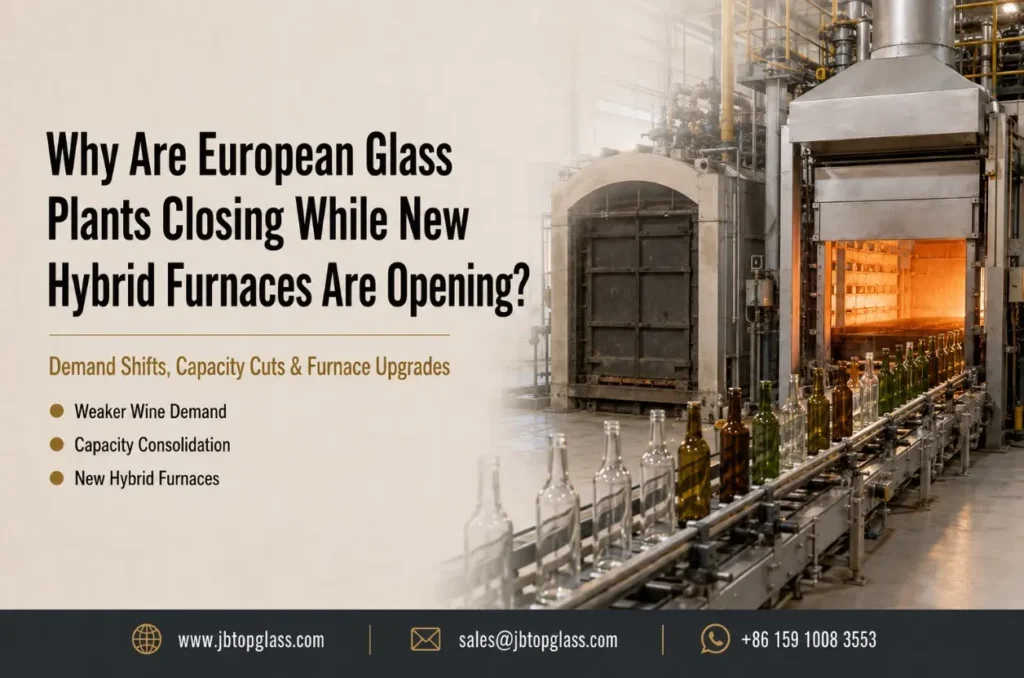
تشهد مصانع الزجاج الأوروبية موجة إغلاق، في حين يتم افتتاح أفران هجينة جديدة، وذلك لأن المنتجين يعملون على تركيز الطلب المنخفض في عدد أقل من المواقع الأكثر كفاءة. وقد أدى ضعف الطلب إلى عدم الاستفادة الكاملة من بعض الطاقات الإنتاجية القديمة. وفي الوقت نفسه، تدفع تكاليف الطاقة وخطط الاستثمار طويلة الأجل المنتجين إلى تحديث المواقع التي يتوقعون الاحتفاظ بها.
لا يشير هذان الاتجاهان إلى أن أوروبا تتخلى عن التغليف الزجاجي. بل يوضحان أن الصناعة تشهد تغيرًا في أماكن إنتاج الزجاجات الزجاجية وكيفية إنتاجها.
يتمثل التغيير الرئيسي في الانتقال من صيانة كل فرن قائم إلى اختيار المصانع التي تستحق استثمارات جديدة. وستفقد بعض المواقع جزءًا من طاقتها الإنتاجية، في حين ستحصل مواقع أخرى على أفران هجينة وأنظمة لاستعادة الحرارة وخطوط إنتاج جديدة.
ما الذي يحدث لقدرات إنتاج الزجاج في أوروبا؟
قامت العديد من الشركات الكبرى المنتجة للزجاج بتعديل شبكات إنتاجها في أوروبا خلال عام 2026.
أكدت مجموعة أرداغ أن منشأتها في جيرمرشايم بألمانيا ستغلق أبوابها خلال الربع الثالث من عام 2026. وأوضحت الشركة أن هذا القرار يهدف إلى مواجهة ظروف الطلب الصعبة وجعل طاقتها الإنتاجية أكثر توافقًا مع احتياجات السوق الحالية. ويأتي هذا الإغلاق في إطار خطة أرداغ الشاملة لإعادة الهيكلة “Clearly Ardagh”، وفقًا لـ نتائج الربع الثاني من عام 2026.
مصنع جيرمرشايم ليس مجرد مستودع صغير أو موقع للتشطيب. تشير التقارير الصناعية إلى أن المصنع ينتج ما يقل قليلاً عن مليوني حاوية زجاجية يوميًا ويعمل فيه حوالي 260 موظفًا. ويخدم الموقع بشكل أساسي أسواق زجاجات المشروبات. ونظرًا لهذا الحجم، فإن إغلاق المصنع يمثل انخفاضًا ملموسًا في الطاقة الإنتاجية الألمانية.
ليست «أرداغ» الشركة الوحيدة التي تقوم بهذا النوع من التعديلات. فقد أغلقت شركة «فيراليا» مصنعها في إيسن بألمانيا في مارس 2026. كما أوقفت الشركة تشغيل فرن في شاتوبيرنارد بفرنسا وآخر في نوتينغلي بالمملكة المتحدة. ووصفت «فيراليا» هذه الإجراءات بأنها استجابة للطاقة الإنتاجية الزائدة في السوق الأوروبية في تقريرها نتائج النصف الأول من عام 2026.
ومع ذلك، أعادت شركة «فيراليا» تشغيل فرن أكثر كفاءة في مدينة ليدز، بينما أوقفت تشغيل المعدات الأقدم في مواقع أخرى. وهذه التفاصيل مهمة. فالشركات المنتجة لا تكتفي ببساطة بإزالة كل طن متاح من الطاقة الإنتاجية، بل إنها تنقل الإنتاج إلى المصانع التي تتمتع بكفاءة أعلى أو موقع أفضل أو قيمة طويلة الأجل.
لماذا تغلق بعض مصانع الزجاج الأوروبية أبوابها؟
تغلق بعض مصانع الزجاج الأوروبية أبوابها بسبب انخفاض الطلب إلى ما دون الطاقة الإنتاجية التي تم تركيبها خلال الفترات التي شهدت ازدهارًا في السوق. ويظهر هذا الانخفاض بوضوح خاص في أسواق النبيذ، والنبيذ الفوار، والكونياك، وبعض المشروبات الروحية.
أفادت شركة «فيراليا» أن أحجام التعبئة والتغليف الزجاجية الأوروبية انكمشت بشكل حاد في عام 2023 وظلت دون مستويات عام 2019. وعزت الشركة هذا التغير جزئيًا إلى انخفاض استهلاك الكحول في أوروبا بنسبة 4% منذ عام 2019. كما أشارت شركة «فيراليا» في إعلانها بشأن حضورها الصناعي في أوروبا إلى تراجع صادرات عملائها إلى الولايات المتحدة وآسيا.
ولا يتساوى هذا الانخفاض في جميع فئات التغليف الزجاجي. فقد يواجه أحد المنتجين ضعفًا في الطلب على زجاجات النبيذ، في حين تظل أحجام الطلب على برطمانات الأغذية أو زجاجات المشروبات الكحولية أكثر استقرارًا. كما تختلف الظروف الإقليمية أيضًا. فقد يعاني مصنع في ألمانيا من انخفاض في معدل الاستخدام، في حين لا يزال موقع يخدم إسبانيا أو سوقًا آخر بحاجة إلى مزيد من الطاقة الإنتاجية.
كما أن إنتاج الزجاج ينطوي على تكاليف ثابتة مرتفعة. فالفرن الكبير وخطوط التشكيل والمعدات الداعمة له تتطلب استثمارات ضخمة وتشغيلًا مستمرًا. وتفقد المصانع قدرتها التنافسية عندما يظل إنتاجها أقل من المستوى اللازم لتغطية تلك التكاليف.
وبالتالي، يجوز للمنتج إغلاق أحد المواقع ونقل عملائه إلى مصنع آخر. ويمكن لهذا القرار أن يقلل من الطاقة الإنتاجية غير المستغلة دون قطع الإمداد عن العملاء المتأثرين.
لماذا يتم تشغيل أفران الزجاج الهجينة في نفس الوقت؟
يتم افتتاح أفران زجاج هجينة لأن المنتجين ما زالوا بحاجة إلى إنتاج موثوق به في المصانع التي يخططون للاحتفاظ بها. ولا يؤدي إغلاق فرن في موقع ما إلى إزالة الحاجة إلى إعادة بناء الأفران القديمة في أماكن أخرى.
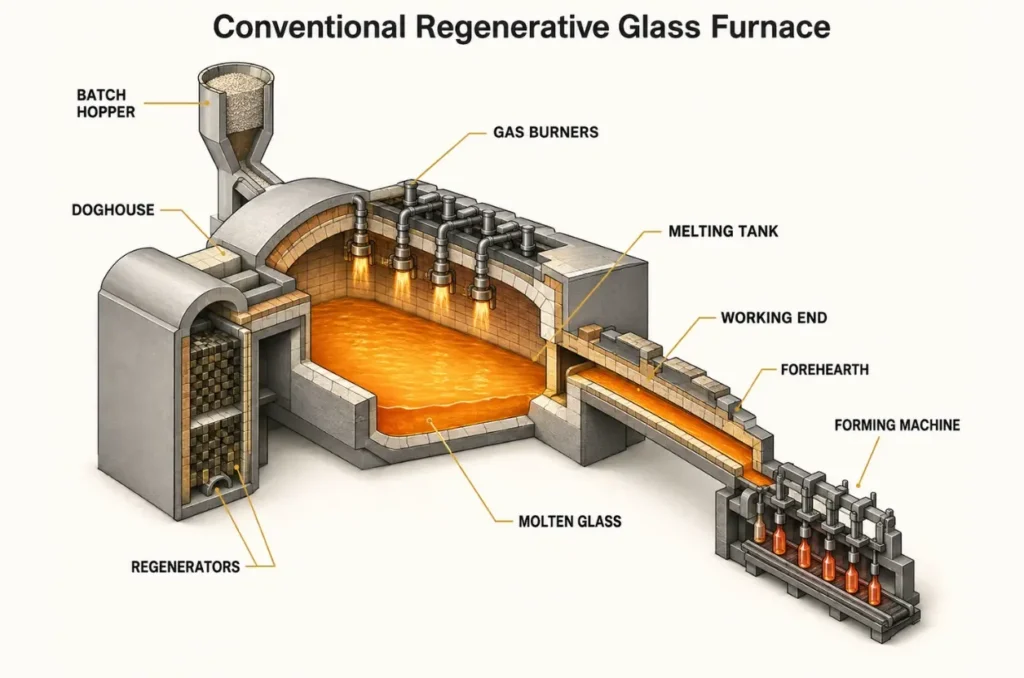
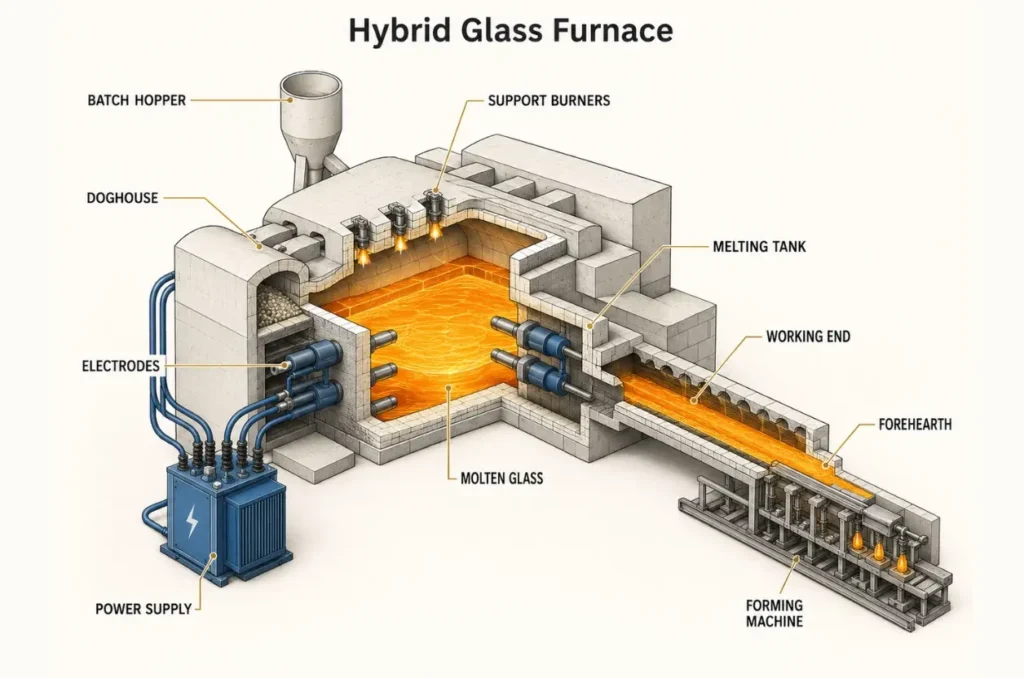
يعتمد فرن الزجاج التقليدي بشكل أساسي على الوقود الأحفوري لصهر المواد الخام والزجاج المعاد تدويره. أما الفرن الهجين فيستخدم كلاً من الوقود والكهرباء. ويمكن للمشغل ضبط مزيج الطاقة وفقًا لتصميم الفرن وإمدادات الكهرباء واحتياجات الإنتاج.
لا تشير كلمة “هجين” إلى نظام واحد محدد. فالمشاريع المختلفة تستخدم نسبًا متفاوتة من الكهرباء والغاز الطبيعي والوقود الحيوي أو احتراق الأوكسي-وقود.
افتتحت شركة «فيراليا» أول فرن هجين لها في سرقسطة، إسبانيا، في أبريل 2026. وقد استثمرت الشركة 63 مليون يورو في هذا المشروع. ويستخدم الفرن 70% من الكهرباء المتجددة و30% من الغاز الطبيعي أو الوقود الحيوي. ويضم الفرن ثلاثة خطوط إنتاج ويمكنه إنتاج زجاج بألوان مختلفة.
كما سيؤدي هذا الاستثمار إلى رفع إجمالي إنتاج موقع سرقسطة — الذي يشغّل فرنين — إلى 1.3 مليون حاوية يوميًا عند التشغيل بكامل طاقته. وأوضحت شركة «فيراليا» أن المشروع يلبي الطلب من عملاء قطاع النبيذ والمشروبات الكحولية والمشروبات في السوق الإسبانية. وقد نشرت الشركة تفاصيل المشروع في إعلان عن فرن «زاراغوزا» الهجين.
كما أنتجت شركة O-I أول كمية من الزجاج من فرنها الهجين الجديد في فوش، بفرنسا، في يونيو 2026. وكانت شركة O-I قد أعلنت في البداية عن استثمار يبلغ حوالي $65 مليون من أجل كهربة المصنع وتحديثه. ويمكن للفرن استهلاك ما بين 30% و70% من الكهرباء. كما أضافت شركة O-I أنظمة لاستعادة الحرارة وتسخين الهواء مسبقًا إلى الموقع.
استبدل مشروع «فوش» أحد الأفران الموجودة في المصنع. ولم يؤدِّ إلى إنشاء مصنع زجاج جديد تمامًا. ويتيح هذا النوع من الاستبدال لشركة «O-I» الحفاظ على الإنتاج في مصنع ذي موقع استراتيجي مع تغيير التكنولوجيا المستخدمة في صهر الزجاج. ويمكن الاطلاع على المواصفات الأصلية في إعلان عن مشروع O-I.
كما يتم المضي قدمًا في المزيد من المشاريع الهجينة في فرنسا. تعمل شركة «فيراليا» (Verallia) على استبدال فرن قائم في سان-رومان-لو-بوي بتقنية هجينة. وتعاونت شركة «فيريسينس» (Verescence) مع شركة «فايفز» (Fives) لاستبدال فرن قائم في مير-لي-بان. وسيُنتج فرن شركة «فيريسينس» ما يصل إلى 150 طنًا من الزجاج يوميًا لاستخدامه في زجاجات العطور ومستحضرات التجميل، ويمكنه استبدال ما يصل إلى 80% من استهلاكه للوقود الأحفوري بالكهرباء.
وتُظهر هذه المشاريع مرة أخرى أن جزءًا كبيرًا من الاستثمارات يتضمن استبدال أفران محددة بدلاً من إنشاء مصانع جديدة بالكامل.
لماذا لا يتعارض إغلاق المصانع مع الاستثمار في الأفران؟
يُعد إغلاق المصانع والاستثمار في الأفران الهجينة جزءين من نفس الاستراتيجية الصناعية. حيث يعمل المنتجون على خفض الطاقة الإنتاجية في الأماكن التي لم يعد فيها الطلب كافياً لتشغيل المصنع بكامل طاقته، بينما يستثمرون في الأماكن التي يُتوقع أن يظل الإنتاج فيها مجديًا لسنوات عديدة.
إن إنشاء فرن جديد لا يعني دائمًا أن الشركة تتوقع زيادة كبيرة في إجمالي الطلب الأوروبي على الزجاجات. فالعديد من مشاريع الأفران تهدف إلى استبدال المعدات التي وصلت إلى نهاية عمرها التشغيلي.
كما أن الموقع له أهميته أيضًا. فقد يكون المصنع القريب من العملاء الرئيسيين ومصادر الزجاج المعاد تدويره والبنية التحتية المناسبة للطاقة أكثر قيمة من مصنع أقدم يعاني من ضعف الطلب المحلي. وقد يقوم المنتجون بنقل إنتاج الزجاجات بين المواقع المختلفة حتى في حالة انخفاض إجمالي طاقتهم الإنتاجية في أوروبا.
تشير البيانات المتاحة إلى أن إنتاج الزجاج في أوروبا أصبح أكثر تركيزًا. ومن المرجح أن تعمل هذه الصناعة بعدد أقل من الأصول ذات الاستخدام المنخفض، مع توجيه المزيد من رأس المال نحو مصانع حديثة مختارة.
يمكن أن يؤدي هذا التغيير إلى تحسين الكفاءة، لكنه يزيد أيضًا من أهمية مواقع الإنتاج الفردية. فقد يؤثر أي تأخير أو إصلاح أو مشكلة في التوريد في أحد المصانع الكبرى على عدد أكبر من العملاء عندما يكون الإنتاج مركّزًا في شبكة أصغر.
كيف تؤثر الأفران الهجينة على انبعاثات الكربون؟
يمكن للأفران الهجينة أن تقلل الانبعاثات عندما تحل الكهرباء محل جزء من الوقود الأحفوري المستخدم في عملية الصهر. ومع ذلك، فإن كل رقم يتعلق بالتخفيض لا ينطبق إلا على فرن معين، ومزيج طاقة محدد، ونطاق حسابي معين.
تتوقع شركة «فيراليا» أن يؤدي فرنها في سرقسطة إلى خفض النطاق 1 والنطاق 2 انبعاثات ثاني أكسيد الكربون بنحو 50%. وتشير الشركة إلى أن هذا الانخفاض قد يصل إلى 60% اعتمادًا على مزيج مصادر الطاقة.
تتوقع شركة O-I أن تؤدي تقنيتها الهجينة «Veauche» إلى خفض انبعاثات ثاني أكسيد الكربون في الموقع بنحو 43% عندما يعمل الفرن بمستوى استهلاك كهربائي متوسط يبلغ 50%.
لا ينبغي تطبيق هذه الأرقام على جميع الأفران الهجينة. فقد تحقق المنشأة التي تستخدم كهرباء منخفضة الكربون نتيجة مختلفة عن تلك التي تعتمد على الكهرباء المولدة من الوقود الأحفوري. كما تتغير النسبة المئوية عندما يشمل الحساب المواد الخام أو الزجاج المعاد تدويره أو النقل أو أي جوانب أخرى من دورة حياة الزجاجة.
لذلك، ينبغي على مشتري الزجاجات التحقق مما تشمله أي ادعاءات تتعلق بانبعاثات الكربون. ويجب على المشتري أن يسأل عما إذا كان الرقم يشير إلى الفرن، أم إلى المصنع بأكمله، أم إلى انبعاثات النطاق 1 والنطاق 2، أم إلى دورة الحياة الكاملة لزجاجة واحدة.
كما يمكن أن يؤثر وزن الزجاجة ومحتوى الزجاج المعاد تدويره على البصمة البيئية النهائية. وتعد تكنولوجيا الأفران جزءًا واحدًا فقط من عملية حساب الأثر البيئي للتغليف.
ماذا تعني هذه التغييرات لمشتري الزجاجات؟
إن إغلاق مصنع واحد لا يؤدي تلقائيًا إلى حدوث نقص في الزجاجات الأوروبية. فالمُنتجون الكبار يمكنهم تحويل جزء من إنتاج الزجاجات إلى مصانع أخرى ضمن شبكاتهم.
ومع ذلك، قد يؤدي النقل إلى تغيير المهل الزمنية ومسافات النقل وجداول الإنتاج. وقد يحتاج العميل أيضًا إلى الموافقة على الزجاجات المصنعة على خط إنتاج مختلف أو في مصنع آخر.
يجب على المشترين التأكد من موقع الإنتاج الفعلي بدلاً من الاعتماد فقط على اسم شركة المورد. كما يجب على المشتري أن يستفسر عما إذا كان لدى المورد مصنع آخر قادر على إنتاج الزجاجة نفسها، وبنفس لون الزجاج وشكل عنق الزجاجة.
تتطلب الزجاجات المصنعة حسب الطلب مراجعة أكثر دقة. فقد يكون القالب المخصص مخزّنًا في أحد المصانع، وقد لا يكون جاهزًا للاستخدام على خط تشكيل آخر. يجب على المشتري التأكد من ملكية القالب وشروط نقله وخيارات الإنتاج البديلة قبل أن تحدث أي مشكلة في التوريد.
يجب على المشترين الذين يحتاجون إلى بيانات بيئية أن يطلبوا معرفة طريقة الحساب بالإضافة إلى النسبة المئوية. فالعبارة العامة من قبيل “صُنع في فرن هجين” لا توفر معلومات كافية لإعداد تقرير رسمي عن التغليف.
These checks are especially important for wine, sparkling wine and spirits brands because several recent European capacity changes involve plants that serve alcoholic beverage markets.
الأسئلة الشائعة
Are European Glass Bottle Shortages Likely?
The current closures do not prove that Europe will face a general bottle shortage. Producers are transferring some production and investing in other sites.
Certain bottle types, colours or regional supply routes may still face tighter capacity. Custom bottles can carry more risk because another factory may not have the required mould or production setup.
Is a Hybrid Glass Furnace Fully Electric?
No. A hybrid glass furnace combines electricity with another energy source, such as natural gas, biofuel or oxy-fuel combustion.
The electricity share depends on the furnace design. Verallia’s Zaragoza furnace uses 70% renewable electricity, while O-I’s Veauche system can operate with an electricity share between 30% and 70%.
Does a Hybrid Furnace Produce Better Glass Bottles?
A hybrid furnace does not automatically produce a stronger or clearer bottle. Bottle quality still depends on the glass composition, melting control, forming process, annealing and inspection system.
The main advantages of hybrid technology relate to energy flexibility, efficiency and reduced dependence on fossil fuels.
Will Hybrid Furnaces Make Glass Bottles Cheaper?
Hybrid technology does not guarantee a lower bottle price. These furnaces require large investments, and electricity prices can vary by country and time.
The technology may improve long-term energy efficiency. However, bottle prices still depend on order volume, bottle weight, colour, mould requirements, decoration, packaging and transport.
الخاتمة
European glass plants are not closing because the glass bottle market is disappearing. Producers are closing underused sites, moving production and replacing selected furnaces with more flexible technology.
The result is a smaller or more concentrated production network in some regions, combined with major investment at sites expected to remain competitive. Bottle buyers should watch production locations, backup capacity, mould arrangements and lead times rather than judging the market from one plant closure.
مستلزمات Jingbo Group glass wine and beer bottles و glass spirits bottles for standard and custom packaging projects. If you are reviewing alternative bottle supply or preparing a new order, send your bottle requirements to Jingbo Group.